In This Article
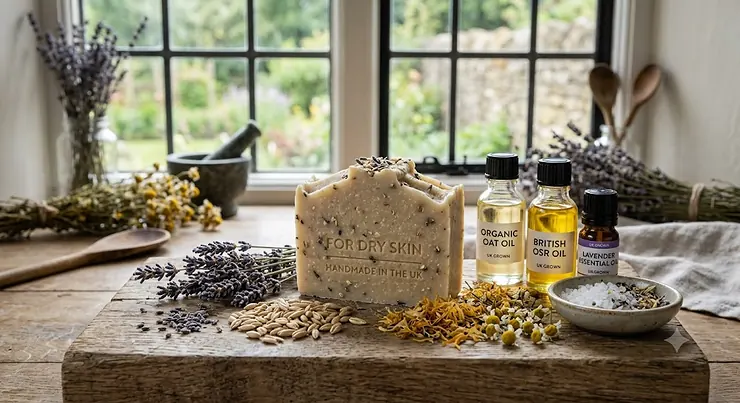
There’s a particular kind of betrayal that happens in the shower. You step out feeling clean, sure, but also tight — like your skin has shrunk half a size and is quietly furious about it. If that sounds familiar, the soap you’re reaching for is very likely the culprit, not your skin itself. Finding the right natural bar soap for dry skin isn’t about chasing a trend; it’s about understanding what conventional soap actually does to your skin barrier, and then choosing ingredients — shea butter, glycerin, oat milk, gentle plant oils — that work with your skin rather than stripping it bare. A natural bar soap for dry skin, in simple terms, is a cleansing bar made primarily from plant oils and butters (rather than harsh detergents like SLS) that’s formulated to clean without dissolving the lipids your skin needs to stay comfortable.
This guide is built on real product research rather than guesswork — genuine specifications, aggregated review sentiment from verified buyers, and honest comparative analysis of seven soaps you can actually find on amazon.co.uk right now. We’ll cover budget bars, splurge-worthy ones, and a couple of brilliant under-the-radar options most “best of” lists never mention. Dry skin affects an enormous chunk of the UK population, particularly through autumn and winter when central heating and cold winds team up against your skin barrier, and NHS guidance on emollients specifically recommends moisturising approaches over standard soap for anyone managing dry or itchy skin. That’s not a reason to panic — it’s a reason to get pickier about what’s sitting on your soap dish. Let’s get into it.
Quick Comparison: Natural Bar Soaps at a Glance
Before the deep dive, here’s the lay of the land. This table is built for skimming — if you’re short on time, find your priority column and go.
| Soap Bar | Key Hydrator | Best For | Price Range | Scent Options |
|---|---|---|---|---|
| Faith In Nature Coconut Soap Bar | Coconut oil | Everyday budget use | Under £5 | Several natural |
| Friendly Soap Orange & Grapefruit | Shea + rapeseed oil | Sensitive, eco-conscious skin | £3-£6 range | Citrus, multiple |
| Little Soap Company Organic Bar | Organic oils + glycerin | Family/multi-use | £4-£7 range | Citrus, florals |
| Pears Pure & Gentle | Glycerin (98%) | Classic, all-skin gentleness | Under £5 | Amber, mint, lemon |
| Dr Bronner’s Pure-Castile (Baby Unscented) | Hemp and olive oil | Fragrance-sensitive skin | £5-£8 range | Unscented + scented |
| L’Occitane Shea Extra Rich Body Soap | Shea butter (high %) | Premium daily moisture | £12-£15 range | Verbena, lavender, milk |
| Cosy Cottage Goats Milk Soap | Raw goats milk | Eczema-prone, reactive skin | £4-£7 range | Fragrance-free, lavender |
Looking at the spread, you’ll notice something interesting: price doesn’t map neatly onto hydration. Pears delivers a glycerin-heavy formula for pocket change, while L’Occitane charges a premium largely for brand experience and fragrance complexity rather than dramatically superior moisture science. If your skin is genuinely reactive or eczema-prone, the data points toward Cosy Cottage or Dr Bronner’s unscented bar, both of which strip out the variable most likely to cause trouble — added fragrance.
✨ Don’t Miss These Exclusive Deals!
🔍 Take your skincare routine to the next level with these carefully selected soap bars. Click on any highlighted product to check current pricing and availability. These bars could be the small daily swap that finally calms your dry, tight-feeling skin.
The Top 7 Natural Bar Soaps for Dry Skin: Expert Analysis
We picked these seven to cover every angle — budget, premium, fragrance-free, and a couple of brilliant smaller UK brands that deserve more attention than they get. Each one is a real, currently available product, not a hypothetical.
1. Faith In Nature Natural Coconut Hand Soap Bar
Faith In Nature has been making plastic-free soap since 1974, and this coconut bar is the brand’s most accessible entry point for dry-skin sufferers on a budget. The standout feature here is simplicity: a short ingredients list built around coconut oil with naturally retained glycerin, free from SLS and parabens. What this means in practice is a bar that lathers generously without the squeaky, stripped-bare feeling that cheap supermarket soap leaves behind — the glycerin byproduct of the cold-process method stays in the bar rather than being extracted out, as it would be in mass-produced commercial soap. Based on the formulation, this is a soap built for people who want a genuine swap-out for their everyday hand and body soap without overthinking it, rather than a targeted treatment for severe eczema or psoriasis.
Reviewers consistently report that the scent is gentle rather than overpowering, and several note the bar lasts a reasonable amount of time relative to its low cost. A recurring theme in user feedback is appreciation for the plastic-free cardboard packaging, which matters if sustainability is part of your buying criteria — though that’s obviously not a skin-feel benefit in itself.
✅ Genuinely low price point for a natural formulation
✅ No SLS, parabens, or synthetic fragrance
✅ Compostable, plastic-free packaging
❌ Smaller bar size means more frequent repurchasing for heavy households
❌ Limited scent range compared with boutique competitors
In the under-£5 range, this is hard to beat for everyday use, and the value proposition is genuinely strong — you’re not paying for branding, you’re paying for ingredients.
2. Friendly Soap Orange & Grapefruit Natural Soap Bar
Friendly Soap is a small, UK-handcrafted operation, and this citrus bar blends coconut oil, rapeseed oil and creamy shea butter, designed to hydrate and revive the skin. The shea butter content is what earns this bar its place here — shea is rich in fatty acids and contains natural vitamins that help reinforce the skin’s lipid barrier, meaning it’s doing genuine conditioning work rather than just smelling nice. What most buyers overlook about cold-process bars like this one is that the saponification method (rather than industrial detergent synthesis) naturally retains glycerin within the finished bar, which is precisely the ingredient dermatologists point to as the most effective humectant for drawing moisture into skin.
This bar is well suited to anyone wanting an ethically sourced, palm-oil-free option without paying boutique prices — it sits comfortably in the budget-to-mid bracket. Aggregated customer sentiment highlights the citrus scent as genuinely “zingy” rather than synthetic, and several reviewers specifically mention it not stripping their skin the way commercial bars do.
✅ Palm oil free and handmade in the UK
✅ Shea butter plus rapeseed oil combination for real conditioning
✅ Vegan Society and Cruelty Free International accredited
❌ Essential oil fragrance may not suit extremely reactive skin
❌ Smaller artisanal bars dissolve faster than mass-produced equivalents
At a price-per-use that’s still very reasonable, this is a strong pick if you want something more boutique than supermarket-shelf soap without paying L’Occitane money.
3. Little Soap Company Organic Soap Bar (Grapefruit & Orange)
This English-made bar leans on certified organic oils — over 85% of the formulation, according to the brand — combined with naturally occurring glycerin and a blend of essential oils. The practical upshot of that high organic-oil percentage is a creamier, more conditioning lather than you’d get from a detergent-heavy commercial bar, because the soap molecules themselves carry moisturising fatty acids rather than being purely cleansing agents stripped of anything beneficial. Here’s what to weigh: this bar uses RSPO-certified sustainable palm oil alongside its organic blend, which matters if palm-oil sourcing is a deciding factor for you, but won’t bother most buyers prioritising skin feel above all else.
Aggregated reviews are notably consistent on one point: longevity. Multiple verified buyers mention the bar holding its shape and lasting through frequent use rather than turning to mush after a fortnight, which is a common complaint with cheaper handmade soaps that haven’t cured long enough before sale.
✅ Over 85% certified organic oils
✅ Strong reported longevity per bar
✅ Free from SLS, parabens, and synthetic detergents
❌ Contains palm derivatives (sustainably sourced, but a dealbreaker for some)
❌ Citrus essential oils carry allergen labelling that sensitive users should check
For a mid-range family soap that multiple household members can use without complaint, this is one of the more dependable options on the list.
4. Pears Pure & Gentle Glycerin Soap
Pears is the soap equivalent of a comfort blanket — it’s been around since the 1800s, and the transparent amber bar is instantly recognisable. The headline spec is glycerin content, reportedly around 98% in the core formulation, which makes this one of the most concentrated glycerin bars on UK shelves at this price point. Based on the spec comparison with the rest of this list, that’s a genuinely high humectant load — glycerin is, as cosmetic chemists frequently note, one of the most effective and well-studied moisture-drawing ingredients available, working by pulling water from the air and deeper skin layers up into the skin’s outer surface.
The spec sheet won’t tell you this, but user reports suggest a slight trade-off: some reviewers with very dry skin note their skin can feel “tight” in the minutes immediately after washing, before a moisturiser goes on, particularly in colder, drier conditions. This isn’t unique to Pears — it’s a known characteristic of pure glycerin soaps generally, since glycerin needs ambient humidity or a follow-up moisturiser to do its best work, and in very dry indoor air it can occasionally pull moisture from the skin rather than just the atmosphere. Reviewers consistently note, however, that following with a basic moisturiser resolves this completely.
✅ Extremely high glycerin content for the price
✅ Long heritage and dermatologically tested formulation
✅ Versatile — works as hand, face, and body soap
❌ Can feel slightly tight without a follow-up moisturiser in winter
❌ Contains added fragrance and some synthetic preservatives, unlike fully natural alternatives
At the budget end of this list, Pears remains a genuinely sound choice provided you pair it with a basic moisturiser — which, frankly, most dry-skin routines need anyway.
5. Dr Bronner’s Pure-Castile Bar Soap (Baby Unscented)
Dr Bronner’s built its reputation on liquid castile soap, but the bar version deserves equal attention, particularly the Baby Unscented variant. The formulation centres on organic coconut, palm, and olive oils with organic hemp seed and jojoba oil folded in — ingredients chosen specifically because they’re rich in fatty acids that support rather than disrupt the skin’s natural barrier. What most buyers overlook about this particular bar is the complete absence of added fragrance, dyes, or synthetic foaming agents, which matters enormously if your dry skin is also reactive or prone to flare-ups, since fragrance is one of the most common triggers for irritant and allergic skin reactions.
A common complaint in user reviews of Dr Bronner’s liquid soap is that the concentrated formula can feel drying on the face when used at full strength — but reviewers consistently note the bar format behaves differently, producing a milder, creamier lather that multiple users describe as leaving skin “soft” rather than stripped, likely because the bar form isn’t diluted the same way and includes the jojoba and hemp oils as conditioning agents. This is a soap built for people who want maximum ingredient transparency and minimum risk of irritation, even if that means sacrificing some of the lather drama of more heavily surfactant-based bars.
✅ Completely fragrance-free in the unscented variant
✅ Organic, fair-trade certified core ingredients
✅ Versatile enough for face, body, and even hair
❌ Less luxurious lather than detergent-boosted commercial bars
❌ Castile-based formulas can feel slightly different on very hard water
For sensitive, easily irritated dry skin, this sits firmly in the mid-range bracket and earns its place through honesty of ingredients rather than marketing polish.
6. L’Occitane Shea Extra Rich Body Soap
This is the splurge pick, and it earns that position through sheer shea butter concentration rather than gimmickry. L’Occitane sources its shea through direct partnerships with women’s shea-processing collectives in West Africa, and the resulting soap is formulated with shea butter as a headline ingredient alongside sunflower and coconut oils. The real-world meaning of that formulation: shea butter is unusually rich in oleic and stearic acids plus natural vitamin E, giving it genuine emollient properties that go beyond simple surface moisturising — it helps replenish the lipids your skin loses through washing rather than just coating over the problem temporarily.
Here’s what to weigh against the higher price: aggregated reviews are largely glowing on the moisture front, with one verified buyer specifically describing being “bowled over” by how the bar performed on very dry skin, while a recurring theme across reviews highlights both the lather quality and the bar’s surprising longevity given its size. The honest caveat, and it shows up reliably in user feedback, is fragrance intensity — L’Occitane’s scents are distinctive and strong, which a minority of reviewers find overwhelming despite loving the skin-feel itself, and at least one review noted the verbena variant didn’t suit their particularly dry skin as well as expected, a useful reminder that “natural” and “universally gentle” aren’t always the same thing.
✅ High shea butter concentration with documented emollient benefits
✅ Palm-oil-free formulation
✅ Strong reported longevity relative to size
❌ Premium pricing compared with every other bar on this list
❌ Distinctive, strong fragrance won’t suit everyone
If budget isn’t your primary constraint and you want a soap that feels genuinely indulgent while still doing real conditioning work, this earns its premium positioning.
7. Cosy Cottage Goats Milk Soap
This is the lesser-known gem on the list, and arguably the most interesting for anyone dealing with genuinely reactive or eczema-prone skin rather than ordinary winter dryness. Cosy Cottage is a small Yorkshire soap maker, founded by a qualified chemist, and this bar is built around raw goats milk sourced from a nearby farm. The standout feature is the milk fat and lactic acid content goats milk naturally carries, which functions as a gentle exfoliant while simultaneously delivering fatty acids that support the skin barrier — a genuinely different mechanism from the shea or glycerin-led bars elsewhere on this list. Goats milk soap is frequently cited in skincare literature as helpful for eczema-prone and reactive skin, largely because the proteins and fats in raw milk are structurally similar to those naturally found in human skin.
What’s particularly notable in aggregated review sentiment is the volume of feedback specifically from parents managing children’s eczema and adults with long-standing flare-ups, several of whom describe noticeable calming within roughly a week of switching, alongside repeated mentions of the soap not provoking reactions even on “extremely sensitive” skin. The fragrance-free variant is suitable from four weeks old, making this one of the few soaps on this list genuinely appropriate for an entire household, baby included.
✅ Raw goats milk delivers genuinely different conditioning mechanism
✅ Fragrance-free option suitable from four weeks old
✅ Strong aggregated sentiment specifically from eczema-prone users
❌ Smaller production run means less consistent UK stock availability than major brands
❌ Higher glycerin content (a benefit for skin) means the bar needs proper drying between uses to last
For genuinely problem skin rather than ordinary dryness, this under-the-radar option deserves serious consideration over more heavily marketed alternatives.
Setting Up Your Natural Soap Routine: A Practical Usage Guide
Switching to a natural bar isn’t simply a like-for-like swap — get the routine wrong and you’ll undersell what these soaps can do. First, the soap dish matters more than people expect. Natural bars retain far more glycerin than commercial soap, which means they’re softer and dissolve faster if left sitting in standing water. A draining soap dish, or better still a soap saver pouch, extends bar life noticeably — several brands above explicitly recommend this in their care instructions.
Second, resist the urge to scrub vigorously. Natural bars lather differently to detergent-heavy commercial soap; you’ll generally get a better, creamier lather by working the bar briefly between wet hands or a soft flannel rather than rubbing it directly and aggressively against skin. Third, timing matters: apply any moisturiser within roughly three minutes of patting skin dry, while it’s still slightly damp, since this is when skin absorbs hydrating ingredients most effectively — a principle NHS guidance on emollients echoes when recommending application straight after washing. Common first-30-days mistakes include switching too many products at once (making it impossible to identify what’s actually helping), using water that’s too hot (which strips natural oils regardless of how gentle your soap is), and giving up after a week when skin barrier repair genuinely takes several weeks of consistent use to show full results.
Real-World Scenarios: Which Soap Bar Actually Suits Your Life?
Consider Sarah, a 34-year-old office worker with mild eczema on her hands from frequent sanitiser use during the day. Her environment is dry, centrally heated, and she washes her hands eight or more times daily — for her, Dr Bronner’s Baby Unscented or Cosy Cottage’s fragrance-free bar make the most sense, since both eliminate the fragrance variable that’s most likely to compound existing irritation, while still delivering conditioning oils.
Then there’s James, a university student on a tight budget sharing a bathroom with three flatmates, whose skin gets tight and flaky every winter but isn’t otherwise reactive. Faith In Nature or Pears cover his needs perfectly — both sit under £5, both genuinely outperform supermarket own-brand soap on hydration, and neither requires him to learn complicated skincare habits he doesn’t have time for.
Finally, picture a parent shopping for a household that includes a baby, an eczema-prone toddler, and two adults with ordinary combination skin. Cosy Cottage’s fragrance-free goats milk bar is suitable across that entire age range from four weeks old, which solves the genuinely common problem of needing five different products for one bathroom shelf.
Common Dry-Skin Soap Problems and How to Solve Them
Problem: skin feels tight immediately after washing. This usually means the soap’s surfactants are outpacing its moisturising ingredients. Solution: switch to a glycerin or shea-forward bar like Pears or L’Occitane, and apply moisturiser within three minutes of drying off.
Problem: visible flaking on arms or legs, especially in winter. This points to a barrier that’s losing water faster than it’s retaining it. Solution: a shea butter or goats milk bar, paired with lukewarm (not hot) showers and a daily emollient routine, as recommended by NHS guidance, which notes that everyday soaps, shampoos and shower gels usually dry out the skin and can make skin conditions worse.
Problem: a new soap is causing redness or stinging. Stop using it immediately and patch test future products on a small area of skin first. Fragrance-free options like Dr Bronner’s Baby Unscented or Cosy Cottage’s plain variant remove the most common irritant variable.
Problem: the bar turns to mush within days. This is almost always a storage issue rather than a product fault — natural bars with higher glycerin content need to dry fully between uses. Invest in a draining dish.
Problem: budget constraints make “natural” feel unaffordable. It needn’t be — Faith In Nature and Pears both sit comfortably under £5 and outperform many supermarket bars on genuine hydration.
How to Choose a Natural Soap Bar for Dry Skin
Picking the right bar comes down to a handful of genuinely important criteria, ranked roughly by impact:
- Check the ingredients list for added fragrance first if your skin is reactive. Fragrance, even “natural” essential oil fragrance, is the single most common trigger for irritation in already-compromised skin.
- Look for glycerin retention, not glycerin removal. Cold-process, handmade soaps typically retain more naturally occurring glycerin than industrially manufactured detergent bars.
- Prioritise shea butter, coconut oil, or goats milk as headline ingredients rather than buried at the bottom of a long ingredients list, since position generally reflects concentration.
- Avoid SLS and SLES if your skin reacts easily, as these foaming agents are effective cleansers but notoriously stripping for compromised skin barriers.
- Consider bar size against household usage — a smaller, premium bar might cost more per gram but still work out cost-effective if it lasts as long as reviews suggest.
- Patch test anything new, regardless of how “natural” or gentle the marketing claims, particularly if you have a history of skin sensitivity.
- Match the formulation to your specific skin issue — ordinary dryness responds well to glycerin and shea bars, while eczema-prone or reactive skin tends to do better with fragrance-free, milk-based options.
Natural Bar Soap vs Liquid Body Wash for Dry Skin
This comparison comes up constantly, and the honest answer is more nuanced than either camp likes to admit. Natural bar soap, when formulated with retained glycerin and conditioning oils, tends to offer a more concentrated dose of moisturising ingredients per wash, simply because bars aren’t diluted with as much water as liquid formulas typically are. Liquid body washes, on the other hand, almost always rely more heavily on sulfate-based surfactants to achieve that satisfying foam most people associate with “clean,” which means even moisturising-marketed liquid washes frequently strip more natural oil than a well-formulated natural bar would.
That said, liquid washes have a genuine practical edge for households sharing a bathroom, since they avoid the slightly unhygienic reality of multiple people handling the same wet bar — though this is more a perception issue than a proven hygiene risk for most healthy skin. Cost-per-use generally favours bar soap too: a single £5 bar of Faith In Nature or Friendly Soap will typically outlast an equivalently priced bottle of liquid body wash by a noticeable margin, since bars aren’t bulked out with as much water. For genuinely dry or eczema-prone skin specifically, the weight of dermatological guidance leans toward bar-format or leave-on emollient cleansers over standard sulfate-heavy liquid washes, precisely because they interfere less with the skin’s lipid barrier.
Common Mistakes When Buying Natural Soap for Dry Skin
The single biggest mistake is assuming “natural” automatically means “gentle” — plenty of natural ingredients, including some essential oils and citrus extracts, can irritate already-compromised skin just as effectively as synthetic ones. Always check for added fragrance regardless of how the marketing positions the product. The second common error is buying based on scent appeal alone rather than checking the actual oil and butter content; a soap that smells gorgeous but lists water and basic surfactants ahead of any conditioning oils isn’t doing your dry skin many favours. Third, people frequently underestimate bar longevity differences — a £3 bar that dissolves in a week is, per use, considerably more expensive than a £6 bar that lasts a month, so price-per-gram or reported average lifespan matters more than sticker price. Finally, many buyers skip patch testing entirely on the assumption that “natural” equals “safe for everyone,” then end up frustrated when a new bar triggers exactly the irritation they were trying to avoid.
Moisturising Soap Bar: What Makes a Bar Truly Hydrating
Not every soap marketed as “moisturising” actually earns the label, and the difference comes down to formulation chemistry rather than packaging claims. A genuinely moisturising soap bar retains its naturally occurring glycerin (a byproduct of the saponification process) rather than having it extracted out and sold separately, which is common practice with cheap commercial soap manufacturing. It also typically includes superfatting — meaning extra unsaponified oils are deliberately left in the final bar to provide a conditioning film on skin after rinsing. Among the seven bars covered here, Pears, Friendly Soap, and L’Occitane all lean heavily on this principle, each via a different headline ingredient (glycerin, shea-and-rapeseed, and concentrated shea respectively). The spec sheet won’t tell you this, but in practice, a moisturising bar should leave skin feeling soft rather than squeaky after rinsing — squeaky-clean is actually a sign that natural oils have been stripped away, not a sign of effective cleansing.
Soap Bar for Flaky Skin: Ingredients That Actually Help
Flaking is essentially visible evidence that skin cells aren’t shedding normally because the surrounding lipid barrier has broken down. For a soap bar to genuinely help rather than aggravate flaky skin, it needs ingredients that both cleanse gently and actively replenish lost lipids. Shea butter performs particularly well here thanks to its oleic and stearic acid content, while oat-based and goats milk formulations like Cosy Cottage’s offer mild exfoliation alongside moisture, helping loosen flakes without the abrasiveness of a physical scrub. Reviewers consistently note that switching from a standard supermarket bar to a shea or milk-based natural soap noticeably reduces visible flaking within a few weeks, though full barrier repair generally takes longer and benefits from a consistent moisturising routine alongside the soap swap.
Shea Butter Soap Bar vs Glycerin Soap Bar: Which Wins for Dry Skin?
These two ingredient categories work through genuinely different mechanisms, and the better choice depends on your specific skin behaviour. Glycerin is a humectant — it draws water toward the skin’s surface from both the air and deeper skin layers, which works brilliantly in reasonably humid conditions but can occasionally backfire in very dry indoor heating, pulling moisture from skin if there’s nothing in the surrounding air for it to grab onto instead. Shea butter, by contrast, is an emollient — it sits on the skin’s surface and fills in gaps in the lipid barrier directly, working independently of ambient humidity, which makes it the more reliable choice through harsh UK winters specifically.
Pears represents the glycerin camp at its most concentrated, while L’Occitane and Friendly Soap lean shea-forward. For most people dealing with general dry skin, a combination approach — alternating between the two, or choosing a bar like Friendly Soap that includes both — tends to outperform either ingredient used in isolation, since you get both the humectant pull and the emollient seal working together.
Hydrating Cleansing Bar: Long-Term Cost & Maintenance
Looking purely at upfront price misses the real economics of natural soap. A £3 supermarket bar that needs replacing weekly because it dissolves into mush actually costs more annually than a £6 natural bar that, properly stored on a draining dish, lasts five to six weeks. Run the maths across a year and Faith In Nature or Friendly Soap, both genuinely budget-friendly to start with, often work out cheaper per month than commercial alternatives once you factor in moisturiser savings too — since a soap that doesn’t strip your skin barrier means you’re not compensating with as much separate lotion afterward. Premium options like L’Occitane cost more per bar but several reviewers specifically note unusually strong longevity for the size, which narrows the actual cost gap more than the sticker price suggests. The maintenance side is simple: keep bars dry between uses, store away from direct water flow, and they’ll consistently outlast expectations.
Safety, Regulations and Skin Conditions: What to Know
All cosmetic products sold in Great Britain, soap included, must comply with strict GOV.UK safety regulations. Cosmetic products must be safe whether sold, given away, or used by professionals or the public, with contents tightly regulated and certain substances banned or restricted, and every product must be assessed by a qualified professional before it reaches shelves. For consumers, the practical takeaway is that a genuine ingredients list (in INCI format) should always be available, even on small items like soap, and you’re entitled to check exactly what’s in a bar before buying. If you have a diagnosed skin condition like eczema or psoriasis rather than general dryness, it’s worth discussing soap substitutes with a GP or pharmacist, since severe cases sometimes respond better to prescription emollients than even the best natural bar soap. Glycerol, the scientific name for glycerin, has a well-documented history of relieving conditions like ichthyosis and xerosis when applied topically, which is reassuring evidence behind why so many dermatologists recommend glycerin-rich formulations specifically for dry-skin sufferers.
Frequently Asked Questions
❓ Is natural bar soap actually better for dry skin than regular soap?
❓ Can natural soap bars help with eczema specifically?
❓ How long should a natural soap bar last?
❓ Are glycerin soap bars suitable for oily skin too?
❓ Why does my skin feel tight after using natural soap?
Conclusion
If there’s one thing this research makes clear, it’s that the gap between a soap that helps dry skin and one that quietly makes it worse usually comes down to a handful of ingredients hiding in plain sight on the label. Glycerin retention, shea butter concentration, and the absence of unnecessary fragrance matter more than brand prestige or price point — which is exactly why a £3 Faith In Nature bar and a £14 L’Occitane bar both earned their place on this list, just for different households and different budgets. Whether you’re managing genuine eczema, ordinary winter flakiness, or simply tired of that post-shower tightness, there’s a bar here built around your specific situation rather than a one-size-fits-all marketing promise. Start with whichever option matches your skin’s actual behaviour, give it a proper few weeks to show results, store it on a draining dish, and pair it with a basic moisturiser while your skin barrier rebuilds. Small, consistent swaps like this tend to outperform dramatic skincare overhauls, and your skin — not your bathroom shelf — is ultimately the judge of what’s working.
Recommended for You
- Natural Bar Soap for Men: 7 Honest Picks You Need in 2026
- Natural Soap Bar for Eczema: 7 Genuinely Gentle Picks (2026)
- 7 Best Natural Bar Soap UK 2026 — Gentle, Chemical-Free Picks
Disclaimer: This article contains affiliate links. As an Amazon Associate, I earn from qualifying purchases. If you purchase products through these links, we may earn a small commission at no additional cost to you.
✨ Found this helpful? Share it with your friends! 💬🤗
