In This Article
There’s a particular kind of panic that hits around week two of parenthood, usually at 11pm, standing over a bathroom sink with a slippery, wailing infant and a bottle of something you grabbed off a supermarket shelf without reading the label. You flip it over. Fourteen ingredients you can’t pronounce. A faint chemical tang under the “baby fresh” scent. And you think: surely there’s something simpler than this. An organic soap bar for babies is exactly that — a single, short-ingredient bar made mostly from saponified plant oils, without the synthetic detergents, parabens, and artificial fragrance load found in a lot of mainstream baby washes. It’s not a magic fix for delicate skin, but for many families it’s a meaningful step down in chemical exposure, and often a step up in how the skin actually feels afterwards. Newborn skin is thinner, less acidic, and considerably more permeable than adult skin, which is precisely why the NHS advises careful, supervised bathing in the earliest weeks — more on that shortly. This guide walks through seven genuinely available organic and natural bar soaps for babies, what the research and aggregated reviewer sentiment actually say about each, and — because marketing copy is cheap and honest analysis isn’t — where the real trade-offs lie between chamomile bars, unscented bars, and the wider category of gentle organic baby soap bar options on the market in 2026.

Before we go further, a quick definition for anyone scanning: an organic soap bar for babies is a solid cleansing bar formulated with a majority of certified-organic or naturally derived oils (such as olive, coconut, or shea), free from synthetic detergents like SLS, and typically fragrance-light or fragrance-free, designed specifically to be mild enough for infant skin. That’s the category in a sentence. Everything below is about which specific bars deliver on that promise, and which ones just borrow the word “organic” for the label.
Quick Comparison Table
For parents who want the headline version before the deep dive, here’s how the seven bars stack up at a glance. Remember that Amazon pricing fluctuates constantly, so treat these as general positioning bands rather than fixed figures — always check the current price on the product page before buying.
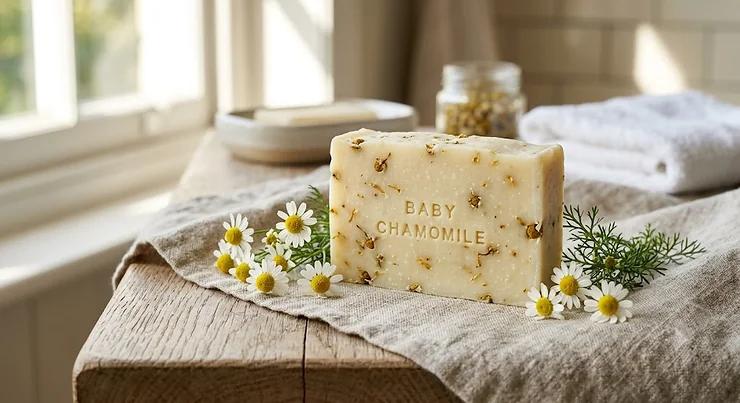
| Product | Price Band | Best For | Fragrance |
|---|---|---|---|
| Weleda Calendula Baby Soap | mid-range, around £4-£6 | Newborns with normal-to-sensitive skin | Light, natural essential oil |
| Dr. Bronner’s Pure-Castile Bar Soap – Baby Unscented | mid-range, around £5-£8 | Multi-use family bar, eczema-prone skin | None |
| Little Soap Company Sensitive Unperfumed Soap Bar | budget, under £4 | Budget-conscious UK parents | None |
| All Naturals Organic Pure Baby Soap Bar | budget-mid, around £5-£7 | First-time buyers wanting a gentle all-rounder | Very light, natural |
| All Naturals Organic Soap Chamomile Calendula | budget-mid, around £5-£7 | Parents specifically wanting chamomile baby soap bar benefits | Light, herbal |
| Little Soap Company Naturals – Citrus & Lavender | budget, under £4 | Older babies and toddlers, family bathroom | Moderate, essential oil |
| Natural Unscented Soap Bar – Handmade in Scotland | premium, around £5-£7 | Allergy-prone skin, small-batch preference | None |
Looking at the spread, there’s a clear pattern: the truly fragrance-free options (Dr. Bronner’s Pure-Castile Bar Soap, the Natural Unscented Soap Bar, and Little Soap Company Sensitive Unperfumed Soap Bar) cluster at opposite ends of the price scale, proving fragrance-free doesn’t automatically mean premium. Meanwhile, the calendula and chamomile options sit in the middle, reflecting the slightly higher cost of sourcing and processing organic herbal extracts. If your baby has any diagnosed sensitivity, the unscented trio deserves first look; if you’re simply after a gentle everyday bar with a pleasant, natural scent, the calendula and chamomile picks edge ahead on the sensory experience.
💬 Just one click — help others make better buying decisions too!😊
Top 7 Organic Soap Bars for Babies: Expert Analysis
Selecting products for this list meant filtering out anything vague about its ingredient sourcing or suspiciously light on actual organic content — a lot of “natural” baby soap on Amazon is natural in name only. What follows are seven bars with verifiable formulations, real UK availability, and enough aggregated reviewer history to say something honest about how they perform in practice.
1. Weleda Calendula Baby Soap — decades-old biodynamic calendula formula
Weleda has been making this soap since 1927, and that vintage shows up in the formula’s simplicity rather than in any dated performance. The bar is built on saponified palm, coconut, and olive oils, lifted by extracts of biodynamically grown organic calendula and organic chamomile — the same botanical pairing Weleda uses across its wider baby range. In practice, this means a genuinely creamy, low-lather wash rather than a foamy one; parents used to bubble-heavy baby washes sometimes find it under-performs on suds, but that’s precisely the trade-off for a milder surfactant profile. The calendula extract is well-documented for its traditional use in soothing minor skin irritation, and the chamomile brings a gentle anti-inflammatory reputation, though neither ingredient is a treatment for diagnosed skin conditions. This is the bar for parents who want an established, dermatologically tested brand with a long track record rather than a newer artisan name — it suits normal-to-sensitive newborn skin well, though the light fragrance (derived from natural essential oils, not synthetic perfume) means it isn’t the right choice if you’re deliberately hunting for a completely unscented baby cleansing bar. Aggregated reviewer sentiment is strikingly consistent across UK and international retailers: users repeatedly describe it as gentle enough for eczema-adjacent skin and note it doesn’t leave the tight, stripped feeling some soaps cause, though a recurring complaint is that the bar is smaller than expected for the price, and it softens quickly if left sitting in water.
Pros:
- ✅ Nearly a century of formulation history and consistent sourcing
- ✅ Calendula and chamomile extracts from biodynamic farming
- ✅ Creamy, low-irritation lather suited to newborn skin
Cons:
- ❌ Small bar size relative to price per gram
- ❌ Contains natural fragrance, unsuitable if you need fully unscented
Price sits in the mid-range, around £4-£6 depending on pack size, and for a soap you’ll likely use sparingly on a small body, that cost-per-use works out reasonably economical over a bar’s lifespan.
2. Dr. Bronner’s Pure-Castile Bar Soap – Baby Unscented — the multi-use organic workhorse
Dr. Bronner’s built its reputation on liquid castile soap, but the bar version carries the same Regenerative Organic Certified and USDA Organic credentials into solid form, made from saponified organic coconut, palm kernel, and olive oils with nothing added for scent. What most buyers overlook about this one is its versatility: it’s formulated mild enough for a newborn’s skin, yet robust enough that the same bar can double as a family hand soap or even a gentle laundry spot-treatment, which genuinely stretches value if you’re trying to simplify a bathroom shelf cluttered with single-purpose products. Being a true castile soap, it’s more alkaline than a syndet (synthetic detergent) bar, which is the honest caveat here — castile soap is not officially “tear-free,” and contact with eyes will sting, so it’s best kept for body-only use rather than face-washing during bath time, in line with the manufacturer’s own guidance. Reviewers across multiple international storefronts consistently praise how far a single bar stretches and how little residue it leaves, though a recurring theme in aggregated feedback is that the alkalinity can feel slightly drying on very sensitive skin without a follow-up moisturiser, echoing the National Eczema Society’s guidance that soap can be a common irritant for eczema-prone skin and should be used sparingly alongside emollients. For parents managing a baby with dry or eczema-prone skin, this bar works best as an occasional cleanser rather than a daily default.
Pros:
- ✅ Regenerative Organic Certified and USDA Organic ingredients
- ✅ Multi-purpose bar reduces bathroom clutter and cost
- ✅ Zero added fragrance or synthetic preservatives
Cons:
- ❌ Not tear-free — avoid contact with baby’s eyes
- ❌ Can feel drying on very sensitive skin without follow-up moisturiser
Expect a mid-range price, roughly £5-£8 depending on bar size and pack quantity, which is competitive once you factor in the soap’s multi-use flexibility across the whole household.
3. Little Soap Company Sensitive Unperfumed Soap Bar — British-made budget staple with oatmeal
This is a proudly UK-manufactured bar, formulated specifically for the “sensitive” end of the brand’s range, built around English oatmeal alongside base oils and completely free from SLS and parabens. The oatmeal inclusion isn’t just marketing texture — colloidal oatmeal has a genuine, well-studied reputation in dermatology circles for calming irritated skin, which is why you’ll find it in prescription-grade eczema treatments as well as budget bars like this one. Here’s what to weigh: at a genuinely low price point, this bar competes directly with premium organic options on formulation simplicity, even though it doesn’t carry the same certified-organic percentage labelling as, say, the Weleda or All Naturals bars. That’s a reasonable trade for a family working through several bars a month across siblings, or simply wanting to try natural bar soap without committing to a premium price. Aggregated UK reviews are strongly positive on the unperfumed formula specifically, with repeat mentions that it doesn’t sting eyes as much as some soaps and lathers gently without over-drying — though a handful of reviewers note the bar dissolves faster than pricier alternatives, meaning cost-per-wash may not be quite as favourable as the sticker price first suggests.
Pros:
- ✅ Genuinely low price point for a UK-made vegan bar
- ✅ Colloidal oatmeal known for calming irritated skin
- ✅ Free from SLS, parabens, and synthetic fragrance
Cons:
- ❌ Dissolves faster than firmer, longer-lasting bars
- ❌ Lower certified-organic ingredient percentage than premium picks
Sitting comfortably under £4 per bar in most retail listings, this is the pick for parents prioritising value without sacrificing a genuinely clean ingredient list.
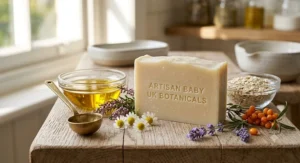
4. All Naturals Organic Pure Baby Soap Bar — shea, jojoba and almond in one gentle bar
Built around a genuinely generous ingredient stack — extra virgin coconut oil, shea butter, jojoba oil, almond oil, and rosehip seed oil — this bar reads more like a spa product than a supermarket baby soap, and the formulation backs that up. The brand markets it as plastic-free, palm-oil-free, and free from SLS, parabens, phthalates, and silicones, which puts it firmly in the “read the label and actually mean it” camp rather than greenwashing. Based on the spec comparison with the other bars here, the standout is the sheer number of moisturising oils layered into one formula; jojoba oil in particular is prized because its molecular structure closely resembles human sebum, meaning it tends to sit well on skin without clogging or over-coating it. This makes the bar a strong option for babies with normal-to-dry skin who need a wash that doubles as light moisturisation, rather than one that simply strips and rinses. The catch worth flagging honestly: this specific product has shown intermittent UK stock availability on some retail listings, so if you fall for it, it’s worth checking current stock status before building a routine around it, or having a backup bar on standby. Where genuine customer reviews are available, feedback skews positive on scent — described as subtle rather than overpowering — and on how the lather feels notably richer than budget bars, without any reported stinging on the face.
Pros:
- ✅ Five nourishing organic oils in a single formulation
- ✅ Plastic-free and palm-oil-free packaging commitment
- ✅ Free from SLS, parabens, phthalates and silicones
Cons:
- ❌ Stock availability can be inconsistent on some UK listings
- ❌ Smaller review pool than more established brands
Priced in the budget-to-mid range, typically £5-£7, the ingredient density here genuinely justifies the cost relative to simpler single-oil bars.
5. All Naturals Organic Soap Chamomile Calendula — the dedicated chamomile baby soap bar pick
If you’ve specifically been searching for a chamomile baby soap bar, this is the most direct match on the list. Formulated with extra virgin coconut oil, cocoa butter, and — as the name suggests — organic chamomile and calendula extracts, it leans into the same soothing botanical pairing that Weleda uses, but from a different brand at a broadly comparable price point. What the spec sheet won’t tell you outright is that chamomile’s reputation for calming skin comes largely from its content of bisabolol and chamazulene, compounds with mild anti-inflammatory properties that have some supporting evidence in topical use, though robust clinical trials specifically on infant skin remain limited — so treat “soothing” as a genuine, traditionally-supported claim rather than a medical guarantee. Cocoa butter adds a noticeably richer, creamier bar than most on this list, which some parents love for winter use when skin tends to dry out faster, and others find slightly heavy for daily summer washing. Aggregated reviewer sentiment specifically praises the “minimal but pleasant” scent profile, a phrase that comes up repeatedly and distinguishes it from heavier, more perfumed chamomile products elsewhere on the market. As with product four, this is a smaller-scale brand, so do check current listing status before relying on it as your sole bar.
Pros:
- ✅ Dedicated chamomile and calendula botanical formulation
- ✅ Rich cocoa butter base suited to drier skin and winter months
- ✅ Reviewers specifically note the subtle, non-overpowering scent
Cons:
- ❌ Cocoa butter richness may feel heavy in warmer months
- ❌ Availability has fluctuated on some UK retail listings
At a similar budget-to-mid price band as its sibling product, around £5-£7, it’s a direct like-for-like alternative if the plain version above isn’t in stock.
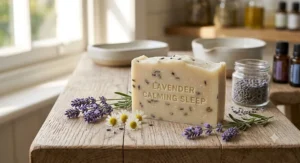
6. Little Soap Company Naturals – Citrus & Lavender — the family-bathroom variant
Not every bar on a “baby soap” list needs to be exclusively for tiny newborns, and this one earns its place as the sensible next step once a baby moves into toddlerhood and starts sharing bath time and bathroom shelf space with older siblings or parents. Formulated with natural cleansing essential oils rather than synthetic fragrance, it’s positioned by the brand as antibacterial and refreshing rather than specifically infant-targeted, which is an honest distinction worth making: the citrus and lavender essential oil content means this bar is not the right pick for very young or highly sensitive newborn skin, but works well from the toddler stage onward when a slightly more robust, everyday family bar makes practical sense. Here’s what most comparison lists get wrong by lumping every “gentle” bar into one newborn-appropriate category — essential oils, even natural ones, carry a higher sensitisation risk for the youngest infants than for toddlers and adults, so positioning matters. For a family wanting one soap that transitions with the child rather than buying an entirely separate bar at each stage, this variant genuinely delivers, and aggregated reviews consistently mention the lavender scent as calming for bedtime baths specifically, a small but meaningful detail for parents managing an overtired toddler at 6pm.
Pros:
- ✅ Natural essential oil scent transitions well from toddler to adult use
- ✅ Antibacterial cleansing profile suited to active, exploring toddlers
- ✅ Same trusted UK manufacturer as the unperfumed sensitive bar
Cons:
- ❌ Essential oil content makes it unsuitable for very young newborns
- ❌ Stronger scent than the dedicated baby-specific bars on this list
Budget-friendly at under £4, this is the practical “grows with your family” pick once the newborn stage has passed.
7. Natural Unscented Soap Bar – Handmade in Scotland — small-batch artisan alternative
The final entry is the lesser-known name on this list, and deliberately so — it’s worth including because artisan, small-batch soap makers often out-perform bigger brands on ingredient simplicity precisely because they’re not optimising for shelf life or mass production speed. This bar is handcrafted using saponified castor, coconut, and olive oils, poured into individual moulds in small batches, and carries no added fragrance whatsoever, making it a genuine unscented baby cleansing bar option rather than one that’s merely “lightly scented” under a natural-sounding label. Reviewers consistently describe the lather as notably creamy for a totally fragrance-free bar, which addresses a common complaint that unscented soaps often feel thinner or less luxurious than their scented counterparts. Being handmade also means each batch can vary slightly in appearance and firmness — not a defect, just a characteristic of small-batch production, and one that’s worth setting expectations around if you’re used to the uniform bars of a big-name brand. This is honestly the pick for parents who’ve tried mainstream “natural” baby soaps and still noticed reactions, since a genuinely minimal ingredient list gives the fewest possible variables to troubleshoot if sensitive skin flares up.
Pros:
- ✅ Completely fragrance-free with a minimal ingredient list
- ✅ Handmade in small batches for freshness and consistency
- ✅ Creamy lather despite having zero added fragrance
Cons:
- ❌ Batch-to-batch appearance and firmness can vary slightly
- ❌ Smaller production scale means less widespread stock availability
Sitting in the premium band, roughly £5-£7 for a 100g bar, the cost reflects small-batch, handcrafted production rather than mass manufacturing economics.
How to Introduce an Organic Soap Bar Into Your Baby’s Bath Routine
Switching from a liquid baby wash to a bar soap isn’t complicated, but there are a few first-30-days habits worth building early. First, resist the urge to lather the bar directly onto your baby’s skin or hair — instead, work up a lather in your hands or on a soft washcloth first, then transfer that lather to the skin. This gives you far more control over how much product actually touches your baby and avoids the bar’s edges catching on delicate skin folds. Second, store the bar on a well-draining soap dish rather than a flat surface; bars left sitting in pooled water soften and dissolve dramatically faster, which is the single most common complaint in aggregated reviews across nearly every product on this list. Third, in line with NHS guidance on newborn bathing, avoid introducing any cleanser — bar or liquid — during the very first weeks unless your midwife or health visitor has specifically advised otherwise; plain warm water is genuinely sufficient for newborn skin in that early window. Once you do introduce a bar, patch-test on a small area of skin (the inner forearm works well) and wait 24 hours before using it more broadly, watching for any redness or irritation. A common early mistake is over-washing: babies simply don’t get dirty enough to need a full soap wash more than two to three times a week, with plain water “topping and tailing” sufficient in between, which also happens to make a single bar last considerably longer. The NCT’s step-by-step bathing guide is a genuinely useful reference if you want a fuller walkthrough of safe bath-time technique alongside your new soap routine.
Real-World Scenarios: Matching Products to Situations
Every family’s bathroom routine looks different, so here’s how three common situations map onto the bars above. If you’re a first-time parent with a healthy, non-sensitive newborn, wanting an established brand with decades of trust behind it, the Weleda Calendula Baby Soap is the sensible starting point — it’s dermatologically tested, widely stocked, and forgiving if your baby’s skin turns out to be fairly average in sensitivity. If you’re managing a baby with diagnosed eczema or a strong family history of allergies, lean toward the fragrance-free trio: the Natural Unscented Soap Bar, Dr. Bronner’s Pure-Castile Bar Soap, or Little Soap Company Sensitive Unperfumed Soap Bar, used sparingly alongside a proper emollient routine as recommended by dermatology guidance, rather than as your baby’s primary daily cleanser. And if you’re a budget-conscious parent running multiple bars through a household with older children too, the Little Soap Company range as a whole — both the sensitive unperfumed bar for the baby and the citrus and lavender variant for toddlers and adults — lets you standardise on one trusted, affordable UK brand across every age in the house, simplifying the weekly shop without compromising on ingredient quality.
Common Baby Skin Problems and Practical Solutions
Dry, flaky patches after bathing are usually a sign of over-washing or a too-alkaline formula; switching to a lower-frequency wash schedule and a syndet or oil-rich bar like the All Naturals Organic Pure Baby Soap Bar often resolves this within a week or two. Persistent redness around the nappy area isn’t typically a soap problem at all — it’s usually contact irritation from prolonged moisture, and no bar soap on this list will fix it; a barrier cream and more frequent nappy changes are the actual solution, with soap use minimised in that area. If your baby seems to react specifically to scented products, don’t assume all “natural” fragrance is safe by default — essential oils are still a recognised allergen category, so the honest fix is moving to one of the genuinely unscented bars covered above rather than simply switching between differently scented “natural” products and hoping for the best. Finally, if a bar seems to leave a filmy residue, that’s usually down to hard water interacting with the soap’s fatty acids rather than a fault with the product itself; a thorough final rinse resolves it in most cases.
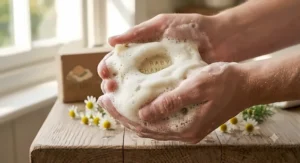
How to Choose an Organic Soap Bar for Babies
Picking the right bar comes down to seven practical checks, in roughly this order of importance:
- Check the ingredient list length first. A genuinely simple organic soap bar for babies typically lists under ten ingredients; anything longer is worth scrutinising for hidden synthetic additives.
- Confirm fragrance-free versus naturally-fragranced. Decide upfront whether your baby needs a completely unscented organic soap or can tolerate light, natural essential oil scent — this single decision eliminates roughly half the market instantly.
- Look for recognised certification, not just the word “organic.” Labels like Soil Association, COSMOS Organic, or USDA Organic mean independently verified standards, whereas an uncertified “organic” claim on packaging carries no legal weight in cosmetics.
- Assess lather type versus your baby’s skin needs. Low-lather, creamy bars (like calendula and shea-based options) suit drier skin, while firmer, longer-lasting bars suit families washing multiple children daily.
- Weigh bar longevity against price per gram. A cheaper bar that dissolves in half the washes isn’t necessarily better value than a pricier, firmer bar — do the cost-per-use maths, not just the shelf price.
- Read aggregated review themes, not star ratings alone. A 4.6-star average tells you little; look specifically for repeated mentions of skin reactions, scent strength, or bar firmness across dozens of reviews.
- Match the product to your baby’s actual skin history. A baby with no sensitivity history has far more flexibility than one with eczema or a strong allergy background, where fragrance-free, minimal-ingredient bars should be the default starting point.
Common Mistakes When Buying Organic Baby Soap
The single biggest mistake is assuming “natural” and “organic” are interchangeable — they’re not, and UK cosmetics labelling law doesn’t strictly regulate either term the way food labelling does. A product can legally call itself “natural” while containing only a token percentage of naturally derived ingredients. The second common error is buying based on scent appeal rather than skin need; a soap that smells wonderful to an adult nose isn’t automatically gentler, and stronger natural fragrance can still trigger sensitivity in a minority of babies. Third, plenty of parents buy the biggest multipack available to save money, only to find the bar dissolves or dries out in storage before it’s used — organic bars without synthetic hardening agents typically have a shorter useful shelf life than mass-market soap, so buying in smaller quantities more frequently often works out better in practice. Finally, a frequently overlooked mistake is ignoring how a bar performs specifically on faces versus bodies; several bars on this list, including the castile-based options, are explicitly not designed for eye-area use, and treating every “gentle” bar as interchangeable for face-washing can lead to unnecessary stinging and tears.
Organic Soap Bar vs Liquid Baby Wash
The comparison between a natural baby wash bar and a liquid pump bottle isn’t as one-sided as bar-soap advocates sometimes suggest, but the practical differences are real. Bar soaps generally use less plastic packaging, often none beyond simple paper wrapping, which matters for parents prioritising sustainability. They also tend to have shorter, simpler ingredient lists by necessity, since liquid formulations require additional stabilisers, thickeners, and preservatives that solid bars don’t need to remain shelf-stable. On the other hand, liquid washes are typically formulated closer to skin-neutral pH and are easier to dispense one-handed while holding a squirming baby, which is a genuine practical advantage bar-soap fans sometimes underweight. Bars can also become a shared-surface hygiene consideration in multi-child households if not stored and dried properly between uses, whereas a pump dispenses without contact. On balance, for a single baby with no specific skin sensitivities, either format works; for households prioritising minimal ingredients and reduced plastic, the organic soap bar for babies category has a clear edge, provided it’s stored correctly and used at a sensible frequency.
| Factor | Organic Soap Bar | Liquid Baby Wash |
|---|---|---|
| Ingredient simplicity | Typically fewer, simpler ingredients | Usually requires stabilisers and preservatives |
| Packaging waste | Minimal, often plastic-free | Usually a plastic pump bottle |
| One-handed use | Harder to manage with a wriggling baby | Easier single-hand dispensing |
| Best For | Eco-conscious families, sensitive skin | Busy solo bath-time routines |
The analysis here is fairly clear-cut: neither format is objectively superior, but they solve different problems. If your priority is minimising synthetic ingredients and packaging waste, the bar format wins; if your priority is speed and one-handed convenience during a genuinely chaotic bath time, the liquid format has the edge, and there’s no reason a household can’t keep both on hand for different situations.
✨ Don’t Miss These Exclusive Deals!
🔍 Ready to build a gentler bath-time routine? Click through on any of the bars above to check current pricing and availability, and give your little one the naturally kind clean their skin deserves!
Safety, Regulations and Compliance Guide
In the UK, cosmetic products including baby soap bars fall under the UK Cosmetic Products Regulation, which requires every product to undergo a safety assessment before sale and to carry a full ingredients listing. This is separate from organic food regulation, which is why, as the Soil Association explains, the term “organic” is legally regulated for food but remains largely unregulated for cosmetics and beauty products — meaning a soap can call itself organic without independent verification unless it carries a recognised certification mark. This is precisely why certifications like COSMOS Organic matter more in this category than in food shopping: certified organic beauty standards limit controversial synthetic chemicals such as parabens and phthalates, follow green chemistry principles, and prohibit animal testing, giving you an independently checked guarantee rather than a marketing claim. On the “tear-free” question specifically — since it’s one of the most common search terms in this category — it’s worth being direct: very few genuinely organic, minimal-ingredient soap bars are formulated to be truly tear-free in the way mainstream baby shampoo brands are, because tear-free formulations typically rely on specific synthetic surfactants designed to minimise eye-area irritation, which sit somewhat at odds with a stripped-back organic ingredient list. If avoiding all eye stinging is your top priority, treat every bar on this list as “keep away from the eye area” rather than assuming any bar-format organic soap is automatically tear-free. For babies with diagnosed eczema specifically, the National Eczema Society’s guidance is to favour leave-on emollients or emollient wash products over standard soap where possible, using soap sparingly rather than as a daily default — genuinely useful context if you’re shopping this category because of a skin condition rather than general preference.
Long-Term Cost and Maintenance
Thinking in cost-per-wash rather than sticker price changes the value picture considerably. A firmer, longer-lasting bar like the Natural Unscented Soap Bar or Weleda Calendula Baby Soap, stored correctly on a draining dish, can realistically deliver 60-80 washes from a single 100g bar used sparingly on a small body. A softer, faster-dissolving bar might only manage 30-40 washes in the same conditions, meaning the cheaper sticker price doesn’t always translate into cheaper actual use. Maintenance is minimal but matters: keeping the bar dry between uses, away from direct water streams, roughly doubles its usable lifespan according to consistent aggregated reviewer feedback across nearly every brand covered here. A simple wooden or ridged soap dish, costing very little, is genuinely one of the better value-for-money accessories a parent can add to the routine, since it directly extends the life of whichever bar you choose. Over a baby’s first two years, the total cost difference between the cheapest and priciest bars on this list, assuming similar usage frequency and proper storage, typically works out to a modest few pounds a month — small enough that ingredient quality and skin suitability should usually outweigh price as the deciding factor.
Features That Actually Matter (And Those That Don’t)
Ingredient simplicity matters enormously; a shorter list genuinely does correlate with fewer potential irritants, and it’s the single most useful thing to check before buying. Certification marks matter too, for the regulatory reasons covered above — they’re the difference between a verified claim and a marketing one. Bar firmness matters more than most parents expect, since it directly affects longevity and value. What matters considerably less, despite how it’s marketed, is exotic-sounding botanical extracts beyond the well-evidenced basics like calendula, chamomile, and oatmeal; plenty of “superfood” ingredients added to baby soap in tiny percentages exist more for the ingredient-list marketing appeal than for any measurable skin benefit at the concentrations used. Packaging aesthetics — embossed bars, decorative wrapping — also matter far less than manufacturers would like you to believe; a plain, unbranded bar with a genuinely short ingredient list will usually outperform a beautifully packaged one with a longer, vaguer formulation. The takeaway: filter hard on ingredients and certification, and treat scent, packaging, and marketing language as the least important factors in the decision.
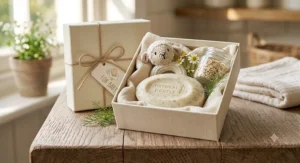
Frequently Asked Questions
❓ Is organic soap safe for newborn babies?
❓ What is the best organic soap bar for baby eczema?
❓ Can organic baby soap be used on the face?
❓ How long does an organic soap bar last?
❓ Is unscented or naturally scented organic soap better for babies?
Conclusion
There’s no single “best” organic soap bar for babies, and honestly, anyone claiming otherwise is skipping the part where every baby’s skin is genuinely different. What the research and aggregated review data do support is a fairly clear decision framework: start with ingredient simplicity, check for real certification rather than marketing language, match fragrance-free or lightly-scented formulas to your baby’s actual sensitivity history, and don’t assume price correlates with quality — some of the most genuinely minimal-ingredient bars on this list, like the Little Soap Company Sensitive Unperfumed Soap Bar, sit at the budget end of the market. Whether you land on the long-established Weleda Calendula Baby Soap, the multi-purpose Dr. Bronner’s Pure-Castile Bar Soap, or one of the smaller artisan names covered here, the underlying principle stays the same: fewer, better-sourced ingredients, used at a sensible frequency, generally serve delicate baby skin better than a long, unfamiliar ingredient list ever will. Take the comparison table back through once more against your own baby’s skin history before deciding, and remember that switching products slowly, one at a time, makes it far easier to spot what’s actually working.
✨ Ready to Switch to a Gentler Bath-Time Routine?
🧴 Compare the seven organic soap bars above, check current pricing on Amazon, and pick the one that matches your baby’s skin needs. A small switch today could mean a noticeably calmer, softer bath time tonight!
Recommended for You
- 7 Best Organic Soap Bar for Face Picks UK Buyers Trust (2026)
- 7 Best Organic Soap Bars for Sensitive Skin UK (2026 Guide)
- Organic Soap Bar UK: 7 Best COSMOS Certified Picks (2026)
Disclaimer: This article contains affiliate links. As an Amazon Associate, I earn from qualifying purchases. If you purchase products through these links, we may earn a small commission at no additional cost to you.
✨ Found this helpful? Share it with your friends! 💬🤗
