In This Article
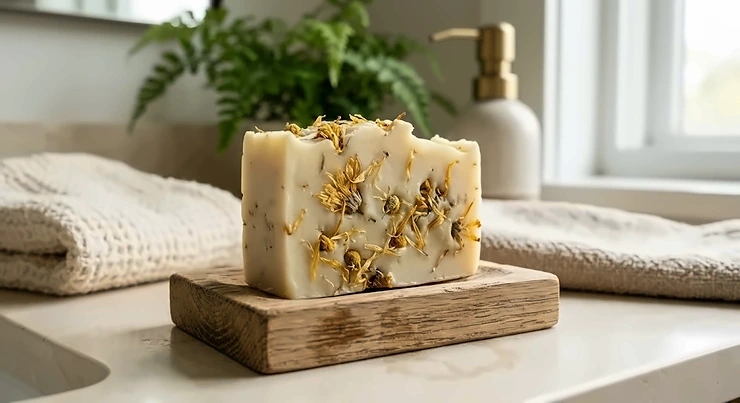
There’s a particular kind of betrayal that comes from a bar of soap. You picked it because it smelled like a spa, or because the packaging promised “gentle” in swirly lowercase letters, and twenty minutes later your skin is tight, blotchy, and quietly furious with you. If that sounds familiar, you’re not imagining things, and you’re certainly not alone — reactive, easily-irritated skin is one of the most common complaints dermatology clinics hear, and an enormous amount of it traces back to what’s sitting on the bathroom shelf. This guide exists to fix that particular problem, specifically by looking at cold process soap for sensitive skin, a category of bar that’s made differently to almost everything else stacked on a supermarket shelf.
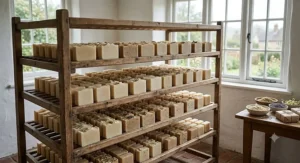
Cold process soap is made by combining oils and lye at low temperatures rather than cooking them, a slower method that keeps the naturally-occurring glycerin inside the finished bar instead of stripping it out during manufacturing — and glycerin, as any dermatologist will tell you, is precisely what dry, reactive skin is short of. If you want the full chemistry, the Wikipedia entry on saponification covers the reaction in more depth than we need here, but the short version matters: gentler process, gentler bar.
Over the next few thousand words we’ve dug through real UK products, real ingredient lists, and real aggregated review sentiment to bring you seven genuinely worthwhile bars — from budget castile-style bars under a fiver to considered, dermatologically-tested options for £5 and up. We’ll cover eczema-safe picks, fragrance-free bars, and a proper look at calendula soap, because “natural” on a label means precisely nothing until you know what’s actually inside.
Quick Comparison Table
| Soap | Best For | Fragrance | Price Range |
|---|---|---|---|
| Little Soap Company Unperfumed Olive Oil Bar | Budget daily use | Unscented | Around £2-£3 |
| Simple Pure Soap Oatmeal Bar | Eczema-prone skin | Fragrance-free | Under £3 |
| Faith in Nature Fragrance Free Bar | Vegan sensitive skin | Fragrance-free | Around £2-£3 |
| Little Soap Company Organic Oatmeal Bar | Irritated/problem skin | Unscented | £2.50-£3.50 range |
| Dr. Bronner’s Baby Unscented Bar | Babies & fragrance sensitivity | Fragrance-free | Around £4-£6 |
| Weleda Calendula Soap | Dermatologically-tested reassurance | Light calendula/chamomile | £5-£6 range |
| The Handmade Soap Company Lavender, Rosemary, Thyme & Mint Bar | Sensitive-but-tolerant, gift-worthy | Essential oils | Mid-£6 to £9 range |
Looking at the spread above, the pattern is clear enough: the truly unscented bars cluster at the budget-to-mid end, while calendula and essential-oil formulations — which still avoid synthetic fragrance but aren’t 100% oil-free — sit higher up. If your skin reacts to essential oils as well as synthetic perfume, stick to the unperfumed end of the table; if it’s synthetic fragrance specifically that causes trouble, the calendula and lavender bars open up more options.
💬 Found a bar that matches your skin? One click helps other sensitive-skin sufferers find this guide too!😊
What Is Cold Process Soap?
Cold process soap is true soap made by mixing fats or oils with a lye solution at room temperature (rather than heating the mixture), triggering a chemical reaction called saponification that turns oil into soap and glycerin over several weeks of curing. Because nothing is heated or washed out afterwards, the naturally-occurring glycerin stays in the bar — which is the whole reason this soap-making method keeps coming up in sensitive-skin circles.
It’s worth being precise here, because “cold process” gets used loosely in marketing. A handful of the bars in this guide — the Little Soap Company range and The Handmade Soap Company bar — are genuinely handcrafted in small batches using traditional saponification methods. Others, like Simple and Faith in Nature, are mass-manufactured true soaps that share the same gentler chemistry (real saponified oils, not synthetic detergents) without being cottage-industry cold-process bars in the artisan sense. We’ll flag which is which as we go, because honesty about the process matters more than the marketing term stamped on the wrapper.
How to Choose the Best Cold Process Soap for Sensitive Skin
- Check the ingredient list before the marketing copy. “Natural” isn’t a regulated term — look for saponified oils (sodium/potassium palmate, cocoate, olivate) near the top and essential oils, not “parfum” or “fragrance”, further down.
- Match the fragrance level to your actual triggers. If synthetic scent is your problem, an essential-oil bar may be fine. If any scent at all sets you off, go fully unperfumed.
- Look for oatmeal, calendula or shea rather than exfoliating add-ins. Ground walnut shell and other “scrub” additives can micro-tear compromised skin — soothing ingredients are the safer default.
- Consider pH, even though it’s rarely printed. True soap sits around pH 9-10, higher than skin’s natural 4.5-5.5, which is why even a gentle bar can occasionally sting broken skin — patch test before committing.
- Weigh bar hardness against how long it’ll actually last. Softer, more superfatted bars (higher oil-to-lye ratio) tend to feel silkier but dissolve faster, which matters for cost-per-wash.
- Read aggregated reviews for repeat patterns, not star ratings. A 4.6-star average hides a lot; scan for recurring words like “stinging”, “flaking” or “no reaction at all” across dozens of reviews instead.
- Buy the smallest size first. Even a genuinely gentle bar can disagree with a specific skin — a 100g bar is a cheap way to find out before committing to a twin-pack or subscription.
Top 7 Cold Process Soap Bars for Sensitive Skin: Expert Analysis
1. Little Soap Company Unperfumed Olive Oil Bar — best budget castile-style bar
This one leans hard into simplicity, and that’s precisely the point. Over 64% of the bar is olive oil, with a little rapeseed and coconut oil blended in so it actually lathers rather than sitting there like a greasy brick — pure olive-oil soap on its own tends to be tacky and slow to foam, which is a real practical annoyance most “100% olive oil” bars don’t mention.
What that oil ratio means in practice: expect a dense, slightly slippery lather rather than the big fluffy foam you get from SLS-based bars, and a bar that leaves skin feeling coated rather than squeaky-clean. That’s a feature, not a bug, if your skin gets tight and dry after washing — the whole reason “squeaky clean” feels satisfying is that it’s stripped your skin of oil it needed.
Based on the ingredient profile, this suits people whose reaction is triggered by fragrance and essential oils specifically rather than soap chemistry itself, since it carries zero perfume of any kind. It was originally developed for supermarket own-ranges (Waitrose and Asda have both stocked variants), which is partly why it stays so affordable despite the natural formulation. Reviewers consistently describe it as mild enough for eczema-prone patches, with the main recurring theme being that it doesn’t lather as generously as people expect from a “proper” soap — a fair trade-off for the gentleness, but worth knowing before your first wash.
Pros:
- ✅ Genuinely fragrance-free, no essential oils at all
- ✅ Over 64% olive oil for a nourishing, non-stripping wash
- ✅ Among the cheapest genuinely natural bars on this list
Cons:
- ❌ Slower, denser lather than detergent-based bars
- ❌ Softens faster in a wet soap dish without drainage
Price sits around £2-£3 for a 100g bar at the time of research, though prices fluctuate, so check current pricing before buying — for the ingredient quality, that’s genuinely good value.
2. Simple Pure Soap Oatmeal Bar — best twin-pack for eczema-prone skin
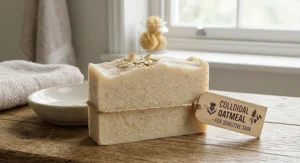
Simple has built an entire UK reputation on the word “sensitive,” and this oatmeal bar is where that reputation earns its keep. It’s explicitly marketed as suitable for eczema, rosacea and sensitive skin, and it comes as a twin pack, which matters more than it sounds — a spare bar means you’re not tempted to reach for whatever’s left in the shower when you run out mid-week.
Oatmeal (colloidal oat, typically) has recognised soothing and anti-inflammatory properties, which is why it turns up so often in products aimed at compromised skin barriers; the ground oat acts almost like a mild buffer against the soap’s alkalinity while gently cleansing rather than exfoliating aggressively. As a mainstream drugstore brand, this bar is manufactured at scale rather than hand-poured in small batches, so it sits closer to “true soap made with gentle intent” than artisan cold-process — but the fragrance-free formulation and oat content still put it firmly in gentle territory.
What most buyers overlook about this one is that “fragrance-free” on Simple’s packaging is a genuine formulation choice, not just an absence of added perfume masking other scented ingredients — a distinction worth checking on any bar claiming the same. Aggregated reviewer sentiment repeatedly mentions it being kind enough for children’s eczema flare-ups and post-shave sensitivity alike, with the main complaint being that the bar dissolves relatively quickly in humid bathrooms.
Pros:
- ✅ Explicitly formulated for eczema and rosacea-prone skin
- ✅ Comes as a twin pack for better everyday value
- ✅ Widely available on the UK high street and online
Cons:
- ❌ Not an artisan cold-process bar, mass-manufactured
- ❌ Dissolves faster than harder, more superfatted bars
At under £3 for two bars, this is one of the cheapest genuinely eczema-conscious options around — solid value if your budget is doing a lot of the deciding.
3. Faith in Nature Fragrance Free Bar — best vegan pick for sensitive skin
Faith in Nature has quietly become one of the UK’s most trusted “clean label” brands, and this fragrance-free bar strips their usual formula right back to basics. No SLS, no parabens, fully vegan, and — crucially for this list — genuinely free of added fragrance rather than merely “unscented” in the vague marketing sense.
The absence of sodium lauryl sulfate matters more than shoppers often realise: SLS is a foaming detergent that’s cheap and effective at cleaning but notorious for stripping the skin’s lipid barrier, which is exactly the mechanism behind a lot of post-shower tightness. Cutting it entirely, as this bar does, shifts the cleansing action back onto the saponified oils themselves, producing a softer, less aggressive wash. Here’s what to weigh: without SLS’s big foaming action, the lather is noticeably less dramatic, so anyone expecting a rich bubble bath experience should recalibrate expectations.
Reviewers consistently note that this bar suits sensitised or post-treatment skin — people coming off harsh acne washes or recovering from a reaction to a scented product — better than it suits anyone chasing a luxurious spa feel. It’s a workhorse bar rather than a treat, and that’s exactly its appeal.
Pros:
- ✅ Zero SLS or parabens in the formulation
- ✅ Fully vegan and cruelty-free certified
- ✅ Genuinely fragrance-free, not just lightly scented
Cons:
- ❌ Noticeably less foamy than SLS-based bars
- ❌ Limited size options compared with scented ranges
Around £2-£3 at the time of research puts this squarely in budget territory, making it an easy first bar to try if you suspect SLS specifically is your problem ingredient.
4. Little Soap Company Organic Oatmeal Bar — best for problem or irritated skin
This is one of the brand’s oldest recipes, dating back to founder Emma Heathcote-James’s original farmers’ market bars, and it shows in how deliberately restrained the formulation is: organic saponified oils, rolled oatmeal, and genuinely nothing else — no essential oils, no synthetic fragrance, no colour.
The specific oil blend (palm, coconut, naturally-occurring glycerin) combined with whole rolled oats means the bar does double duty as a very mild physical buffer and a moisture-retaining wash in one. Based on the ingredient ratio, oat content this high is aimed squarely at problematic, oily or dry skin rather than “normal” skin looking for a nice smell — it’s a functional bar first, a luxury item a distant second. What the spec sheet won’t tell you, but the brand’s own product history suggests, is that this recipe has survived over a decade largely unchanged precisely because customers with sensitive skin keep repurchasing it rather than trading up to newer, more heavily marketed ranges.
It carries RSPO certification for its palm-derived ingredients, which is worth flagging for anyone weighing sustainability alongside skin tolerance — a detail plenty of “natural” competitors skip. Aggregated reviews describe it as reliably non-reactive even on eczema-prone patches, with the main criticism being that some buyers find the oat texture slightly more textured than they expect from a smooth bar.
Pros:
- ✅ Organic certification with no essential oils added
- ✅ Oatmeal content aimed specifically at problem skin
- ✅ RSPO-certified sustainable palm sourcing
Cons:
- ❌ Slightly gritty texture from whole oat content
- ❌ Costs more than the brand’s non-organic olive bar
Expect to pay in the £2.50-£3.50 range, a modest premium over the brand’s standard olive bar that reflects the organic certification rather than any dramatic formulation upgrade.
5. Dr. Bronner’s Baby Unscented Pure-Castile Bar — best fair-trade organic option
Dr. Bronner’s built its reputation on liquid castile soap, but the bar version deserves more attention than it gets from UK sensitive-skin shoppers. The Baby Unscented formulation doubles the olive oil content compared with the brand’s standard scented bars and drops added fragrance entirely, while still pulling in hemp seed oil, jojoba and organic sunflower oil for conditioning.
That ingredient stack means the bar behaves closer to a rich, oil-forward cleanser than a classic hard soap bar — expect a softer bar overall that some buyers find dissolves quicker than harder olive- or palm-heavy competitors, a direct trade-off for the higher oil content. Based on the spec comparison with the rest of this list, this is one of the more oil-rich formulations here, which on paper means better moisture retention but a shorter bar lifespan per pound spent. It’s worth noting the brand markets this as good for sensitive skin and babies “though not tear-free” — an honest caveat worth respecting rather than testing near the eyes regardless of the gentle formulation.
Reviewers who use it as a full-body and hair wash (it’s genuinely an 18-in-1 product in the brand’s own framing) consistently report no irritation even on fragrance-reactive skin, though a handful mention the alkaline nature of any true soap can still tingle on broken or actively-flaring eczema patches — a reminder that “gentle” and “suitable for open skin” aren’t automatically the same thing.
Pros:
- ✅ Certified fair trade and organic oil sourcing
- ✅ Doubled olive oil content versus standard scented bars
- ✅ Multi-use bar for body, face and hair alike
Cons:
- ❌ Softens and wears down faster than harder bars
- ❌ Alkaline pH can still tingle on actively broken skin
At around £4-£6 depending on pack size, it sits at the mid-to-premium end, reflecting the fair-trade organic sourcing rather than lavish packaging.
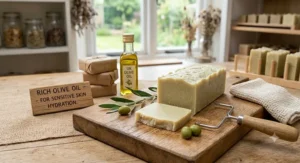
6. Weleda Soap with Calendula — best dermatologically-tested reassurance
Weleda has decades of pharmacy-shelf credibility behind it, and this calendula bar leans on that trust rather than trend-chasing. It’s Natrue-certified, dermatologically tested, and built around organic calendula and chamomile alongside organic coconut, palm and olive oils — a formulation aimed specifically at sensitive and reactive skin types.
Calendula extract has a long-standing reputation in skincare for its soothing, skin-conditioning properties, which is exactly why it turns up in products aimed at compromised or easily-irritated skin rather than in everyday commodity soap. On the spec sheet, the inclusion of chamomile alongside calendula is a deliberate pairing — both are traditionally used for their calming reputation on reactive skin, though it’s worth being honest that “traditionally used” and “clinically proven to treat eczema” are different claims, and Weleda doesn’t market the bar as a medical treatment. What most buyers overlook is that “dermatologically tested” is a real, verifiable claim on this bar rather than an empty marketing phrase — Weleda publishes its testing credentials, which isn’t universal across this category.
Aggregated customer sentiment is strongly positive on tolerability, with reviewers repeatedly describing it as the gentlest bar they’ve tried after switching from supermarket soap, though the trade-off is a noticeably higher price point than the unperfumed budget bars earlier on this list, and it isn’t entirely fragrance-free — the calendula and chamomile carry their own natural scent.
Pros:
- ✅ Natrue-certified organic formulation
- ✅ Dermatologically tested, a verifiable claim
- ✅ Calendula and chamomile aimed at reactive skin
Cons:
- ❌ Not fully fragrance-free due to botanical scent
- ❌ Priced well above the budget bars on this list
At £5-£6 for a 100g bar, this is a premium pick, but the certification and reputation behind it go some way to justifying the cost for anyone who’s been burned by cheaper “natural” claims before.
7. The Handmade Soap Company Lavender, Rosemary, Thyme & Mint Bar — best artisan gift-worthy pick
This is the one genuine artisan cold-process bar on the list in the strictest sense — hand-shaped and poured by a small team of soap-makers in Slane, Ireland, and certified natural by Cosmos Ecocert, with B Corp status attached to the whole company. It’s a different proposition to the rest of this list: not fragrance-free, but fragranced entirely with essential oils rather than synthetic perfume.
The lavender, rosemary, thyme and mint blend is aimed at people whose sensitivity is specifically a synthetic-fragrance reaction rather than a reaction to natural botanicals or essential oils in general — an important distinction, because essential oils are still a common trigger for genuinely reactive skin and shouldn’t be assumed automatically safe just because they’re “natural”. Reviewers consistently praise the sulfate-free, silicone-free, paraben-free formulation and describe the bar as gentle on dry skin, with the scent itself frequently called out as more restrained and herbal than the fruity, synthetic blends common on supermarket shelves.
Based on the certification stack here (Cosmos Ecocert, B Corp, cruelty-free), this bar is aimed at buyers who want reassurance beyond the ingredient list itself — verified third-party standards rather than brand claims alone. It won’t suit anyone who reacts to essential oils, and it’s priced well above everything else on this list, positioning it as a gift or occasional-treat bar rather than a daily budget staple.
Pros:
- ✅ Genuine artisan cold-process production in small batches
- ✅ Cosmos Ecocert certified natural formulation
- ✅ Sulfate, silicone and paraben-free
Cons:
- ❌ Not suitable if essential oils themselves trigger reactions
- ❌ Priced at the premium end of this list
Expect to pay in the mid-£6 to £9 range, reflecting the artisan production, certification and premium packaging rather than being a like-for-like swap for the unperfumed bars earlier on.
Top 7 Products Comparison
| Soap | Type | Fragrance | Best For | Price Range |
|---|---|---|---|---|
| Little Soap Company Unperfumed Olive Oil Bar | Handmade, castile-style | None | Everyday budget wash | £2-£3 |
| Simple Pure Soap Oatmeal Bar | Mass-manufactured true soap | None | Eczema, rosacea | Under £3 |
| Faith in Nature Fragrance Free Bar | Mass-manufactured, vegan | None | SLS-sensitive skin | £2-£3 |
| Little Soap Company Organic Oatmeal Bar | Handmade, organic | None | Problem/irritated skin | £2.50-£3.50 |
| Dr. Bronner’s Baby Unscented Bar | Fair-trade castile soap | None | Babies, whole family | £4-£6 |
| Weleda Calendula Soap | Certified natural, tested | Botanical (calendula) | Verified reassurance | £5-£6 |
| The Handmade Soap Company Bar | Artisan cold-process | Essential oils | Gifting, treat bar | £6-£9 |
The clearest split in this table is between fully unperfumed bars and botanically-scented ones — if your reaction is to synthetic fragrance specifically, the Weleda Calendula Soap and The Handmade Soap Company Bar open up genuinely lovely options that the strict avoid-everything approach rules out. For anyone unsure exactly what triggers their skin, though, starting at the fully fragrance-free end of the table and working upward is the lower-risk approach, simply because it removes more variables at once.
Cold Process Soap for Eczema: What the Evidence Says
Eczema and soap have an uneasy relationship, and it’s worth being straightforward about it rather than making blanket promises. Soap and washing detergent are commonly flagged as things that can make atopic eczema worse, and mainstream NHS guidance on the condition points toward avoiding those irritants while applying moisturising treatments as often as possible — you can read the full guidance on the NHS atopic eczema page. That’s not a reason to panic about every bar in this guide; it’s a reason to be selective and honest about what “gentle” actually means.
Cold process and true-soap bars without synthetic fragrance, sulfates or added colour genuinely sit at the milder end of what’s available, largely because the glycerin retained during saponification helps offset the naturally alkaline pH of soap. But the NHS’s own guidance leans toward emollient soap substitutes over any soap, including gentle ones, for people with active, moderate-to-severe eczema — the bars in this guide are best framed as a considerably gentler daily-wash option for mild sensitivity, not a medical substitute for prescribed treatment. If you’re managing a diagnosed eczema flare, it’s worth discussing soap substitutes with a GP or pharmacist alongside anything you pick from this list, rather than instead of it.
Gentle Cold Process Soap Bar vs Commercial Bar Soap
The gap between a properly made cold process bar and a typical commercial “beauty bar” is bigger than most shoppers realise, because the two aren’t actually made the same way at all. Commercial beauty bars are frequently syndet bars — synthetic detergent formulations dressed up to look and lather like soap — built around ingredients chosen for shelf stability, foam volume and fragrance-carrying capacity rather than skin compatibility. True soap, by contrast, is the product of saponification: oil plus lye equals soap plus glycerin, with nothing stripped back out afterwards in a genuine cold process bar.
That difference shows up practically in three ways. First, lather: commercial bars, loaded with SLS or similar detergents, foam faster and bigger, which is precisely the sensory cue that makes people feel “clean” — even though that big foam is often what’s stripping the skin. Second, residual glycerin: a gentle cold process soap bar retains its own naturally-produced glycerin, while many commercial soaps have theirs removed and sold separately into the lotion industry, leaving the bar drier in its wash-off effect. Third, ingredient transparency: cold process brands tend to publish full saponified-oil lists, while commercial bars can hide behind “soap base” or generic “fragrance” on the label.
| Factor | Cold Process/True Soap | Commercial Beauty Bar |
|---|---|---|
| Cleansing agent | Saponified oils | Synthetic detergents (often SLS) |
| Glycerin | Retained naturally | Often extracted and sold separately |
| Fragrance transparency | Usually listed oils, if any | Often generic “fragrance/parfum” |
| Typical pH | Higher, alkaline (9-10) | Can be adjusted lower |
None of this means commercial bars are automatically villains — some pH-balanced syndet bars are genuinely formulated for sensitive skin and perform well in that specific niche. But for buyers specifically hunting a gentle cold process soap bar, the distinction in this table is the one to actually check on the ingredient panel rather than trusting the word “gentle” printed on the front.
Unscented Cold Process Soap: Why Fragrance-Free Matters
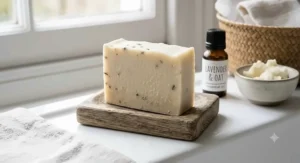
Fragrance is the single most common cosmetic allergen dermatologists encounter, and it hides in more places than people expect — not just perfume-heavy bars, but “unscented” lotions that use masking fragrance to neutralise base ingredient smells, which is a genuinely different thing to fragrance-free. An unscented cold process soap, properly formulated, contains no added fragrance ingredients at all, natural or synthetic, and relies entirely on the base smell of its saponified oils.
What most buyers overlook is that essential oils are still fragrance, chemically and legally, even in a bar marketed as “natural” — lavender, tea tree and citrus oils are common allergens in their own right, and a truly reactive person needs to treat them with the same caution as synthetic perfume rather than assuming “essential oil” automatically means safe. That’s why several bars on this list — the Little Soap Company Unperfumed Olive Oil Bar, both Simple and Faith in Nature fragrance-free bars, the Little Soap Company Organic Oatmeal Bar, and Dr. Bronner’s Baby Unscented Bar — carry no essential oils whatsoever, while the Weleda Calendula Soap and The Handmade Soap Company Bar knowingly trade a fully blank scent profile for botanical benefits.
Here’s what to weigh: if you’ve never actually confirmed which category triggers your skin, the fully unperfumed bars are the lower-risk starting point, simply because they remove the largest single variable. If you’ve already patch-tested essential oils and know they’re fine, the calendula and lavender options open up a noticeably nicer sensory experience without reintroducing synthetic fragrance.
Fragrance Free Handmade Soap: Reading the Label
This is where a lot of otherwise careful buyers still get caught out, and it’s worth walking through the specific mistakes.
Mistake one: confusing “unscented” with “fragrance-free”. Some brands use masking fragrance to cancel out a soap base’s natural smell and still call the result “unscented” — technically there’s fragrance in the formula, it’s simply designed not to smell like anything. A genuinely fragrance-free handmade soap will say so explicitly, or list zero fragrance-related ingredients on the panel.
Mistake two: assuming “handmade” means cold process. Plenty of soap is hand-poured from a pre-made melt-and-pour base bought in bulk, which is a different (and often less gentle, since it can include more synthetic stabilisers) process to genuine saponification from scratch. “Handmade” describes labour, not chemistry.
Mistake three: skipping the patch test on a “safe” bar. Even the gentlest formulation on this list can occasionally cause a reaction in an individual with unusually reactive skin — a small test patch on the inner forearm for 48 hours, well away from broken skin, catches this before a full-face or full-body wash does.
Cold Process Calendula Soap: A Closer Look
Calendula deserves its own section because it’s one of the more genuinely evidence-informed botanical additions to sensitive-skin soap, rather than a purely decorative one. The extract, derived from marigold flowers, has a long history of use in skincare aimed at soothing and conditioning compromised skin, which is precisely why it turns up in the Weleda Calendula Soap on this list and in countless baby-care ranges beyond it.
On the spec sheet, what calendula brings to a cold process bar is less about dramatic transformation and more about a gentler sensory experience during a wash that’s already been engineered to be mild — think of it as a soothing accent on top of a fundamentally gentle base, rather than the entire reason a bar works for sensitive skin. Reviewers consistently frame calendula bars as their step-up choice once they’ve confirmed a fully unperfumed bar suits them and they’re ready to reintroduce a light, natural scent without reaching for anything synthetic. It’s worth being honest, though, that calendula soap isn’t a medicinal product, and anyone managing a diagnosed skin condition should treat it as a pleasant daily wash rather than a treatment.
Practical Usage Guide: Getting the Most from Your Bar
Even the gentlest bar on this list underperforms if it’s used carelessly, so here’s how to actually get the most out of one.
Storage matters more than people assume. A cold process bar left sitting in a puddle of water dissolves fast and turns mushy, wasting a surprising amount of product — a draining soap dish or raised soap saver extends bar life noticeably, often by weeks.
Skip the flannel or loofah for the first fortnight. When switching from a commercial detergent bar, skin needs time to recalibrate to a gentler wash; scrubbing with a rough exfoliating tool during that adjustment period can cause irritation that gets wrongly blamed on the soap itself rather than the technique.
Rinse thoroughly, especially with harder water. Soap scum forms more readily in hard-water areas and can leave a mildly drying residue on skin if rinsing is rushed — a longer, cooler final rinse noticeably improves how skin feels afterwards.
Follow with a fragrance-free moisturiser while skin is still damp. Locking in moisture within a few minutes of washing, rather than after towelling off completely, makes a measurable difference to how tight skin feels for the rest of the day — this is standard advice across skincare, not specific to cold process soap, but it matters more with sensitive skin than most.
Give a new bar three to four washes before judging it. A slight initial adjustment period, as skin recalibrates away from stripping detergents, is normal and shouldn’t automatically be read as a bad reaction — though anything beyond mild, brief tightness is a reason to stop and patch test elsewhere.
Real-World Scenarios: Who Should Choose What
The new parent bathing a baby with dry patches. Budget matters, frequency of use is high (daily, sometimes twice daily), and the priority is the lowest possible risk of reaction. The Dr. Bronner’s Baby Unscented Bar or Simple Pure Soap Oatmeal Bar both fit well here — both explicitly marketed with babies or eczema in mind, both fully fragrance-free, and both affordable enough to use generously without budget anxiety.
The student managing mild eczema flares on a tight budget. Frequency of use is daily, environment is often a shared bathroom with limited storage, and cost-per-wash matters. The Little Soap Company Unperfumed Olive Oil Bar or Faith in Nature Fragrance Free Bar deliver genuinely gentle formulations at some of the lowest price points on this list, without sacrificing ingredient quality.
The professional who wants reassurance backed by real certification. Budget is more flexible, usage is daily, and the priority is trust in claims rather than price. The Weleda Calendula Soap, with its Natrue certification and dermatological testing, suits this profile well — a bar bought partly for the paper trail behind it, not just the ingredient list.
The gift-buyer shopping for someone with sensitive-but-not-reactive skin. Occasional use, higher budget tolerance, and presentation matters. The The Handmade Soap Company Lavender, Rosemary, Thyme & Mint Bar fits this scenario precisely — premium packaging, genuine artisan credentials, and a scent profile pleasant enough to feel like a treat rather than a medical necessity.
Common Mistakes When Buying Cold Process Soap for Sensitive Skin
The most common mistake, by a distance, is buying on scent description alone — “gentle,” “calming” and “soothing” are unregulated marketing words that appear on plenty of bars that are none of those things once you check the ingredient panel. The second most common mistake is assuming a higher price guarantees a gentler formulation; several of the most genuinely fragrance-free bars in this guide are also the cheapest, because simplicity, not luxury packaging, is what drives tolerability. The third mistake is switching multiple products at once — a new soap, a new moisturiser and a new laundry detergent in the same week makes it almost impossible to identify what actually caused a reaction if one occurs. The fourth is ignoring bar hardness and lifespan when comparing prices, since a soft bar that dissolves in three weeks can end up costing more per wash than a harder bar priced slightly higher upfront. The final, and most avoidable, mistake is skipping the patch test entirely on the assumption that “natural” automatically means “safe for me” — it doesn’t, and the small inconvenience of a 48-hour test patch is considerably smaller than a face full of reaction.
Long-Term Cost & Maintenance
Cost-per-wash is a more useful number than sticker price when comparing bars this different in size, hardness and superfatting. A soft, highly-superfatted bar like the Dr. Bronner’s Baby Unscented Bar dissolves faster than a harder, more traditionally cured bar like The Handmade Soap Company offering, which means the premium bar’s higher upfront cost is partly offset by a longer usable life — the value gap between “budget” and “premium” on this list narrows more than the headline prices suggest once bar longevity is factored in.
Storage habits matter here too, and they’re free to fix. A bar left on a flat, non-draining surface can lose a meaningful chunk of its lifespan to unnecessary dissolving between washes, effectively increasing cost-per-wash without changing anything about the product itself. Buying in the largest pack size a household will realistically use before a bar goes soft or discoloured — twin packs for the Simple Pure Soap Oatmeal Bar, for instance — typically brings the per-gram price down without any compromise on formulation. Over a year of daily use, the gap between the cheapest and most premium bar on this list, factored properly across cost-per-wash rather than shelf price, is usually smaller than shoppers expect.
Safety, Regulations & Compliance Guide
All the soap bars in this guide, wherever they’re sold in the UK, fall under the UK’s cosmetic products safety framework, the retained version of the EU Cosmetics Regulation, which requires that any cosmetic product placed on the market is safe for use under normal, foreseeable conditions and carries accurate labelling and ingredient information — you can read more about how that framework applies to everyday products via Business Companion’s guide to cosmetic products. In practice, that means every bar reviewed here is required to disclose its full ingredient list and meet baseline safety testing before it reaches a shelf, whether it’s a supermarket own-brand or a small artisan maker.
That regulatory floor doesn’t replace personal caution, though. For anyone managing a diagnosed skin condition rather than general sensitivity, official guidance recommends leave-on emollients as a soap substitute for dry or itchy skin, since everyday soaps, shampoos and shower gels can dry out the skin and worsen conditions like eczema — full guidance is available on the NHS emollients page. The bars in this guide are a considerably gentler daily-wash category than mainstream commercial soap, but they sit alongside, not instead of, medical advice for anyone with a diagnosed condition rather than general sensitivity.
FAQ
❓ Is cold process soap actually better for sensitive skin?
❓ Can I use cold process soap on my face as well as my body?
❓ Does unscented mean the same as fragrance-free?
❓ Is calendula soap safe for eczema-prone skin?
❓ How long does a bar of cold process soap typically last?
Conclusion
The honest takeaway from all of this is fairly simple: gentle isn’t a single ingredient or a single brand, it’s a combination of process, formulation and honest labelling, and the bars that get it right tend to share the same traits — real saponified oils, minimal or fully absent fragrance, and ingredient lists that hold up to scrutiny rather than hiding behind vague marketing language. Whether that means the no-frills Little Soap Company Unperfumed Olive Oil Bar for a tight budget, the eczema-conscious Simple Pure Soap Oatmeal Bar for a young family, or the dermatologically-tested reassurance of Weleda Calendula Soap for anyone who’s been let down by “natural” claims before, the right pick genuinely depends on which specific trigger you’re avoiding rather than which bar has the prettiest packaging.
If there’s one habit worth taking from this entire guide, it’s patch testing before committing to a full-size bar, no matter how gentle the marketing sounds — skin is individual, and even the most carefully formulated bar on this list won’t suit absolutely everyone. Start with the fully unperfumed end of the list if you’re unsure what triggers your skin, work upward toward the botanical options once you’ve confirmed a baseline tolerance, and give any new bar a fair few washes before judging it.
✨ Don’t Miss These Exclusive Deals!
🔍 Take your skincare routine to the next level with these carefully selected gentle soap bars. Click on any highlighted product to check current pricing and availability. A properly chosen bar can make an everyday routine feel calm again!
Recommended for You
- Cold Process Soap vs Hot Process Soap: 7 Picks; Verdict (2026)
- Cold Process Soap Bar: 7 Genuine Picks for 2026 (UK Guide)
- Handmade Soap Bar for Dry Skin: 7 Genuinely Kind Picks (2026)
Disclaimer: This article contains affiliate links. As an Amazon Associate, I earn from qualifying purchases. If you purchase products through these links, we may earn a small commission at no additional cost to you.
✨ Found this helpful? Share it with your friends! 💬🤗
