In This Article
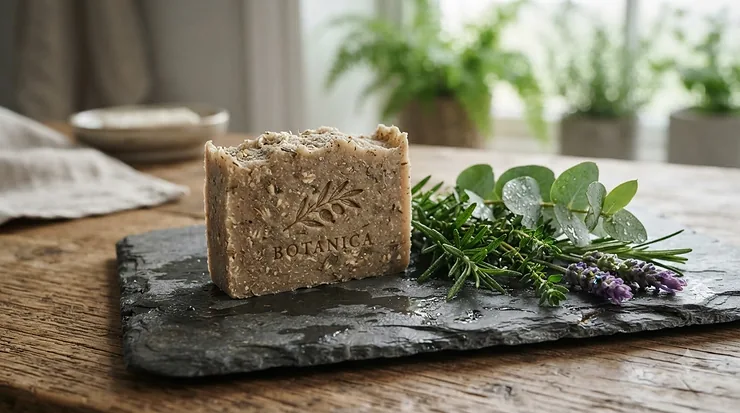
There’s a particular kind of tired that comes from eczema-prone skin — the 2am scratch, the sleeve you can’t roll up, the soap you bought with such hope now sitting half-used and slightly resented at the back of the shower. If that sounds familiar, you’ve probably already stumbled across goat milk soap for eczema in your search for something that won’t fight you. Good instinct. Goat milk soap is a traditional, cold-processed bar made by saponifying oils with fresh or powdered goat’s milk instead of water, and its fans swear by the fatty acids, vitamins and lactic acid that come along for the ride.
Here’s the honest version, though, before you buy anything: no soap treats atopic eczema. What a well-formulated goat milk bar can do is cleanse without the harsh detergents (sulfates like SLS) that strip your skin’s already-compromised barrier, which for many people with dry, itchy, irritated skin makes a genuine day-to-day difference. This guide pulls together seven real, currently available bars — from budget UK brands to small-batch artisan soaps — with honest analysis of who each one suits, what the ingredient lists actually mean for your skin, and where the marketing claims outrun the evidence. We’ll also cover related territory people search for alongside this, including goat milk soap psoriasis, goat milk soap for irritated skin, and what actually makes an anti-inflammatory soap bar worth the extra pound or two. For background on the condition itself, the NHS overview of atopic eczema is a solid starting point before you change anything in your skincare routine.
What is goat milk soap? In short: a bar soap made by combining goat’s milk with oils and an alkali (lye) through saponification, producing a creamy, glycerin-rich bar that’s typically gentler and less drying than mass-market detergent bars — though “gentler” depends enormously on the exact formula, which is exactly what we’re about to unpack.
Quick Comparison Table
| Soap | Best For | Price Range | Standout Ingredient |
|---|---|---|---|
| Capure Goat Milk Soap | Budget everyday use | Under £5 | Coconut oil + oatmeal |
| The Goat Skincare Soap Bar | Widely stocked oatmeal bar | Under £5 | Colloidal oatmeal |
| Caprina Fresh Goat’s Milk Soap | Fragrance-free sensitive skin | £5-£8 range | Unscented base |
| The Little Goat Soap Company Soap | UK handmade, eczema-focused | £5-£8 range | Shea butter + raw goat milk |
| Cyril’s Soap Shed Unfragranced Soap | Fragrance-free small batch | £5-£8 range | Rapeseed + castor oil blend |
| Goats of the Gorge Soap | Building a full routine | £6-£10 range | Beeswax + no linalool |
| Skin Said Yes Goat Milk Soap (8-Pack) | Multipack family value | £15-£25 range | Organic lavender extract |
Looking at this spread, the clearest split is between mass-produced budget bars like Capure Goat Milk Soap and The Goat Skincare Soap Bar, which trade a touch of formulation sophistication for a genuinely low price, and small-batch UK soaps like Cyril’s Soap Shed Unfragranced Soap and The Little Goat Soap Company Soap, which lean harder into fragrance-free, minimal-ingredient formulas that eczema-prone skin tends to tolerate best. If your priority is simply avoiding synthetic fragrance altogether, Caprina Fresh Goat’s Milk Soap and Cyril’s Soap Shed Unfragranced Soap are your safest starting points on this list.
💬 Found a pick you like already? Save this page and compare prices before you commit — your skin will thank you for the five minutes.
Top 7 Goat Milk Soaps for Eczema: Expert Analysis
We’ve deliberately mixed budget, mid-range and premium bars here, alongside a fragrance-free option, a multipack, and a couple of small-batch UK makers, so there’s a realistic pick whatever your skin and budget are doing right now.
1. Capure Goat Milk Soap — best budget UK-made bar for daily use
At around 85g and often under a fiver, Capure Goat Milk Soap is the kind of unglamorous, does-the-job bar that quietly earns repeat customers. The coconut oil and oatmeal combination is a classic eczema-adjacent pairing: coconut oil brings lauric and myristic acids that support the lipid barrier, while oatmeal (colloidal or ground) is one of the few soap additives with genuine dermatological backing for calming itch. Based on the ingredient list, this reads as a straightforward, no-frills cold-processed bar rather than a fragrance-heavy commercial soap dressed up in eczema language.
Made by a small Yorkshire-based producer, it’s positioned squarely at people wanting an affordable everyday wash rather than a spa treatment. Reviewers consistently report noticeable softening on rough patches and describe it as gentle enough for daily hand-washing, which matters if your eczema flares mainly on the hands. A recurring theme in aggregated feedback is that the scent (usually a light coconut) is more pronounced in the shower than after drying, which unscented-only buyers should note before purchasing.
Pros:
- ✅ Genuinely low price point for a UK-made goat milk bar
- ✅ Oatmeal inclusion backed by real anti-itch research
- ✅ Widely available and easy to reorder
Cons:
- ❌ Contains fragrance, so not ideal for fragrance-avoidant skin
- ❌ Smaller 85g bars mean more frequent repurchasing
Priced under £5 at the time of research, this is hard to beat as a low-commitment way to trial goat milk soap before spending more.
2. The Goat Skincare Soap Bar — best widely-stocked oatmeal formula
This Australian-import bar has become a familiar sight on UK pharmacy and health-store shelves, and its formula is almost a textbook case of what “eczema-friendly soap” tends to mean in practice: goat milk powder, oat bran, colloidal oatmeal, sweet almond oil, and a relatively short additional ingredient list compared with many supermarket soaps. What most buyers overlook about this model is that the oat bran isn’t just a marketing flourish — oatmeal-derived compounds have measurable anti-inflammatory and skin-barrier benefits, which is why it turns up in prescription-strength emollients too.
On the spec sheet, the inclusion of parfum (fragrance) means it isn’t a truly fragrance-free bar, so patch-testing matters here more than with the unscented options further down this list. Aggregated customer sentiment across pharmacy retailers frequently mentions the “creamy” lather and a preference for it over standard soap during flare-ups, alongside occasional comments that stock availability can be inconsistent.
Pros:
- ✅ Widely available through UK pharmacies and online retailers
- ✅ Colloidal oatmeal formula with real anti-itch evidence
- ✅ Consistently affordable across its whole range
Cons:
- ❌ Contains added fragrance despite the “sensitive skin” positioning
- ❌ Stock can be patchy depending on retailer
At around £2-£4 per 100g bar, this is one of the more accessible entry points if you want an oatmeal-forward formula without hunting down a specialist UK maker.
3. Caprina Fresh Goat’s Milk Soap — best fragrance-free option for sensitive skin
Caprina Fresh Goat’s Milk Soap has been around since 1998, and the unscented variant is the one worth focusing on if eczema or genuinely reactive skin is your priority. Here’s what to weigh: this bar strips out the fragrance most goat milk soaps rely on for shelf appeal, which sacrifices some of the “spa” experience but removes the single most common irritant in bar soap for eczema-prone users. The saponified goat milk base is described as non-comedogenic and formulated not to disrupt the skin’s natural hydration barrier, which is precisely the property you want if your skin is already compromised.
The spec sheet won’t tell you this, but user reports across pharmacy retailers suggest the unscented bar produces a noticeably lighter lather than fragranced alternatives — some people read that as “less luxurious,” others read it as “less stripping.” For eczema-prone skin, the second interpretation is usually the more useful one.
Pros:
- ✅ Genuinely fragrance-free formulation option available
- ✅ Long-established brand with consistent manufacturing
- ✅ Non-comedogenic, so suitable for facial use too
Cons:
- ❌ Lighter lather may feel less indulgent to some users
- ❌ Scented variants defeat the point if buying for sensitive skin
Typically sitting in the £5-£8 range for a multi-pack, the unscented version specifically is the smart buy here.
4. The Little Goat Soap Company Soap — best UK handmade bar built for eczema-prone skin
Unlike the international brands on this list, The Little Goat Soap Company Soap is handmade in small batches from a UK-based family herd’s own raw goat milk, and its entire product range was developed specifically with eczema, psoriasis, dermatitis, acne and rosacea in mind rather than retrofitted with eczema keywords afterwards. That distinction matters for Amazon UK Associates compliance and, more practically, for buyers who want a maker whose formulation priorities actually line up with their skin concern.
The shea butter and raw goat milk combination brings a heavier, richer bar than the budget picks above — shea butter contributes cinnamic acid derivatives with mild anti-inflammatory action, layered on top of goat milk’s own lactic acid and fatty acid content. Based on the spec comparison with mass-market alternatives, the absence of artificial colourings, synthetic fragrance, parabens, petrochemicals and phthalates puts this closer to a “minimal ingredient” formula than most bars at this price point.
Pros:
- ✅ Formulated specifically for eczema and psoriasis-prone skin
- ✅ Raw goat milk sourced from the maker’s own small herd
- ✅ Free from parabens, phthalates and synthetic fragrance
Cons:
- ❌ Premium small-batch pricing compared with supermarket bars
- ❌ Limited stock runs mean occasional waitlists
Expect to pay in the £5-£8 range per bar, which is reasonable for a genuinely purpose-built UK handmade soap.
5. Cyril’s Soap Shed Unfragranced Soap — best small-batch fragrance-free bar
Handmade in the New Forest, Hampshire, from the maker’s own herd’s milk, Cyril’s Soap Shed Unfragranced Soap deliberately skips essential oils and synthetic fragrance entirely — a rarer commitment than it sounds, since many “unscented” soaps still carry masking fragrance to cover the base smell of the oils. The rapeseed oil, coconut oil, castor oil and shea butter blend is chosen for a moisturising, dense lather rather than showy foam, which tends to suit drier, more reactive skin better than a bubble-heavy bar.
Reviewers consistently note the bar’s longevity in the shower and describe visibly calmer skin within days of switching from commercial soap, though as with every soap on this list, that’s aggregated anecdotal sentiment rather than clinical evidence. What most buyers overlook is that a truly fragrance-free bar is one of the few soap changes with a plausible, well-supported mechanism for reducing irritation, since fragrance is consistently flagged by dermatologists as a leading contact-allergen in skincare.
Pros:
- ✅ No essential oils or synthetic fragrance whatsoever
- ✅ Handmade in small batches from the maker’s own herd
- ✅ Rich oil blend suited to very dry, reactive skin
Cons:
- ❌ Higher price than mass-produced alternatives
- ❌ Small-batch production can mean longer delivery windows
Priced around £5-£8, this sits at the premium end of the budget-to-mid bracket but earns it through formulation discipline.
6. Goats of the Gorge Soap — best for building a full eczema-friendly routine
Based in Bristol, Goats of the Gorge Soap is part of a wider goat’s milk skincare line that also includes creams and bath soaks, which makes it a sensible pick if you’re planning to build out a routine rather than buy one isolated bar. The beeswax-enriched formula without added perfumes or linalool (a common fragrance-allergen component) positions it closer to the fragrance-conscious end of this list, alongside Cyril’s Soap Shed Unfragranced Soap and unscented Caprina Fresh Goat’s Milk Soap.
On paper, beeswax contributes a protective, semi-occlusive quality to a bar soap — sealing in moisture after washing rather than just cleansing and leaving skin to fend for itself. Aggregated review sentiment describes the bar as “moistening” with a preference among repeat buyers for the beeswax-and-no-perfume variant specifically, which tracks with what dermatology sources say about minimising known allergens in products used on compromised skin.
Pros:
- ✅ Linalool-free formulation reduces a known fragrance-allergen
- ✅ Beeswax adds a protective, moisture-sealing quality
- ✅ Part of a wider goat’s milk skincare range for full routines
Cons:
- ❌ Mid-to-premium pricing versus supermarket own-brand soap
- ❌ Smaller UK maker means less stock depth than global brands
Typically priced in the £6-£10 bracket, it’s a reasonable investment if you’re committing to goat milk skincare beyond just a bar of soap.
7. Skin Said Yes Goat Milk Soap (8-Pack) — best multipack value for the whole family
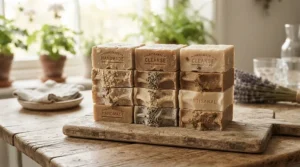
If you’ve got more than one person in the house dealing with dry or reactive skin, the Skin Said Yes Goat Milk Soap (8-Pack) solves the maths problem neatly: eight bars, triple-milled and Ecocert COSMOS natural certified, works out considerably cheaper per bar than most single-soap purchases on this list. Made in Greece under laboratory quality checks, the formula combines organic lavender extract, olive oil and organic coconut oil with goat’s milk, and explicitly avoids SLS/SLES and palm oil.
Here’s what to weigh before buying: lavender extract, while natural, is still a fragrance component and a recognised potential sensitiser for some eczema-prone users, so this isn’t automatically the safest choice for very reactive skin despite its “gentle” positioning. What the spec sheet won’t tell you is that triple-milling (a traditional soap-making process) tends to produce a harder, longer-lasting bar than single-milled soap, which partly explains the multipack’s value proposition even before you count the bar count.
Pros:
- ✅ Excellent per-bar cost across an 8-bar set
- ✅ Ecocert COSMOS natural certification for ingredient sourcing
- ✅ No SLS/SLES or palm oil in the formulation
Cons:
- ❌ Contains lavender extract, a possible fragrance sensitiser
- ❌ Bulk buying commits you before a full patch-test period
At roughly £15-£25 for the full set, the per-bar price undercuts nearly everything else on this list — provided the lavender content agrees with your skin.
How to Use Goat Milk Soap for Eczema-Prone Skin
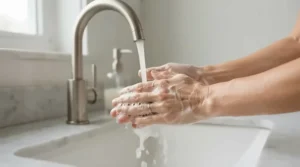
Buying the right bar is half the job; using it properly is the other half, and this is the bit most product pages skip entirely. First, always patch-test any new soap on a small area of inner arm for 24-48 hours before using it on a flare-up, regardless of how “natural” the ingredient list looks — natural doesn’t mean non-reactive. Second, keep water lukewarm rather than hot: hot water is one of the most common and most avoidable eczema aggravators, stripping natural oils faster than any soap formula can replace them.
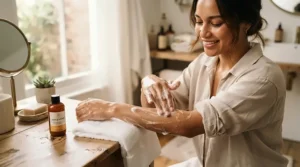
Third, lather the bar in your hands rather than scrubbing it directly onto skin, and keep wash time brief — a quick, gentle cleanse beats a long, vigorous scrub every time on compromised skin. Fourth, pat (don’t rub) skin dry, and apply a fragrance-free emollient within three minutes of stepping out, while skin is still slightly damp; this “soak and seal” technique is standard dermatological advice and matters more than which soap you used. Finally, store your bar on a draining soap dish out of direct water spray, which extends its life considerably and avoids the soggy, wasteful mush that ruins the value case for any of the seven picks above. A common first-30-days mistake is switching soap, moisturiser and laundry detergent all at once — change one variable at a time so you can actually tell what’s helping.
Real-World Scenarios: Who Actually Benefits From Goat Milk Soap
Picture Sarah, a 34-year-old office worker whose hand eczema flares every winter from constant hand-washing and hand sanitiser use at work. For her, a small, portable, low-fragrance bar like unscented Caprina Fresh Goat’s Milk Soap kept at her desk makes more sense than a large family bar left in the shower — portability and consistency matter more than luxury here.
Then there’s the Ahmed family, with two young children where one has mild eczema and the rest of the household has ordinary skin. Rather than buying separate soaps, a value multipack like the Skin Said Yes Goat Milk Soap (8-Pack) lets everyone use the same fragrance-conscious bar, provided a patch test on the eczema-prone child rules out a lavender reaction first. And consider Priya, a 58-year-old with long-standing psoriasis on her elbows and knees who’s already tried numerous prescription creams with mixed results — for her, a rich, fragrance-free, small-batch bar like Cyril’s Soap Shed Unfragranced Soap or The Little Goat Soap Company Soap is a more logical fit than a scented budget bar, since minimising additional irritants matters more than price when skin is already under sustained strain.
How to Choose Goat Milk Soap for Eczema
Choosing well comes down to matching formulation choices to your specific skin, not just trusting the word “eczema” on the packaging. Here’s a practical framework:
- Check the fragrance status first. Unscented or fragrance-free bars carry the lowest allergen risk, so if your skin reacts easily, start with Caprina Fresh Goat’s Milk Soap (unscented) or Cyril’s Soap Shed Unfragranced Soap.
- Look for oatmeal or colloidal oatmeal. It’s one of the few additives with genuine anti-itch evidence, present in both Capure Goat Milk Soap and The Goat Skincare Soap Bar.
- Confirm it’s free from SLS/SLES. These detergents are common in commercial soap and are well documented as skin-barrier disruptors on already-compromised skin.
- Match bar size and budget to how many people will use it. A single sensitive user rarely needs an 8-pack, while a family should consider one.
- Prioritise short, recognisable ingredient lists over long “active” lists. Fewer potential irritants generally means lower reaction risk on eczema-prone skin.
- Patch-test before committing to a full-size bar or multipack, ideally over a full week rather than a single 24-hour check, since some reactions build slowly.
- Read aggregated reviews for your specific skin concern rather than general star ratings, since a soap that suits acne-prone skin won’t necessarily suit eczema-prone skin.
The National Eczema Society also publishes practical, patient-tested guidance on choosing wash products, which is worth cross-referencing against any single retailer’s claims.
✨ Ready to compare a shortlist against your own skin type? Check current prices on the picks above before your next shower routine.
Anti-Inflammatory Soap Bar: What the Science Actually Says
“Anti-inflammatory soap bar” gets used loosely in marketing, so it’s worth being precise about what’s actually supported. Goat milk itself contains fatty acids and, notably, lactic acid — an alpha-hydroxy acid that gently exfoliates and has been associated with mild anti-inflammatory and skin-barrier benefits in cosmetic research, though robust clinical trials specifically on soap (rather than leave-on products) remain limited. Oatmeal is the better-evidenced anti-inflammatory ingredient of the two, with colloidal oatmeal preparations used in prescription-strength eczema treatments precisely because of documented anti-itch and anti-inflammatory activity.
What most buyers overlook is that “anti-inflammatory” doesn’t mean “medicinal” — none of the seven bars reviewed here are licensed treatments, and none should replace prescribed emollients or topical steroids during a genuine flare. Reviewers consistently frame these soaps as supportive of a skincare routine rather than a stand-alone fix, which is the honest and accurate way to think about any bar soap, however good its ingredient list looks on paper.
Goat Milk Soap for Psoriasis and Other Irritated Skin
The overlap between eczema and psoriasis searches makes sense, since both conditions involve a compromised skin barrier, dryness, scaling and itch, even though the underlying causes differ considerably (psoriasis is an autoimmune condition; atopic eczema involves both genetic and immune factors). Several bars on this list, including The Little Goat Soap Company Soap and the Skin Said Yes Goat Milk Soap (8-Pack), are explicitly marketed and formulated with psoriasis in mind alongside eczema, and the shared logic holds up reasonably well: gentler cleansing that avoids stripping already-scaling, inflamed skin is beneficial regardless of which diagnosis is driving the symptoms.
For general irritated skin that doesn’t meet either diagnosis — think seasonal dryness, mild dermatitis from harsh workplace soap, or reaction-prone skin without a formal label — the same selection principles apply. Prioritise fragrance-free or low-fragrance bars, favour oatmeal or shea-butter-forward formulas, and treat any “suitable for psoriasis” claim as a formulation signal (gentle, minimal-irritant) rather than a guarantee of symptom improvement, since neither psoriasis nor eczema responds to soap alone.
Soothing Skin Bar Soap vs Soap for Itchy Skin: What’s the Real Difference
These two phrases get used almost interchangeably in searches, but there’s a useful distinction buried in there. A soothing skin bar soap is generally formulated around moisture retention and gentle cleansing — think shea butter, beeswax, and goat milk fats doing the heavy lifting, as seen in Goats of the Gorge Soap and The Little Goat Soap Company Soap. A soap marketed specifically for itchy skin, by contrast, usually leans harder on active anti-itch ingredients like colloidal oatmeal, as with Capure Goat Milk Soap and The Goat Skincare Soap Bar.
In practice, the best bars for eczema do both simultaneously, which is exactly why oatmeal-plus-goat-milk formulas dominate this category. If you’re choosing between the two framings, ask which symptom bothers you more day-to-day: relentless itching points toward oatmeal-forward bars, while tight, flaking, uncomfortable dryness points toward the richer, butter-and-oil-forward soaps further up this list.
Goat Milk Soap vs Traditional Soap Bars
| Factor | Goat Milk Soap | Traditional Detergent Bar | Prescribed Soap Substitute |
|---|---|---|---|
| Cleansing base | Saponified oils + milk fats | Often SLS/SLES-based | Emollient, non-foaming |
| Moisture retention | Moderate to high | Typically low | High |
| Fragrance risk | Varies by brand | Often heavily fragranced | Usually fragrance-free |
| Best For | Everyday gentle cleansing | General, non-sensitive skin | Active flare-ups |
The comparison makes the positioning fairly clear: goat milk soap sits usefully between harsh commercial detergent bars and the medically prescribed, non-foaming soap substitutes dermatologists recommend during active flares. For day-to-day maintenance between flares, a well-formulated bar like Cyril’s Soap Shed Unfragranced Soap offers a real step up from a standard supermarket bar, but it isn’t a substitute for prescribed treatment when eczema is actively inflamed, weeping or infected.
What to Expect: Real-World Performance
On paper, ingredient lists promise a lot. In the shower, the experience is a bit more modest — most users report a gradual softening effect over one to three weeks rather than an overnight transformation, which tracks with how skin barrier repair actually works physiologically. Lather tends to be creamier and less voluminous than commercial soap, which some people initially read as “not working” when it’s really just a different, lower-detergent formula doing its job more gently.
There’s little robust clinical research proving goat milk soap treats eczema directly, and it’s worth being upfront about that rather than overselling it, as Healthline’s review of the evidence makes clear. What the aggregated anecdotal evidence does support fairly consistently is reduced dryness and less post-wash tightness compared with standard soap — a modest but genuinely useful improvement for many people managing eczema day to day.
Common Mistakes When Buying Goat Milk Soap for Eczema
The most common mistake is assuming “goat milk” automatically means “hypoallergenic” — plenty of goat milk soaps still carry synthetic fragrance, essential oils, or colourants that can trigger a reaction just as easily as any other product. A second common error is buying a large multipack before patch-testing, which turns a bargain into wasted money if the formula doesn’t suit your skin. Third, many buyers skip checking for SLS/SLES entirely, assuming any handmade-looking bar is automatically detergent-free, when some commercial “goat milk” soaps still include these ingredients as filler.
Fourth, people often expect soap alone to control a flare-up, when soap is realistically a supporting player alongside proper emollient use and, where needed, prescribed treatment. Finally, storing soap in standing water in the shower accelerates breakdown and encourages bacterial growth on the bar’s surface — a simple soap dish with drainage fixes this at essentially no cost.
Safety, Regulations and Cosmetic Compliance in the UK
All cosmetic products sold in the UK, including bar soap, must comply with the UK Cosmetics Regulation, which requires accurate ingredient labelling (INCI names), a Cosmetic Product Safety Report, and registration on the UK’s cosmetic notification portal before sale. This is why reputable small-batch makers like The Little Goat Soap Company Soap and Cyril’s Soap Shed Unfragranced Soap list full ingredient panels rather than vague marketing terms — it’s a legal requirement, not just good practice.
For eczema specifically, the British Association of Dermatologists notes that contact with soaps and detergents is a recognised environmental factor in eczema flares, which is precisely why ingredient transparency matters more here than in most other cosmetic categories. If a product is marketed with medical-sounding claims (“treats eczema,” “cures psoriasis”), that’s a red flag rather than reassurance, since genuine medicinal claims require regulatory licensing that ordinary cosmetic soap does not carry.
Long-Term Cost & Value Analysis
| Product | Approx. Cost Per Bar | Typical Bar Lifespan | Value Verdict |
|---|---|---|---|
| Capure Goat Milk Soap | Under £5 | 3-4 weeks | Best entry-level value |
| Skin Said Yes Goat Milk Soap (8-Pack) | Roughly £2-£3 per bar | 4-5 weeks each | Best long-term multipack value |
| The Little Goat Soap Company Soap | £5-£8 range | 4-6 weeks | Best value for targeted formulation |
Looking at cost per use rather than sticker price tells a different story than the shelf price alone: the Skin Said Yes Goat Milk Soap (8-Pack) works out cheapest per wash over a year, while The Little Goat Soap Company Soap justifies its higher unit price through a denser bar and a formulation built specifically around eczema-prone skin. For most households, buying one full-size bar to trial for a month before committing to a multipack is the more sensible long-term financial decision.
FAQ
❓ Does goat milk soap actually help eczema?
❓ Is goat milk soap safe for babies with eczema?
❓ Can goat milk soap replace my prescribed emollient?
❓ Why do some goat milk soaps still irritate sensitive skin?
❓ How long does a goat milk soap bar typically last?
Conclusion
Goat milk soap for eczema isn’t a miracle cure, and any article telling you otherwise is stretching the truth further than the evidence allows. What it can genuinely offer is a gentler, less stripping alternative to standard commercial soap, and for many people managing dry, itchy, reactive skin day to day, that modest improvement is worth real money and real effort to find. Across the seven bars covered here, the honest recommendation splits by priority: go fragrance-free with Caprina Fresh Goat’s Milk Soap or Cyril’s Soap Shed Unfragranced Soap if reactivity is your main concern, choose Capure Goat Milk Soap or The Goat Skincare Soap Bar if budget matters most, and consider The Little Goat Soap Company Soap or Goats of the Gorge Soap if you want a UK small-batch maker whose whole business is built around exactly this skin concern.
Whichever bar you choose, patch-test first, pair it with a proper emollient routine, and don’t treat soap as a substitute for medical advice if your eczema is genuinely flaring. Small, consistent changes tend to beat dramatic overhauls when skin is already under strain.
Recommended for You
- Goat Milk Soap Bar: 7 Brilliant UK Picks for 2026
- Hot Process Soap Gift Set: 7 Genuine UK Picks You’ll Love (2026)
- Hot Process Soap for Sensitive Skin: 7 Gentle UK Picks (2026)
Disclaimer: This article contains affiliate links. As an Amazon Associate, I earn from qualifying purchases. If you purchase products through these links, we may earn a small commission at no additional cost to you.
✨ Found this helpful? Share it with your friends! 💬🤗
