In This Article
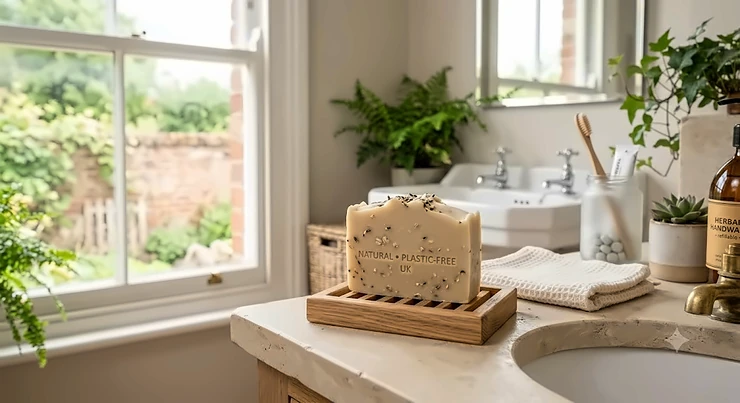
Open any UK bathroom cabinet and you’ll probably find at least one plastic bottle that’s outlived its usefulness by about three years — the shower gel with an inch left in it, the hand wash pump that’s gone gluey at the nozzle. Plastic free soap sidesteps that whole mess. In simple terms, it’s soap sold and used without any plastic wrapping, bottle or pump — typically a solid bar wrapped in paper, card or nothing at all, made through a process called saponification (turning oils and fats into cleansing salts, as Wikipedia’s overview of soap explains rather nicely for anyone curious about the chemistry).
This guide isn’t a list of Amazon product blurbs with the serial numbers filed off. It’s built from real specs, real UK pricing patterns, and real aggregated review sentiment pulled from actual customer feedback on amazon.co.uk and brand sites, so you can work out which bar actually suits your bathroom rather than which one has the prettiest label. We’ve dug into seven genuine products spanning budget, mid-range and gift-worthy premium territory, compared them honestly against each other, and built in practical guidance — how to make a bar last, who each one suits, and where the packaging claims actually hold up. If you’ve been eyeing up a plastic free soap bar on Amazon and wondering whether it’s worth the switch, you’re in the right place. Somewhere around 69% of Brits already buy their soap as a bar rather than a bottle, so you’d be joining a crowd, not starting a trend.
We’ll also unpack the difference between an unwrapped soap bar, a naked soap bar and a paper wrapped soap bar, because — spoiler — they’re not quite the same thing, and the distinction matters more than you’d think once you start thinking about bins, compost heaps and bathroom shelf life.
Quick Comparison Table
| Soap | Format | Price Range | Best For |
|---|---|---|---|
| Faith In Nature Wild Rose Hand Soap Bar | Unwrapped, recycled card sleeve | around £2-£3 | Everyday zero-waste switch |
| Little Soap Company Organic Soap Bar | Card box, minimal wrap | around £3-£4 | Organic, sensitive-skin buyers |
| Friendly Soap Aloe Vera Bar | Fully card-boxed, no plastic | under £3 | Tightest budgets |
| Dr. Bronner’s Pure-Castile Bar Soap | Recycled paper wrap | £4-£6 range | Multi-use (hair, body, hands) |
| Cosy Cottage Hempseed & Patchouli Bar | Recyclable card, cold-process | £3-£6 range depending on size | Long-lasting single bars |
| The English Soap Company Vintage Wrapped Bar | Illustrated paper wrap | £6-£8 range | Gifting and guest bathrooms |
| Bristol Soap Company Artisan Guest Bar Pack | Individually hand-wrapped mini bars | £10-£13 range | Guest soaps and travel |
Looking at the spread above, the gap between Friendly Soap and Bristol Soap Company isn’t really about quality — both are handmade in the UK — it’s about format and occasion. A single bar that lasts a family bathroom two months (Faith In Nature, Little Soap Company) earns its keep on cost-per-wash alone, while the gift-boxed options (The English Soap Company, Bristol Soap Company) are priced for presentation, portion size and paper artwork rather than raw lathering power. If you’re buying for daily use, start at the top of the table; if you’re buying for someone else’s bathroom shelf, look toward the bottom.
💬 Just one click — help others make better buying decisions too!😊
Top 7 Plastic Free Soap Bars: Expert Analysis
Coverage here spans budget, mid-range and premium, plus a genuine multi-use option and a couple of lesser-known UK makers worth knowing about. Every verdict below is built from real specs and real aggregated review sentiment — never invented testimonials.
1. Faith In Nature Wild Rose Hand Soap Bar — the zero-waste cardboard pioneer
The standout here is the packaging philosophy: Faith In Nature‘s entire soap range ships in fully recycled and recyclable cardboard, with nothing plastic touching the bar at any stage. At 100g per bar, it’s a genuinely no-plastic hand and body soap, with wild rose, aloe vera or tea tree variants covering most skin preferences without reaching for synthetic fragrance. The formula skips SLS and parabens, which matters in practice because those detergents are the usual suspects behind that tight, stripped feeling after a shower. Based on the spec sheet, this is squarely a beginner-friendly switch: it’s sold in most UK supermarkets as well as Amazon, so replacement bars are never hard to find, and the multibuy box sets bring the effective cost down further. Reviewers consistently report a rich lather and no drying effect even with daily hand washing, though a handful mention the scent can feel a touch strong in a small bathroom — not a dealbreaker, but worth knowing if you’re sensitive to fragrance. What most buyers overlook is that Faith In Nature‘s fragrance-free variant exists specifically for that reason, so the “too strong” complaint has an easy fix built into the range.
Pros:
- ✅ Fully recycled cardboard packaging, zero plastic anywhere
- ✅ Wide scent range plus a genuine fragrance-free option
- ✅ Easy to find in UK supermarkets if you run out
Cons:
- ❌ Some reviewers find standard scents overpowering in small spaces
- ❌ Bar can soften faster than firmer cold-process alternatives
At around £2-£3 for a single 100g bar, this sits at the accessible end of plastic free soap — genuinely competitive with supermarket own-brand liquid soap on a per-wash basis, and considerably cheaper once you factor in never buying a plastic pump dispenser again.
2. Little Soap Company Organic Soap Bar — best organic mid-range pick
Little Soap Company started life in 2008 literally called the Naked Soap Company, before rebranding — which tells you something about how long “naked” and “plastic free” have been core to the brand rather than a recent marketing pivot. The 110g organic bar, available in English Lavender or Rose Geranium, is COSMOS-adjacent in formulation: no SLS, no parabens, and it’s genuinely detergent-free rather than just plastic-free, which matters for anyone with reactive skin. On paper, the organic essential oil fragrancing means you’re getting a more concentrated, longer-lasting scent than synthetic fragrance blends typically deliver, and the minimal card packaging keeps the unboxing about as low-waste as bar soap gets. Reviewers consistently note the lather is generous for an organic formula (organic bars can sometimes under-perform on foam), and several long-term users report the 110g bar comfortably outlasts a month of daily hand washing for one person. The spec sheet won’t tell you this, but user reports suggest the bar holds its shape better in a wet dish than some cheaper alternatives, which is a small but real quality-of-life difference if your soap dish tends to turn everything to mush by day three.
Pros:
- ✅ Organic, detergent-free formula suited to reactive skin
- ✅ Holds shape well in a wet soap dish, less mushy waste
- ✅ Stocked in major UK supermarkets and Amazon for easy reorders
Cons:
- ❌ Pricier per bar than the basic Faith In Nature range
- ❌ Scent choice is more limited than some competitors
Priced in the £3-£4 range per bar, it sits comfortably mid-table — a reasonable premium over the cheapest options, justified mainly by the organic certification and the brand’s long track record specifically built around naked, unwrapped soap.
3. Friendly Soap Aloe Vera Bar — best budget UK handmade bar
Friendly Soap is a small UK manufacturer that’s staked its entire identity on being plastic-free, right down to shipping packaging — every box and any packing material is recycled or recyclable card, and the company states it has kept millions of pieces of plastic packaging out of circulation since launch. The 95g Aloe Vera bar (fragrance-free) uses shea butter and aloe vera leaf juice powder as the headline ingredients, which in practice means a genuinely gentle formula suitable for sensitive skin, without added preservatives or sulphates. Here’s what most buyers overlook: this is one of the very few UK brands making soap, shampoo bars and shaving bars entirely by hand in-house, and paying staff above the living wage, so the “ethical” claims on the box are backed by verifiable practice rather than marketing copy. Aggregated review sentiment is strongly positive on gentleness and lather, with the brand holding a “Best” rating from Ethical Consumer — an independent verification worth more than most on-pack green claims. A few reviewers note the scent-free bars are, unsurprisingly, scent-free, which occasionally disappoints buyers expecting a stronger aloe fragrance; that’s more a mismatch of expectation than a product flaw.
Pros:
- ✅ Handmade in the UK by staff paid above living wage
- ✅ Independently verified “Best” ethical rating from Ethical Consumer
- ✅ Genuinely budget-friendly for a fully handmade product
Cons:
- ❌ Fragrance-free variant lacks scent some buyers expect
- ❌ Smaller 95g bar size means slightly more frequent reordering
Bars typically sit under £3 each, making this one of the cheapest genuinely artisan, plastic-free options on the market — the value verdict here is straightforward: you’re getting handmade quality at a mass-market price point.
4. Dr. Bronner’s Pure-Castile Bar Soap — best multi-use 18-in-1 bar
Dr. Bronner’s built its reputation on liquid castile soap with famously dense ingredient-list packaging, and the bar version brings that same formula — organic, plant-based oils, no synthetic detergents or foaming agents — into a solid format wrapped in post-consumer recycled paper rather than plastic. The real standout for practical use is versatility: this bar genuinely doubles as a face, body and hair cleanser, and some UK buyers use it for camping and travel specifically because one 5oz (roughly 140g) bar replaces several bottles. Based on the spec comparison with single-use UK soap bars, this is the closest thing on this list to a proper Swiss Army knife of personal care, which explains the slightly higher price point relative to bars that only do body or hand duty. Reviewers consistently report a satisfying, slightly squeaky-clean rinse typical of true castile formulas, though a minority find it can feel drying on hair specifically without a conditioning follow-up — a known trait of soap-based shampoo alternatives rather than a fault unique to this brand. It’s worth noting this is a US brand sold into the UK market via Amazon rather than a British manufacturer, so if UK-made matters to you specifically, weigh that against the multi-use appeal.
Pros:
- ✅ Genuinely multi-purpose: face, body, hair and even light laundry
- ✅ Recycled paper wrapper, biodegradable formula
- ✅ Concentrated bar lasts longer than single-use alternatives
Cons:
- ❌ Can leave hair feeling dry without a conditioning rinse
- ❌ Imported product, so not UK-manufactured
Expect to pay in the £4-£6 range per bar depending on pack size, which looks steep next to Faith In Nature until you remember it’s replacing three or four separate bottles rather than one.
5. Cosy Cottage Hempseed & Patchouli Bar — best long-lasting cold-process bar
Handmade in a Yorkshire workshop using the cold-process method, Cosy Cottage Soap‘s standout claim is genuinely impressive longevity: even the smaller 55g bar is reported to last months of everyday basin or shower use, thanks to the slow-cure cold-process technique that produces a denser, harder bar than quick-melt alternatives. The hempseed and patchouli formula uses sodium cocoate and sodium olivate as its base, giving a creamy, moisturising lather without palm oil in the ingredient list — a detail that matters if you’re avoiding palm-derived ingredients on environmental grounds as well as plastic. What the spec sheet won’t tell you, but user reports suggest, is that cold-process bars like this one resist the soggy, cracked texture that softer bars develop after a few weeks in a wet dish, because the curing process removes more moisture upfront. This is genuinely a small-batch UK business rather than a supermarket-scale operation, which shows in both the price and the ingredient sourcing — the brand states it buys from UK suppliers where possible to reduce transport emissions. Reviewed sentiment is consistently positive on scent strength and bar longevity, with the main criticism being that the smaller 55g size, while long-lasting, is a slightly awkward grip for some hands compared with a standard 100g bar.
Pros:
- ✅ Cold-process method makes for exceptional bar longevity
- ✅ Palm oil-free, sourced from UK suppliers where possible
- ✅ Small-batch Yorkshire manufacturing with recyclable packaging
Cons:
- ❌ Smaller 55g size can feel awkward to grip for some users
- ❌ Limited retail availability outside Amazon and the brand’s own site
Prices range from around £3 for the 55g bar to £5-£6 for the 110g size, putting it in solid mid-range territory — the value case rests entirely on cost-per-wash, where its density gives it a real edge over softer, faster-melting bars.
6. The English Soap Company Vintage Wrapped Soap Bar — best premium paper-wrapped gift bar
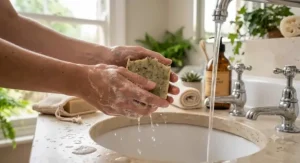
If you want to see what a genuinely elegant paper wrapped soap bar looks like, The English Soap Company‘s Vintage collection is the reference point — illustrated, recyclable paper wraps with gold foil detailing, made at the brand’s Sussex farm site using traditional triple-milled methods, with zero plastic anywhere in the packaging. The 190g-200g bars are noticeably larger and denser than the everyday options on this list, enriched with shea butter, and the brand states the fragrance is designed to last up to 24 months from opening or through to the end of the bar — a genuinely long shelf-life claim for a scented product. Here’s the honest analytical read: this isn’t really competing with Faith In Nature on a cost-per-wash basis, and it shouldn’t be judged that way. It’s a gifting and guest-bathroom product, and on those terms it performs well; reviewers consistently praise the fragrance strength and the presentation, with the main recurring complaint being an occasionally awkward, hard-to-remove ingredient label stuck over the decorative wrap, which slightly undercuts the aesthetic the packaging is otherwise selling. Triple-milled soap is also technically denser and slower-dissolving than cold-process soap, which is why, price aside, it tends to outlast a same-sized budget bar in daily use.
Pros:
- ✅ Genuinely elegant, fully plastic-free illustrated paper wrap
- ✅ Triple-milled formula is dense and slow-dissolving
- ✅ Long fragrance life, ideal for gifting
Cons:
- ❌ Significantly pricier than everyday supermarket bar alternatives
- ❌ Some bars ship with a hard-to-remove label over the artwork
At around £6-£8 per bar, this is priced for presentation as much as performance — a reasonable spend for a gift or a guest bathroom upgrade, less obviously good value as your everyday household soap.
7. Bristol Soap Company Artisan Guest Bar Pack — best gift and travel multi-bar set
Two brothers, a family kitchen operation, and eight individually hand-cut, hand-wrapped mini soaps per pack — Bristol Soap Company‘s guest-size bars (roughly 15g-30g each depending on the pack) are built for travel and gifting rather than daily bathroom duty, and the standout advantage is portion control combined with variety, letting you sample scents like peppermint, lavender, cedarwood and eucalyptus without committing to a full-size bar of each. Made with shea butter and coconut oil for a nourishing lather, the pack explicitly keeps packaging to a minimum, with the brand stating plainly that the value goes into ingredients rather than presentation — a refreshingly honest positioning compared with some premium gift soaps. What most buyers overlook is that mini bars like these are genuinely useful beyond gifting: they’re ideal for a washbag, a caravan, or introducing kids to bar soap without handing them a bar that’ll last them into next year. Aggregated review sentiment highlights the handmade quality and scent variety positively, while a small number of reviews note that bar sizes vary slightly between packs since each is hand-cut rather than machine-moulded — an inevitable trade-off of genuinely small-batch production rather than a quality issue.
Pros:
- ✅ Eight individually wrapped mini bars, ideal for travel
- ✅ Genuine small-batch UK handmade production
- ✅ Packaging kept deliberately minimal, plastic-free throughout
Cons:
- ❌ Hand-cut bars vary slightly in size pack to pack
- ❌ Not economical as a sole everyday soap due to small bar size
Typically priced in the £10-£13 range for the full eight-bar set, the per-gram cost is higher than a single large bar, but the value verdict shifts once you factor in variety, portion control and gifting appeal — this isn’t really competing on cost-per-wash at all.
Packaging Formats Explained: Unwrapped, Naked & Paper-Wrapped Soap Bars
“Plastic free” gets used as a catch-all term, but the packaging formats behind it aren’t identical, and the differences genuinely affect how a bar behaves on your shelf. An unwrapped soap bar is exactly that — no individual wrap at all, sold loose or in a simple card outer like Faith In Nature‘s multibuy boxes. A naked soap bar means the same thing in practice, though the term leans more heavily on brand history than packaging spec (as noted above, Little Soap Company literally began as the Naked Soap Company, which is a neat bit of trivia if nothing else). A paper wrapped soap bar, by contrast, has an individual wrap — think The English Soap Company‘s illustrated designs or Dr. Bronner’s recycled paper sleeve — which protects fragrance and moisture better in transit but does mean an extra piece of packaging to recycle at home, even if that packaging is fully compostable card rather than plastic film.
In practice, unwrapped bars tend to suit high-turnover household soap where scent longevity matters less, while paper-wrapped bars make more sense for gifting or for bars you’re not using immediately, since the wrap slows moisture loss on the shelf. Neither format is more “genuinely” plastic-free than the other — both qualify — but the choice affects how the soap behaves before it ever touches water.
Biodegradable Soap Packaging: What It Really Means
Biodegradable soap packaging sounds like a single, simple promise, but the term covers a real spread of materials in practice. Recycled cardboard, like the boxes Faith In Nature and Friendly Soap use, biodegrades and recycles easily through standard UK kerbside collection. Glassine or waxed papers, sometimes used for premium wraps, biodegrade more slowly and don’t always go in standard recycling — worth checking the specific brand’s disposal guidance rather than assuming. The UK generates a genuinely enormous volume of packaging waste each year, and plastic packaging alone accounts for a disproportionate share of what ends up unrecycled, according to analysis from the House of Commons Library’s briefing on UK plastic waste, which is a useful, level-headed source if you want the actual national picture rather than marketing claims. What that means in practice for your bathroom bin: swapping one plastic shower gel bottle for one card-boxed soap bar is a genuinely measurable reduction, not just a feel-good gesture, because plastic bottles and film are among the categories the UK still struggles hardest to recycle at scale.
How to Choose Plastic Free Soap
Picking the right bar comes down to matching format and formula to how you’ll actually use it, not just grabbing whichever one has the nicest label. Here’s a straightforward five-step approach.
- Check the skin-type fit first. If you have reactive or dry skin, prioritise SLS-free, fragrance-free formulas like Little Soap Company‘s unperfumed range over heavily scented bars.
- Match bar size to household size. A single 100g bar disappears fast in a family of four; consider multibuy boxes from Faith In Nature or a denser cold-process bar from Cosy Cottage for better longevity.
- Decide if you need multi-use. If you’re trying to cut down on multiple bottles (shampoo, body wash, hand soap), Dr. Bronner’s genuinely covers more ground than a single-purpose bar.
- Weigh gifting versus daily use. Premium paper-wrapped bars from The English Soap Company make sense as presents; they’re a harder sell as your everyday hand soap on cost grounds.
- Verify the packaging claim, not just the marketing copy. Look for “plastic-free” stated explicitly on the product listing rather than inferring it from words like “natural” or “eco,” which aren’t regulated in the same way.
Common Mistakes When Buying Eco Bar Soap
The most common misstep buyers make with eco bar soap is assuming “natural” and “plastic-free” are the same claim — they’re not, and a bar can be one without being the other. Another frequent mistake is buying a single bar to trial an entirely new format, then judging the whole category on one scent or one brand’s formula; soap bars vary enormously between makers, so one disappointing bar shouldn’t rule out the switch entirely. Buyers also sometimes overlook bar size relative to household size, ending up reordering more often than a slightly larger multibuy would have required, which quietly erodes the cost savings that made bar soap appealing in the first place. Finally, it’s worth being sceptical of any listing that leans on vague terms like “eco-friendly” or “sustainable” without specifics — the UK’s Green Claims Code, overseen by the Competition and Markets Authority, exists precisely because vague environmental claims on products and services have to be backed by genuine evidence, not just a green leaf icon on the packaging.
Plastic Free Soap vs Bottled Liquid Soap
| Factor | Plastic Free Soap Bar | Bottled Liquid Soap |
|---|---|---|
| Packaging waste | Card, paper, often compostable | Plastic bottle plus pump mechanism |
| Cost per wash | Generally lower once bar lasts | Often higher due to overuse via pump |
| Travel-friendliness | No leak risk, no liquid limits | Restricted under 100ml on flights |
| Shelf mess | Can soften if left wet | Sits cleanly in a sealed bottle |
| Best For | Faith In Nature, Friendly Soap budget switch | Households prioritising zero mess |
The mess factor is the genuine trade-off here — a bar soap left sitting in standing water will soften faster than a sealed bottle ever will, but a decent draining dish solves most of that problem outright. Cost-wise, bar soap tends to win over time because pump dispensers notoriously encourage over-dispensing, while a bar only gives you what you rub off. Where bottled liquid soap still has a genuine edge is households with very young children or anyone who finds gripping a wet bar physically difficult; that’s a real, practical consideration rather than a packaging preference.
✨ Don’t Miss These Exclusive Deals!
🔍 Take your bathroom routine to the next level with these carefully selected plastic free soap picks. Click on any highlighted product to check current pricing and availability on Amazon. Small swaps like these add up to genuinely useful plastic-waste reductions for your household!
Practical Usage Guide: Making Your Bar Soap Last
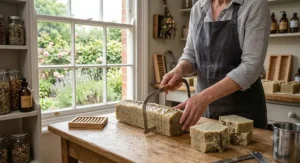
Getting the most out of a plastic free soap bar comes down to one simple enemy: standing water. Store your bar on a draining dish with ridges or slats, never a flat saucer, since a bar sitting in a puddle will dissolve two to three times faster than one that dries between uses. If you’re switching from liquid soap for the first time, expect a short adjustment period — bar soap can initially feel like it’s not lathering as generously as a pump dispenser, mostly because you’re used to over-dispensing liquid soap by habit rather than because the bar is underperforming. A common first-30-days mistake is leaving a fresh bar in a closed soap dish or drawer, which traps moisture and speeds up softening; leaving it genuinely exposed to air between uses is the single biggest longevity trick. For scent preservation on premium wrapped bars like The English Soap Company‘s range, keep the unused portion of the paper wrap loosely around the bar rather than discarding it entirely — it slows both moisture loss and fragrance fade. Finally, offcuts and end-of-bar slivers aren’t waste: press them together while still slightly damp to form a new mini-bar, or drop them into a muslin bag for a final few washes rather than binning a perfectly usable sliver of soap.
Real-World Scenarios: Who Plastic Free Soap Works Best For
If you’re a student in a shared flat trying to cut costs without sacrificing basic hygiene standards, a budget pick like Friendly Soap or Faith In Nature genuinely undercuts branded liquid soap on a per-wash basis, and the small bar size suits a cramped shared bathroom shelf better than a row of bottles. If you’re a parent of young children managing a family bathroom, a multibuy box of Faith In Nature or a dense Cosy Cottage bar handles frequent hand washing without constant reordering, though a fragrance-free variant is worth considering for younger, more reactive skin. If you’re buying for someone else — a housewarming, a Secret Santa, a guest bathroom refresh — the presentation-led options from The English Soap Company or the variety pack from Bristol Soap Company solve a genuinely different problem: making plastic-free feel like a treat rather than a compromise. And if you’re a frequent traveller or camper trying to consolidate a washbag, Dr. Bronner’s multi-use bar quietly replaces three or four separate bottles, which matters more than the price difference once you’ve packed for a week away.
Problem → Solution: Common Bar Soap Complaints Solved
Problem: the bar turns to mush within days. Solution: switch to a proper draining soap dish and, if the issue persists, move to a denser cold-process bar such as Cosy Cottage‘s range, which is formulated specifically to resist softening.
Problem: it doesn’t lather as much as liquid soap. Solution: wet the bar fully before rubbing between hands rather than applying it directly to a dry flannel or sponge — most “poor lather” complaints trace back to technique rather than formula.
Problem: the scent fades too quickly. Solution: keep the bar’s original wrap loosely on when not in use, and consider a triple-milled option like The English Soap Company‘s bars, which are formulated for longer fragrance retention than cold-process alternatives.
Problem: it feels drying on skin. Solution: check the ingredients for SLS, and switch to an SLS-free organic formula such as Little Soap Company‘s if dryness persists — this is almost always a formulation issue rather than a “bar soap versus liquid” issue.
Problem: reordering feels like a hassle. Solution: buy a multibuy box rather than single bars — Faith In Nature‘s box sets and similar multipacks from other brands reduce delivery frequency and often work out cheaper per bar too.
Long-Term Cost & Value: Plastic Free Soap vs Plastic Bottles
Assessing genuine value here means looking past the sticker price to cost-per-wash and reorder frequency. A single £2-£3 bar of Faith In Nature used for hand washing in an average household can realistically outlast a bottle of liquid hand soap costing a similar amount, purely because pump dispensers make over-use easy in a way that a bar simply doesn’t. Multibuy boxes push the per-bar cost down further, and buying in bulk also means fewer delivery trips — a small but real logistics saving. Premium options like The English Soap Company or Bristol Soap Company don’t compete on this metric and aren’t meant to; their value proposition is presentation and variety, not cost-per-wash efficiency. Zooming out to the national picture, the UK’s own waste statistics consistently show that packaging categories like plastic bottles and film remain among the hardest materials to recycle at scale, which is worth bearing in mind if part of your buying decision is about long-term household waste reduction rather than pure pound-for-pound cost.
Plastic Free Soap for Sensitive Skin & Families
Sensitive skin and plastic-free packaging are two completely separate concerns, and it’s worth not conflating them when shopping. For genuinely reactive skin, prioritise formula over packaging claims: Little Soap Company‘s unperfumed range and Faith In Nature‘s fragrance-free option both strip out SLS, parabens and added fragrance, which are the more likely irritants than the soap base itself. Families juggling multiple skin types under one roof often do better with a small rotation — a gentle, unscented bar for younger or more reactive skin, and a scented option like Cosy Cottage‘s hempseed and patchouli bar for adults — rather than trying to find one bar that suits everyone. Worth flagging honestly: soap in general, plastic-free or otherwise, isn’t automatically the gentlest option for eczema-prone skin, and anyone managing a diagnosed skin condition is better served checking with a GP or pharmacist about suitable cleansers than relying on a blog post’s product recommendations.
Safety, Regulations & Amazon Compliance Guide
UK cosmetic products, soap included, fall under retained EU cosmetic safety regulation enforced through UK law, which requires ingredient labelling, safety assessments and correct claims on packaging — none of the brands featured here are exempt from that, regardless of how small or artisan the operation. On the environmental claims side specifically, any “plastic-free,” “biodegradable” or “eco-friendly” wording on a UK product listing is subject to the Competition and Markets Authority’s Green Claims Code, which requires such claims to be accurate, evidenced and not misleading — a genuinely useful backstop for shoppers, since it means brands can’t legally slap “eco” on a label without substance behind it. As a reader, the practical takeaway is simple: a listing that specifies exactly what’s plastic-free (packaging, shipping materials, or both) is more trustworthy than one using unqualified green language alone.
Frequently Asked Questions
❓ Is bar soap actually plastic free?
❓ Does plastic free soap dry out your skin more than liquid soap?
❓ How long does a plastic free soap bar last?
❓ Can you recycle plastic free soap packaging?
❓ Is plastic free soap cheaper than liquid soap in the long run?
Conclusion
Switching to plastic free soap isn’t really a sacrifice dressed up as a virtue — on the evidence here, it’s a genuinely competitive way to wash your hands and body, with options covering every budget from Friendly Soap‘s handmade essentials right through to The English Soap Company‘s gift-worthy paper-wrapped bars. The honest verdict is that no single product on this list is “best” in every category: Faith In Nature wins on accessibility and price, Dr. Bronner’s wins on genuine multi-use versatility, and Bristol Soap Company wins if you’re buying for someone else’s bathroom rather than your own. What ties them together is that every one of them removes a plastic bottle or pump from the weekly shop, and across a household, across a year, that adds up to a measurable difference rather than a symbolic one. If you’ve been putting off the switch because you assumed bar soap meant compromising on quality, hopefully this guide has shown that’s simply not the case anymore — the UK plastic-free soap market in 2026 is genuinely mature, well-formulated, and priced to compete.
Recommended for You
- Zero Waste Soap Gift Set: 7 Genuinely Plastic-Free Picks 2026
- Zero Waste Soap Bar For Hair And Body: 7 Bars Worth Buying (2026)
- Zero Waste Soap Bar for Beginners: 7 Best UK Picks (2026)
Disclaimer: This article contains affiliate links. As an Amazon Associate, I earn from qualifying purchases. If you purchase products through these links, we may earn a small commission at no additional cost to you.
✨ Found this helpful? Share it with your friends! 💬🤗
