In This Article
Sensitive skin has a habit of picking the worst possible moment to flare up, and more often than not, the culprit is sitting right there on the edge of the bath. If you’re hunting for cruelty free soap for sensitive skin, you’ve probably already binned a few “gentle” bars that turned out to be anything but. Here’s a quick working definition: cruelty free soap for sensitive skin is a bar cleanser made without any animal testing at any stage of production, formulated to avoid the fragrances, sulphates and harsh surfactants that commonly trigger redness, tightness or itching on reactive skin.
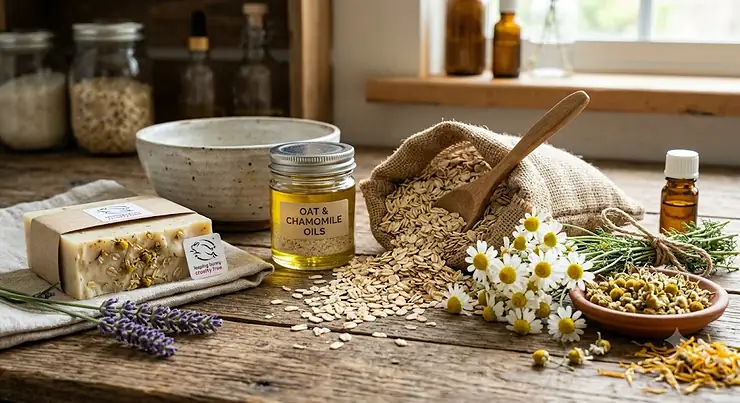
That sounds simple enough, but the UK soap aisle is a minefield of vague claims. “Gentle” and “kind to skin” aren’t regulated terms — anyone can print them on a wrapper. Genuine cruelty free status, by contrast, usually comes with a verifiable certification such as Leaping Bunny or Cruelty Free International’s Leaping Bunny programme, and genuine sensitivity-friendly formulation tends to show up as a short, boring ingredients list rather than a paragraph of botanical poetry.
This guide digs into seven real, currently available soap bars, ranging from budget supermarket staples to premium organic picks, and explains what actually matters in each one’s formulation. We’ll compare them honestly, flag where reviewers report problems as well as praise, and walk through how to choose sensibly rather than just grabbing whatever’s labelled “sensitive” this week. Along the way we’ll cover leaping bunny certified soap, fragrance-free cruelty free soap, hypoallergenic ethical soap and non-toxic soap bar options, because each of those terms means something slightly different — and knowing the difference will save your skin some grief.
What Is Cruelty-Free Soap for Sensitive Skin?
Cruelty-free soap for sensitive skin is a bar cleanser certified as free from animal testing (ideally via Leaping Bunny or a similar audited scheme) and formulated without common irritants — synthetic fragrance, SLS, harsh alcohols and heavy dyes — so it cleanses without stripping the skin barrier or triggering a reaction. Not every “sensitive skin” bar carries formal cruelty-free certification, and not every cruelty-free bar suits sensitive skin, so the two claims genuinely need checking separately rather than assumed together.
Quick Comparison: Cruelty-Free Soaps for Sensitive Skin
| Product | Best For | Fragrance | Certification | Price Range |
|---|---|---|---|---|
| Faith In Nature Fragrance Free Hand Soap Bar | Everyday budget use | None added | Vegan Society, cruelty-free | Under £3 |
| Kirk’s Original Coco Castile Soap, Fragrance Free | Simple 5-ingredient formula | None added | Cruelty-free (Leaping Bunny history) | £3-£5 range |
| Little Soap Company Organic Unperfumed Bar Soap with Oatmeal | Newly reactive/irritated skin | None added | Leaping Bunny certified | £3-£5 range |
| Little Soap Company Unperfumed Pure Olive Soap Bar | Coconut-sensitive skin | None added | Leaping Bunny certified | £3-£5 range |
| Dr. Bronner’s Pure-Castile Bar Soap, Baby Unscented | Face, body and hair in one | None added | Fair Trade, cruelty-free, vegan | Mid-£4 to £6 range |
| Weleda Calendula Soap | Eczema-prone and baby skin | Natural essential oils | NaTrue certified natural | £5-£7 range |
| Neal’s Yard Remedies Lavender & Tea Tree Soap | Premium organic finish | Natural essential oils | Certified organic, cruelty-free | £7-£9 range |
Looking at the table, the split really comes down to fragrance tolerance rather than budget. The unperfumed bars from Faith In Nature, Kirk’s, Little Soap Company and Dr. Bronner’s solve the same core problem — zero added scent — while Weleda Calendula Soap and Neal’s Yard Remedies Lavender & Tea Tree Soap trade a whisper of natural essential oil fragrance for extra soothing botanicals. If your skin reacts to fragrance specifically, stick to the unperfumed end of the table rather than assuming “natural” or “organic” automatically means “safe” for you — as the NHS explains, fragrance is one of the most common triggers of allergic contact dermatitis regardless of whether it’s synthetic or plant-derived.
✨ Ready to switch? Scroll down for the full breakdown of all seven bars, including honest pros, cons and what reviewers actually say.
Top 7 Cruelty-Free Soaps for Sensitive Skin: Expert Analysis
Here’s the full rundown, covering budget, mid-range and premium options, plus a couple of lesser-known but genuinely well-formulated alternatives that most “best of” round-ups skip entirely.
1. Faith In Nature Fragrance Free Hand Soap Bar — best natural budget pick for daily cleansing
Faith In Nature Fragrance Free Hand Soap Bar is built around wild-harvested seaweed, which sounds like a marketing flourish until you learn that seaweed extract is genuinely rich in minerals and mild polysaccharides that help soften water’s drying effect on skin. The bar is vegan, contains no SLS or parabens, and comes in plastic-free, fully recyclable cardboard packaging — a detail that matters if you’re also trying to cut down bathroom waste alongside irritation. Based on the ingredient list, this is a sensible entry point for anyone new to sensitive-skin shopping, since a short formula makes it far easier to trace a reaction than a fragranced, multi-ingredient bar would allow. Reviewers consistently note that it lathers well and rinses cleanly, though a notable minority report the bar left their skin feeling dry or triggered mild itching on the face specifically — a reminder that “fragrance-free” doesn’t automatically mean “universally non-reactive,” since other ingredients like coconut-derived surfactants can still be individual triggers.
Pros:
- ✅ Genuinely fragrance-free with no synthetic masking scent
- ✅ Plastic-free, fully recyclable cardboard packaging
- ✅ Widely available and one of the cheapest genuinely vegan options
Cons:
- ❌ Some reviewers report dryness or facial reactions despite the “sensitive” label
- ❌ Smaller 100g bar size means more frequent repurchasing
Priced under £3, it’s one of the most affordable entry points into fragrance-free bar soap, and a smart first purchase if you’re still narrowing down exactly what your skin objects to.
2. Kirk’s Original Coco Castile Soap, Fragrance Free — best simple ingredient list under a fiver
Kirk’s Original Coco Castile Soap, Fragrance Free has been made in essentially the same way since 1839, and the ingredient list reflects that: sodium cocoate, water, glycerin, sodium chloride and sodium gluconate — five components, no added fragrance, no synthetic detergents. What most buyers overlook about this brand is that it was clinically tested specifically for sensitive skin rather than simply labelled that way after the fact, and it’s produced by a company with Leaping Bunny cruelty-free history stretching back decades. The all-coconut-oil base creates a notably rich lather even in the UK’s harder tap water, which is worth knowing if you’ve found other “natural” bars disappointingly slippery and thin-lathering. Reviewers repeatedly praise it as an affordable, fragrance-free option for exactly the reason it was designed: a plain coconut-oil soap with nothing extra for reactive skin to argue with, though a handful mention it can feel slightly drying with prolonged use, which tracks with the higher pH typical of traditional saponified bar soaps compared with syndet bars.
Pros:
- ✅ Just five ingredients, easy to patch-test and trace reactions
- ✅ Rich lather even in hard water
- ✅ Long-standing hypoallergenic, dermatologically tested formula
Cons:
- ❌ Traditional soap pH can feel drying with very frequent use
- ❌ Multi-packs work out cheaper per bar but require a larger upfront spend
At around £3-£5 for a single bar (multipacks bring the per-bar cost down further), it represents solid value for a formula this simple, particularly if hard water has left you unimpressed by other “gentle” bars.
3. Little Soap Company Organic Unperfumed Bar Soap with Oatmeal — best for newly reactive or irritated skin
Little Soap Company Organic Unperfumed Bar Soap with Oatmeal packs in real oatmeal, which contains avenanthramides — compounds widely recognised for calming inflamed skin rather than just adding rustic texture. The bar is made from 85.8% certified organic oils and is completely free from detergents, SLS, sulphates, alcohol, parabens and synthetic preservatives. It’s also RSPO-certified for sustainable palm oil and Leaping Bunny cruelty-free certified, with the company proactively monitoring suppliers against a fixed cut-off date policy rather than a one-off tick-box exercise. Based on the spec comparison with other unperfumed bars in this guide, the oatmeal inclusion gives it a specific practical edge for anyone dealing with active irritation rather than simply avoiding future flare-ups. It’s stocked in Sainsbury’s, Ocado and Amazon, and the brand’s own customer feedback repeatedly mentions it settling down irritated, oily or dry patches, though independently verified review counts weren’t available during our research, so treat that as a promising signal rather than a guarantee.
Pros:
- ✅ Contains real oatmeal for genuinely calming, not just marketing, benefit
- ✅ Leaping Bunny certified with an audited supplier-monitoring system
- ✅ Made from over 85% certified organic oils
Cons:
- ❌ Independent review volume is harder to verify than for bigger brands
- ❌ Contains palm-derived ingredients, which some shoppers specifically avoid
Priced in the £3-£5 range, it’s one of the better value organic entry points for reactive skin, and a smart choice if you’re not yet sure exactly what your skin objects to.
4. Little Soap Company Unperfumed Pure Olive Soap Bar — best palm-oil-free option for coconut-sensitive skin
Little Soap Company Unperfumed Pure Olive Soap Bar swaps the usual palm and coconut base for olive oil, which has a long Mediterranean tradition precisely because of its high oleic acid content. In practice that translates to a noticeably creamier, less foaming lather that leaves less of the “squeaky clean but tight” feeling some detergent-heavy bars cause. Based on the spec comparison with the brand’s own oatmeal bar, the absence of coconut oil — a known individual irritant for some reactive skin types — makes this a genuinely useful option for anyone who has already ruled out coconut-derived ingredients as a personal trigger. Like its oatmeal sibling, it carries no essential oils, SLS, sulphates or parabens, and it’s Leaping Bunny certified cruelty-free. What the spec sheet won’t tell you, but reviewers note, is that unperfumed olive oil bars can feel slightly softer in the shower and dissolve a touch faster than palm-heavy formulations, so a decent soap dish genuinely extends its working life.
Pros:
- ✅ Palm-oil-free formula for shoppers avoiding that ingredient specifically
- ✅ Creamy, low-foam lather suited to very dry or reactive skin
- ✅ Leaping Bunny certified with a fully plastic-free wrapper
Cons:
- ❌ Dissolves faster than firmer palm-based bars without a draining dish
- ❌ Lower lather may feel underwhelming if you’re used to foamier soaps
Also sitting in the £3-£5 range, this is best thought of as a direct alternative to the oatmeal bar above — same certifications, different base oil, different skin logic.
5. Dr. Bronner’s Pure-Castile Bar Soap, Baby Unscented — best all-rounder for face, body and hair
Dr. Bronner’s Pure-Castile Bar Soap, Baby Unscented doubles the usual olive oil content and adds no fragrance at all, which the brand itself is upfront about being formulated for babies and adults with sensitive skin and allergies — while also noting, refreshingly honestly, that it’s “not tear-free.” That kind of candour is rare in this category. The bar is certified organic and Fair Trade, made with organic hemp oil for a softer lather, and wrapped in recycled paper rather than plastic. Here’s what to weigh: because it’s a genuine castile soap, it sits at a naturally higher, more alkaline pH than syndet-based cleansers, which some very dry or eczema-prone users find can leave a slight residue or tightness. Reviewers consistently score it highly for being fragrance-free and multi-purpose (face, body, hair, even light laundry use), with the main recurring complaint being that castile soap can behave unpredictably in very hard water, sometimes leaving a faint film that a vinegar rinse resolves.
Pros:
- ✅ Zero added fragrance, verified by the brand’s own honest labelling
- ✅ Certified organic, Fair Trade ingredients with recycled packaging
- ✅ Genuinely multi-purpose across face, body and hair
Cons:
- ❌ Higher natural pH can feel tight on very dry or eczema-prone skin
- ❌ Can leave mineral film in hard water areas without a rinse
At a mid-£4 to £6 price range for a single bar, it earns its slightly higher cost through genuine versatility, cutting down the number of separate products a sensitive-skin household needs to buy.

6. Weleda Calendula Soap — best gentle natural-fragrance option for eczema-prone skin
Weleda Calendula Soap has been produced since 1927, using biodynamically grown calendula and organic chamomile extracts alongside a coconut, palm and olive oil base. It’s dermatologically tested, free from synthetic fragrance, colourants, preservatives and mineral-oil derivatives, and carries NaTrue certification for natural cosmetics — a genuinely independent, audited standard rather than a self-awarded badge. Based on the ingredient list, this is worth flagging clearly: it does contain a touch of fragrance from natural essential oils, so it isn’t a strictly fragrance-free option in the way the first five bars are. What most buyers overlook is that natural essential oil fragrance can still trigger reactions in fragrance-sensitive skin, even without any synthetic component — the presence of linalool and limonene on the ingredients list is worth checking if you have a known essential-oil sensitivity. Reviewers, including several managing eczema, consistently report it as gentle enough for daily use without stripping or reacting, with the calendula genuinely appearing to help calm existing irritation rather than just moisturise superficially.
Pros:
- ✅ NaTrue certified natural formula with independent auditing
- ✅ Calendula and chamomile extracts with genuine calming reputation
- ✅ Suitable from birth onwards per dermatological testing
Cons:
- ❌ Contains natural essential oil fragrance, unsuitable for strict fragrance avoidance
- ❌ Premium pricing compared with unperfumed budget bars
Sitting in the £5-£7 range, it’s a reasonable step up if your skin tolerates natural fragrance but reacts badly to synthetic scent — a distinction that matters more than people assume.
7. Neal’s Yard Remedies Lavender & Tea Tree Soap — best premium organic pick with soothing botanicals
Neal’s Yard Remedies Lavender & Tea Tree Soap is certified organic and palm oil-free, built on a coconut oil base enriched with organic shea butter, and scented purely with lavender and tea tree essential oils rather than synthetic fragrance compounds. The brand has operated as a cruelty-free, vegan-approved company since 1981, and this bar reflects that long-standing ethical positioning rather than a recent rebrand. Here’s what to weigh: the essential oil blend means this isn’t suitable for anyone avoiding fragrance entirely, but for those who tolerate natural botanicals, the combination of purifying tea tree and calming lavender genuinely suits both oily-sensitive and dry-sensitive skin types simultaneously — a fairly unusual dual benefit. Reviewers consistently praise the rich lather and describe it as gentle enough for sensitive skin despite the fragrance content, with the most common complaint being price rather than performance; several reviewers explicitly note it “doesn’t dry out the skin” while acknowledging it sits at the premium end of the category.
Pros:
- ✅ Certified organic and palm oil-free with a shea butter base
- ✅ Long-established cruelty-free, vegan brand since 1981
- ✅ Reviewers report it doesn’t dry out sensitive skin despite fragrance
Cons:
- ❌ Not suitable for strict fragrance-avoidance skin
- ❌ The most expensive bar in this round-up by a clear margin
At around £7-£9, it’s a genuine premium pick — worth the spend if your sensitivity is more about synthetic chemicals than natural essential oils specifically.
Practical Usage Guide: Getting the Most From Your Ethical Soap Bar
Switching to an unfamiliar cruelty free soap for sensitive skin works best with a bit of planning rather than a cold-turkey swap of your entire routine. In the first week, patch-test on your inner forearm for 48 hours before using any new bar on your face, even if the packaging says “gentle” — as the NHS notes, allergic reactions to personal care products can take one to three days to appear after exposure. Store the bar on a properly draining soap dish rather than a flat surface; unperfumed, lower-detergent bars like the Little Soap Company olive soap dissolve noticeably faster when left sitting in water, and a raised, ridged dish can extend a bar’s life by weeks. If you’re switching from a heavily fragranced commercial bar, expect a short adjustment period of three to five days where skin can feel slightly different as it recalibrates to a milder surfactant system — this isn’t necessarily a bad sign, but persistent redness or itching beyond a week warrants stopping and trying an alternative. A common first-30-days mistake is over-washing in an attempt to “deep clean” reactive skin; sensitive skin generally responds better to one wash a day with a mild bar like Dr. Bronner’s or Faith In Nature, followed by a fragrance-free moisturiser applied to slightly damp skin to lock in hydration.
Real-World Scenarios: Matching Products to Your Skin Story
Priya, 29, eczema-prone and living in a hard-water area: For Priya, a castile-style bar like Dr. Bronner’s Pure-Castile Bar Soap, Baby Unscented makes sense as a starting point given its fragrance-free, high-olive-oil formula, but she should expect to rinse with slightly cooler water and pat rather than rub dry to reduce any mineral-film sensation. If irritation persists, Weleda Calendula Soap‘s calendula-chamomile blend is worth trialling next, since several reviewers specifically report it calming existing eczema flare-ups.
Tom, 41, budget-conscious with mild facial redness: Tom doesn’t need a premium bar; Faith In Nature Fragrance Free Hand Soap Bar or Kirk’s Original Coco Castile Soap both offer genuinely short ingredient lists under £5, making it straightforward to isolate whether a future reaction comes from the soap or something else entirely in his routine.
Aisha, 34, wants an ethical soap bar that also smells nice but avoids synthetic fragrance: Aisha’s needs point toward Neal’s Yard Remedies Lavender & Tea Tree Soap, where the scent comes purely from essential oils rather than a fragrance blend, though she should patch-test first since natural essential oils can still be individually irritating regardless of their “natural” status.
Buyer’s Decision Framework for Ethical Soap Bar Sensitive Skin Shoppers
If you react to synthetic fragrance specifically but tolerate natural essential oils, choose Neal’s Yard Remedies or Weleda Calendula Soap, because their scent profile comes entirely from plant-derived oils rather than synthetic fragrance compounds. If you’re not sure what triggers your reactions yet, choose one of the fully unperfumed options — Faith In Nature, Kirk’s, or either Little Soap Company bar — because a short, scent-free ingredient list makes future patch-testing far easier to interpret. If you live in a hard-water area, lean toward Dr. Bronner’s or a syndet-adjacent bar rather than a pure olive-oil soap, since traditional soap can behave less predictably with high mineral content. If budget is the deciding factor, the Little Soap Company and Faith In Nature bars deliver genuine Leaping Bunny or Vegan Society credentials without the premium price tag of the organic imports.
How to Choose Cruelty-Free Soap for Sensitive Skin
- Verify the cruelty-free claim independently. Don’t rely on a brand’s own “not tested on animals” label — check for a recognised scheme such as Leaping Bunny, which requires audited supplier monitoring and a fixed cut-off date rather than a one-off promise.
- Read the full ingredients list, not just the front label. “Natural” and “sensitive” aren’t regulated terms in the UK; a genuinely short ingredients panel tells you more than marketing copy ever will.
- Decide your fragrance tolerance first. Synthetic fragrance, natural essential oil fragrance, and genuinely fragrance-free are three separate categories, and conflating them is the single most common buying mistake in this category.
- Consider your water hardness. Traditional saponified soaps (castile, olive-oil bars) can behave differently in hard water than syndet-style bars, sometimes leaving mineral residue.
- Check for a patch-test recommendation and follow it. Even certified gentle formulas can trigger individual reactions; a 48-hour forearm test costs nothing and saves a lot of facial discomfort.
- Weigh certified organic status against price. Organic certification (Soil Association, NaTrue) adds cost but also independent verification of ingredient sourcing, which matters more to some buyers than others.
- Factor in packaging and bar longevity. A cheaper bar that dissolves in half the time isn’t necessarily better value than a firmer, slightly pricier one.
Understanding Leaping Bunny Certified Soap
Leaping bunny certified soap carries genuinely meaningful weight compared with a generic “cruelty-free” claim printed by the brand itself. The Leaping Bunny programme, run internationally through Cruelty Free International, requires companies to sign a binding commitment, adhere to a fixed cut-off date after which no animal testing may occur anywhere in the supply chain, and submit to ongoing independent monitoring of suppliers — not just the finished product. That’s a meaningfully higher bar than an unaudited “we don’t test on animals” sticker, which any company can print regardless of whether their ingredient suppliers test elsewhere. Of the seven bars in this guide, Little Soap Company‘s oatmeal and olive bars carry explicit Leaping Bunny certification, and it’s worth checking current packaging for the logo directly rather than assuming certification is permanent, since companies can and occasionally do drop out of audited schemes.
Cruelty-Free Soap vs Traditional Soap: Benefits, Trade-offs & Ethical Soap Bar Considerations
| Factor | Cruelty-Free / Ethical Soap Bar | Traditional Mass-Market Soap |
|---|---|---|
| Animal testing | Certified none, audited supply chain (where Leaping Bunny certified) | Often untested at brand level, but ingredient suppliers may still test elsewhere |
| Typical fragrance | Fragrance-free or natural essential oil options common | Usually synthetic fragrance as standard |
| Ingredient transparency | Short, disclosed lists common among smaller ethical brands | Full disclosure required by law, but formulas often longer |
| Best For | Sensitive, reactive or eczema-prone skin | General use where sensitivity isn’t a concern |
| Typical price | £3-£9 per bar | £1-£3 per bar |
The trade-off here is fairly clear-cut: ethical soap bars generally cost more per bar, but that premium typically buys shorter ingredient lists, verifiable cruelty-free auditing, and a materially lower chance of the fragrance-driven reactions that dominate sensitive-skin complaints. Traditional mass-market soap isn’t automatically harsh — some budget bars are perfectly mild — but without an audited certification, cruelty-free status is essentially a brand promise rather than a verified fact. For genuinely reactive skin, the extra £1-£4 per bar is usually cheaper than a course of prescription emollients or a GP visit for contact dermatitis.
Hypoallergenic Ethical Soap: Common Mistakes When Buying
The biggest mistake shoppers make with hypoallergenic ethical soap is assuming “hypoallergenic” is a regulated, tested claim — in the UK and EU it isn’t; it simply means a manufacturer has formulated the product to reduce the likelihood of allergic reaction, with no mandatory independent verification required. A second common error is buying based on the word “natural” alone: natural ingredients such as essential oils, citrus extracts and certain plant proteins are actually among the more common contact allergens, so “natural” and “hypoallergenic” can sometimes pull in opposite directions. Shoppers also frequently skip patch-testing entirely because a product is marketed as ethical or gentle, assuming ethical sourcing implies skin safety — the two are unrelated; a soap can be perfectly cruelty-free and still contain an ingredient your skin specifically dislikes. Finally, many buyers switch soaps and moisturisers simultaneously when trying to solve a reaction, making it impossible to identify which product actually caused the improvement or the ongoing irritation — change one variable at a time.
Non-Toxic Soap Bar: Features That Actually Matter (And Those That Don’t)
When shopping for a non-toxic soap bar, the features that genuinely matter are a disclosed, short ingredients list; independent certification (Leaping Bunny, NaTrue, Soil Association); and the absence of SLS, synthetic dyes and added fragrance if you’re specifically fragrance-sensitive. What matters far less than marketing suggests: “detox” or “toxin-releasing” claims, which have no meaningful scientific basis for a rinse-off product used for under a minute; elaborate scent descriptions layered onto essential oil blends, which don’t change the underlying irritation risk; and packaging claims like “eco-luxury,” which describe positioning rather than formulation. Reviewers across the products in this guide consistently mention that the presence or absence of a handful of specific ingredients — added fragrance, SLS, synthetic dye — predicts their skin’s reaction far more reliably than a brand’s overall “clean beauty” positioning. If a product page leads with lifestyle language before listing ingredients, that’s often a signal to scroll further before adding to basket.
Long-Term Cost & Maintenance of Your Cruelty-Free Soap Routine
A £3 unperfumed bar used daily by one adult typically lasts three to five weeks depending on storage, working out to roughly 60-80p per week — genuinely comparable to, or cheaper than, many liquid body washes once you account for how much product gets wasted down the plughole with a pump dispenser. Premium organic bars at £7-£9 last a similar length of time but cost proportionally more per wash; the calculation that matters is less about total price and more about whether the specific formulation actually reduces flare-ups, since a single GP visit or course of prescribed emollient for contact dermatitis frequently costs more than a year’s supply of a well-chosen bar.
| Price Band | Approx. Cost per Bar | Typical Lifespan | Best Value For |
|---|---|---|---|
| Budget | Under £3 | 3-4 weeks | First-time patch testing |
| Mid-range | £3-£6 | 4-5 weeks | Regular daily use |
| Premium | £7-£9 | 3-4 weeks | Occasional treat or gift use |
Maintenance is simple but easy to neglect: keep the bar dry between uses on a draining dish, avoid leaving it directly in running water, and cut a large bar in half if you find yourself using it faster than expected — smaller pieces dry out and last proportionally longer than one large block left sitting in a wet dish.
Safety, Regulations & Compliance: Cruelty-Free Standards in the UK
The UK has banned animal testing of finished cosmetic products and their ingredients for consumer safety since 1998, a ban that remains in force today. However, as Cruelty Free International has documented, a separate regulatory framework covering worker and environmental chemical safety briefly allowed some animal testing of cosmetic ingredients between 2019 and 2023, before licensing was formally reinstated as banned. This history is exactly why independent certifications like Leaping Bunny matter more than a brand’s own cruelty-free claim: they verify compliance against audited criteria rather than relying solely on the underlying legal minimum, which has shifted more than most consumers realise. Separately, all cosmetic soap sold in the UK must comply with UK cosmetic product safety regulations, meaning ingredients must be safety-assessed and properly labelled — but “safety-assessed for general use” is a different bar than “unlikely to irritate sensitive skin,” which is precisely the gap this guide has been addressing throughout.
Frequently Asked Questions
❓ Is all vegan soap automatically cruelty-free?
❓ Can fragrance-free soap still irritate sensitive skin?
❓ What does leaping bunny certified soap actually guarantee?
❓ Is bar soap better than liquid soap for sensitive skin?
❓ How long should I patch-test a new soap before full use?
Conclusion
Choosing cruelty free soap for sensitive skin genuinely comes down to matching a verified certification with an honest read of your own skin’s specific triggers, rather than trusting a “gentle” label at face value. Among the seven bars covered here, Faith In Nature and Kirk’s Original Coco Castile Soap offer the most budget-friendly, genuinely short-ingredient starting points, while Little Soap Company‘s Leaping Bunny certified pair gives you a straightforward audited option in either an oatmeal or olive-oil base depending on your specific sensitivities. Dr. Bronner’s remains the most versatile multi-purpose pick, and if your skin tolerates natural essential oils rather than reacting to fragrance broadly, Weleda Calendula Soap and Neal’s Yard Remedies Lavender & Tea Tree Soap both bring genuine botanical benefit alongside long-standing ethical credentials. Whichever bar you choose, patch-test first, change one product at a time, and remember that “natural,” “vegan” and “cruelty-free” are three separate claims worth checking independently rather than assuming one implies the others.
✨ Don’t Miss These Exclusive Deals!
🔍 Take your sensitive-skin routine to the next level with these carefully selected, genuinely gentle bars. Click through to check current pricing and availability, and find the soap that finally stops fighting your skin instead of caring for it!
Recommended for You
- Cruelty Free Vegan Soap Bar: 7 Genuinely Ethical Picks for 2026
- Cruelty Free Soap Bar: 7 Ethical Picks for UK Skin (2026)
- Best Vegan Soap Bar Gift Set 2026: 7 Cruelty-Free Picks Reviewed
Disclaimer: This article contains affiliate links. As an Amazon Associate, I earn from qualifying purchases. If you purchase products through these links, we may earn a small commission at no additional cost to you.
✨ Found this helpful? Share it with your friends! 💬🤗
