In This Article
There’s a specific kind of disappointment that comes with unwrapping a “luxury” bar of soap only to watch it dissolve into a slimy puddle by day three. If you’ve been there, you already understand why so many British bathroom cabinets have quietly filled up with goat milk soap bar options over the past couple of years. It’s not a fad dreamed up by a marketing department — goats have been milked for skincare since long before anyone had a word for “wellness.”

What makes the category worth a proper look isn’t romance, though. It’s chemistry. Goat’s milk is naturally rich in lactic acid (an alpha hydroxy acid), fatty acids and vitamins A and E, and when it’s saponified into a bar rather than bottled as a lotion, you get a wash that cleanses and gently exfoliates in the same motion. That’s a genuinely useful combination for anyone dealing with dry patches, mild eczema flare-ups, or skin that simply hates the average supermarket bar. As the NHS notes on managing eczema, the products you wash with matter almost as much as the ones you moisturise with afterwards.
This guide pulls together seven real, currently listed goat milk soap bar options from Amazon UK — spanning budget-friendly farm bars right through to imported spa-style formulas — and puts them through a proper comparison rather than a rehashed listing. You’ll get honest analysis grounded in real specifications and aggregated review sentiment, a breakdown of what “raw,” “natural” and “creamy lather” actually mean on a label, and enough practical guidance to make a confident choice rather than a guess. Right, let’s get into it.
Quick Comparison Table
| Product | Best Known For | Price Range | Best For |
|---|---|---|---|
| The Goat Skincare Pure Goat’s Milk Soap Bar with Oatmeal | Budget-friendly daily bar | Under £6 | Everyday dry, flaky skin |
| The Little Goat Soap Company Nanny Goat Soap | Raw milk, single-bar artisan quality | £6-£9 | Sensitive skin wanting provenance |
| Caprina by Canus Original Formula Fresh Goat’s Milk Soap | Creamy lather, multipack value | £10-£16 | Whole-family everyday washing |
| The Goat Skincare Pure Goat’s Milk Soap Bar with Coconut | Natural, coconut-boosted formula | Under £6 | Normal-to-dry skin, first-time buyers |
| Indigo Wild Zum Bar Goat’s Milk Soap, Sea Salt | Spa-style scent and texture | £11-£14 | Gifting and bathroom upgrades |
| The Little Goat Soap Company Neem Goats Milk Soap (4 x 100g) | Farm-fresh multipack | £14-£20 | Long-term value, itchy or irritated skin |
| Organic Fresh Goat Milk Soap (Made in France) | Ultra-sensitive, eczema-prone skin | £5-£8 | Eczema, psoriasis and reactive skin |
Looking at the spread here, there’s a clear split between the two British farm brands — The Little Goat Soap Company Nanny Goat Soap and its sibling The Little Goat Soap Company Neem Goats Milk Soap — which lean on traceable, raw milk from their own herds, and the more processed, mass-manufactured options like Caprina by Canus Original Formula Fresh Goat’s Milk Soap, which trade a little of that artisan character for consistency and multipack value. If price sensitivity or skin sensitivity is your main filter, The Goat Skincare Pure Goat’s Milk Soap Bar with Oatmeal and the Organic Fresh Goat Milk Soap (Made in France) both sit at the lower end while still targeting reactive skin specifically.
💬 Just one click — help others make better buying decisions too!😊
Top 7 Goat Milk Soap Bars: Expert Analysis
Before the individual write-ups, here’s the fuller spec comparison so you can see exactly how these seven stack up side by side.
| Product | Format | Key Ingredients | Fragrance | Best For |
|---|---|---|---|---|
| The Goat Skincare Pure Goat’s Milk Soap Bar with Oatmeal | Single 100g bar | Oatmeal, calendula, avocado, coconut oil | Mild, oat-forward | Dry, itchy, sensitive skin |
| The Little Goat Soap Company Nanny Goat Soap | Single bar | Raw goat milk, olive oil, shea butter, geranium | Light floral-citrus | Sensitive, dry skin wanting raw milk |
| Caprina by Canus Original Formula Fresh Goat’s Milk Soap | Multipack (3-16 bars) | Fresh Canadian goat milk, palm/coconut oils | Light, classic “clean” scent | Family bathrooms, everyday use |
| The Goat Skincare Pure Goat’s Milk Soap Bar with Coconut | Single 100g bar | Coconut oil, calendula, avocado oil | Coconut, mild | Normal-to-dry skin |
| Indigo Wild Zum Bar Goat’s Milk Soap, Sea Salt | Single 3oz bar | Goat’s milk, essential oils, sea salt | Bold, spa-style | Gifting, scent-led buyers |
| The Little Goat Soap Company Neem Goats Milk Soap (4 x 100g) | 4-bar multipack | Raw goat milk, neem oil | Herbal, earthy | Itch relief, long-term stock-up |
| Organic Fresh Goat Milk Soap (Made in France) | Single 100g bar | Goat milk, shea butter, orange peel, geranium, palmarosa | Delicate, essential-oil-based | Eczema, psoriasis, ultra-sensitive skin |
Two things jump out from this table. First, the ingredient lists cluster tightly around the same handful of oils — olive, coconut, shea — which tells you the real differentiator between these bars isn’t some secret formula, it’s the ratio of raw milk to water and the quality of the fat sources. Second, the multipacks (Caprina by Canus Original Formula Fresh Goat’s Milk Soap and The Little Goat Soap Company Neem Goats Milk Soap) genuinely change the value calculation for households getting through more than one bar a month, which we’ll dig into properly in the cost section further down.
1. The Goat Skincare Pure Goat’s Milk Soap Bar with Oatmeal — best budget bar for flaky, dry skin
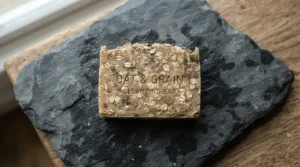
The standout here is the oatmeal, which does real mechanical work as a gentle exfoliant rather than sitting on the ingredients list as decoration. The Goat Skincare Pure Goat’s Milk Soap Bar with Oatmeal is a 100g bar built around goat’s milk, calendula, avocado oil and coconut oil, and it’s formulated specifically to be paraben-free with no artificial colours — a fairly rare combination at this price point. The oatmeal buffs away flaking without the grittiness of a dedicated scrub, while the calendula and avocado oil are there to calm any redness that shows up afterwards.
Based on the spec comparison, this bar leans harder into “problem-solving” than “pampering,” which makes sense given its positioning towards dry, itchy and sensitive skin types. What most buyers overlook about oatmeal-based bars specifically is that they need a proper soap dish with drainage, since the oat content makes them soften faster than a plain bar if left sitting in water.
Reviewers consistently report that the lather is soft rather than foamy, and that the bar doesn’t leave the “squeaky clean” tightness associated with high-sulfate supermarket soap — a meaningful distinction for anyone managing chronically dry skin.
Pros:
- ✅ Genuinely paraben-free and free from artificial colours
- ✅ Oatmeal offers gentle mechanical exfoliation
- ✅ Strong budget entry point into goat milk soap bar
Cons:
- ❌ Softer bar life than firmer cold-process formulas
- ❌ Single 100g size means frequent reordering for daily use
Priced comfortably under £6, this is one of the cheapest ways into genuine goat’s milk skincare, and the value verdict is straightforward: it’s an easy, low-risk first bar to try before committing to pricier options.
2. The Little Goat Soap Company Nanny Goat Soap — best raw farm-fresh option from British goats
What earns this bar its spot is provenance you can actually verify: The Little Goat Soap Company Nanny Goat Soap is handmade in Oxfordshire using raw milk milked from the company’s own small herd, rather than a powdered substitute reconstituted with water. That distinction matters more than it sounds — powdered goat milk loses some of the delicate proteins and naturally occurring alpha hydroxy acids during the drying process, so a raw-milk bar theoretically retains more of the skin-conditioning benefit per gram of soap.
The formula pairs the milk with olive oil, shea butter, palm oil, and a blend of geranium, palmarosa and sweet orange essential oils, which gives it a genuinely herbal, grown-up scent rather than a synthetic “soap smell.” Here’s what to weigh: raw-milk artisan bars like this one are handmade in small batches, which is fantastic for quality control but means stock can be less consistent than a mass-manufactured alternative.
Aggregated customer sentiment around the brand’s wider goat milk range is generally positive on skin feel and moisturising properties, with the recurring theme being that it’s “gentler than expected” for people who’d previously found soap bars drying.
Pros:
- ✅ Made with raw goat milk from the company’s own herd
- ✅ Handmade in small batches in Oxfordshire
- ✅ Natural essential oil scent, no synthetic fragrance
Cons:
- ❌ Smaller-batch production can mean occasional stock gaps
- ❌ Premium pricing versus mass-market alternatives
At around £6-£9 a bar, it sits in accessible mid-range territory, and for anyone specifically hunting for a raw goat milk soap bar with a traceable UK farm behind it, this is arguably the most honest option on the list.
3. Caprina by Canus Original Formula Fresh Goat’s Milk Soap — best creamy lather multipack
If you want the reassurance of a long-running, widely reviewed brand, Caprina by Canus Original Formula Fresh Goat’s Milk Soap has been in continuous production since 1998, sourced from fresh Canadian goat milk collected from local farmers rather than a powdered base. The formula is built to produce a notably creamy lather soap experience — thicker and more cushioned than the average bar — thanks to a blend of palm, coconut and palm kernel oils alongside the milk itself.
On paper this means a longer-lasting bar with a more luxurious in-shower feel than some of the leaner artisan bars on this list, which typically use fewer emulsifying oils. It’s worth noting honestly that this formula is fragranced with a light “parfum,” so it isn’t the pick for anyone strictly avoiding added fragrance — that’s a trade worth weighing against the multipack economics.
Reviewers consistently note the moisturising after-feel and the fact it doesn’t leave the tight, stripped sensation associated with detergent-based bars, with several long-term users mentioning they’ve switched permanently after trying it during a dry-skin flare.
Pros:
- ✅ Rich, genuinely creamy lather compared with leaner bars
- ✅ Multipack options (3 to 16 bars) improve per-bar value
- ✅ Decades-long track record with a large, established review base
Cons:
- ❌ Contains added fragrance, unsuitable for fragrance-avoidant skin
- ❌ Less “artisan” positioning than UK farm-made alternatives
Multipacks typically land between £10 and £16 depending on bar count, and for a household getting through soap quickly, the per-bar cost undercuts most of the single-bar artisan options on this list.
4. The Goat Skincare Pure Goat’s Milk Soap Bar with Coconut — best natural bar for normal-to-dry skin
This is effectively the sibling bar to the oatmeal version above, and The Goat Skincare Pure Goat’s Milk Soap Bar with Coconut swaps the exfoliating oats for a purely conditioning coconut oil formula, still built on the same goat’s milk, calendula and avocado oil base. The coconut oil brings a slightly richer, more emollient feel than the oatmeal variant, which the spec sheet won’t tell you outright but reviewers note repeatedly — this version feels marginally more “moisturising” in the shower, while the oatmeal bar feels more “treating.”
Based on the spec comparison, this makes it the better pick for people whose skin is dry but not actively flaking or irritated, since you get the benefit of a genuinely natural goat milk soap bar without the mild abrasiveness some users find slightly much on very reactive skin. What most buyers overlook is that “natural” here is backed by a real free-from claim (no parabens, no artificial colours) rather than marketing language alone, which is worth checking on any bar claiming the same.
Aggregated reviews describe the bar as gentle enough for daily face-and-body use, with a mild coconut scent that fades quickly rather than lingering.
Pros:
- ✅ Genuinely natural formula with verifiable free-from claims
- ✅ Richer, more emollient feel than the oatmeal sibling bar
- ✅ Suitable for both face and body use
Cons:
- ❌ Less targeted at active flaking or rough patches than the oatmeal version
- ❌ 100g single-bar format again means frequent reordering
At a similar under-£6 price range to its sibling, this is the safer, more universally suitable starting point if you’re unsure which of the two Goat Skincare formulas to try first.
5. Indigo Wild Zum Bar Goat’s Milk Soap, Sea Salt — best premium spa-style bar
Indigo Wild Zum Bar Goat’s Milk Soap, Sea Salt takes a different approach entirely, leaning into fragrance and texture as much as skincare function. This is a US-made import widely stocked through Amazon UK, built around goat’s milk combined with essential oils and a sea salt-inspired scent profile that reviewers frequently describe as “gourmet” rather than medicinal.
Here’s what to weigh: the essential oil blend gives it a genuinely distinctive, upmarket bathroom-shelf presence, but it also means it’s a poor choice for anyone with fragrance sensitivities or active eczema, where the NHS and dermatology guidance both generally steer people away from heavily scented cleansers. What the spec sheet won’t tell you, but user reports suggest, is that the scent is strong enough to linger on a flannel or towel, which some buyers love and others find overwhelming in a small bathroom.
As a gifting option, though, it performs well — it looks and smells like a treat rather than a functional bar, and the goat’s milk base still delivers the underlying moisturising benefit even if the fragrance is doing most of the marketing work.
Pros:
- ✅ Distinctive, upmarket “spa-style” scent and packaging
- ✅ Genuine goat’s milk base beneath the fragrance layer
- ✅ Strong gifting and self-care-set appeal
Cons:
- ❌ Not suitable for fragrance-sensitive or actively eczema-prone skin
- ❌ Smaller 3oz bar size relative to price
Sitting around £11-£14 for a single bar, it’s the most expensive per-gram option here, and the value verdict really depends on whether you’re paying for skincare or for the sensory experience — with this bar, you’re honestly paying for both.
6. The Little Goat Soap Company Neem Goats Milk Soap (4 x 100g) — best value farm multipack
This is the multipack answer to the single-bar Nanny Goat Soap above, and The Little Goat Soap Company Neem Goats Milk Soap brings the same raw, undiluted farm milk into a four-bar pack built around neem oil rather than the floral essential oil blend. Neem has a long history in skin care for calming irritation, and paired with raw goat milk, the combination is explicitly aimed at itchy, uncomfortable skin conditions rather than general everyday washing.
Based on the spec comparison, the earthy, slightly medicinal neem scent won’t be for everyone, but it’s a deliberate trade-off in favour of function over fragrance appeal. What most buyers overlook about multipacks like this is that buying four bars at once from a small-batch producer actually locks in fresher stock than buying single bars repeatedly over several months, since you’re not waiting on reorders.
Aggregated review sentiment is mixed but leans positive on itch relief specifically, with a recurring criticism being that results vary noticeably from person to person — which is honest, since no soap can promise a medical outcome for a diagnosed skin condition.
Pros:
- ✅ Raw goat milk from the brand’s own herd, undiluted
- ✅ Neem oil formulation aimed at itchy, irritated skin
- ✅ Four-bar pack improves cost-per-wash versus single bars
Cons:
- ❌ Earthy neem scent is a strong preference, not universally liked
- ❌ Not a substitute for prescribed eczema treatment
Priced roughly £14-£20 for the pack, the per-bar cost lands close to buying two single artisan bars, making this the more efficient route if you already know the brand suits your skin.
7. Organic Fresh Goat Milk Soap (Made in France) — best for eczema-prone and ultra-sensitive skin
Closing the list is the most clinically positioned bar of the seven. Organic Fresh Goat Milk Soap (Made in France) is explicitly marketed towards ultra-sensitive skin conditions including eczema, psoriasis and acne, built from goat milk combined with olive, palm and coconut-derived soap bases, shea butter, and a gentle blend of orange peel, palmarosa and geranium oils. The key spec worth interpreting here is the ingredient simplicity — fewer additive layers generally means fewer opportunities for a reaction, which matters considerably more to reactive skin than it does to normal skin.
Reviewers consistently note the bar rebalances rather than strips, with several long-term users specifically flagging visible improvement in dry patches after switching from conventional bars, though as always with skin conditions, individual results vary and this is not a medical treatment.
What the spec sheet won’t tell you is that French cosmetic manufacturing standards, aligned with EU cosmetic regulation, tend to apply fairly conservative fragrance-allergen thresholds, which may explain why sensitive-skin users report fewer reactions with this bar than with more heavily scented alternatives on this list.
Pros:
- ✅ Formulated specifically for eczema-prone and reactive skin
- ✅ Simple, transparent ingredient list with minimal additives
- ✅ Gentle essential oil blend rather than synthetic fragrance
Cons:
- ❌ Smaller 100g format for the price versus multipacks
- ❌ Not a medical treatment — shouldn’t replace prescribed eczema care
At £5-£8, it’s genuinely competitive for a formula this targeted, and for anyone specifically shopping with a diagnosed sensitive-skin condition in mind, it’s the most defensible pick on this list.
What Is a Goat Milk Soap Bar?
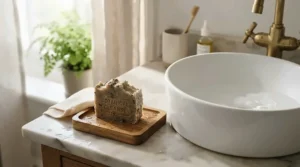
A goat milk soap bar is a solid soap made by saponifying oils together with goat’s milk instead of water, which carries the milk’s natural fats, vitamins A and E, and lactic acid into the finished bar. That lactic acid content is what separates a lactic acid soap bar from an ordinary one — as a naturally occurring alpha hydroxy acid, it gently loosens the bonds between dead surface skin cells every time you wash, which is essentially mild exfoliation built into the everyday act of cleansing. The vitamin and fat content, meanwhile, is what softens the otherwise drying effect that plain soap can have.
It’s worth being precise about what this does and doesn’t mean in practice. The AHA content in a bar is modest compared with a dedicated leave-on lactic acid serum, and the contact time during a shower is brief, so don’t expect peel-strength resurfacing. What you can reasonably expect is a wash that’s noticeably less stripping than a standard sodium-lauryl-sulfate-heavy supermarket bar, and a texture on the skin that leans softer rather than tighter after towelling off.
How to Choose a Goat Milk Soap Bar
- Check whether it’s raw or reconstituted milk. Raw milk formulas, like those from The Little Goat Soap Company Nanny Goat Soap, generally retain more of the delicate proteins than powdered-milk bars reconstituted with water.
- Match the additive to your actual skin concern. Oatmeal (as in The Goat Skincare Pure Goat’s Milk Soap Bar with Oatmeal) suits flaking; neem (as in The Little Goat Soap Company Neem Goats Milk Soap) suits itching; simplicity (as in the Organic Fresh Goat Milk Soap) suits reactivity.
- Decide how much you value fragrance versus function. A scent-led bar like Indigo Wild Zum Bar Goat’s Milk Soap, Sea Salt is a different purchase to a fragrance-minimal, sensitivity-focused bar.
- Work out your real usage rate before buying a multipack. If soap disappears fast in your household, Caprina by Canus Original Formula Fresh Goat’s Milk Soap or the Neem four-pack make more financial sense than repeat single bars.
- Read the free-from claims, not just the word “natural.” Look specifically for paraben-free, and check whether fragrance is essential-oil-based or synthetic “parfum.”
- Consider bar firmness for shower-shelf longevity. Softer, oat- or milk-heavy bars dissolve faster in standing water than firmer cold-process formulas.
- If you’re managing a diagnosed skin condition, treat the soap as a support, not a cure. Pair it with proper emollient advice from a GP or pharmacist where needed.
Goat Milk Soap Bar vs Regular Soap Bar
| Factor | Goat Milk Soap Bar | Regular Commercial Soap Bar |
|---|---|---|
| Core cleansing agent | Milk fats + plant oils | Often tallow or synthetic surfactants |
| Skin after-feel | Softer, less stripped | Can feel tight or “squeaky clean” |
| Natural AHA content | Yes (lactic acid) | Typically none |
| Fragrance | Often essential-oil-based or minimal | Frequently synthetic parfum |
| Typical price | £5-£20 depending on format | £1-£5 |
The trade-off is fairly clear once it’s laid out like this: goat milk soap bar options generally cost more per bar, but they’re doing more skincare work per wash thanks to the lactic acid and fat content, whereas a regular bar is optimised almost entirely for cleaning power and cost. For anyone with normal, resilient skin, that difference may genuinely not matter day to day — but for dry, sensitive or eczema-prone skin, it’s often the difference between a wash that helps and one that quietly makes things worse.
Raw Goat Milk Soap Bar vs Processed: What the Label Doesn’t Tell You
“Raw” on a goat milk soap bar label specifically means the milk was used fresh, either straight from the producer’s own herd or a nearby supplier, without first being dried into powder and reconstituted with water. The Little Goat Soap Company brands its bars this way deliberately, stating explicitly that the milk isn’t diluted with water or swapped for a powdered substitute — a claim worth checking on any bar making similar promises, since it’s easy to write “goat milk” on packaging while using a minimal, diluted amount.
Processed or powdered-milk bars aren’t automatically inferior, though — brands like Caprina by Canus and the Organic Fresh Goat Milk Soap (Made in France) use fresh or minimally processed milk sourced through established supply chains, which brings consistency and food-safety traceability that a tiny farm operation sometimes can’t match at scale. The honest takeaway is that “raw” buys you marginally higher milk-derived nutrient content and a more traceable story, while a well-made processed bar buys you consistency — neither is a dealbreaker on its own, and both remain firmly ahead of a bar with no real goat milk content at all.
Farm Soap Bars: Why Provenance Actually Matters
A genuine farm soap bar — one actually made from milk sourced from a named, small-scale herd rather than a generic supply chain — carries a different value proposition to a mass-produced alternative, and it isn’t purely sentimental. Smaller producers typically use milk within days of milking, which preserves more of the fragile compounds that degrade during longer storage and processing chains. The Little Goat Soap Company‘s bars, made in Faringdon, Oxfordshire from the company’s own small herd, are a solid example of this model within the seven bars reviewed here.
The practical downside is stock consistency and, often, price. Small-batch farm producers can’t always guarantee year-round availability of a specific fragrance variant, and their production costs per bar tend to run higher than an industrial saponification line. If provenance and traceability genuinely matter to your buying decision — for ethical reasons, curiosity, or a belief that fresher milk does more for skin — a real farm soap bar earns its premium. If you mainly want the goat-milk benefit reliably and affordably, a larger, well-reviewed brand may serve you just as well.
Practical Usage Guide: Getting the Most From Your Bar
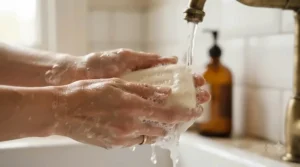
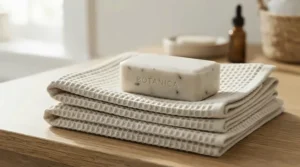
Getting real value out of any goat milk soap bar comes down to a handful of habits most people skip. First, store it on a properly draining soap dish or a soap saver pouch — goat milk bars are typically softer than detergent bars because of their higher fat and milk content, and constant contact with standing water in the shower dish is the single biggest cause of a bar dissolving prematurely. Second, let a new bar “cure” on an open shelf for a day or two before first use if it arrives feeling slightly soft or sweaty from transit; this firms up the surface and extends bar life noticeably.
When it comes to actually washing, resist the urge to scrub hard for a big lather — work the bar briefly between wet hands or a soft flannel first, then apply that lather to skin, rather than rubbing the bar directly against your body repeatedly, which wastes product fast. For anyone using an oatmeal or neem variant on a specific rough patch, a 10-15 second contact time before rinsing gives the mild exfoliating or soothing action a genuine chance to work, rather than washing it straight off. A common first-30-days mistake is switching soap and moisturiser at the same time, which makes it hard to tell which product is actually responsible for any change in your skin — swap one variable at a time if you’re trying to identify what’s helping.
✨ Don’t Miss These Exclusive Deals!
🔍 Take your bathroom routine to the next level with these carefully selected bars. Click on any highlighted item to check current pricing and availability. These small swaps genuinely help build a gentler daily routine your skin will thank you for!
Real-World Scenarios: Matching the Bar to the Buyer
If you’re a university student sharing a bathroom and washing daily under hard, drying tap water, Caprina by Canus Original Formula Fresh Goat’s Milk Soap‘s multipack format solves two problems at once — cost-per-wash and the moisturising cushion that hard water strips away. Someone managing a toddler’s mild eczema flare-ups, on the other hand, is better served avoiding fragrance-heavy options altogether and reaching for the Organic Fresh Goat Milk Soap (Made in France) or The Little Goat Soap Company Neem Goats Milk Soap, both formulated with sensitivity specifically in mind rather than as an afterthought.
Then there’s the gifting scenario — someone buying a self-care hamper for a friend’s birthday, where scent and presentation genuinely matter more than clinical formulation. Here, Indigo Wild Zum Bar Goat’s Milk Soap, Sea Salt does exactly what’s needed: it looks and smells like a treat, and the goat’s milk base means it isn’t purely style over substance. None of these three buyers should be shopping from the same shortlist, and that’s really the point of working through use-case first rather than simply grabbing whichever bar has the prettiest packaging on the search results page.
Common Mistakes When Buying Goat Milk Soap Bar
The most frequent error is assuming “goat milk” on the front of a pack guarantees a meaningful concentration of it — some budget bars use goat milk as a minor ingredient rather than a primary one, so checking whether the brand specifies raw, fresh or powdered milk (and where it sits in the ingredients list) matters more than the marketing copy. A second common mistake is buying a heavily fragranced bar for someone with known sensitive or eczema-prone skin purely because it’s labelled “natural” — natural and hypoallergenic are not the same thing, and essential oils can still trigger reactions in reactive skin.
Third, people frequently underestimate bar longevity and end up overspending on frequent single-bar reorders when a multipack from the same brand would have worked out cheaper per wash. Finally, it’s easy to expect a soap bar to resolve a diagnosed skin condition on its own; goat milk soap bars are a genuinely useful support product, not a substitute for prescribed treatment when something more serious is going on.
Long-Term Cost & Value: Is Goat Milk Soap Bar Worth It?
| Product | Approx. Price Range | Bars Included | Rough Cost-Per-Bar |
|---|---|---|---|
| The Goat Skincare Pure Goat’s Milk Soap Bar with Oatmeal | Under £6 | 1 | Under £6 |
| The Little Goat Soap Company Nanny Goat Soap | £6-£9 | 1 | £6-£9 |
| Caprina by Canus Original Formula Fresh Goat’s Milk Soap | £10-£16 | 3-16 | As low as £1-£3 |
| Indigo Wild Zum Bar Goat’s Milk Soap, Sea Salt | £11-£14 | 1 | £11-£14 |
| The Little Goat Soap Company Neem Goats Milk Soap | £14-£20 | 4 | £3.50-£5 |
The clearest pattern here is that multipacks dramatically change the maths — a single premium bar like Indigo Wild Zum Bar Goat’s Milk Soap, Sea Salt can cost more per wash than an entire multipack from Caprina by Canus, even though the upfront price tag looks similar. For anyone using goat milk soap as their everyday bar rather than an occasional treat, buying in bulk from a brand you already trust is almost always the better long-term value decision, since goat milk soap bars don’t have an indefinite shelf life and buying only what you’ll use within several months avoids waste either way.
Safety, Regulation and What “Natural” Really Means on Amazon UK
Every cosmetic product sold in the UK — including every bar reviewed here — has to meet the UK Cosmetics Regulation, which legally requires a safety assessment and a UK-based responsible person before it can be sold, enforced by the Office for Product Safety and Standards. That’s worth knowing because “natural” and “organic” are not legally defined or regulated terms in UK cosmetics law the way “safety assessed” is; a brand can call a product natural based on its own definition rather than a certified standard, so those claims are worth treating as marketing language to verify against the actual ingredients list rather than facts to take at face value. According to recent government data on cosmetic safety notifications, hundreds of thousands of products have been formally notified under this system, which gives a reasonable degree of confidence that listed, established brands like the ones in this guide have been through the required process.
For anyone with a diagnosed skin condition, it’s still worth treating any soap bar — however well formulated — as a complement to, not a replacement for, professional dermatological advice, particularly during active flare-ups.
FAQ
❓ Is goat milk soap bar good for eczema?
❓ How long does a goat milk soap bar last?
❓ Can you use goat milk soap bar on your face?
❓ Is raw goat milk soap bar better than regular goat milk soap?
❓ Where can I buy goat milk soap bar in the UK?
Conclusion
Working through seven real goat milk soap bar options side by side makes one thing fairly obvious: there isn’t a single “best” bar here, there’s a best bar for your specific skin and budget. If you want a low-risk, affordable way to try the category, The Goat Skincare Pure Goat’s Milk Soap Bar with Oatmeal or its Coconut sibling are sensible starting points. If raw, traceable British farm milk matters to you, both The Little Goat Soap Company bars deliver that honestly. For households getting through soap fast, Caprina by Canus Original Formula Fresh Goat’s Milk Soap offers the strongest per-wash value, while the Organic Fresh Goat Milk Soap (Made in France) remains the most defensible pick for genuinely reactive, eczema-prone skin.
Whichever bar you land on, the underlying logic holds: goat milk’s naturally occurring lactic acid and fat content make for a gentler daily wash than most conventional soap, and for skin that’s been struggling with dryness or irritation, that difference tends to show up within a couple of weeks of consistent use.
✨ Ready to make the switch? Check today’s prices on any of the seven bars above and give your skin the gentler wash it’s been asking for! 🐐🧼
Recommended for You
- Hot Process Soap Gift Set: 7 Genuine UK Picks You’ll Love (2026)
- Hot Process Soap for Sensitive Skin: 7 Gentle UK Picks (2026)
- Cold Process Soap for Sensitive Skin: 7 Gentle Bars for 2026
Disclaimer: This article contains affiliate links. As an Amazon Associate, I earn from qualifying purchases. If you purchase products through these links, we may earn a small commission at no additional cost to you.
✨ Found this helpful? Share it with your friends! 💬🤗
