In This Article
There’s a particular kind of betrayal that only your bathroom cabinet can deliver: you buy a “gentle” cleanser, use it for a fortnight, and your face responds by turning into the Sahara. If that sounds familiar, you’re not alone, and you’re not imagining it — a lot of mainstream face washes lean on surfactants that clean brilliantly and moisturise terribly. This is roughly where the humble goat milk soap bar for face use starts to look less like a wellness fad and more like a sensible swap.
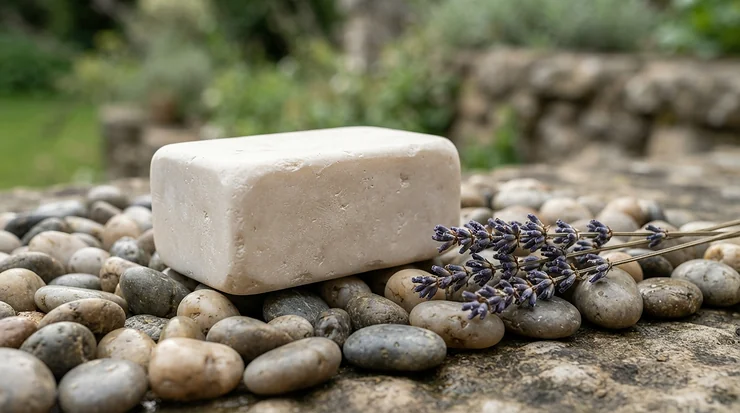
Goat milk has been used as a skin remedy since long before “skincare” was a category with its own aisle, and the science, while still developing, backs up a fair bit of the folklore. It’s rich in lactic acid (a gentle alpha-hydroxy acid), fatty acids, and vitamins A and E — a combination that cleanses without the tight, squeaky feeling cheaper soaps leave behind. A goat milk soap bar for face and body use typically has a lower pH than standard bar soap too, which matters more than most shoppers realise.
Below, we’ve researched seven real, currently available bars — from budget-friendly UK pharmacy staples to a triple-milled American import — and picked them apart honestly: what they’re made of, who they actually suit, and where the marketing gets ahead of the evidence. No invented reviews, no miracle claims — just spec-by-spec, skin-by-skin analysis to help you choose with confidence.
What Is a Goat Milk Soap Bar for Face?
A goat milk soap bar for face use is a solid cleansing bar made by combining fresh or powdered goat’s milk with saponified plant oils (typically coconut, palm, and olive), producing a mild, low-lather bar rich in lactic acid, fatty acids, and vitamins A, B6, B12, C and E that cleanses while leaving more of the skin’s natural moisture intact than a standard soap bar.
That’s the textbook version. In practice, formulations vary wildly — some bars are barely more than standard soap with a splash of milk for the label, while others are built around goat milk as the genuine hero ingredient. That’s exactly why the comparison below matters more than the marketing copy on any single pack.
Quick Comparison Table
| Product | Best For | Price Range | Fragrance |
|---|---|---|---|
| The Goat Skincare Soap Bar (Original) | Everyday budget sensitive-skin cleansing | Under £5 | Light, mild |
| The Goat Skincare Soap Bar with Manuka Honey | Redness-prone, reactive skin | Under £5 | Honey, subtle |
| The Goat Skincare Soap Bar with Oatmeal | Itchy, eczema-prone skin | Under £5 | Fragrance-light |
| The Little Goat Soap Company Simply Goats Milk Soap | Fragrance-free minimalists | £5-£10 range | Unscented |
| The Little Goat Soap Company Neem Goats Milk Soap (4-Pack) | Oily, blemish-prone combination skin | £10-£15 range | Herbal, earthy |
| Beekman 1802 Pure Goat Milk Soap | Premium, fragrance-free daily luxury | £10-£15 range | Unscented |
| Caprina by Canus Original Goat’s Milk Soap | Widely-stocked all-rounder, family use | Under £10 | Classic, mild |
Looking at this table, the split is fairly clean: the The Goat Skincare range dominates the budget end and is genuinely built around sensitive-skin use, the The Little Goat Soap Company bars sit in the middle with more targeted formulations (neem for blemishes, fragrance-free for reactive skin), and Beekman 1802 justifies its premium price with triple-milling and a longer-lasting bar. If you’re testing whether goat milk soap suits your face at all, start cheap with one of the The Goat Skincare bars before committing to a pricier import.
Just one click — help others make better buying decisions too!😊
Top 7 Goat Milk Soap Bars for Face: Expert Analysis
We’ve deliberately mixed budget, mid-range, and premium options, plus a couple of lesser-known but genuinely well-formulated bars that don’t get the marketing spend of the big American brands. Every product below is real, currently sold, and researched from manufacturer specs and aggregated customer feedback — never invented.
1. The Goat Skincare Soap Bar (Original) — best budget staple for sensitive skin
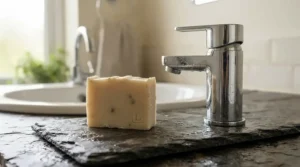
This is the bar most UK shoppers stumble across first, usually in a pharmacy aisle rather than a skincare boutique, and it undersells itself because of that. The Original formula pairs pure goat’s milk with sweet almond oil and is pH-balanced specifically to support the skin’s natural defences rather than strip them.
At under a fiver, it’s one of the cheapest genuine goat milk soap bars for face and body use on the UK market, which makes it the obvious first bar to try if you’re simply curious whether goat milk suits your skin at all. Based on the ingredient list, the absence of sulphates and added fragrance is what earns this bar its sensitive-skin reputation — it’s not relying on botanical extras to do the work. It suits beginners, budget-conscious buyers, and anyone managing generally dry or reactive skin who wants a low-risk trial.
Reviewers consistently report that it leaves skin feeling soft rather than tight after washing, and several specifically mention using it as a face wash without irritation, though a handful note the bar softens faster than a synthetic soap if left sitting in water.
Pros:
- ✅ pH-balanced formula suited to daily facial use
- ✅ Genuinely low price point for a real goat milk bar
- ✅ Fragrance-light recipe reduces reaction risk
Cons:
- ❌ Softens quickly if not stored on a draining rack
- ❌ Contains almond oil, unsuitable for nut allergy sufferers
At around £3-£5, The Goat Skincare Soap Bar (Original) is close to unbeatable value — the verdict here is simple: buy this first before spending more elsewhere.
2. The Goat Skincare Soap Bar with Manuka Honey — best for redness and reactive skin
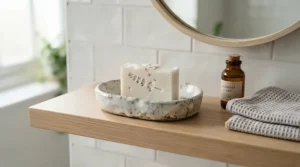
Take the Original formula, add manuka honey, and you get a bar aimed squarely at skin that flares up easily. Manuka honey brings mild humectant and soothing properties on top of the base goat’s milk formula, and on paper that combination is well-suited to skin that reddens after normal washing.
What most buyers overlook about honey-based cleansers is that the benefit is largely about calming rather than active treatment — this isn’t a medicated bar, and it won’t do anything a dermatologist-prescribed cream would for genuine rosacea. Aggregated reviews are strongly positive on texture and scent, with multiple buyers describing the lather as “creamy” and noting visibly calmer skin after switching from a harsher soap, though the honey fragrance — while subtle — is present, so strict fragrance-avoiders should default to an unscented option instead.
It’s a strong pick for anyone whose face reacts to temperature changes, wind, or over-washing rather than a diagnosed skin condition.
Pros:
- ✅ Manuka honey adds mild soothing, humectant benefit
- ✅ Consistently positive review sentiment on texture
- ✅ Still budget-friendly despite the added ingredient
Cons:
- ❌ Contains fragrance, unsuitable for total fragrance avoidance
- ❌ Not a substitute for treating diagnosed skin conditions
Priced similarly to the Original, in the under-£5 range, The Goat Skincare Soap Bar with Manuka Honey earns its keep for anyone whose skin is reactive rather than clinically diagnosed.
3. The Goat Skincare Soap Bar with Oatmeal — best for itchy, eczema-prone skin
Oatmeal has genuine, well-documented anti-itch and skin-protectant properties — it’s not just a texture gimmick — and combining it with goat’s milk stacks two soothing ingredients into one bar. This variant is aimed at drier, itchier skin than the Original, and the spec sheet backs that positioning up: colloidal oatmeal forms a light protective film while the goat’s milk delivers the same fatty-acid moisturisation as the rest of the range.
Here’s what to weigh: oatmeal bars can occasionally leave a very fine residue that some users mistake for poor rinsing, so a thorough final rinse matters more with this bar than a standard soap. Reviewers frequently cite it being recommended by pharmacists for children’s itchy skin, and several parents report reduced scratching when it’s used as both a bath and face bar, though as with any goat’s-milk product, dairy-sensitive individuals should patch test first.
This is a genuinely good pick for anyone managing eczema-adjacent dryness rather than acne or oiliness.
Pros:
- ✅ Colloidal oatmeal adds proven anti-itch benefit
- ✅ Suitable for both children and adults with dry skin
- ✅ Still sits in the budget price bracket
Cons:
- ❌ Can leave a faint residue if rinsing is rushed
- ❌ Not ideal for oily or acne-prone skin types
At under £5, The Goat Skincare Soap Bar with Oatmeal is the pick for anyone whose main complaint is itchiness rather than shine.
4. The Little Goat Soap Company Simply Goats Milk Soap — best fragrance-free UK-handmade pick
Handmade in the UK using goat’s milk collected without separating kids from their mothers (a detail the brand is vocal about), this bar strips things right back: pure goat milk, natural oils, shea butter, and vitamin E, with no added fragrance, colour, or anything else that might irritate reactive skin. Based on the spec comparison with scented alternatives, this is the safer choice for anyone who has previously reacted to “natural” soaps that still contained essential oils.
The brand positions it as suitable for washing both body and face, and the higher goat milk content (undiluted, not powdered, according to the manufacturer) is a genuine differentiator versus some bulk imports that use reconstituted milk powder. Reviewers highlight the creamy lather and note it doesn’t leave the tight, stripped feeling associated with standard soap, though a few mention the unscented format feels less “luxurious” than perfumed competitors — which, for anyone buying it specifically for sensitivity reasons, is rather the point.
It suits fragrance-avoidant buyers, breastfeeding or pregnant users cautious about essential oils, and anyone with a confirmed fragrance allergy.
Pros:
- ✅ Zero added fragrance, colour, or extra irritants
- ✅ Uses undiluted fresh goat milk, not powder
- ✅ Handmade in the UK with ethical milking practices
Cons:
- ❌ Feels plain compared with scented, “spa-style” bars
- ❌ Limited variety within the unscented range
Sitting in the £5-£10 range, The Little Goat Soap Company Simply Goats Milk Soap is the sensible pick when fragrance itself is the problem, not just dryness.
5. The Little Goat Soap Company Neem Goats Milk Soap (4-Pack) — best for blemish-prone combination skin
Neem oil has a long history in traditional skincare for oily and blemish-prone skin, thanks to its natural antibacterial and astringent properties, and pairing it with goat’s milk is a clever way to offset neem’s slightly drying reputation. The spec sheet notes the goats are milked once daily with kids left to nurse, a detail that speaks to sourcing rather than efficacy, but it does suggest a brand paying attention to quality rather than just spinning out a commodity bar.
What most buyers overlook is that neem’s scent is genuinely distinctive — earthy and herbal rather than floral — so this is not the bar to buy if you’re expecting something sweet-smelling. Aggregated feedback is mixed but leans positive: several reviewers report it helping with body and facial blemishes, though at least one review flagged it as not resolving a specific skin condition, underlining that this is a supportive cleanser rather than a treatment.
It’s best suited to combination or oily-prone skin, teenagers navigating early breakouts, and anyone who has found neem beneficial in other formats before.
Pros:
- ✅ Neem oil offers natural antibacterial, astringent action
- ✅ Four-bar pack extends value versus single bars
- ✅ Sourced with attention to ethical goat welfare
Cons:
- ❌ Strong herbal scent won’t suit everyone
- ❌ Not a substitute for prescribed acne treatment
At roughly £10-£15 for a four-pack, The Little Goat Soap Company Neem Goats Milk Soap offers solid per-bar value for combination and blemish-prone faces specifically.
6. Beekman 1802 Pure Goat Milk Soap — best premium triple-milled import
Beekman 1802 built an entire skincare brand around goat milk, and this bar is their flagship: a 100% vegetable soap base combined with creamy goat milk, triple-milled to remove excess water and produce a denser, longer-lasting bar than most competitors on this list. On paper, triple-milling matters because it directly affects how long a bar survives daily use — a denser bar simply dissolves slower, which is where some of the higher price gets justified over time.
The formulation is fragrance-free and cruelty-free, leaning into the lactic-acid content of goat milk as a gentle exfoliant alongside the cleansing action. Reviewers describe the lather as notably velvety compared with cheaper bars, and the brand’s own positioning around “nourish, moisturise, renew” lines up with what triple-milled, fragrance-free goat milk soap should deliver in practice.
The catch is availability and price: it’s stocked through UK beauty retailers and imports rather than being a supermarket staple, and it regularly sells out. This is the pick for buyers who want the most refined version of this format and don’t mind paying import-adjacent prices for it.
Pros:
- ✅ Triple-milled for a denser, longer-lasting bar
- ✅ Fragrance-free formulation suits sensitive faces
- ✅ Lactic-acid-rich goat milk supports gentle exfoliation
Cons:
- ❌ Premium price versus UK-made alternatives
- ❌ Stock availability can be inconsistent
In the £10-£15 range, Beekman 1802 Pure Goat Milk Soap is the luxury choice — worth it if longevity and refinement matter more to you than budget.
7. Caprina by Canus Original Goat’s Milk Soap — best widely-stocked all-rounder
Caprina by Canus has been making this bar since 1998, using fresh Canadian goat milk collected from local farmers rather than reconstituted powder, and it remains one of the most widely available goat milk soaps internationally, including through UK-facing retailers. The formula is built through traditional saponification with a vegetable-based soap base, and the brand notes it’s dermatologist-tested and recommended, along with being phosphate and paraben-free.
Here’s what the spec sheet won’t tell you outright: because it’s mass-produced at scale compared with the smaller UK brands on this list, batch consistency tends to be more reliable — useful if you hate the “which bar did I get this time” lottery that smaller artisan brands sometimes involve. Reviewer sentiment is consistently strong on moisturisation, with multiple long-term users specifically citing it helping with dry winter skin, and it’s frequently bought as a family bar suitable for the whole household rather than a specialist facial-only product.
It suits buyers who want a dependable, easy-to-repurchase everyday bar rather than something artisanal or scent-forward.
Pros:
- ✅ Made with fresh, not powdered, goat milk
- ✅ Dermatologist-tested with consistent batch quality
- ✅ Easy to repurchase thanks to wide availability
Cons:
- ❌ Less distinctive than boutique or artisan bars
- ❌ Classic scent may feel dated to some buyers
At around £6-£10 depending on pack size, Caprina by Canus Original Goat’s Milk Soap is the dependable everyday choice when you just want a bar that works, reliably, every time.
Practical Usage Guide: Getting the Most From Your Goat Milk Facial Bar
Switching to a goat milk facial cleansing bar isn’t complicated, but a few habits make a real difference to how long it lasts and how your skin responds. First, storage matters more than people expect: goat milk soap has a higher glycerin and moisture content than synthetic bars, which makes it softer and more prone to turning to mush if it sits in a puddle. A draining soap dish or a wooden soap saver extends bar life significantly and is worth the two or three pounds it costs.
Second, give your skin two to three weeks before judging results. The first few washes with any goat milk soap replace face wash routine can feel different — less foamy, sometimes slightly tacky as it rinses — and that’s the lower-sulphate formulation working as intended, not a sign it’s wrong for you. If genuine irritation appears (redness, stinging, breakouts), that’s different and worth stopping for.
Third, avoid scrubbing. Goat milk bars work through gentle chemical cleansing (the lactic acid) as much as physical lathering, so aggressive rubbing undoes some of the benefit and can irritate rather than deep-clean. A common mistake in the first month is treating it like an exfoliating scrub — pat and glide rather than scrub.
Finally, follow with a light moisturiser if your skin is very dry, particularly in winter. Goat milk soap reduces stripping but doesn’t replace a leave-on moisturiser entirely, especially for genuinely dehydrated skin.

Real-World Scenarios: Who Should Switch to a Goat Milk Facial Cleansing Bar
Scenario one: A university student in Manchester, budget tight, dealing with post-exam-stress breakouts and dry patches from central heating. A pack of The Goat Skincare Soap Bar (Original) or the oatmeal variant fits both the budget and the skin need — cheap enough to try without commitment, gentle enough not to worsen the breakouts.
Scenario two: A parent managing a toddler’s mild eczema flare-ups who also wants a face-safe bar for themselves. The Goat Skincare Soap Bar with Oatmeal or The Little Goat Soap Company Simply Goats Milk Soap both suit this household — fragrance-free or fragrance-light, and gentle enough for shared family use across ages.
Scenario three: A skincare enthusiast in their forties looking at a goat milk anti-ageing soap as part of a broader routine, willing to spend more for refinement. Beekman 1802 Pure Goat Milk Soap, used alongside a proper leave-on retinoid or vitamin C serum rather than instead of one, fits this profile — the soap supports the skin barrier while the actives do the heavier lifting.
Matching the bar to the scenario, rather than buying whatever’s cheapest or most hyped, is the difference between a soap that sits half-used in a drawer and one you actually finish the bar of.
Common Face-Washing Problems a Goat Milk Facial Bar Can Solve
Problem: Tight, “squeaky clean” skin after washing. This usually means your current cleanser is over-stripping natural oils. Swapping to any bar on this list, starting with The Goat Skincare Soap Bar (Original), is a straightforward first fix.
Problem: Redness after washing with hot water. Combine a lukewarm rinse with The Goat Skincare Soap Bar with Manuka Honey rather than changing water temperature alone — the soothing formula does more heavy lifting than temperature adjustment by itself.
Problem: Recurring small blemishes on the jawline or forehead. Consider The Little Goat Soap Company Neem Goats Milk Soap, used consistently for several weeks rather than as a one-off spot treatment, since neem’s benefit is cumulative rather than instant.
Problem: Soap dissolving too fast, feeling wasteful. This is almost always a storage issue rather than a product fault — a draining rack, plus Beekman 1802 Pure Goat Milk Soap‘s naturally denser, triple-milled bar, solves it from both angles.
Problem: Uncertainty about switching from liquid cleanser entirely. Run both side by side for two weeks rather than switching cold turkey — most people find the goat milk soap replace face wash transition easier gradually than all at once.
How to Choose the Right Goat Milk Soap Bar for Your Face
Choosing well comes down to seven practical checks, each grounded in what actually affects your skin day to day:
- Check the ingredient order. Goat milk should sit near the top of the list, not buried after a dozen other fillers — position broadly reflects concentration.
- Confirm fragrance status. If you have reactive or eczema-prone skin, fragrance-free variants (like The Little Goat Soap Company Simply Goats Milk Soap) reduce reaction risk considerably.
- Match the add-in to your concern. Oatmeal for itch, honey for redness, neem for blemishes — the base ingredient does the general work, the add-in targets your specific issue.
- Look at milling process where stated. Triple-milled bars, such as Beekman 1802 Pure Goat Milk Soap, last noticeably longer than single-processed bars.
- Check for palm oil sourcing concerns if that matters to you. Several bars on this list use palm-derived ingredients; ethically sourced or palm-free alternatives exist if this is a priority.
- Factor in pack size versus price per use. A four-pack, like the The Little Goat Soap Company Neem Goats Milk Soap, often works out cheaper per wash than single premium bars.
- Patch test before full facial use, particularly if you have a known dairy sensitivity, since goat milk is still an animal-derived ingredient.
Working through this list takes about five minutes and saves considerably more time than the trial-and-error approach most people default to.
Common Mistakes When Buying a Goat Milk Facial Bar
The most frequent mistake is assuming all goat milk soap is created equal because the label says “goat milk.” Some commercial bars use trace amounts alongside heavy synthetic surfactants purely for marketing appeal — the ingredient list, not the front-of-pack claim, tells the real story.
A second common error is buying scented variants for genuinely reactive skin because the scent sounds gentle (“oat and honey,” “chamomile”). Added fragrance is added fragrance regardless of how soothing it sounds, and it remains one of the most common triggers for facial irritation according to dermatology guidance from the British Association of Dermatologists, which publishes patient-facing leaflets on sensitive and reactive skin conditions.
A third mistake is expecting immediate, dramatic results. Goat milk soap is a supportive, barrier-friendly cleanser, not a fast-acting treatment — comparing it unfavourably to a medicated cream after three days is comparing two different categories of product.
Finally, buyers frequently ignore storage, letting an otherwise excellent bar dissolve into a soggy mess within a fortnight, then concluding the product itself was poor value.
Goat Milk Soap Bar vs Traditional Face Wash: Can It Really Replace Your Cleanser?
This is the question most people actually want answered before they commit: does a goat milk soap bar replace face wash entirely, or is it a nice-to-have alongside a proper cleanser? The honest answer is “it depends on your skin type and your current routine,” which isn’t a satisfying soundbite but is accurate.
For normal-to-dry skin without active acne concerns, a well-formulated bar like The Goat Skincare Soap Bar (Original) or Caprina by Canus Original Goat’s Milk Soap can comfortably replace a liquid cleanser full-time. The lower pH and higher fatty-acid content generally outperform standard bar soap and match, or beat, many mid-range liquid cleansers on gentleness.
For oily or genuinely acne-prone skin, a targeted bar such as The Little Goat Soap Company Neem Goats Milk Soap can work, but it’s worth pairing with a proper salicylic-acid or benzoyl-peroxide treatment rather than expecting the soap alone to manage active breakouts.
For skin under active dermatological treatment (retinoids, prescribed acne medication), check with a pharmacist or GP before switching entirely, since some treatments require pH-neutral or specifically formulated cleansers to avoid over-irritation.
| Factor | Goat Milk Soap Bar | Traditional Liquid Face Wash |
|---|---|---|
| Typical pH | Closer to skin’s natural pH | Often more alkaline, varies widely |
| Moisture retention | Higher, due to fatty acids and glycerin | Depends heavily on formulation |
| Cost per use | Generally lower over time | Often higher, especially premium brands |
| Best For | Dry, sensitive, reactive skin | Oily skin needing deeper degreasing |
The table makes the trade-off fairly clear: goat milk soap tends to win on gentleness and long-term cost, while some liquid cleansers still edge ahead for genuinely oily skin that needs stronger degreasing action. Most people land somewhere in the middle, using a bar daily and reserving a targeted liquid cleanser for occasional deeper cleaning.
Goat Milk Facial Cleansing Bar for Different Skin Types
Dry and mature skin: Prioritise fragrance-free, higher-fat formulations. The Little Goat Soap Company Simply Goats Milk Soap and Beekman 1802 Pure Goat Milk Soap both suit this profile well, given their minimal-additive, moisture-forward positioning.
Oily and combination skin: A goat milk facial bar with a targeted add-in, such as The Little Goat Soap Company Neem Goats Milk Soap, balances cleansing power with the gentleness goat milk provides, avoiding the over-stripping that harsher acne washes can cause.
Sensitive and eczema-prone skin: Stick to fragrance-light or fragrance-free bars — The Goat Skincare Soap Bar with Oatmeal and the unscented The Little Goat Soap Company bar are the strongest candidates here, both grounded in ingredients with genuine soothing properties rather than marketing flourishes.
Normal, low-maintenance skin: Almost any bar on this list will work well; Caprina by Canus Original Goat’s Milk Soap is the pragmatic pick for buyers who simply want reliability without overthinking it.
Teens and younger skin: Gentler, lower-fragrance options reduce the chance of reactions during a period when skin chemistry is already in flux — the oatmeal or neem variants tend to suit this group best depending on whether dryness or blemishes are the bigger concern.
Gentle Face Cleansing Soap: Features That Actually Matter (And Those That Don’t)
Matters: pH and ingredient transparency. A genuinely gentle face cleansing soap lists goat milk high in the ingredients and avoids harsh sulphates like SLS. This is the single biggest predictor of how your skin will react.
Matters: milling process. As covered with Beekman 1802 Pure Goat Milk Soap, triple-milling produces a denser bar that lasts longer and often lathers more consistently — a genuine functional benefit, not just marketing language.
Doesn’t matter much: exotic-sounding botanical names. A long ingredient list with unfamiliar Latin names isn’t automatically more effective; several of the most effective bars here have short, simple formulations.
Doesn’t matter much: packaging and branding polish. Attractive packaging says nothing about pH or fat content. Some of the plainest-looking bars on this list, notably the unscented options, are among the most genuinely skin-friendly.
Matters: fragrance-free labelling for sensitive users, but doesn’t matter for those with no history of reactive skin — this is a case where the “right” feature depends entirely on your own skin history rather than any universal rule.
Goat Milk Anti-Ageing Soap: Safety, Regulations & What the Science Says
The phrase goat milk anti-ageing soap gets thrown around a lot, so it’s worth being precise about what’s actually supported. Lactic acid, present naturally in goat milk, is a genuine alpha-hydroxy acid with evidence behind gentle exfoliation and improved skin texture over time — that part checks out. What doesn’t check out is treating a rinse-off soap bar as equivalent to a leave-on anti-ageing serum. Contact time matters enormously in skincare chemistry; a soap is on your skin for seconds before rinsing, while a serum sits for hours. Independent academic analysis of anti-ageing skincare claims, including a review from Keele University, makes this contact-time distinction clear when evaluating which ingredients genuinely reach the skin in effective concentrations.
That doesn’t make a goat milk anti-ageing soap pointless — a well-formulated bar supports the skin barrier, which indirectly helps skin look healthier and more resilient, and the mild lactic-acid exfoliation is a genuine (if modest) bonus over a standard bar. Just treat it as a supporting player in a routine, not the star performer, if visible ageing is your main concern.
On the safety and regulatory side, any cosmetic bar sold in the UK must comply with the UK’s post-Brexit cosmetics framework, which requires responsible-person registration and ingredient safety assessment before products reach shelves — full detail is available via the UK government’s cosmetic products regulation guidance. In practical terms, this means legitimate UK-sold goat milk soap has been through more scrutiny than the “handmade at a market stall” framing sometimes implies — a reassuring point for anyone slightly wary of small-batch cosmetic products.
Also worth flagging: because goat milk soap is dairy-derived, anyone with a diagnosed dairy or lanolin-related allergy should patch test on the inner forearm before full facial use, and anyone using it as a soap substitute for a diagnosed skin condition like eczema should check current guidance, since the NHS advises specific emollient soap substitutes for moderate-to-severe cases rather than standard cosmetic bars, however gentle.
✨ Don’t Miss These Exclusive Deals!
🔍 Take your skincare shelf to the next level with these carefully selected bars. Click on any highlighted product to check current pricing and availability. These gentle, nourishing bars will help you build a genuinely honest facial cleansing routine your skin will thank you for!
Frequently Asked Questions
❓ Can a goat milk soap bar for face use really replace my usual cleanser?
❓ Is goat milk soap suitable for sensitive or eczema-prone facial skin?
❓ How long does a goat milk facial cleansing bar typically last?
❓ Does goat milk soap actually have anti-ageing benefits?
❓ Is goat milk soap safe to use daily on the face?
Conclusion
There’s no single “best” goat milk soap bar for face use — there’s a best one for your skin, your budget, and your specific concern, and that’s a more useful way to think about this category than chasing whichever bar has the loudest marketing. If you’re new to the format and want a low-risk trial, The Goat Skincare Soap Bar (Original) is the sensible starting point. If redness or itchiness is your main issue, the manuka honey or oatmeal variants target that specifically. For blemish-prone combination skin, The Little Goat Soap Company Neem Goats Milk Soap earns its place, while fragrance-avoidant buyers should look straight to the unscented Simply Goats Milk Soap. And if you want the most refined, longest-lasting version of this format and don’t mind paying for it, Beekman 1802 Pure Goat Milk Soap delivers, with Caprina by Canus Original Goat’s Milk Soap as the dependable, always-available all-rounder in between.
Whichever bar you choose, give it a genuine two-to-three-week trial, store it properly, and pair it with realistic expectations — a gentle cleanser supports healthy skin, it doesn’t replace a full skincare routine overnight. Your face will likely thank you either way.
✨ Ready to make the switch? Check current prices on today’s featured bars and find the goat milk soap bar for face that finally works with your skin, not against it! 🧼✨
Recommended for You
- Goat Milk Soap for Dry Skin: 7 Nourishing UK Picks (2026)
- Goat Milk Soap for Eczema: 7 Soothing UK Picks (2026)
- Goat Milk Soap Bar: 7 Brilliant UK Picks for 2026
Disclaimer: This article contains affiliate links. As an Amazon Associate, I earn from qualifying purchases. If you purchase products through these links, we may earn a small commission at no additional cost to you.
✨ Found this helpful? Share it with your friends! 💬🤗
