In This Article
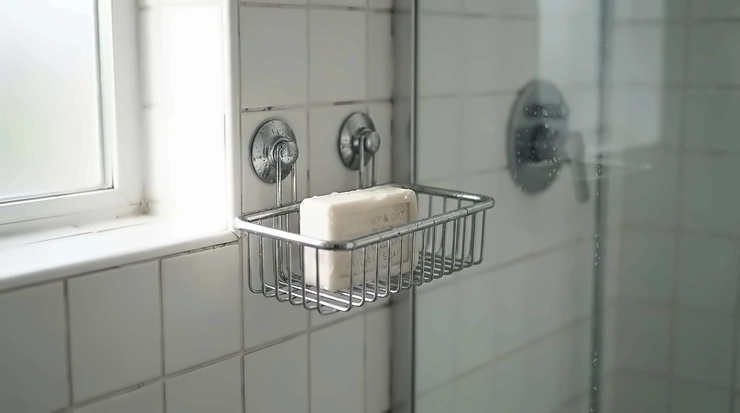
A fragrance-free soap bar is a solid cleanser made without any added perfume, fragrance compounds or scented essential oils. Nothing in the recipe is there purely to make it smell nice. That makes it a sensible starting point for anyone with eczema, reactive skin or a suspected fragrance allergy.
Here’s what the supermarket aisle won’t tell you. The prettiest-smelling bar is often the most complicated one on the shelf. A perfume blend can contain many individual ingredients. The NHS guidance on contact dermatitis lists soaps, detergents, and perfumes and preservatives in toiletries among the common irritants behind itchy, inflamed skin. Take the scent out and you remove a whole category of potential trouble.
That’s why a fragrance-free soap bar has become a quiet staple for UK households dealing with eczema, sore hands or a possible fragrance allergy. It also suits people who just don’t want to smell like a department store. I’ve compared seven real products on ingredient lists, brand claims and aggregated review sentiment. Then I’ve added the practical bits listings skip: a patch testing routine, label-reading tips and a decision framework.
One honest note first. I haven’t handled these bars personally, so there are no invented “I tested this for a month” stories here. You’ll get spec analysis, clearly labelled review themes and plain reasoning about who each bar suits. Where the evidence is thin, I’ll say so.
You’ll also meet the phrases shoppers actually type: perfume-free soap for sensitive skin, essential oil-free soap and dye-free and fragrance-free soap. They overlap, but they aren’t identical, so we’ll untangle them.
Quick Comparison: The Best Fragrance-Free Soap Bar Picks at a Glance
Here’s the cheat sheet. Prices are indicative ranges at the time of research and may vary, so check current price before buying.
| Product | Size | Standout trait | Price range | Best For |
|---|---|---|---|---|
| Lucy Bee Fragrance Free Natural Soap Bar | 150g | Seven-ingredient coconut recipe | Around £3-£5 per bar | Eczema-prone hands and body |
| Faith in Nature Fragrance Free Soap Bar | 100g | Plastic-free, high-street staple | Under £4 | Budget household use |
| Dr Bronner’s Baby Unscented Pure-Castile Bar Soap | 140g | Double olive oil, face-body-hair | Around £4-£5 | Whole-family versatility |
| Friendly Soap Fragrance Free Aloe Vera Soap | 95g | Palm-free with shea butter | Around £3-£4 | Palm-free shoppers |
| Little Soap Company Organic Unperfumed Bar Soap | 110g | Organic oils with oatmeal | Around £3-£4 | Gentle everyday cleansing |
| Dove Sensitive Skin Beauty Bar | 2 x 90g | Moisturising cream formula | Around £2-£5 per twin pack | Easy-to-find, low-fuss option |
| The English Soap Company Sensitive Skin Soap Bar | 190g | Largest bar, plastic-free pack | Check current price | Fast-soap-using households |
Looking at the table, Faith in Nature and Friendly Soap Aloe Vera keep spend lowest. Dr Bronner’s Baby Unscented costs a little more but covers face, body and hair. Lucy Bee is the one to try first if sore hands are your main battleground, because its short ingredient list leaves the fewest variables to troubleshoot. Dove Sensitive is the easiest to find, but it’s a mild-cleanser beauty bar rather than a traditional soap, which matters if you want a plain saponified-oil recipe.
💬 Just one click — help others make better buying decisions too!😊
Top 7 Fragrance-Free Soap Bar Picks: Expert Analysis
Review comments below are aggregated themes from brand and retailer pages. I can’t vouch for each one individually, and I flag where the sample is small.
1. Lucy Bee Fragrance Free Natural Soap Bar — shortest ingredient list in this round-up
Lucy Bee wins the minimalism contest. The label I reviewed lists seven ingredients: sodium cocoate, water, glycerin, coconut acid, coconut oil, sodium citrate and sodium chloride. None of them exist to scent or colour the bar.
What does that mean in practice? Sodium cocoate is simply coconut oil turned into soap, so this is essentially a one-oil recipe with glycerin to take the edge off tightness. At 150g it’s a generous bar. The brand says it’s dermatologically approved for sensitive skin, COSMOS Organic, palm-free and made in the UK. The label also recommends patch testing before first use, which is refreshingly candid.
My read, purely from the spec: a high-coconut recipe lathers generously, which is lovely on hands and body. Coconut-based soaps also tend to feel more degreasing than olive-led ones. If your skin runs very dry, trial it on hands first and approach the face cautiously.
Reviewers on the brand’s own site (a curated source, so take it with a pinch of salt) keep returning to a creamy lather, no tight after-feel and a bar that lasts. Several mention it not aggravating their eczema.
Pros:
- ✅ Seven-ingredient recipe with no scent or colour
- ✅ Generous 150g size lasts well
- ✅ Palm-free, organic-certified base
Cons:
- ❌ Coconut-heavy recipe may feel degreasing on dry skin
- ❌ Wrapped in plastic flow-wrap
Around £3-£5 per bar at the time of research, and multipacks cost more overall. That’s strong value for this level of simplicity.
2. Faith in Nature Fragrance Free Soap Bar — the budget-friendly high-street staple
Faith in Nature is the bar for when you want fragrance-free without a fuss or a big outlay. It’s a 100g, plastic-free, UK-made bar with a short, plain ingredient list.
The retailer listing I reviewed shows sodium palmate and sodium palm kernelate (both certified sustainable origin), water, glycerin, seaweed powder, sodium chloride, sodium citrate and citric acid. Translation: a conventional palm-and-kernel soap base, which is firm, long-lasting and generous with lather, plus glycerin for comfort. The brand states there’s no added fragrance, essential oils, colour, parabens or SLS/SLES. That ticks the main boxes for anyone avoiding scented ingredients.
Who is it for? Households wanting one dependable bar at every sink without worrying about losing one to a soggy dish. Anyone avoiding palm derivatives altogether should look elsewhere, certified or not. The seaweed powder may leave faint flecks, which is a texture quirk, not a dye.
Review evidence is thinner than for some rivals. The listings I found include a family with sensitive skin saying they specifically needed a fragrance-free option and were pleased. That’s encouraging, not conclusive.
Pros:
- ✅ Plastic-free packaging and UK-made
- ✅ No added fragrance or essential oils (brand states)
- ✅ Very affordable for a 100g bar
Cons:
- ❌ Palm-derived soap base
- ❌ Limited review volume to learn from
Under £4 per bar at the time of research, which makes it arguably the best pound-for-pound pick here.
3. Dr Bronner’s Baby Unscented Pure-Castile Bar Soap — a castile classic for face, body and hair
Dr Bronner’s Baby Unscented brings fair-trade oils to the fragrance-free party. It’s the most versatile bar here, and the brand pitches it for face, body and hair.
The 140g bar uses coconut, palm, olive, hemp, jojoba and sunflower oils, plus sea salt, citric acid and vitamin E. The “double olive oil” claim matters, because olive-led soaps are generally creamier and kinder-feeling than coconut-heavy ones. That’s why this type of bar often suits drier skin. There’s no added fragrance, and the brand is upfront that it’s not tear-free. Real soap is mildly alkaline, so keep it out of eyes.
On paper it’s a strong all-rounder for allergy-prone households wanting one bar for everyone. But “baby” on the wrapper is branding, not medical clearance. For newborns with eczema, check with your health visitor or GP first.
Reviewers on retailer pages describe fragrance-sensitive users who found it didn’t trigger them. One says it’s the only soap that doesn’t cause redness or itching, and others say a bar lasts a long time. The pool I found was small, around a handful of reviews, so read it as promising rather than definitive.
Pros:
- ✅ Double olive oil for a creamier, kinder feel
- ✅ Works as a face, body and hair bar (brand claim)
- ✅ Fair-trade ingredients with no added fragrance
Cons:
- ❌ Not tear-free, so eye contact stings
- ❌ Palm-derived ingredient in the base
Around £4-£5 at the time of research. That’s fair value for a bar that can replace several products.
4. Friendly Soap Fragrance Free Aloe Vera Soap — palm-free with shea butter softness
Friendly Soap Aloe Vera is the palm-free pick with a slightly richer feel, thanks to shea butter in the mix.
The 95g bar’s listed ingredients are sodium cocoate (coconut), sodium olivate (olive), water, shea butter and aloe vera leaf juice powder. Practically, that’s a coconut-and-olive base that lathers well, with shea adding a cushioned feel. In a rinse-off soap, the aloe powder is more a pleasant garnish than an active treatment. It’s handmade in the UK by the cold-process method, vegan and cruelty-free, with plastic-free packaging.
One flag. Retailers note a formulation change across the range, swapping olive oil for rapeseed oil, so read the ingredient list on the bar that actually arrives. That’s good advice with any small-batch soap.
This bar suits shoppers who want palm-free credentials without leaving the fragrance-free world, or who find pure coconut soaps too brisk. It’s small at 95g, so it works better for face-and-hands duty than for a whole family’s showers.
Review evidence is thin. The listing I found carried only a handful of votes, so I can’t honestly summarise a trend.
Pros:
- ✅ Palm-free, vegan and cruelty-free
- ✅ Shea butter adds a cushioned feel
- ✅ Plastic-free packaging
Cons:
- ❌ Small bar disappears quickly in family use
- ❌ Very limited review data
Around £3-£4 per bar at the time of research. Fair value for a palm-free option.
5. Little Soap Company Organic Unperfumed Bar Soap — oatmeal-enriched with a solid retailer rating
Little Soap Company Unperfumed carries a 4.5-out-of-5 average from 30 reviews on a major UK grocery site. That’s one of the larger independent samples in this round-up.
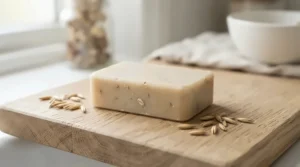
The 110g bar, launched in 2010 according to the listing, uses around 86% organic oils plus rolled oatmeal, with no essential oils at all. Oatmeal is a long-standing favourite for dry, irritated skin. In a rinse-off soap the contact time is short, though, so think of it as a gentle bonus rather than a treatment. The brand says it’s free from SLS, sulphates, alcohol, parabens, silicones and synthetic preservatives. It’s also vegan, Leaping Bunny cruelty-free and plastic-free.
Who’s it for? Anyone wanting an unperfumed bar with certification credentials, and families who like a brand with a long track record. If you’re sensitised to oats, skip it, because that’s the one spec detail that could genuinely bite.
Reviewers broadly rate it well. The 4.5 average across 30 reviews suggests reliable satisfaction, though I couldn’t verify the individual comments.
Pros:
- ✅ Organic oils with oatmeal and no essential oils
- ✅ Leaping Bunny certified and plastic-free
- ✅ Solid average across 30 retailer reviews
Cons:
- ❌ Unsuitable if you react to oats
- ❌ Only 110g, so replacements come round often
Around £3-£4 per bar at the time of research. Good value if you want organic credentials.
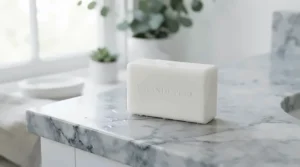
6. Dove Sensitive Skin Beauty Bar — easiest to find, softest-feeling mainstream option
Dove Sensitive is the supermarket-aisle answer: widely stocked twin packs of 90g bars with Dove’s quarter-moisturising-cream formula.
Strictly speaking, it isn’t a traditional soap. Dove calls it a beauty bar built from mild cleansers rather than saponified oils. The brand describes it as fragrance-free, hypoallergenic, free of sulphate SLES and dermatologically tested for face, body and hands. Practically, that tends to mean a softer, less squeaky after-feel than classic soap, which many dry-skinned people prefer.
Honest caveats follow. “Hypoallergenic” is a marketing promise, not a guarantee against reactions. The ingredient list is also longer than the single-oil bars above, so check it against your known triggers. One reviewer notes that although it’s fragrance-free, it has its own mild smell. That is likely the base ingredients rather than added perfume, though the label has the final word.
Who should buy it? People wanting a low-effort, widely available option, or those who find real soap too alkaline for their skin.
Reviewers on a US retailer listing say it doesn’t irritate sensitive skin and lasts well. US and UK formulations can differ, so treat that as supportive, not decisive.
Pros:
- ✅ Moisturising cream formula feels softer than classic soap
- ✅ Easy to find in multipacks
- ✅ Free of SLES and marketed for face, body and hands
Cons:
- ❌ Not a traditional saponified-oil soap
- ❌ Reviewers mention a faint base smell
Around £2-£5 per twin pack at the time of research. Good value if convenience matters.
7. The English Soap Company Sensitive Skin Soap Bar — largest bar, plastic-free pack
English Soap Company Sensitive Skin is the heavyweight. It’s a 190g bar, nearly double most rivals, from the brand’s Take Care Collection for dry and sensitive skin.
The brand describes it as fragrance and perfume-free, traditionally milled, handmade in the English countryside, vegan and cruelty-free, and free from SLS, SLES and parabens. Packaging is recyclable and plastic-free. Milling (grinding and compressing soap) typically gives a dense, slow-wearing bar, so the weight advantage is real. I couldn’t find a full ingredient list in my research, so read the pack before committing.
Who it suits: households that get through soap quickly, people tired of replacing bars constantly, and gift-givers who like a hefty product. A big bar can also be cut in half to serve two sinks, which a 95g bar can’t do.
Review evidence: I couldn’t find enough independent reviews to summarise honestly. That makes this the most spec-led recommendation here. If you’re being evidence-first, start with a bar that has a bigger review pool and treat this as a follow-up.
Pros:
- ✅ Biggest bar here at 190g
- ✅ Plastic-free, recyclable packaging
- ✅ Fragrance-free and SLS/SLES/paraben-free per brand
Cons:
- ❌ No verifiable ingredient list in my research
- ❌ Few reviews to learn from
I couldn’t confirm a reliable current price, so check before buying and judge value per 100g rather than per bar.
Side-by-Side: What’s Actually in Each Bar
| Product | Base | Review evidence | Best For |
|---|---|---|---|
| Lucy Bee | Coconut oil soap with glycerin | Very positive, brand-hosted | Eczema-prone hands and body |
| Faith in Nature | Palm and palm kernel soap (certified sustainable) | Thin, but encouraging | Budget, multi-sink households |
| Dr Bronner’s Baby Unscented | Coconut, palm, olive, hemp, jojoba | Small retailer samples | Face, body and hair |
| Friendly Soap Aloe Vera | Coconut, olive, shea | Very thin | Palm-free shoppers |
| Little Soap Company Unperfumed | Organic oils plus oatmeal | 4.5 from 30 reviews | Gentle daily use |
| Dove Sensitive | Mild cleansers plus moisturising cream | US retailer comments | Easy availability |
| English Soap Company Sensitive Skin | Milled soap (full list not found) | None found | Big, long-lasting bar |
This snapshot shows why “best” depends on your priorities. Lucy Bee and Little Soap Company Unperfumed have the clearest recipes and strongest review signals, while Faith in Nature wins on price. English Soap Company Sensitive Skin has the least evidence behind it, so treat it as a calculated gamble rather than a safe default.
✨ Don’t Miss These Gentle Picks!
🔍 Take your skincare routine to the next level with these carefully selected bars. Click on any highlighted item to check current pricing and availability. These gentle cleansers will help you create calm, comfortable skin your whole family will love!
Patch Testing at Home: A Step-by-Step Routine Before You Commit
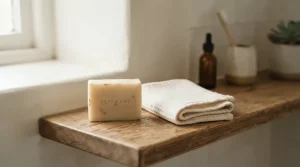
Let’s clear up a naming muddle. Formal patch testing is a specialist procedure carried out in dermatology departments. Small amounts of suspected allergens go on your skin, usually your back, and are checked over several days. The British Association of Dermatologists explains how patch testing works in its patient information, and notes it won’t detect food allergies. What you can do at home is a much simpler “use test”. It isn’t a diagnosis, just a sensible trial run for any new fragrance-free soap bar.
- Pick a calm week. Don’t start while your skin is flaring or while you’re trying three new products at once.
- Choose a small area. The inner forearm works well. Lather the bar, wash the patch and rinse as you normally would.
- Repeat twice daily for up to a week. Repeated exposure is more revealing than a single wash.
- Check at 48 hours, not just at once. The NHS explains that allergic reactions occur when a sensitised immune system meets the substance again, so reactions can be delayed.
- Scale up gradually. Hands first, then body, then face.
- Stop if anything flares. Speak to a pharmacist or GP. If reactions keep happening without a clear cause, ask whether referral for proper patch testing makes sense.
Note that Lucy Bee specifically recommends patch testing before first use. Brands that do this are doing you a favour.
Real-World Scenarios: Matching a Fragrance-Free Soap Bar to Your Life
Specs are abstract and routines are real, so here are three profiles with the reasoning spelled out.
The ward nurse (30+ hand washes a shift). Budget is modest, the environment is hot, dry and wet-work heavy, and frequency is relentless. The NHS lists soaps, detergents and wet work among risk factors, so the aim is to reduce total irritation, not hunt for a miracle. At home, Lucy Bee keeps the ingredient list short. Keep a hand cream nearby and ask your occupational health team about the soap used on shift.
The parent of a toddler with eczema. Budget is mid-range and baths are daily. Dr Bronner’s Baby Unscented has the creamier olive-led recipe. It’s not tear-free, so keep it off faces and out of eyes. Little Soap Company Unperfumed is a gentler-feeling alternative with oatmeal. Check any eczema routine with your GP or health visitor.
The student in a shared house. The budget is a few pounds a month, the soap dish never drains and showers are daily. Faith in Nature is cheap enough to replace, and firm palm-based bars tend to hold their shape better in damp dishes. Dove Sensitive twin packs are a convenient back-up.
Problem → Solution: When Your Fragrance-Free Soap Bar Still Isn’t Behaving
Even the gentlest bar can disappoint. These are the four most common complaints and what to try.
“My skin feels tight after washing.” True soap is alkaline. Friendly Soap lists a pH of 8-9 for bars in its range, while skin’s surface is mildly acidic. Use lukewarm water, rinse thoroughly and moisturise within minutes. If tightness persists, try olive-led Dr Bronner’s Baby Unscented or the mild-cleanser Dove Sensitive.
“It says fragrance-free, but I’m still reacting.” Look beyond the bar: laundry detergent, towels and shampoo running down your body all count. Re-read the ingredient list for “parfum”, “aroma”, “masking fragrance” or botanical oils. I found at least one widely sold cleansing bar whose ingredients on some retailer pages included masking fragrance, while other pages described it as fragrance-free. Persistent unexplained reactions deserve a GP conversation about patch testing.
“My bar turns to mush.” Use a draining dish and let it dry between uses. Firmer palm-based bars like Faith in Nature tend to cope better than soft, olive-heavy ones.
“It smells of something.” Base oils have a faint natural smell, which isn’t added fragrance. If a bar develops a sour smell or orange spots, the oils may have oxidised, so replace it.
How to Choose a Fragrance-Free Soap Bar: 7 Steps That Actually Matter
- Read the full ingredient list, not the front label. Look for “parfum”, “fragrance”, “aroma”, “masking fragrance” and essential oils by botanical name.
- Scan for named fragrance allergens. Linalool, limonene and citronellol usually signal scenting ingredients.
- Decide between true soap and a mild-cleanser bar. True soap lists names like sodium cocoate or sodium olivate, while bars like Dove Sensitive use mild cleansers instead.
- Match the base oil to your skin. Coconut-heavy bars lather big and clean strongly, while olive and shea add cushioning.
- Treat badges as ethics, not allergy guarantees. Vegan Society and cruelty-free marks say nothing about your skin’s reaction.
- Plan your patch testing routine before switching your whole household.
- Check the size and storage. A 95g bar and a 190g bar have very different lifespans.
Fragrance Allergy: What It Is and Why Soap Is a Frequent Culprit
Fragrance allergy is a specific immune response, not just “sensitive skin”. According to the NHS, the first exposure sensitises you and you don’t react. It’s re-exposure that turns skin red and itchy. After that, small amounts can set things off, which is why people with confirmed fragrance allergy usually avoid fragrance altogether rather than cut back.
Which fragrances matter most? A study of products on UK shelves in the British Journal of Dermatology found linalool was the most frequently labelled fragrance ingredient among 70 personal care products, including soaps, shampoos and shower gels. It also noted that linalool and limonene become significant allergens once oxidised. Many essential oils naturally contain these components, so “natural” scent isn’t a safe harbour.
How common is it? Regulatory estimates quoted in industry commentary suggest roughly 1-9% of people are sensitised to fragrance allergens. A fragrance-free soap bar removes one major source of exposure, but it isn’t a cure. If you suspect fragrance allergy, ask your GP whether referral for patch testing is appropriate.
Perfume-Free Soap for Sensitive Skin: Fragrance-Free, Unscented or Unperfumed?
Shop for perfume-free soap for sensitive skin and you’ll meet a thicket of near-synonyms: fragrance-free, unscented, unperfumed, perfume-free, “no added fragrance”. In theory, fragrance-free means no fragrance ingredient. Unscented can simply mean the bar doesn’t smell strongly, which can be achieved with a masking fragrance that neutralises odour.
As far as I could establish, these marketing terms aren’t policed to one strict standard on soap wrappers. The ingredient list is the real arbiter. In this round-up, Little Soap Company Unperfumed says no essential oils, Dr Bronner’s Baby Unscented says no added fragrance, and Dove Sensitive says fragrance-free.
Here’s a simple test. If you see “parfum”, “fragrance”, “aroma” or “masking” on the list, it isn’t fragrance-free. Also remember that even a genuinely fragrance-free bar smells faintly of its oils. When choosing perfume-free soap for sensitive skin, the back of the pack matters far more than the front.
Essential Oil-Free Soap: Why “Natural” Isn’t Automatically Gentle
Many “natural” brands scent soaps with essential oils instead of synthetic perfume. Your skin doesn’t care about the marketing. Friendly Soap’s ylang ylang bar, for instance, lists ylang ylang flower oil alongside linalool, benzyl benzoate, benzyl salicylate and farnesol. That’s the allergen disclosure you’d expect, and it shows exactly what’s riding along with a pleasant scent.
Contrast that with the bars here. Faith in Nature states no fragrance or essential oils, Little Soap Company Unperfumed says “absolutely no essential oils”, and Lucy Bee says no added fragrance or essential oils. Faith in Nature also sells naturally scented lines, which shows how one brand can offer both.
If you’re hunting for essential oil-free soap, watch for botanical names in the ingredient list, such as Lavandula, Melaleuca, Cananga or Citrus. Think of essential oil-free soap as the stricter cousin of fragrance-free. Also remember that “100% natural origin” describes sourcing, not safety.

Dye-Free and Fragrance-Free Soap: Does Colour Really Matter?
Dye-free and fragrance-free soap is the “nothing extra” ideal. Dye is the quieter half of that promise. Colourants show up as CI numbers or ingredients like mica, and mainstream cream bars often contain opacifiers or whiteners, such as CI 77891 (titanium dioxide). Check the list if colour is a worry.
Fragrance-free bars usually come out off-white to cream because the oils are naturally pale. Faith in Nature states it’s free from colour. The ingredient lists I reviewed for Lucy Bee, Dr Bronner’s Baby Unscented, Friendly Soap Aloe Vera and Little Soap Company Unperfumed didn’t include listed colourants.
Plant powders are a different story. Seaweed, oatmeal and aloe powders can add flecks or tint, but they’re functional ingredients, not dyes. If you avoid colourants strictly because of a dye allergy, that’s the distinction to keep in mind. For anyone shopping for dye-free and fragrance-free soap, the golden rule is the same as everywhere: read the full ingredient list.
Fragrance-Free Soap for Face and Body: Can One Bar Do Both?
Often yes, with caveats. Dr Bronner’s Baby Unscented pitches itself for face, body and hair, and Dove Sensitive is marketed for daily use on face, body and hands. One reviewer on a brand site says Lucy Bee removed makeup without scrubbing. I’d call that a single anecdote, not a rule.
Facial skin is thinner and more reactive, so a fragrance-free soap for face and body needs a gentler approach. Use lukewarm water, keep the lather time short and avoid eyes. Lucy Bee warns against eye contact, and Dr Bronner’s Baby Unscented isn’t tear-free. Moisturise afterwards.
If your face feels tight after washing, the bar may simply be too alkaline for you. In that case, a mild-cleanser bar like Dove Sensitive might suit better. A good fragrance-free soap for face and body should leave skin comfortable, not squeaky. If it feels squeaky, it’s cleaning too hard.
Fragrance-Free Soap Bar vs Liquid Soap: A Fair Fight?
A fragrance-free soap bar and a liquid soap aren’t equally simple, even when both say “gentle”. Liquids are mostly water, which means they need preservatives to stay safe on the shelf. A recent conference abstract in the British Journal of Dermatology analysed UK supermarket and NHS liquid hand soaps. It found fragrance allergens in 33% of the NHS products and methylisothiazolinone, a known contact allergen, in 15%.
| Factor | Fragrance-free soap bar | Fragrance-free liquid soap |
|---|---|---|
| Ingredient list | Often 4-10 ingredients, e.g. Lucy Bee, Friendly Soap Aloe Vera | Typically longer, with preservatives |
| Preservatives | Little Soap Company Unperfumed lists none synthetic | Water-rich formulas need them |
| Packaging | Often plastic-free, e.g. Faith in Nature, English Soap Company Sensitive Skin | Plastic bottles or refills |
| Convenience | Needs a draining dish | One-hand pump |
| Best For | Minimal-ingredient seekers | Shared sinks and hands-free use |
The pattern here is clear. Bars generally win on ingredient simplicity and packaging, while liquids win on convenience. If you’re managing sensitive skin, shorter ingredient lists are the more important advantage. Choose a bar for personal use and a liquid only where hands-free matters.
Long-Term Cost & Maintenance: Making Each Bar Go Further
Bars look cheap, but the maths is worth doing. If a bar costing around £3-£4 lasts four to six weeks of daily body and hand use, that works out at roughly 10-15p a day. Using the same bar for hands and body also trims your shopping list.
Maintenance is mostly about drainage. Keep the bar on a draining dish and let it dry between uses. Firm bars like Faith in Nature survive damp conditions better. Softer olive-led bars like Dr Bronner’s Baby Unscented need more care. A 190g bar like English Soap Company Sensitive Skin can be halved to serve two sinks.
Buy one bar first and run your patch testing routine. A multipack of the wrong bar costs far more than a single bar of the right one. Store spares somewhere cool and dry, and check ingredient lists whenever you reorder, since formulations can change.
UK Labelling Rules: What the Law Does (and Doesn’t) Tell You
UK cosmetics rules require 26 fragrance allergens to be listed individually on the label when they exceed 0.001% in leave-on products or 0.01% in rinse-off products. The European Commission has set out its fragrance allergens labelling position and, via Regulation (EU) 2023/1545, extended the list to around 80 substances. Industry commentary says that expanded list applies to new EU products from 31 July 2026.
The UK picture is less clear. Industry sources I found say Great Britain hasn’t formally adopted the expanded list, while Northern Ireland follows EU rules. Since brands selling across both markets often update labels for everyone, you may still see more allergens listed. Check the government’s cosmetics guidance for the current position.
What does this mean for you? A declared allergen is a clue that scenting ingredients are present, so it’s useful. But no allergen listed doesn’t mean no fragrance. Look for “parfum” or “aroma” too, and treat the ingredient list as your most reliable tool.
FAQ
❓ How long does a fragrance-free soap bar last?
❓ Can fragrance-free soap bars be used on babies?
❓ Is a fragrance-free soap bar worth paying more for?
❓ Can I still react to a fragrance-free soap bar?
❓ Can I use a fragrance-free soap bar for hand-washing at work?
Conclusion
Choosing a fragrance-free soap bar isn’t about chasing perfection. It’s about removing one variable so your skin has a chance to settle. The seven options here cover different priorities: Lucy Bee for the shortest recipe, Faith in Nature for budget, Dr Bronner’s Baby Unscented for versatility, Friendly Soap Aloe Vera for palm-free credentials, Little Soap Company Unperfumed for a proven rating, Dove Sensitive for easy availability, and English Soap Company Sensitive Skin for size.
Don’t forget the unglamorous bits. Read the ingredient list, run a patch testing routine before you switch the whole household, and be realistic about what fragrance-free can and can’t do. If you suspect a genuine fragrance allergy, a GP conversation beats any soap shelf.
Ready to start? Pick one bar, give it a fair trial and keep notes on how your skin responds.
✨ Ready for calmer skin?
🛁 Choose your bar, check current price and availability, and give your skin a fragrance-free fresh start. Your future self will thank you!
Recommended for You
- Unscented Soap Bars Multipack: 7 Best Picks For UK Homes (2026)
- Soap For Psoriasis: 7 Best Gentle Picks, Honestly Compared (2026)
- Coal Tar Soap For Psoriasis: 7 Honest UK Picks To Try (2026)
Disclaimer: This article contains affiliate links. As an Amazon Associate, I earn from qualifying purchases. If you purchase products through these links, we may earn a small commission at no additional cost to you.
✨ Found this helpful? Share it with your friends! 💬🤗
