In This Article
What is hypoallergenic soap for sensitive skin? It is a cleansing bar formulated to cut out the ingredients most likely to provoke irritation or allergy, usually fragrance, harsh detergents and certain preservatives. The word to underline is “minimise”. Hypoallergenic soap for sensitive skin lowers your odds of a reaction, but no label can promise a zero-risk wash for every pair of hands.

Stand in a UK pharmacy aisle and the problem becomes obvious. Every second bar whispers “gentle”, “mild” or “dermatologically tested”, and the packaging all looks reassuringly clinical. Yet the NHS says contact dermatitis, a type of eczema triggered by contact with a particular substance, is most commonly caused by irritants such as soaps and detergents. The thing you use to get clean can be the thing quietly making your skin angry.
So this guide does the label-reading for you. Below are seven bars you can realistically buy in the UK in 2026, from supermarket-budget to pharmacy-grade. Each is judged on its published ingredient list, the claims on its packaging and the themes in publicly visible reviews. Further down, we unpick hypoallergenic labelling and common soap allergens, and show how to patch-test a new bar without turning your forearm into a science experiment.
A quick honesty note. This article is based on published ingredient lists, manufacturer claims and public review themes rather than personal testing. Formulations vary by market and change over time, so always check the pack in your hand. It is general information, not medical advice. If your skin is persistently sore, cracked or blistered, speak to a pharmacist or GP.
Quick Comparison: 7 Hypoallergenic Soap for Sensitive Skin Bars at a Glance
Short on time? This table sorts the field by formulation type, fragrance status as published by retailers and makers, and who each bar suits best. Prices are ranges at the time of research and will vary, so check the current price before buying.
| Product | Type | Fragrance status (as published) | Price range | Best For |
|---|---|---|---|---|
| Simple Pure Soap | Traditional soap | No perfume or colour listed | £1.50–£4 | Ingredient-list minimalists |
| Dove Sensitive Skin Beauty Bar | Cream-enriched beauty bar | Described as fragrance-free | £2–£4 | Everyday face-and-body use |
| Sanex Dermo Sensitive Hypoallergenic Bar Soap | Soap bar with emollients | Parfum appears on listed ingredients | £1–£3 | Budget buyers who tolerate fragrance |
| Cetaphil Gentle Cleansing Bar | Soap-free bar | Varies by market, so check the label | £4–£7 | Dry, reactive skin |
| Eucerin pH5 Solid Soap for Sensitive Skin | Soap-free, pH5-buffered bar | Not confirmed in sources, so check the label | £4–£8 | Frequent hand-washers |
| Oilatum Gentle Cleansing Bar | Soap-free emollient bar | Marketed as free from fragrance | £3–£6 | Eczema-prone skin |
| Little Soap Company Organic Unperfumed Soap Bar | Oatmeal soap bar | Fragrance- and essential-oil-free | £2–£5 | Plastic-free, vegan shoppers |
Two patterns jump out. The cheapest bars are not automatically the simplest: Simple Pure Soap has the shortest published ingredient list of the lot, while Sanex Dermo Sensitive Hypoallergenic Bar Soap lists parfum despite its label. The soap-free options (Cetaphil Gentle Cleansing Bar, Eucerin pH5 Solid Soap for Sensitive Skin and Oilatum Gentle Cleansing Bar) cost more but target dry, reactive skin where classic soap can feel tight. If fragrance is your trigger, start with the first two rows. If dryness is the problem, look at rows four to six.
💬 Just one click — help others make better buying decisions too!😊
Top 7 Hypoallergenic Soap for Sensitive Skin Bars: Expert Analysis
Every entry follows the same logic: what stands out, what the specs mean in practice, who the bar suits, what reviewers say and where it falls short. Prices are ranges only. Click through to check current pricing and availability.
1. Simple Pure Soap — shortest ingredient list in the lineup
The case for Simple Pure Soap is almost aggressively minimal: fewer ingredients means fewer suspects.
A UK supermarket’s published list runs to just eight items. These are sodium palmate, water, sodium palm kernelate, glycerin, palm kernel acid, sodium chloride and two chelating agents (tetrasodium EDTA and tetrasodium etidronate) that help keep the bar stable. There is no perfume and no colour, and the maker describes it as dermatologically tested and vegan-friendly. That brevity matters most if you ever need to work out what is bothering you, because nobody can diagnose an ingredient list they can’t read.
On the spec comparison, this is the bar to try first if fragrance is your suspected trigger. The caveat is that it is a traditional soap, so it behaves more alkaline than the soap-free bars below. On very dry or eczema-prone skin that can feel tight.
Reviewers on public retail listings describe it as mild and unperfumed with a creamy lather, and several say they have used it for years, including one who mentions a past eczema flare. I couldn’t verify an aggregated Amazon UK rating at the time of research, so skim the three-star reviews on the product page.
Pros:
- ✅ Very short, easy-to-audit ingredient list
- ✅ No perfume or colour listed
- ✅ Vegan-friendly and widely stocked
Cons:
- ❌ Traditional soap can feel drying on eczema-prone skin
- ❌ Palm-derived ingredients may not suit every ethical preference
Expect under about £4 for a twin pack (prices may vary). That is top-tier value for a short-list formula.
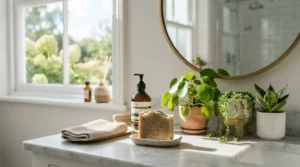
2. Dove Sensitive Skin Beauty Bar — cream-enriched comfort for daily use
The selling point of Dove Sensitive Skin Beauty Bar is texture. It is built to feel like a moisturiser that happens to foam.
The maker describes it as fragrance-free, hypoallergenic and dermatologically tested, made with mild cleansers and a quarter moisturising cream, and suitable for face, body and hands. It is also described as sulphate (SLES) free. That last point is more reassurance than differentiator, because SLES is mainly a liquid-wash ingredient rather than a bar-soap one. The cream content is what translates into daily life: it is why a beauty bar tends to leave skin less tight than a classic soap.
On paper, this is a sensible mainstream default for someone who is sensitive rather than allergic. It is easy to find, easy to understand and unperfumed according to the brand. If you are managing a diagnosed allergy, still read the full list on the pack, because cream-based bars generally contain more components than a pure soap.
The only review sentiment I could verify came from a US retailer page for the equivalent bar. There a reviewer says it doesn’t irritate sensitive skin and lasts well. I couldn’t confirm a UK aggregate, so check UK reviews directly.
Pros:
- ✅ Fragrance-free formula, according to the maker
- ✅ Moisturising cream leaves skin less tight
- ✅ Easy to find in a twin pack
Cons:
- ❌ Longer formulation than pure soap bars to audit
- ❌ Cream-rich bars can soften if left sitting wet
Roughly £2–£4 for two bars. Sound value for everyday family use.
3. Sanex Dermo Sensitive Hypoallergenic Bar Soap — bargain price with a labelling twist
The headline for Sanex Dermo Sensitive Hypoallergenic Bar Soap is affordability. The footnote is fragrance.
The maker says it is developed for sensitive skin on the face and body, aiming to maintain the skin’s natural barrier while keeping it hydrated. The ingredient list on a UK supermarket page includes sodium palmate, sodium oleate, glycerin, kaolin, petrolatum, dimethicone and, notably, parfum. The glycerin, petrolatum and dimethicone are the emollient trio that makes it feel kinder than plain soap, and kaolin is a mild clay. The parfum is the catch.
Based on that list, this bar suits people who are irritation-prone but have no known fragrance allergy. If fragrance is your trigger, skip it. It is also a live demonstration of why hypoallergenic labelling shouldn’t replace reading the ingredients. Formulations can change, so confirm on the pack.
One UK supermarket page shows 66 reviews, and a reseller listing summarises feedback as positive about gentleness. That is indicative rather than a rigorous sample, and I couldn’t verify Amazon UK data.
Pros:
- ✅ Very low price for a twin pack
- ✅ Emollient ingredients soften the wash
- ✅ Positioned for both face and body
Cons:
- ❌ Parfum appears on the published ingredient list
- ❌ Poor fit if fragrance allergy is suspected
Roughly £1–£3 for two bars. Excellent value if you tolerate light fragrance.
4. Cetaphil Gentle Cleansing Bar — dermatology pedigree, label-check required
Cetaphil Gentle Cleansing Bar is the soap-free option with the strongest clinical branding, and the one that most rewards careful reading.
Retail descriptions call the 127g bar soap-free, hypoallergenic, paraben-free and dermatologist-tested, with glycerin for hydration and a non-comedogenic formula for face use. The maker states it is clinically proven to be gentle on sensitive skin. Soap-free bars sit closer to your skin’s natural pH than traditional soap, which is why they suit dry or reactive skin.
Here is the wrinkle. Some retailers describe the bar as fragrance-free, yet the ingredient list on Cetaphil’s Canadian site includes parfum and several declared fragrance allergens such as linalool and limonene, plus sodium tallowate, an animal-derived ingredient. Formulations clearly differ between markets. For the UK pack, read the label before committing.
Public review data for the UK version was thin in my research, so I can’t offer a reliable sentiment summary.
Pros:
- ✅ Soap-free base suits dry, reactive skin
- ✅ Glycerin supports hydration while cleansing
- ✅ Dermatologist-tested, face-and-body use
Cons:
- ❌ Fragrance status inconsistent across market listings
- ❌ Some versions contain animal-derived ingredients
Roughly £4–£7. Good value only if the UK formulation matches your needs.
5. Eucerin pH5 Solid Soap for Sensitive Skin — pH-balanced for frequent washing
Eucerin pH5 Solid Soap for Sensitive Skin (the maker’s global name is the pH5 Soap-Free Bar) is built around one idea: respect the skin’s acidity.
The 100g bar uses a pH5 citrate buffer, mild surfactants and dexpanthenol. The maker says it is suitable for frequent use, even on skin normally intolerant to soap. Your skin surface is mildly acidic, and alkaline cleansers can nudge that balance, so a buffered, soap-free bar aims to keep wash-day disruption to a minimum. The claim about intolerant skin is the manufacturer’s, and I couldn’t independently review the clinical data.
This bar looks best suited to frequent hand-washers and anyone with dry, sensitive skin who wants a step up from classic soap. Fragrance status wasn’t confirmed in the sources I could access, so check the pack if fragrance is a concern.
UK retail review data was sparse in my research, so I won’t pretend to summarise it. Read recent reviews before buying.
Pros:
- ✅ pH5-buffered, soap-free formulation
- ✅ Contains dexpanthenol for skin comfort
- ✅ Maker positions it for frequent use
Cons:
- ❌ Pricier than supermarket alternatives
- ❌ Fragrance status not confirmed in available sources
Roughly £4–£8. Fair value for barrier-conscious users who wash often.

6. Oilatum Gentle Cleansing Bar — pharmacy-aisle bar for eczema-prone skin
Oilatum Gentle Cleansing Bar is the most overtly clinical option here, aimed at dry, sensitive and eczema-prone skin.
Listings describe the 100g bar as soap-free, pH-balanced, dermatologically tested and hypoallergenic, with an emollient focus. One retailer says it is endorsed by the British Skin Foundation, a claim worth confirming on the pack. The soap-free formula is the practical point: it cleans without the stripping, tight feeling that traditional soap can leave on compromised skin. That makes it a credible gentle soap for very sensitive skin.
The international listing I found says the formula was developed for a specific regional market, so the UK pack may differ in detail. A UK pharmacy site lists an Oilatum soap bar of the same size as gentle cleansing for dry, sensitive skin.
I couldn’t verify a robust review aggregate, so treat sentiment as unconfirmed and read current feedback.
Pros:
- ✅ Soap-free, pH-balanced emollient formula
- ✅ Targeted at dry, eczema-prone skin
- ✅ Dermatologically tested, per listings
Cons:
- ❌ Formulation details may differ between markets
- ❌ Soap-free bars often lather less richly
Roughly £3–£6. Strong value if dryness is your main issue.
7. Little Soap Company Organic Unperfumed Soap Bar — oatmeal, plastic-free and vegan
Little Soap Company Organic Unperfumed Soap Bar is the feel-good pick for shoppers who care about ethics as much as ingredients.
The 110g bar is described as fragrance-free and essential-oil-free, with oatmeal for a soothing feel. It is dermatologically tested, made with RSPO-certified palm oil, plastic-free and vegan, and free from SLS, sulphates, alcohol, parabens, sorbates, silicones and synthetic preservatives. A solid soap typically needs less preservation than a water-rich liquid, so a preservative-light bar is plausible, though I’d still read the pack.
Analytically, it’s a strong allergy-friendly soap bar on paper, and its cruelty-free, plastic-free credentials make it an easy swap into an eco-minded routine. Like any traditional soap, it is more alkaline than soap-free bars. Oat is a plant ingredient, so anyone with a known oat sensitivity should skip it.
Public review data was limited in my research, so I can’t offer a verified summary. Stock and availability vary by retailer, so check Amazon UK.
Pros:
- ✅ Unperfumed and free from essential oils
- ✅ Plastic-free, vegan and cruelty-free
- ✅ Oatmeal adds a soothing, gentle feel
Cons:
- ❌ Traditional soap may drain very dry skin
- ❌ Availability can vary by retailer
Under roughly £5 for a single bar. Good value for ethically minded buyers.
Your First 30 Days With a New Bar: Setup, Patch Test and Routine
Even the best-reviewed bar can misbehave if you introduce it badly. Here is a practical routine that product pages don’t give you.
Week 0: patch test first
Lather the bar, dab a little on your inner forearm and leave it for a few minutes, as you would on a normal wash. Rinse and pat dry, then repeat twice a day for two days. Allergic reactions are delayed and appear on re-exposure, so one clear wash proves very little.
Weeks 1–2: hands first
Move to the hands, then the body, and the face last if the bar is labelled for it. Change one thing at a time. If you swap soap, moisturiser and laundry detergent in the same week, you will never know the culprit.
Weeks 3–4: lock in the routine
Use lukewarm water and lather in your hands rather than scrubbing with a flannel. Rinse thoroughly, pat dry and apply moisturiser within a few minutes, while skin is still slightly damp.
Maintenance and common mistakes
Keep the bar on a draining dish so it dries between uses. A bar sitting in a puddle turns mushy and wastes money. Keep a two-line diary of date, product and skin comment. The classic first-month mistakes are starting two new products at once, using hot water, scrubbing, and abandoning moisturiser.

Real-World Scenarios: Matching a Bar to Your Life
Specs are abstract. Here are four buyer profiles with budget, environment and frequency of use.
The frequent hand-washer. You wash your hands thirty-plus times a shift in dry air, with about £5 a month to spend on skin care. The maker positions Eucerin pH5 Solid Soap for Sensitive Skin for frequent use, and Oilatum Gentle Cleansing Bar is aimed at dry, eczema-prone skin. Pair either with a fragrance-free hand cream. The NHS notes that wet work raises the risk of irritant contact dermatitis, so protecting your barrier matters more than lather.
The family on a budget. Four people, one bathroom, under £10 a month. Simple Pure Soap is an easy fit: unperfumed, short ingredient list and cheap per wash. Sanex Dermo Sensitive Hypoallergenic Bar Soap is an option only if nobody has fragrance sensitivity. For babies, ask a pharmacist first.
The winter-flare adult. Your shins itch every January. A soap-free bar such as Cetaphil Gentle Cleansing Bar, after checking the UK pack for fragrance, is a reasonable start. Keep washes short and lukewarm, moisturise and see a GP if flares persist.
The plastic-free shopper. Little Soap Company Organic Unperfumed Soap Bar ticks plastic-free, vegan and fragrance-free in one go. It is also a credible allergy-friendly soap bar for households that want fewer plastic bottles. Dove Sensitive Skin Beauty Bar suits anyone who simply wants a familiar, creamy everyday option.
✨ Ready to Shop Smarter?
🔍 Take your skin-care routine to the next level with these carefully selected bars. Click on any highlighted product name to check current pricing and availability. A little label-reading now means calmer, more comfortable skin for your whole household! 🧼
Problem → Solution Guide: Fixing Common Soap Headaches
Problem 1: skin feels tight after washing. Traditional soap is the usual suspect. Switch to a soap-free option such as Oilatum Gentle Cleansing Bar, use lukewarm water and moisturise promptly.
Problem 2: a rash appears a day or two after starting a new bar. Stop using it. A delayed reaction is the classic pattern of allergic contact dermatitis, and a pharmacist or GP can advise next steps. Don’t restart “to test it again” on already inflamed skin.
Problem 3: the label says hypoallergenic but you’re still reacting. Check the ingredient list for parfum, linalool, limonene or essential oils. Sanex Dermo Sensitive Hypoallergenic Bar Soap shows how a hypoallergenic claim and parfum can coexist. Move to an unperfumed bar like Simple Pure Soap.
Problem 4: the bar goes soggy. Use a draining dish and let it dry between uses. Cream-rich bars like Dove Sensitive Skin Beauty Bar are the most prone to softening.
Problem 5: you doubt a listing’s safety. In Great Britain, GOV.UK guidance on cosmetics says products must be safety-assessed and have a named Responsible Person with a UK or EU address. Thin or missing product information is a warning sign. Stick with brands that publish full ingredient lists.
Hypoallergenic Labelling: What the Claim Really Promises
Here is the uncomfortable truth about hypoallergenic labelling: I couldn’t find a single UK pass-or-fail badge behind it. Instead, the claim sits under the general cosmetic claims rules. The Cosmetic, Toiletry & Perfumery Association explains that claims in the UK and EU must meet six common criteria under Regulation 655/2013, including legal compliance, truthfulness and evidential support. A brand has to be able to back up what it prints.
EU-level technical guidance, which is non-binding but widely used as a yardstick, adds two useful ideas. A product described as hypoallergenic should be designed to minimise allergenic potential, and it shouldn’t imply a complete absence of risk. The European Commission’s own claims report also noted that seven member states had found hypoallergenic claims with no supporting evidence.
What does that mean at the shelf? Treat hypoallergenic labelling as a starting signal rather than a verdict. The clearest illustration in this guide is Sanex Dermo Sensitive Hypoallergenic Bar Soap, whose published list includes parfum, which proves a bar can wear the label and still carry fragrance. A genuinely unperfumed bar like Simple Pure Soap tells you more in its ingredient list than any front-of-pack claim could. Flip the pack, read the list and let the ingredients overrule the adjectives.
Common Soap Allergens: What to Look For on the Label
The short version of common soap allergens: fragrance, preservatives and certain cleansing agents do most of the damage. A bar soap sidesteps some of them by design.
Fragrance and essential oils
Fragrance is the headline act. A 2026 conference abstract in the British Journal of Dermatology audited UK supermarket and NHS liquid hand soaps. It found fragrance allergens such as parfum, linalool, citronellol and cinnamal more prevalent in supermarket products. Natural isn’t automatically safe either: essential oils are fragrance by another name.
In Great Britain, 26 fragrance allergens must be listed individually above 0.001% in leave-on or 0.01% in rinse-off products. The EU and Northern Ireland extended that list for new products from 31 July 2026. Great Britain had not formally adopted the expansion at the time of research, so check the latest OPSS guidance.
Preservatives and surfactants
The same study found NHS soaps carried more preservative allergens, including phenoxyethanol, benzoic acid and methylisothiazolinone (MI). Cocamidopropyl betaine was the single most frequently identified allergen, detected in 76% of products. A British Journal of Dermatology review put MI contact allergy at around 1.5% of people. Solid bars generally need less preservation than water-rich liquids, which is one reason many dermatology-minded shoppers lean towards them.
What makes an allergy-friendly soap bar?
In practice, an allergy-friendly soap bar is unperfumed, free of essential oils and dyes, short on ingredients and transparent about all of them. On paper, Simple Pure Soap and Little Soap Company Organic Unperfumed Soap Bar fit that description most cleanly, and Dove Sensitive Skin Beauty Bar is described as fragrance-free. But an allergy-friendly soap bar for you depends on your triggers, not on marketing. If you know yours, patch testing through dermatology is the reliable route to a personal avoid-list.
Contact Dermatitis and Soap: Irritant or Allergic?
Not every angry patch of skin is an allergy, and the difference shapes which soap you should buy.
Irritant contact dermatitis is the common one. The NHS says it may be caused by frequent exposure to a weak irritant such as soap or detergent. Risk is higher if you also have atopic eczema or do a lot of wet work. Milder irritants may not cause trouble immediately, because it can take repeated exposure. Heat, cold, friction and low humidity can make symptoms worse, which is why a hot, scrubby wash in a dry winter bathroom is a recipe for trouble.
Allergic contact dermatitis works differently. The first exposure sensitises you, and the reaction arrives on re-exposure. That is why a soap you’ve used for months can suddenly turn on you. The British Association of Dermatologists explains in its patient leaflet on contact dermatitis that allergic contact dermatitis is diagnosed by patch testing in specialist departments. Avoiding the culprit is the cure, and it can take months for skin to settle.
Practically, suspected irritant problems call for a gentle, soap-free or very mild bar plus moisturiser. Suspected allergy calls for an unperfumed, short-list bar to buy you time, but a patch test gives you answers. Speak to a pharmacist, or a GP if symptoms are persistent, recurrent or severe.
How to Choose Hypoallergenic Soap for Sensitive Skin
What is the best way to choose hypoallergenic soap for sensitive skin? Pick an unperfumed bar with a short, readable ingredient list, match the cleanser type to how dry or reactive your skin is, then patch-test before committing. Here is the process in six steps.
- Start with fragrance. If parfum, linalool or limonene appears, it is a scented bar, whatever the front says. Most common soap allergens begin here.
- Choose your cleanser type. Traditional soap suits resilient skin, while soap-free bars suit dry or eczema-prone skin.
- Read the whole list, not the front. Short lists are easier to audit and easier to explain to a clinician.
- Treat claims as clues. “Hypoallergenic” and “dermatologically tested” are starting points, not guarantees.
- Check the pack in your hand. Lists differ by market and change over time, and Cetaphil Gentle Cleansing Bar is the cautionary tale.
- Patch-test, then reassess after a fortnight. If skin is calmer, keep going. If not, stop and seek advice.
Apply the six steps to the table above and the shortlist usually writes itself.
Gentle Soap for Very Sensitive Skin: When “Mild” Isn’t Mild Enough
Some skin needs more than a nice label. If your hands crack in winter or your forearms flare after a shower, you are shopping for gentle soap for very sensitive skin, and the bar of choice may not be soap at all.
UK patient leaflets on hand dermatitis, including a hospital-trust leaflet on hand eczema and the BAD’s hand-care guidance, steer towards soap substitutes or, at minimum, non-perfumed soap. Of our seven, Oilatum Gentle Cleansing Bar and Eucerin pH5 Solid Soap for Sensitive Skin are designed for exactly that brief. Cetaphil Gentle Cleansing Bar is a contender once you’ve checked the UK pack for fragrance.
If you prefer a traditional bar, Simple Pure Soap is the least fussy way to do it. Whatever you choose as your gentle soap for very sensitive skin, keep washes short, avoid hot water and don’t scrub. If skin is oozing, looks infected or isn’t improving, see a GP. Pharmacists can also point you to emollient soap substitutes made for the job.
Bar Soap vs Soap-Free Bars vs Liquid Wash: Which Suits You?
The bar aisle hides a real chemical divide. Traditional soaps are made by saponifying fats and tend to be alkaline. Soap-free bars use synthetic cleansers designed to sit closer to skin’s natural acidity. Cream bars sit in between, adding moisturising ingredients to soften the wash. Liquid washes are convenient but usually need more preservatives to stay stable.
| Option | Typical skin feel | Allergen watch-points | Best For |
|---|---|---|---|
| Traditional bar (Simple Pure Soap, Little Soap Company Organic Unperfumed Soap Bar) | Clean, can feel tight | Fragrance, essential oils | Resilient sensitive skin, minimalists |
| Soap-free bar (Cetaphil Gentle Cleansing Bar, Eucerin pH5 Solid Soap for Sensitive Skin, Oilatum Gentle Cleansing Bar) | Softer, closer to skin pH | Check fragrance on each pack | Dry or eczema-prone skin |
| Cream bar (Dove Sensitive Skin Beauty Bar, Sanex Dermo Sensitive Hypoallergenic Bar Soap) | Moisturised, mild | Parfum in some | Everyday family use |
| Liquid hand wash | Varies widely | Preservatives, cocamidopropyl betaine | Convenience, shared sinks |
Read across the table and the logic is clear. If fragrance is your problem, a traditional unperfumed bar gives the cleanest audit trail. If dryness is the problem, a soap-free bar is the better engineered answer. Liquid washes earn their place in busy shared bathrooms, but the UK audit above is a reminder that they carry their own preservative and surfactant baggage.
Dermatologically Tested Soap Bar UK: What the Phrase Does and Doesn’t Tell You
Walk the soap aisle and nearly every bar claims to be a dermatologically tested soap bar UK shoppers can trust. Simple Pure Soap, Little Soap Company Organic Unperfumed Soap Bar, Oilatum Gentle Cleansing Bar and Dove Sensitive Skin Beauty Bar all use some version of the line. It sounds weighty, but it is also surprisingly elastic.
Typically, “dermatologically tested” signals that a dermatologist oversaw some form of tolerance testing. The design, size and results of that testing are rarely published. It is not the same as dermatologist-recommended, and it is certainly not the same as hypoallergenic. Eucerin pH5 Solid Soap for Sensitive Skin goes a step further in its wording, citing clinical and dermatological studies on tolerability, though I couldn’t independently review the data.
Use the claim as one filter among several. A dermatologically tested soap bar UK retailers stock is a reasonable baseline, particularly as the GOV.UK guidance cited earlier says every cosmetic sold in Great Britain must be safety-assessed first. But the ingredient list still decides whether a bar suits you. A charity endorsement, such as the British Skin Foundation approval that one retailer attributes to Oilatum Gentle Cleansing Bar, is a different kind of signal again, and worth confirming on the pack.
Long-Term Cost & Value: What a Bar Really Costs You
Price per bar tells you little. Price per month of comfortable skin tells you more. At the time of research, all seven sit between supermarket-budget and mid-range pharmacy pricing. Prices may vary by retailer and pack size, so check the current price before buying.
Think in three tiers. The budget tier is Sanex Dermo Sensitive Hypoallergenic Bar Soap, Simple Pure Soap and Dove Sensitive Skin Beauty Bar. The middle is Little Soap Company Organic Unperfumed Soap Bar and Oilatum Gentle Cleansing Bar. The premium tier is Cetaphil Gentle Cleansing Bar and Eucerin pH5 Solid Soap for Sensitive Skin. A single 90–127g bar used by one person for hands, face and body typically lasts weeks, so even higher-priced bars should work out at a few pounds a month. That is an estimate, and usage varies, especially with how well you keep the bar dry.
The hidden cost is a bad pick. A bar that triggers a reaction and sends you to the pharmacy for creams costs more than any soap. Tolerance first, price second.
| Product | Price range (check current) | Size per listing | Value verdict | Best For |
|---|---|---|---|---|
| Simple Pure Soap | £1.50–£4 | 125g bars | Excellent | Minimalists |
| Dove Sensitive Skin Beauty Bar | £2–£4 | 2 × 90g | Very good | Everyday use |
| Sanex Dermo Sensitive Hypoallergenic Bar Soap | £1–£3 | 2 × 90g | Excellent if fragrance is fine | Tight budgets |
| Cetaphil Gentle Cleansing Bar | £4–£7 | 127g | Good if the UK formula suits | Dry skin |
| Eucerin pH5 Solid Soap for Sensitive Skin | £4–£8 | 100g | Good | Frequent washing |
| Oilatum Gentle Cleansing Bar | £3–£6 | 100g | Good | Eczema-prone skin |
| Little Soap Company Organic Unperfumed Soap Bar | £2–£5 | 110g | Very good | Plastic-free shoppers |
The table backs up the maths. The cheapest bars deliver outstanding value for people who tolerate them, while the pricier soap-free bars earn their premium when dryness is the main problem. If you are choosing an allergy-friendly soap bar, paying a little more for a clean, confirmed formula is usually cheaper than guessing wrong.
FAQ
❓ Is hypoallergenic soap for sensitive skin safe if I have eczema?
❓ Is fragrance-free the same as unperfumed?
❓ How long should I patch test a dermatologically tested soap bar UK stores sell?
❓ Can I use an allergy-friendly soap bar on my face?
❓ Where can I buy a gentle soap for very sensitive skin in the UK?
Conclusion
Choosing hypoallergenic soap for sensitive skin comes down to three habits: read the ingredient list, match the cleanser type to your skin, and patch-test before you commit. Hypoallergenic labelling and dermatologically tested badges are helpful clues, but neither replaces knowing which common soap allergens affect you.
If fragrance is your suspected trigger, begin with Simple Pure Soap or Little Soap Company Organic Unperfumed Soap Bar. For dry, eczema-prone skin, Oilatum Gentle Cleansing Bar and Eucerin pH5 Solid Soap for Sensitive Skin are built for the job, and Cetaphil Gentle Cleansing Bar is worth a look once you’ve checked the UK pack. For an easy everyday family option, Dove Sensitive Skin Beauty Bar is a solid mainstream choice, and Sanex Dermo Sensitive Hypoallergenic Bar Soap works if nobody in the house reacts to fragrance. For an allergy-friendly soap bar that also keeps your bathroom plastic-free, the oatmeal bar from Little Soap Company is hard to beat on paper.
Whichever you pick, give it a fortnight, keep a two-line diary and moisturise like you mean it. If your skin stays angry, a GP or pharmacist is the next stop.
✨ Your Skin Deserves a Calmer Wash!
💬 Compare the bars above, click any highlighted product name to check current pricing and availability, and choose the one that fits your skin, your budget and your routine. Your hands will thank you!
Recommended for You
- Fragrance-Free Soap Bar: 7 Gentle Best Picks For UK Skin (2026)
- Unscented Soap Bars Multipack: 7 Best Picks For UK Homes (2026)
- Soap For Psoriasis: 7 Best Gentle Picks, Honestly Compared (2026)
Disclaimer: This article contains affiliate links. As an Amazon Associate, I earn from qualifying purchases. If you purchase products through these links, we may earn a small commission at no additional cost to you.
✨ Found this helpful? Share it with your friends! 💬🤗
