In This Article
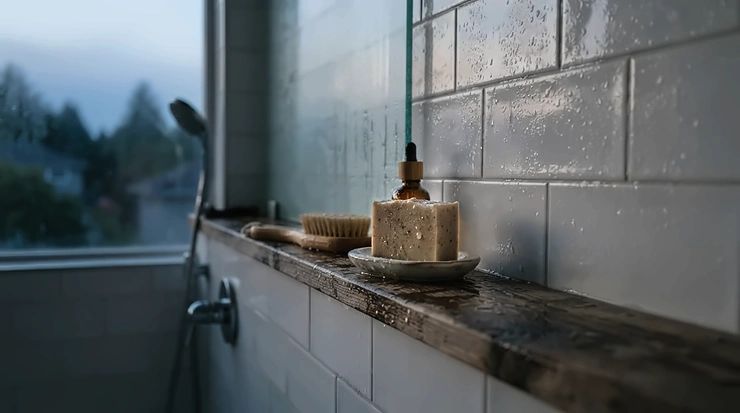
Bath time should be the easy bit. Then your child climbs out with itchy elbows and a blotchy neck, or flatly refuses anything that smells like fruit salad. Suddenly the soap dish feels like a minefield.
What Is a Hypoallergenic Soap Bar for Kids?
A hypoallergenic soap bar for kids is a solid cleansing bar formulated to lower the odds of triggering skin reactions in children, usually by dropping heavy perfume, dyes and harsh detergents. It is a marketing promise rather than a guarantee, so the ingredient list matters far more than the claim on the wrapper.
Here’s why it deserves your attention. NHS hospital leaflets put eczema at roughly one in five UK children, and plenty more have skin that is simply touchy. NICE’s September 2025 review of its under-12s eczema guidance, meanwhile, found no benefit from bathing less. So the useful question isn’t how often your child washes. It’s what they wash with.
This guide compares seven real products and explains what their specs mean in practice. It covers a gentle soap bar for children of every age, a mild soap bar for babies UK parents can actually find, and soap for toddlers with sensitive skin. Along the way it digs into paediatric skin sensitivity, tear-free formulas and school-age skincare, with a few honest warnings about where bar soap can go wrong.
Quick Comparison: 7 Gentle Bars at a Glance
| Product | Standout trait | Best For | Price range* |
|---|---|---|---|
| Sebamed Baby Cleansing Bar | Soap-free, pH 5.5 | Newborns and very reactive skin | Around £4-£6 |
| Childs Farm Kids Blueberry & Organic Mango Body Wash Bar | Soap-free, plastic-free, scented | Fussy school-age kids | Around £3-£5 |
| Simple Pure Soap | No perfume, no colour | Budget family washing | Under £5 |
| Dove Sensitive Skin Beauty Bar | Moisturising-cream bar | Tweens and school-age kids | Around £2-£5 |
| Funky Soap Shop Buttermilk Baby Soap & Shampoo Bar | Soap and shampoo in one | Minimalist routines | Under £10 |
| Bambino Baby Soap | Very low cost | Tight budgets | Under £4 |
| Johnson’s Baby Soap with Honey | Familiar and widely recommended | Babies and mixed-age households | Under £4 |
*Approximate ranges at the time of research. Prices may vary, so check current price.
Looking at the table, Sebamed Baby Cleansing Bar earns the “safest bet” slot because of its soap-free chemistry, while Simple Pure Soap and Bambino Baby Soap win on cost. Childs Farm Kids Blueberry & Organic Mango Body Wash Bar is the one to try if scent is the bath-time battleground. The trade-off throughout is fragrance and cleansing base: the bars at the sensitive end are plainer, and plainer is sometimes a harder sell to a seven-year-old.
💬 Just one click — help others make better buying decisions too!😊
Top 7 Hypoallergenic Soap Bar for Kids Picks: Expert Analysis
1. Sebamed Baby Cleansing Bar — soap-free with a skin-matched pH 5.5
The standout is the chemistry. This is a syndet (a synthetic detergent bar) rather than a traditional soap, which is how it sits at a skin-friendly pH of 5.5 while true soaps run more alkaline.
At 150g it is a big bar, so the cost per wash drops. Retailer listings describe it as soap-free, alkali-free, enriched with panthenol and free from parabens, phthalates and dyes. In practice, a pH close to the skin’s own is meant to support the acid mantle, the thin, slightly acidic film that helps keep irritants out. That matters most for babies and children with reactive skin.
Based on the spec comparison, this is the strongest all-rounder for newborns, toddlers and any child with paediatric skin sensitivity. The trade-off is lather. Retailers openly note it foams less than conventional baby soaps, and a child raised on bubble bath may decide it “isn’t working”. Low foam does not mean low clean.
The overseas retailer pages I found carried a modest number of reviews. Parents mostly praised its gentleness on newborn skin, and low lather was the one recurring caveat. I couldn’t verify a large UK review pool, so treat that as directional.
Pros:
- ✅ Soap-free formula with skin-matched pH 5.5
- ✅ Large 150g bar lowers cost per wash
- ✅ Free from parabens, phthalates and dyes
Cons:
- ❌ Lathers noticeably less than ordinary baby soaps
- ❌ Costs more than supermarket own-brand bars
Expect roughly £4-£6; check current price. The bar size makes it good value.
2. Childs Farm Kids Blueberry & Organic Mango Body Wash Bar — scented, but soap-free and plastic-free
Here is the rare bar that tries to keep children happy and skin calm at once. It uses coconut-derived, soap-free cleansers rather than traditional soap.
The 60g bar is described as 93% natural origin, calculated to ISO 16128. That figure measures where ingredients come from, not how gentle they are, so don’t read it as a safety score. It also contains plant glycerin and a blueberry and organic mango fragrance, and it is free from parabens, phthalates and artificial colours. It is made in the UK and wrapped without plastic.
What most buyers overlook is the fragrance. For a child with eczema or a history of reactions, any perfume is the first suspect, so this isn’t the pick for your most reactive skin. For a school-age child who flatly refuses unscented soap, it is a sensible compromise: soap-free base, short-lived fruity scent, no dyes.
The 60g size is the practical catch. Used daily, it will vanish faster than the larger bars here. I couldn’t find a sizeable independent UK review pool for this specific bar, so I can’t summarise reviewer sentiment fairly.
Pros:
- ✅ Soap-free cleansers rather than traditional soap
- ✅ Fruity scent that fussy kids accept
- ✅ Plastic-free wrapping, made in the UK
Cons:
- ❌ Fragranced, so patch test on reactive skin
- ❌ Small 60g bar disappears quickly
Expect roughly £3-£5; check current price. Good value as a convincing bribe.
3. Simple Pure Soap — no perfume or colour, found almost everywhere
Simple’s appeal is subtraction. No perfume, no colour, dermatologically tested, and sold in most UK supermarkets and chemists in 125g bars.
One thing the front label won’t tell you is that this is a traditional soap. An ingredient list on one overseas listing includes soap-type ingredients such as sodium cocoate, while a UK supermarket listing describes the current bar as vegan-friendly. That suggests the recipe has changed over time, so check the pack in your hand. True soap is more alkaline than a syndet and can dry some children’s skin.
Analytically, it suits children who are generally sensitive but not eczema-prone, and it works well as a shared family bar. It’s also the obvious pick for school and sports bags, where nobody wants to carry a £6 bar. For babies, a syndet bar is the safer first step.
For reviewer sentiment, a Mumsnet roundup names it a best gentle bar. Shopper reviews on retail listings frequently mention the lack of scent and the creamy lather, with some eczema-prone households saying they’ve used it for years. Those are individual experiences, and NHS guidance on soap and eczema (covered later) points the other way.
Pros:
- ✅ Genuinely unperfumed and uncoloured
- ✅ Easy to find and cheap to replace
- ✅ Good lather children enjoy
Cons:
- ❌ Traditional soap can dry sensitive skin
- ❌ Recipe has changed over the years
Expect under £5; check current price. Marketplace listings can cost more than supermarket shelves, so compare before buying.
4. Dove Sensitive Skin Beauty Bar — a moisturising-cream bar that isn’t technically soap
Dove builds its bar around a quarter moisturising cream, and the result feels closer to a lotion than a block of soap.
This is a fragrance-free, hypoallergenic beauty bar of 90g, described as free from SLES sulphates and parabens and pH balanced. It’s designed for hands, body and face. That versatility is its real-world strength: one bar covers the sink, the shower and the mud-caked knees.
My take is that it’s best for school-age children, tweens and families who share one bar. It isn’t marketed as a baby product, and I found no tear-free claim on the listings I reviewed, so I’d keep younger toddlers on a baby-specific bar. The cream also leaves some film on the skin, which many sensitive-skin families like and others find “slippery”.
On reviews, retailer pages for the wider Dove baby range show high ratings. However, several of the visible reviews were collected as part of free-sample promotions, so I’d weigh them lightly. I couldn’t verify an independent UK pool for this exact bar.
Pros:
- ✅ Fragrance-free, with a quarter moisturising cream
- ✅ Safe for face, hands and body
- ✅ Cheap multipacks keep the cost down
Cons:
- ❌ Not specifically formulated for babies
- ❌ Creamy residue isn’t to every child’s taste
Expect around £2-£5 for multipacks; check current price. Strong value for school-age skincare.
5. Funky Soap Shop Buttermilk Baby Soap & Shampoo Bar — one tiny-ingredient bar for hair and body
If a long ingredient list makes you nervous, this is your bar. It’s a London-made natural soap pitched at babies, young children and very sensitive skin, with, according to its seller, very few ingredients.
Because it’s a soap and shampoo bar, one block replaces two bottles. That simplifies bath time and cuts plastic. The seller advises storing it on a soap dish to make it last, and that tip is more important than it sounds, because natural soap melts quickly in a puddle.
Natural soap is more alkaline than a syndet, so parents of very reactive skin should still patch test. Washing a toddler’s hair with a bar also carries a splash risk: lean their head back, rinse with a cup, and don’t assume it is tear-free. The seller makes no such claim.
I couldn’t find a sizeable pool of independent product-level reviews, and the shop’s store-wide star ratings don’t tell you how this bar performs on children. It may also be sold by third-party sellers on amazon.co.uk, so check the seller and availability.
Pros:
- ✅ Short ingredient list with buttermilk base
- ✅ Doubles as shampoo for tiny heads
- ✅ Made in the UK by a small business
Cons:
- ❌ Pricier per gram than supermarket bars
- ❌ Natural soap needs careful drying between uses
Expect under £10; check current price. Worth it for ingredient-minimalists, less so for the budget-conscious.

6. Bambino Baby Soap — the budget from-birth option
The hook here is the price. At roughly £3, it is one of the cheapest bars on this list.
The 90g bar is positioned as suitable from birth, and the manufacturer’s copy promises it cleans without drying. Those are claims, and I couldn’t find an independent source confirming the full ingredient list, which is why I’m ranking it sixth rather than higher. Check the label before putting it anywhere near a newborn.
Analytically, think of it as a sensible second bar. It suits households that go through soap quickly, such as a grandparent’s bathroom, a holiday bag, or the sink at the childminder’s. For an eczema-prone baby, I’d choose a documented soap-free bar first.
Review sentiment is the gap in my research. The retail listing I found carries no meaningful review data, so I can’t honestly summarise what parents say about it. If you try it, patch test first and watch your child’s skin for a few days.
Pros:
- ✅ Very low cost per bar
- ✅ Positioned as suitable from birth
- ✅ Handy 90g size for travel
Cons:
- ❌ Little independent review data available
- ❌ Full ingredients should be checked on pack
Expect under £4; check current price. Good value as a backup, but not my first choice for reactive skin.
7. Johnson’s Baby Soap with Honey — the familiar name parents recommend
Johnson’s wins on familiarity. Mumsnet’s roundup names it its best bar soap for sensitive skin, calling it gentle and moisturising and suitable for babies and adults alike.
The practical wrinkle is that formulations differ by country. Listings from other markets describe a syndet base in one case, a soap with sodium tallowate in another, and an “alcohol and sulphate free” pitch in a third. All mention a mild fragrance. That’s a genuine caution: the UK pack’s ingredient list is the only reliable guide, not the brand name.
Taken together, it’s a decent pick for families who want a recognisable, easy-to-find mild soap bar for babies UK shops stock, or a mixed-age household sharing a single bar. It is fragranced, though, so the most reactive skin should look elsewhere.
On reviews, the Mumsnet recommendation is the most credible source I found, and it’s positive. Beyond that, I couldn’t verify a UK review pool for the honey variant specifically.
Pros:
- ✅ Familiar brand parents already trust
- ✅ Described as gentle and moisturising
- ✅ Good fit for mixed-age households
Cons:
- ❌ Contains fragrance, so not ideal for reactive skin
- ❌ Formulations vary between markets
Expect under £4; check current price. Reliable everyday value, once you’ve read the label.
Spec Snapshot: What the Seven Bars Actually Share
| Product | Size | Cleansing base | Fragrance | Review evidence | Best For |
|---|---|---|---|---|---|
| Sebamed Baby Cleansing Bar | 150g | Syndet, pH 5.5 | Fragrance-free per listings | Small overseas pool | Reactive newborn skin |
| Childs Farm Kids Blueberry & Organic Mango Body Wash Bar | 60g | Soap-free cleansers | Blueberry and mango | None verified | Fussy school-age kids |
| Simple Pure Soap | 125g | Traditional soap | None | Roundups and shopper reviews | Family sharing |
| Dove Sensitive Skin Beauty Bar | 90g | Beauty bar, cream-based | None | Partly promotional | Tweens and teens |
| Funky Soap Shop Buttermilk Baby Soap & Shampoo Bar | Not verified | Natural soap | Light | None verified | Minimal-ingredient routines |
| Bambino Baby Soap | 90g | Not verified | Mild | None verified | Budget backup |
| Johnson’s Baby Soap with Honey | 100g (typical) | Varies by market | Mild | Mumsnet roundup | Familiar everyday use |
The pattern is clear. Only Sebamed Baby Cleansing Bar and Childs Farm Kids Blueberry & Organic Mango Body Wash Bar are documented as soap-free, so they’re the better bets when paediatric skin sensitivity is a concern. The review-evidence column is deliberately honest: for several of these bars, trustworthy independent feedback is thin, which is a good reason to patch test rather than trust any front-of-pack claim.
How to Choose a Hypoallergenic Soap Bar for Kids
Use these seven steps to narrow any shelf of options quickly.
- Check the cleansing base first. Syndet or soap-free bars generally run closer to skin pH than traditional soap, which tends to be gentler on dry or reactive skin.
- Be suspicious of fragrance. Perfume is a common irritant, so for sensitive skin choose unscented or accept a small risk knowingly.
- Read the whole ingredient list. Shorter lists are easier to scan for a known trigger, and they make it simpler to identify a culprit if a reaction happens.
- Look for a stated pH. A figure around 5.5 signals the maker has thought about the skin’s acid mantle, though it doesn’t prove gentleness on its own.
- Match the bar to the hand. A tiny child needs a bar they can grip and a size that won’t slip into the bath. For a busy household, a bigger bar lowers cost per wash.
- Factor in medical history. If your child has eczema, speak to your GP, pharmacist or health visitor, because clinical guidance often favours emollient washes over soap.
- Patch test before committing. Lather a small area, rinse and wait 24 hours before adopting a new bar for the whole body.
Gentle Soap Bar for Children: Features That Actually Matter (And Those That Don’t)
Marketing language is loud on bar packaging, so it helps to sort what changes outcomes from what’s just decoration.
What matters: a fragrance-free or low-fragrance formula, a soap-free or syndet base, a short ingredient list and a rinse-off that doesn’t leave residue. If you’re choosing a gentle soap bar for children, these four features do most of the work. Size and grip also matter more than most parents expect, particularly with toddlers, because wet bars are slippery.
What matters less: “natural” is not a safety standard. Plenty of natural ingredients, including essential oils, are well-known irritants. “Dermatologist tested” describes a process rather than a result, and “hypoallergenic” has no strict legal definition, so manufacturers decide when to use it. Likewise, a cute shape won’t help skin, though it may help a reluctant child get into the bath.
The practical rule is to treat claims as starting points and the ingredient list as the evidence. That is why Sebamed Baby Cleansing Bar, with its documented soap-free base, scores higher here than any bar relying mainly on a friendly-sounding label.
What “Hypoallergenic” Really Means: Paediatric Skin Sensitivity Explained
Paediatric skin sensitivity covers a spectrum. At one end is skin that is simply easily irritated by perfume, heat or rough towels. At the other is atopic eczema, a condition in which the skin barrier is impaired and flare-ups can be triggered by soaps and detergents.
Irritation and allergy are not the same thing. Irritation is direct damage from a harsh ingredient, while allergy is an immune response to a specific one. “Hypoallergenic” implies fewer known allergens, but it says nothing about whether a bar is alkaline enough to irritate.
This matters because clinical advice is firmer than marketing. Scottish NHS guidance on paediatric atopic eczema states that soaps, shower gels and bubble baths are very irritant and should always be avoided, recommending a bath additive or shower emollient instead. Other NHS patient leaflets echo this, advising soap-free washes for children with eczema.
So the honest position is this. A well-chosen hypoallergenic soap bar for kids can suit children with generally sensitive skin. For diagnosed eczema, a soap-free emollient wash is usually the clinical first choice, and a bar such as Sebamed Baby Cleansing Bar is a gentler bar compromise, not a treatment. Ask your GP or health visitor.
Mild Soap Bar for Babies UK: What to Look For
Searching for a mild soap bar for babies UK shops stock can feel like decoding a second language, so keep it simple.
Newborn skin is thinner and more reactive. UK health-visitor guidance commonly suggests plain water in the early weeks, so check with your midwife or health visitor before introducing any cleanser. When you do, prioritise three things: soap-free or syndet base, fragrance-free or very light fragrance, and a stated pH near 5.5.
On those criteria, Sebamed Baby Cleansing Bar is the most clearly documented option here. Bambino Baby Soap and Johnson’s Baby Soap with Honey are positioned for babies but both include fragrance or lack detailed independent data, so read labels carefully.
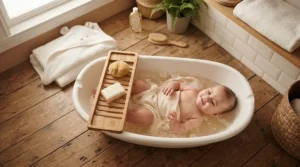
Bars also demand a little technique with babies. Lather the bar in your hands rather than rubbing it on the baby, keep the bar out of reach, and rinse thoroughly, paying attention to skin folds where residue lingers. A wet newborn is slippery enough without a slippery bar involved.
Soap for Toddlers with Sensitive Skin: Bath-Time Tactics
Toddlers add chaos: mud, sand, yoghurt, and a refusal to hold still. Soap for toddlers with sensitive skin has to cope with all of that, plus tiny hands that drop things.
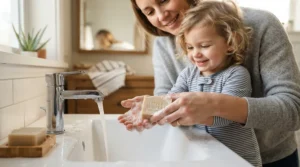
Pick a bar that is easy to grip and large enough not to be swallowed or lost. For toddlers, Sebamed Baby Cleansing Bar is a good fit at 150g, while a 60g bar like Childs Farm Kids Blueberry & Organic Mango Body Wash Bar is better for older children who can manage it safely. Never leave a toddler unsupervised with a bar in the bath.
Keep bubble baths off the menu. NHS leaflets for children with eczema list soaps, bubble baths and perfumed products as common irritants, so a plain, short bath with a gentle bar is kinder to skin. Use lukewarm water, avoid long soaks, and rinse off every trace of lather.
For hair, a bar like Funky Soap Shop Buttermilk Baby Soap & Shampoo Bar simplifies things. Lean the head back, pour water from a cup, and keep suds from running into eyes.
Tear-Free Formulas: Do They Work in a Bar?
Tear-free formulas are a liquid-shampoo concept: a recipe designed to sting less if it reaches the eyes. Bars complicate that, because most bar soap isn’t marketed with a tear-free claim, and a few mild bars rely on gentleness instead.
Among the products here, Sebamed Baby Cleansing Bar is described by some retailers as tear-free, while the other six don’t make that claim on the listings I reviewed. Treat any tear-free claim as a bonus rather than permission to wash faces carelessly.
Two clarifications help. First, tear-free formulas address eye stinging, not allergic reactions or dryness, so they tell you nothing about skin comfort. Second, the lather is where problems start. A thick foam travels, whereas a low-lather bar stays put, which can be an unexpected advantage near eyes.
If your child is prone to crying at rinsing time, use a damp flannel for the face and keep the bar for the body. A jug or cup rinse beats a shower head, because it gives you control over where the water goes.
School-Age Skincare: Building a Routine for 5-12 Year Olds
School-age skincare is mostly about frequency and independence. Children wash their hands more often, swim in chlorinated pools, run around in PE and want to choose their own products.
Hand-washing is the main issue. Frequent washing with a harsh bar can dry skin, so choose something like Dove Sensitive Skin Beauty Bar or Simple Pure Soap for school bags, and moisturise afterwards. Swimming is the other flashpoint. An NHS hospital leaflet notes that chlorine can aggravate eczema and recommends moisturising before and after swimming, with a shower in between.
Independence helps compliance. Let a nine-year-old pick between two pre-approved bars, say the scented Childs Farm Kids Blueberry & Organic Mango Body Wash Bar and a fragrance-free option, and they’re far more likely to use it. Teach the basics too: lather in hands, avoid eyes, rinse well, pat dry.
As puberty approaches, skin changes again, and a gentle bar like Dove Sensitive Skin Beauty Bar can bridge the gap between baby-care and teen routines.
Bar Soap vs Liquid Wash vs Emollient Wash
| Option | Skin-friendliness | Convenience | Best For |
|---|---|---|---|
| Soap-free bar, such as Sebamed Baby Cleansing Bar | High | Good, low plastic | Most sensitive-skin families |
| Traditional soap, such as Simple Pure Soap | Moderate | Excellent | Hands, non-eczema skin |
| Emollient wash (GP or pharmacist advised) | Highest for eczema | Moderate | Diagnosed eczema |
The table shows that “bar” is not one category. A soap-free bar and a traditional soap behave differently on skin, so compare the cleansing base rather than the format. For diagnosed eczema, clinical advice favours emollient washes, and bars come second. For everyone else, a well-chosen bar is cheaper, lasts longer and creates less plastic waste than liquid.
Practical Usage Guide: Your First 30 Days With a New Bar
A new bar deserves a careful introduction. Follow this routine and you’ll know within a month whether it suits your child.
Days 1-2: patch test. Lather a small patch on the inner arm, rinse and leave it for 24 hours. No redness or itch means you can proceed.
Week 1: introduce slowly. Use it on the body only, with lukewarm water, and lather in your hands rather than on the skin. Rinse thoroughly and pat dry.
Moisturise within minutes. Nottingham University’s guidance from Professor Hywel Williams, dated 2011, advises applying moisturiser straight after a bath or shower and avoiding soaps and bubble bath for eczema. It is older advice, but the moisturising-while-damp principle is widely repeated in NHS leaflets.
Store it properly. Use a draining soap dish so the bar dries between washes. A bar sitting in water turns to mush, and a mushy bar wastes money.
Common mistakes in month one: switching two products at once, using hot water, over-scrubbing, and abandoning a low-lather bar after two baths. And remember NICE’s finding that bathing less didn’t help. Wash as often as you need, using a gentler product.
✨ Don’t Miss These Gentle Bath-Time Wins!
🔍 Ready to upgrade your hypoallergenic soap bar for kids routine? Click on any highlighted product name above to check current pricing and availability. A well-chosen bar can make bath time calmer and kinder to your family’s skin! 🛁
Real-World Scenarios: Matching Bars to Real Families
Scenario 1: A newborn with reactive skin. A new parent wants minimal ingredients and a soap-free formula. Sebamed Baby Cleansing Bar fits: the 150g bar lasts months at newborn bath frequency, and the low lather is a feature rather than a flaw. Budget: a mid-single-digit £ spend, used a few times a week.
Scenario 2: A seven-year-old swimmer. Twice-weekly lessons mean chlorine, and one bar needs to cover shower, hands and face. Dove Sensitive Skin Beauty Bar works because it’s face-safe, fragrance-free and moisturising, and a multipack covers the swim bag. Add a moisturiser straight after the shower.
Scenario 3: Three children and a tight budget. A family washing five or six times daily needs low-cost bars. Simple Pure Soap handles hands and general washing at supermarket prices, with Bambino Baby Soap as a cheap backup for the youngest. The key is to switch the child with the most reactive skin to a soap-free bar and keep the traditional soap for the rest.
These matches show why there’s no single “best” bar. The best choice depends on age, skin history, frequency of use and budget, not on the loudest claim on the packaging.
Problem → Solution Guide for Bath-Time Headaches
Problem: skin feels tight after the bath. Switch from traditional soap to a soap-free bar such as Sebamed Baby Cleansing Bar, shorten the bath, lower the water temperature and moisturise within a few minutes.
Problem: stinging eyes and tears. Keep the bar away from the face, use a damp flannel instead and rinse with a cup. Remember that tear-free claims address sting, not skin comfort.
Problem: a child refuses unscented soap. Try Childs Farm Kids Blueberry & Organic Mango Body Wash Bar as a soap-free compromise, and patch test it first.
Problem: the bar turns to mush. Drain it on a raised dish and let it dry fully between washes. Smaller bars like Funky Soap Shop Buttermilk Baby Soap & Shampoo Bar suffer most from puddles.
Problem: patchy redness that doesn’t settle. Stop the new product, return to your previous routine and speak to a GP or pharmacist. Weeping, blistered or painful skin can signal infection, which needs prompt medical advice, and nothing here replaces that.
Safety, Labelling and UK Regulation: What the Pack Should Tell You
Bar soaps for children are regulated as cosmetics in the UK. That brings useful protections, even if it doesn’t make every claim meaningful.
Under the UK’s cosmetics framework, summarised in GOV.UK’s statutory guidance on cosmetic products, a cosmetic product on the Great Britain market needs a UK-based Responsible Person, and the product must undergo a safety assessment. Products are notified to the Office for Product Safety and Standards before sale.
In practice, check that the pack lists a manufacturer or Responsible Person address and a full ingredient list. Be cautious with unbranded imports from marketplace sellers, since a missing address is a red flag. Remember too that the law requires a safety assessment, but it doesn’t define terms like “hypoallergenic” for you.
This article is general information, not medical advice. If your child has eczema, recurring rashes or a suspected allergy, talk to a GP, pharmacist or health visitor before changing their routine.
FAQ: Hypoallergenic Soap Bar for Kids
❓ Can I use a hypoallergenic soap bar for kids on my child's face?
❓ How long does a baby soap bar usually last?
❓ Is bar soap hygienic when siblings share it?
❓ Should I patch test a new gentle soap bar for children?
❓ When should I move from baby bars to school-age skincare products?
Conclusion
There’s no perfect bar, only the right one for your child’s age, skin and routine. If sensitivity is the priority, Sebamed Baby Cleansing Bar is the best-documented soap-free choice here. If scent is the battleground, Childs Farm Kids Blueberry & Organic Mango Body Wash Bar offers a soap-free compromise. For budget families, Simple Pure Soap and Bambino Baby Soap keep costs low, while Dove Sensitive Skin Beauty Bar suits school-age skincare and Johnson’s Baby Soap with Honey offers a familiar name. For ingredient-minimalists, Funky Soap Shop Buttermilk Baby Soap & Shampoo Bar is worth a look.
Whichever you choose, the rules stay the same: read the ingredient list, patch test, rinse thoroughly, moisturise afterwards and ask a health professional if skin worsens. A hypoallergenic soap bar for kids is a good starting point, but it isn’t a cure. Trust your child’s skin more than any label.
Recommended for You
- Hypoallergenic Soap For Sensitive Skin: 7 Best Trusted Bars (2026)
- Fragrance-Free Soap Bar: 7 Gentle Best Picks For UK Skin (2026)
- Unscented Soap Bars Multipack: 7 Best Picks For UK Homes (2026)
Disclaimer: This article contains affiliate links. As an Amazon Associate, I earn from qualifying purchases. If you purchase products through these links, we may earn a small commission at no additional cost to you.
✨ Found this helpful? Share it with your friends! 💬🤗
