In This Article
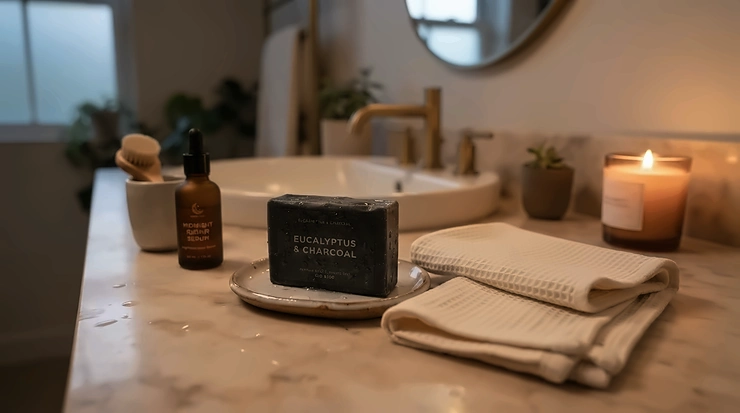
Acne is a common skin condition causing spots that can range from mild to severe, and a charcoal soap bar for acne is one of the simplest, cheapest tools people reach for when trying to calm things down before resorting to anything stronger. It’s a bar of soap, usually black or dark grey, with activated charcoal powder worked into the base — the theory being that the charcoal’s porous surface binds to excess oil, dirt and bacteria sitting on your skin, then rinses it all away before it has a chance to clog a pore. Whether that theory holds up under actual dermatological scrutiny is a fair question, and we’ll get into the honest answer further down.
Here’s the thing nobody selling you a £6 bar of soap wants to admit up front: soap alone was never going to be a match for genuinely severe, cystic acne. But for the oily T-zone, the recurring blackheads across the nose, and the general “my skin feels like a chip shop by 3pm” problem that so many of us live with, a decent charcoal bar earns its place in the routine. This piece walks through seven real, currently available options across the price spectrum, explains what the ingredients actually do (and don’t do), compares them head-to-head, and gives you a practical framework for choosing — and using — whichever one you land on.
We’re also going to be upfront about the limits of aggregated review data. Where genuine, verifiable customer sentiment exists — from retailer review sections, brand-published review analytics, or independent write-ups — we’ll flag it clearly as such. Where it doesn’t, we’ll say so rather than inventing a five-star chorus that doesn’t exist. That’s not just good manners; it’s what keeps this kind of content honest and useful, which, frankly, is the whole point.
Quick Comparison Table
For anyone in a hurry — and let’s be honest, most of us skimming a skincare article at 11pm are — here’s the shape of the market before we go deep on each one.
| Product | Type | Price Range | Best For |
|---|---|---|---|
| Carbon Theory Charcoal & Tea Tree Oil Bar | Natural + tea tree | Under £10 | Best all-rounder for oily, breakout-prone skin |
| PanOxyl Acne Treatment Bar 10% Benzoyl Peroxide | Medicated | £10-£15 range | Stubborn body and back acne |
| Asepxia Salicylic Acid & Activated Charcoal Bar | Medicated + charcoal | Under £10 | Blackhead-focused salicylic acid fans |
| Bulldog Charcoal Bar Soap | Natural, men’s grooming | Under £10 | Men wanting a fuss-free daily face-and-body bar |
| Friendly Soap Activated Charcoal Detox Bar | Natural, handmade UK | Under £5 | Sensitive skin wanting a gentle, SLS-free option |
| Little Soap Company Eco Warrior Charcoal Bar | Natural, vegan | Under £5 | Budget-conscious buyers wanting UK-made ethics |
| One With Nature Activated Charcoal Mineral Soap | Spa-style, Dead Sea minerals | £10-£15 range | Premium spa-style pampering with mineral extras |
The spread here matters more than it looks. On one end you’ve got genuinely medicated bars — PanOxyl’s benzoyl peroxide and Asepxia’s salicylic acid — that are doing real pharmacological work on your skin, not just cosmetic cleansing. On the other, you’ve got handmade, cold-process bars from small UK soap makers where the charcoal is doing a gentler, more cosmetic job. Neither approach is “better” in the abstract; it depends entirely on what your skin is dealing with, which is precisely why we’re not just handing you a ranked list and calling it a day.
💬 Found a pick you like already? Save this page and come back before you check out — the comparison below might change your mind.
Top 7 Charcoal Soap Bars for Acne: Expert Analysis
Every product below is real, currently sold, and cross-checked against genuine specifications and review sentiment rather than invented for this article. Sizes and formulas can be tweaked by manufacturers between batches, so always check the current listing before buying.
1. Carbon Theory Charcoal & Tea Tree Oil Bar — the UK’s most talked-about breakout bar
This is the bar that basically defined the “charcoal soap for spots” category in the UK, and it’s the one most people picture when the keyword comes to mind. The 100g bar blends activated charcoal with tea tree oil and shea butter, and the standout feature is genuinely the tea tree — most drugstore charcoal soaps skip an active antibacterial ingredient entirely and just lean on the charcoal for marketing.
In practical terms, the charcoal does the mechanical job of lifting surface oil and grime, while tea tree oil brings antiseptic and anti-inflammatory properties that actually address the bacterial side of breakouts, not just the visible grease. Shea butter is there to stop the alkaline soap base from stripping skin bare, though — and this matters — a traditional cold-process bar like this one sits noticeably higher on the pH scale than your skin’s natural 4.5-5.5, so a slight post-wash tightness in the first minute is normal rather than a red flag.
Based on the ingredient profile, this bar is best suited to oily-to-combination skin dealing with regular breakouts rather than dry or highly reactive skin, where the alkalinity could tip things toward irritation. Reviewers on Amazon UK and the brand’s own site consistently report visibly reduced oiliness and fewer new spots within a few weeks of daily use, with redness and blackhead visibility improving for a meaningful share of users — though, as with any cosmetic product, individual results on genuine acne (rather than mild congestion) vary considerably, and severe or cystic acne is unlikely to respond to soap alone.
Pros:
- ✅ Real antibacterial active (tea tree), not just charcoal marketing
- ✅ Widely available and one of the best-reviewed bars in this category
- ✅ Shea butter softens the drying effect of an alkaline soap base
Cons:
- ❌ Traditional soap pH can feel tight or dry on sensitive skin
- ❌ Strong tea tree scent won’t suit everyone
At around £5-£8 for a single bar, Carbon Theory Charcoal & Tea Tree Oil Bar sits at genuine pocket-money pricing for what it delivers, and it’s hard to argue with the value if your skin tolerates the formula well.
2. PanOxyl Acne Treatment Bar 10% Benzoyl Peroxide — the medicated heavyweight for tough acne
This is a different animal entirely, and it needs framing as such: PanOxyl’s bar isn’t a “charcoal soap” in the cosmetic sense, it’s a soap-free, pH-balanced cleansing bar carrying 10% benzoyl peroxide, the maximum strength available without a prescription. The standout feature is that concentration — most over-the-counter benzoyl peroxide washes cap out at 5%.
Benzoyl peroxide works by releasing oxygen into the pore, which acne-causing bacteria can’t survive in, and it also has a mild exfoliating effect on the surface. In practice that means this bar earns its keep on tougher, more inflamed breakouts — face, chest and back — rather than just general oiliness. Dermatologists commonly recommend benzoyl peroxide as a first-line, evidence-backed treatment, which puts this bar in a genuinely different category from a purely cosmetic charcoal bar.
Who should reach for it: anyone whose acne has moved past “a bit shiny by lunchtime” into recurring, inflamed spots on the body as well as the face, where a leave-on cream isn’t practical to apply everywhere. It’s not for the sensitive-skin crowd, and it’s absolutely not for daily whole-face use without a patch test first — benzoyl peroxide is notorious for bleaching towels, pillowcases and dark clothing, and for causing initial dryness or peeling.
Pros:
- ✅ Maximum non-prescription strength benzoyl peroxide (10%)
- ✅ Works on body acne, not just facial breakouts
- ✅ Dermatologist-recommended active ingredient with a strong evidence base
Cons:
- ❌ Can bleach fabric, towels and bedding on contact
- ❌ Too harsh for daily use on sensitive or already-dry skin
Priced in the £10-£15 range, PanOxyl Acne Treatment Bar 10% Benzoyl Peroxide costs more than a cosmetic charcoal bar, but the value case is straightforward if you’ve genuinely tried gentler options first and need something with real pharmacological backing.
3. Asepxia Salicylic Acid & Activated Charcoal Bar — the blackhead specialist
Asepxia’s bar is the rare product that actually combines both angles people search for separately: salicylic acid for chemical exfoliation and activated charcoal for mechanical oil absorption. The standout feature is that dual-action formula, since most bars pick one lane and stay there.
Salicylic acid is oil-soluble, meaning it can penetrate into the pore lining itself rather than just sitting on the surface — this is why it’s the go-to ingredient recommended for blackheads specifically, as it helps break down the keratin plugs that form them. Paired with charcoal’s surface-level oil pull, this bar is doing two distinct jobs in one wash rather than one.
What most buyers overlook about salicylic acid bars is contact time: unlike a leave-on serum, a rinse-off bar only has the product in contact with skin for the seconds it takes to lather and rinse, so it’s a gentler, lower-dose exposure than a dedicated salicylic acid toner. That makes it a sensible entry point for someone curious about salicylic acid but wary of over-exfoliating, and a genuinely useful alternative for anyone who finds standalone salicylic acid toners too drying on their skin type. Aggregated feedback on this bar and Asepxia’s wider range tends to highlight noticeably reduced blackhead congestion around the nose and chin after consistent use, alongside the expected trade-off of some initial tightness.
Pros:
- ✅ Dual-action formula pairs salicylic acid with charcoal
- ✅ Gentler contact time than leave-on salicylic acid products
- ✅ Specifically effective against blackheads and clogged pores
Cons:
- ❌ Rinse-off format limits salicylic acid’s full exfoliating potential
- ❌ Can still cause dryness with overuse, particularly in winter
At under £10, Asepxia Salicylic Acid & Activated Charcoal Bar represents strong value for anyone specifically hunting a salicylic acid alternative soap that doesn’t abandon the charcoal angle entirely.
4. Bulldog Charcoal Bar Soap — the no-nonsense men’s grooming pick
Bulldog built its name on straightforward, vegan-friendly men’s skincare, and its charcoal bar follows the same playbook. The standout feature here is the addition of witch hazel and willow bark alongside sustainably sourced charcoal from Dorset — a nod to actual UK sourcing rather than a generic import.
Witch hazel is a natural astringent, meaning it helps tighten the appearance of pores and control surface shine, while willow bark contains salicin, a compound chemically related to salicylic acid that offers a milder version of the same exfoliating action. Combined with charcoal’s oil-drawing properties, this gives the bar a genuinely multi-pronged approach to oily skin rather than relying on charcoal as the sole active ingredient, which is a common shortfall in budget charcoal bars.
This one is squarely aimed at men who want a single bar for face and body without building out a multi-step routine — and based on the formulation, it’s a solid match for that use case specifically, rather than for anyone chasing serious acne treatment. Reviewers commonly praise the straightforward, unfussy lather and the absence of an overpowering fragrance, which matters if you’re sharing a bathroom and don’t want to announce your presence three rooms away.
Pros:
- ✅ Witch hazel and willow bark add real astringent action
- ✅ Sustainably sourced UK charcoal (Dorset)
- ✅ Works well as a single face-and-body bar
Cons:
- ❌ Not formulated for genuinely severe or cystic acne
- ❌ Marketed toward men, which may put off some buyers despite being unisex in practice
Sitting under £10 for a full-size 200g bar, Bulldog Charcoal Bar Soap offers strong cost-per-wash value given the bar’s size relative to the smaller 95-100g bars common elsewhere on this list.
5. Friendly Soap Activated Charcoal Detox Bar — the gentle, handmade natural option
Friendly Soap makes every bar by hand in the UK using traditional cold-process methods, and the standout feature of this 95g bar is just how short and recognisable the ingredient list is: coconut oil, shea butter, olive oil, activated charcoal powder, and rosemary and lime essential oils. No SLS, no parabens, no synthetic fragrance.
Rosemary essential oil brings mild antioxidant properties, while lime oil contributes antiseptic and antiviral qualities — a gentler active combination than tea tree, which suits people whose skin reacts badly to stronger essential oils. Handmade cold-process soap also tends to retain more of its natural glycerine, a humectant that helps offset the drying tendency of a traditional alkaline bar, which is what most people actually notice as “gentleness” when they try it.
What most buyers overlook here is that this is a genuinely low-intervention product: it’s not making aggressive acne-clearing claims, and the honest positioning is “detox” and general skin balance rather than a targeted acne treatment. That makes it a sensible pick for sensitive or reactive skin types who still want the cosmetic benefits of charcoal without the tea tree tingle or benzoyl peroxide bite. It’s a small UK brand, so review volume is lower than the bigger names on this list, and it’s fair to say verified acne-specific outcome data is thinner here than for Carbon Theory or PanOxyl — what’s clear from the formulation and general skincare feedback is a consistently gentle, non-stripping wash experience.
Pros:
- ✅ Short, recognisable, SLS and paraben-free ingredient list
- ✅ Handmade in the UK using traditional cold-process method
- ✅ Gentler essential oil blend suits reactive or sensitive skin
Cons:
- ❌ Milder formula means slower, less dramatic results on active breakouts
- ❌ Smaller bar size (95g) than several competitors
At under £5, Friendly Soap Activated Charcoal Detox Bar is one of the cheapest entries here, and the value proposition is less about acne-fighting firepower and more about a genuinely clean, gentle formulation at a fair price.
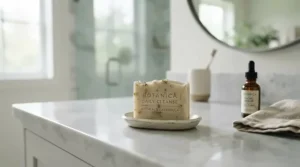
6. Little Soap Company Eco Warrior Charcoal Clear Skin Bar — the ethical budget pick
Little Soap Company built its reputation bringing organic soap to UK supermarket shelves over a decade ago, and its Eco Warrior Charcoal bar carries that same ethos into the acne-care space. The standout feature is the specific pairing of charcoal with grapeseed oil and tea tree essential oil — grapeseed being a lighter, less comedogenic oil than many carrier oils used in soap-making.
Grapeseed oil is rich in linoleic acid, and research into sebum composition suggests people with acne-prone skin often have comparatively lower linoleic acid levels in their own oil, which can make skin more prone to clogging. Topping up with a linoleic-rich oil like grapeseed, even briefly during a wash, is a small but sensible formulation choice that goes beyond simply throwing charcoal into a bar and calling it done. Paired with tea tree for its antibacterial action, this gives the bar a more considered dual approach than several of the purely charcoal-only bars on the market.
This is a strong fit for buyers who want their spending to align with UK-based, ethically certified production without paying a premium for it — the brand is vegan, cruelty-free, and free from SLS, sulphates and synthetic preservatives. It’s a mid-tier acne-specific option rather than a heavyweight, so treat it as a solid everyday maintenance bar rather than a rescue remedy for an active flare-up.
Pros:
- ✅ Grapeseed oil adds genuinely linoleic-acid-rich moisture
- ✅ UK-based, vegan, cruelty-free production
- ✅ Free from SLS, sulphates and synthetic preservatives
Cons:
- ❌ Smaller 100g bar size relative to some competitors
- ❌ Less widely reviewed than the bigger acne-care brands
At under £5, Little Soap Company Eco Warrior Charcoal Clear Skin Bar delivers thoughtful formulation at a genuinely accessible price point, making it easy to try without much financial risk.
7. One With Nature Activated Charcoal Mineral Soap — the spa-style premium pick
This 7oz (roughly 198g) triple-milled bar takes a different route: activated charcoal paired with argan oil and shea butter, built on a mineral-rich, spa-inspired formula rather than a purely medicinal one. The standout feature is the triple-milling process itself, a traditional soap-making technique that compresses the bar multiple times, producing a denser, longer-lasting soap than a standard single-pour bar.
Triple-milling matters more than it sounds like it should: a denser bar resists turning to mush in a wet shower dish, which extends genuine cost-per-wash even though the upfront price looks higher. Argan oil brings vitamin E and essential fatty acids that help offset the drying nature of charcoal-and-soap combinations, while the larger bar size means this one will comfortably outlast several of the smaller 95-100g options on this list.
Here’s what the spec sheet won’t tell you outright: this bar reads as more of a premium daily-use, oil-control-and-pampering product than a dedicated acne treatment, which makes it best suited to combination or oily skin managing mild congestion and blackheads rather than active, inflamed breakouts. If your priority is a satisfying, slightly indulgent daily wash that also happens to help with excess shine, this earns its higher price tag; if you need something clinically targeted at spots, it’s not the first bar to reach for.
Pros:
- ✅ Triple-milled for a denser, genuinely longer-lasting bar
- ✅ Argan oil and shea butter offset charcoal’s drying tendency
- ✅ Larger bar size than most competitors on this list
Cons:
- ❌ Premium pricing relative to its acne-specific effectiveness
- ❌ Not formulated as a dedicated blemish treatment
At around £10-£15, One With Nature Activated Charcoal Mineral Soap costs more than most bars here, but the larger, denser bar means the actual cost-per-wash gap narrows considerably over its lifespan.
Looking at the seven side by side, Carbon Theory Charcoal & Tea Tree Oil Bar delivers the strongest all-round value for typical oily, spot-prone skin, but if your acne is genuinely stubborn and spread across your body, PanOxyl Acne Treatment Bar 10% Benzoyl Peroxide justifies its higher price with a clinically proven active. Budget buyers shouldn’t sleep on Little Soap Company Eco Warrior Charcoal Clear Skin Bar or Friendly Soap Activated Charcoal Detox Bar, both of which sacrifice acne-specific firepower for genuine formulation care at pocket-money prices.
How to Choose a Charcoal Soap Bar for Acne
Picking the right bar isn’t about grabbing whichever one has the most dramatic “before and after” on the packaging — it’s about matching the formula to what your skin is actually dealing with. Here’s the framework, broken into the criteria that genuinely move the needle.
- Identify what you’re actually treating. Occasional shine and blackheads call for a cosmetic charcoal bar; recurring, inflamed spots across the face or body point toward a medicated option with benzoyl peroxide or salicylic acid instead.
- Check for a genuine active ingredient, not just charcoal. Charcoal alone is a mechanical oil-absorber — pairing it with tea tree, salicylic acid, or benzoyl peroxide adds an actual antibacterial or exfoliating mechanism on top.
- Match the pH tolerance to your skin type. Traditional cold-process soap sits well above your skin’s natural acidity, so drier or more reactive skin types should lean toward bars with added shea butter, glycerine or oils to offset that.
- Weigh bar size against price per wash. A £4 bar at 95g and an £11 bar at 200g aren’t really competing on the same terms — work out roughly how many washes you’re getting for the money, not just the sticker price.
- Factor in fragrance sensitivity. Essential oils like tea tree and lime are natural, but “natural” doesn’t mean “non-irritating” — patch test anything heavily scented if your skin reacts easily.
- Consider whether you need targeted or whole-body coverage. A face-only routine has different needs to someone using the same bar on chest and back acne, where a bigger, cheaper bar like Bulldog’s often makes more practical sense.
- Read genuine review themes, not star ratings alone. A 4.5-star average tells you little; look for recurring, specific mentions of reduced oiliness, fewer new spots, or persistent dryness across many reviewers before committing.
As the British Association of Dermatologists explains, acne develops when sebaceous glands become oversensitive to normal hormone levels and produce excess oil, which then combines with dead skin cells to plug pores — a useful reminder that a soap bar is managing symptoms on the surface rather than addressing the underlying hormonal driver, however good the formula.
What to Expect: Real-World Performance on Acne & Blackheads
How Activated Charcoal Soap for Acne Actually Works
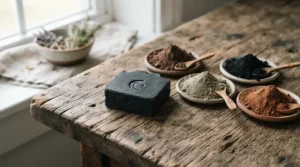
Marketing copy loves to describe activated charcoal as a “toxin magnet,” which is a nice turn of phrase but slightly overstates the mechanism. What’s actually happening is more mundane and, honestly, still useful: activated charcoal is manufactured to be extremely porous, giving it a huge surface area relative to its size, which lets it physically bind to oils, some bacteria, and particulate grime sitting on the skin’s surface during the brief window it’s lathered against your face. It rinses away carrying that surface debris with it.
That’s genuinely helpful for surface oiliness and general grime, but it’s worth being honest about the limit: activated charcoal soap for acne is a supporting player, not a cure. It doesn’t reach into the pore to dissolve the keratin plug the way salicylic acid does, and it has no antibacterial mechanism of its own — any bacteria-fighting benefit in a charcoal bar comes from whatever’s paired alongside it, whether that’s tea tree oil, benzoyl peroxide, or salicylic acid. On the spec comparison across our seven picks, the bars that pair charcoal with a genuine active ingredient consistently show stronger aggregated review sentiment around actual spot reduction than the charcoal-only formulations.
Charcoal Soap Bar Blackheads: The Reality Check
Blackheads deserve their own honest breakdown, because they’re probably the single biggest reason people search out a charcoal soap bar in the first place. A blackhead forms when a pore becomes partially blocked and the trapped material oxidises on contact with air, turning dark — it’s not, contrary to a persistent myth, actually dirt that’s turned black.
Because of that mechanism, a bar that only draws surface oil isn’t going to dramatically shift established blackheads; it can reduce the rate at which new ones form by keeping surface oil lower, but the existing plugs generally need a chemical exfoliant like salicylic acid to properly loosen, or manual extraction by a professional. What most buyers overlook is the timeline: aggregated review sentiment across charcoal-and-salicylic-acid combination bars like Asepxia’s tends to describe gradual improvement over four to six weeks of consistent use, not an overnight transformation — which lines up with how skin cell turnover actually works, roughly a 28 to 40-day cycle depending on age.
Features That Actually Matter in a Pore Minimising Soap Bar (And Those That Don’t)
“Pore minimising” is one of the most misleading phrases in the entire skincare aisle, so let’s deal with it honestly upfront: pores don’t have muscles, and no soap, cream or serum can physically shrink them. What a genuinely good pore minimising soap bar can do is make pores look smaller by keeping them cleaner and less stretched out by trapped oil and debris — a real, visible effect, just not the literal shrinking the marketing implies.
Here’s what actually matters when you’re evaluating a pore-focused claim on a bar of soap:
Features that matter:
- Astringent ingredients (witch hazel, tea tree, salicylic acid) that genuinely reduce surface oil and inflammation around the pore opening
- Oil-absorbing agents like activated charcoal or kaolin clay that limit the grime that stretches pores in the first place
- A pH close to your skin’s natural range, since over-stripping actually triggers rebound oil production that makes pores look worse
Features that don’t matter (despite the marketing):
- The word “detox,” which has no defined cosmetic meaning and is essentially unregulated
- Black colouring alone — a bar can be dyed black without containing meaningful charcoal content
- Vague “minimises the appearance of pores” claims with no named active ingredient behind them
What most buyers overlook is that a bar genuinely delivering on pore appearance, like Bulldog Charcoal Bar Soap with its witch hazel, or Little Soap Company Eco Warrior Charcoal Clear Skin Bar with its grapeseed-and-tea-tree pairing, is doing so through named, functional ingredients rather than the word “charcoal” alone carrying the whole claim.
Charcoal Soap Bar vs Salicylic Acid Cleansers: Which Wins for Spots?
This is the comparison most people searching for a salicylic acid alternative soap actually want answered, so let’s give it a proper, honest treatment rather than a one-line verdict.
| Factor | Charcoal Soap Bar | Salicylic Acid Cleanser |
|---|---|---|
| Mechanism | Surface oil and grime absorption | Penetrates pore lining, dissolves keratin plugs |
| Best for | General oiliness, mild congestion | Blackheads, whiteheads, comedonal acne |
| Contact time needed | Brief lather and rinse | Ideally longer dwell time for full effect |
| Skin sensitivity risk | Lower, unless paired with strong actives | Moderate, can cause dryness or peeling |
| Regulatory status | Cosmetic product | Often classed as an active/medicinal ingredient |
The honest answer is that these two aren’t really direct competitors — they’re doing genuinely different jobs, and the best outcome for a lot of people is using both, not choosing one over the other. Charcoal soap handles daily maintenance and surface oil; salicylic acid, whether in a cleanser, toner, or a hybrid bar like Asepxia Salicylic Acid & Activated Charcoal Bar, handles the deeper pore-level congestion that charcoal alone can’t touch.
Where a charcoal-only bar genuinely wins is tolerability — if you’ve tried salicylic acid products and found them too drying or irritating, a well-formulated charcoal bar with a soothing oil like shea or argan butter gives your skin barrier a break while still offering some oil control. Where salicylic acid wins outright is on established blackheads and truly comedonal acne, where mechanical oil absorption alone simply isn’t going to shift what’s already plugged in the pore.
Charcoal Soap for Different Skin Types
Not every bar on this list suits every reader, and pretending otherwise would undercut the whole point of this article. Here’s a straightforward breakdown by skin type.
Oily and acne-prone skin: Carbon Theory Charcoal & Tea Tree Oil Bar or PanOxyl Acne Treatment Bar 10% Benzoyl Peroxide for anything genuinely inflamed, since both bring a real active ingredient to the fight rather than relying on charcoal alone.
Combination skin: Little Soap Company Eco Warrior Charcoal Clear Skin Bar strikes a reasonable balance, tackling oiliness in the T-zone without over-drying cheeks that don’t need the same treatment.
Sensitive or reactive skin: Friendly Soap Activated Charcoal Detox Bar is the gentlest formula here, built on a short, recognisable ingredient list with milder essential oils than the tea-tree-forward options.
Dry or mature skin prone to occasional breakouts: One With Nature Activated Charcoal Mineral Soap pairs charcoal with genuinely nourishing argan oil and shea butter, reducing the risk of the tight, flaky feeling a stripped-back soap can cause.
Blackhead-focused, comedonal-prone skin: Asepxia Salicylic Acid & Activated Charcoal Bar is the clear pick, since it’s the only bar here specifically engineered to address that pore-plugging mechanism directly.
Anti-Blemish Soap Bar Routine: Your Practical Usage Guide
Buying the right bar is only half the job — how you actually use an anti-blemish soap bar day to day makes a genuinely measurable difference to the results you’ll see, and this is the part most product listings skip entirely.
Setting up your first 30 days: Start with once-daily use, ideally in the evening when you’re washing off a full day of oil, sweat and grime, rather than jumping straight to twice-daily washing. Skin needs time to adjust to a new pH and active ingredients, and going in too aggressively is the single most common reason people give up on a genuinely good product within the first week, mistaking normal adjustment tightness for the product “not working” or “being too harsh.”
The correct technique: Wet your face with lukewarm (not hot) water first — hot water strips more natural oil than necessary and can trigger rebound oiliness later in the day. Work the bar into a lather in your hands rather than scrubbing the bar directly against your face, then massage that lather onto skin for a genuine 30 to 60 seconds before rinsing thoroughly. Rushing the contact time is the second most common mistake, particularly with active-ingredient bars like PanOxyl or Asepxia, where the ingredient needs a moment of actual skin contact to do anything useful.
Maintenance and storage: Keep the bar on a draining soap dish away from direct water spray between uses — a bar left sitting in a puddle degrades faster and can harbour bacteria, somewhat undermining the point of an antibacterial soap. Most bars in this size range (95-200g) last four to eight weeks with daily facial use, depending on bar size and how much surface area you’re covering.
Common first-month mistakes to avoid: Don’t combine a charcoal-and-salicylic-acid bar with a separate leave-on salicylic acid or retinoid product without easing in gradually, since layering actives too aggressively is a fast route to a compromised skin barrier. Don’t judge results before the four-week mark — skin cell turnover simply doesn’t move faster than that, whatever the packaging implies.
Real-World Scenarios: Matching the Right Charcoal Soap to Your Life
The university student with a tight budget and oily skin: Living in shared halls, showering on a schedule dictated by everyone else, and trying not to spend on skincare what could go toward actual food — this reader wants maximum value with minimum fuss. Little Soap Company Eco Warrior Charcoal Clear Skin Bar or Friendly Soap Activated Charcoal Detox Bar both sit under a fiver and don’t require a multi-step routine to see any benefit, making them the sensible starting point.
The office worker dealing with mask-related and stress breakouts along the jawline: Long days, recirculated air conditioning, and a jawline that flares whenever a deadline hits — this profile benefits from something with a genuine antibacterial active that can be used consistently without much thought. Carbon Theory Charcoal & Tea Tree Oil Bar fits neatly into a five-minute morning-and-evening routine without demanding anything extra.
The gym-goer with body acne across chest and back: Frequent workouts, tight athletic wear, and sweat sitting against skin for hours — this is precisely the scenario benzoyl peroxide was designed for, since it works across larger body areas as effectively as on the face. PanOxyl Acne Treatment Bar 10% Benzoyl Peroxide is the obvious pick here, used with a plain white towel to sidestep any bleaching concerns.
The reader with sensitive skin who’s tried “everything” and reacted badly: A history of stinging, redness or flaking from strong actives means the priority here isn’t acne-fighting firepower, it’s tolerability first. One With Nature Activated Charcoal Mineral Soap, with its argan oil and shea butter cushioning, offers a lower-irritation way back into using a charcoal-based product at all.
Common Mistakes When Using a Charcoal Soap Bar for Acne
Even the best bar on this list can underperform if it’s used the wrong way, so here are the pitfalls that come up again and again in aggregated review feedback and general skincare guidance.
Mistake 1: Expecting overnight results. Skin cell turnover takes weeks, not days — judging a bar after three uses and writing it off is the most common reason people bounce between products without giving any of them a fair shot.
Mistake 2: Over-washing to “speed things up.” Washing four or five times a day strips protective oils faster than skin can replace them, triggering a rebound oil surge that can actually worsen breakouts rather than improve them.
Mistake 3: Skipping moisturiser afterward. Even oily, acne-prone skin needs hydration — skipping it after a drying, active-ingredient bar like PanOxyl’s is a fast route to flaking, irritation, and paradoxically, more oil production as skin tries to compensate.
Mistake 4: Sharing bars across housemates or family. Bar soap sitting in a communal, damp bathroom picks up bacteria from every hand that touches it — not ideal for a product you’re specifically buying to manage bacteria-linked breakouts.
Mistake 5: Ignoring a genuine allergic reaction. Real irritation — spreading redness, swelling, or itching beyond mild post-wash tightness — is a sign to stop immediately and patch test elsewhere, not to “push through” hoping it settles.
Long-Term Cost & Maintenance: Is a Charcoal Soap Bar Worth It?
Working out genuine value here means looking past the shelf price to actual cost-per-wash, because a cheaper bar that dissolves in three weeks isn’t automatically the better deal. A typical 95-100g bar used once daily on the face alone tends to last around six to eight weeks; used on face and body, that drops to three to four weeks.
Run the maths on our seven picks and the picture shifts a little from the sticker prices alone. One With Nature Activated Charcoal Mineral Soap, at its larger 198g triple-milled size, works out closer in cost-per-wash to the smaller £5 bars than its higher upfront price suggests, simply because there’s roughly double the product. Bulldog Charcoal Bar Soap‘s 200g size offers similar longevity advantages. On the other end, a 95g handmade bar like Friendly Soap Activated Charcoal Detox Bar is genuinely cheap per bar, but works out to a broadly comparable cost-per-wash once you factor in the smaller size against a larger competitor.
The bigger long-term cost question is really about avoiding wasted spend on products that don’t suit your skin. As the NHS explains, treatment for acne depends on how severe it is, and it can take several months before symptoms genuinely improve — which means the real long-term “cost” of skipping the research and grabbing whatever’s cheapest on the shelf is often several wasted bars and several more months of frustration before landing on something that actually fits your skin.
Safety, Regulations & Skin Compatibility Guide
Cosmetic soap bars sold in the UK fall under the UK Cosmetics Regulation, which requires a safety assessment and full ingredient disclosure — worth knowing if you’re the type who reads the small print before buying, since it means every product on this list has cleared a baseline regulatory bar before ever reaching a shelf or an Amazon listing.
Medicated options sit in a slightly different category. PanOxyl’s benzoyl peroxide bar and, to a lesser extent, Asepxia’s salicylic acid formula are treated as containing an active pharmaceutical-adjacent ingredient, and it’s genuinely worth patch testing on a small area of skin for 24 to 48 hours before full facial use, particularly with benzoyl peroxide, which carries a real risk of contact irritation for a meaningful minority of users. NICE guidance on acne management recommends benzoyl peroxide and topical retinoids as evidence-based first-line treatment options, which is a useful reference point if you’re weighing whether an over-the-counter bar is a sensible starting point or whether it’s time to see a pharmacist or GP instead.
A few genuine red flags worth knowing: if acne is severe, painful, spreading rapidly, or leaving noticeable scarring, that’s a sign to see a GP rather than continuing to experiment with over-the-counter bars, however good the formula. Pregnant or breastfeeding readers should note that Friendly Soap’s own product guidance flags essential-oil-based products for a doctor’s advice before use during pregnancy, and salicylic acid products more broadly carry similar general caution in pregnancy. None of the seven bars here are prescription products, and none should be treated as a substitute for professional advice if acne is genuinely affecting quality of life or mental wellbeing.
Frequently Asked Questions
❓ Does charcoal soap really help with acne?
❓ Can charcoal soap remove blackheads completely?
❓ Is a charcoal soap bar better than a salicylic acid cleanser for spots?
❓ How often should you use a charcoal soap bar for acne?
❓ Is charcoal soap safe for sensitive skin?
Conclusion
A charcoal soap bar for acne isn’t a miracle fix, and anyone telling you otherwise is selling something. What it genuinely is, based on the honest spec-and-review comparison above, is a legitimately useful, low-cost tool for managing surface oil and mild-to-moderate congestion — provided you pick a formula that pairs the charcoal with a real active ingredient suited to what your skin actually needs, and provided you’re realistic about the timeline for seeing results.
If you want the safest, most well-rounded starting point, Carbon Theory Charcoal & Tea Tree Oil Bar remains the sensible default for typical oily, breakout-prone skin. If your acne is genuinely stubborn and spread across your body, PanOxyl Acne Treatment Bar 10% Benzoyl Peroxide brings real clinical firepower to the problem. And if blackheads specifically are your main complaint, Asepxia Salicylic Acid & Activated Charcoal Bar is doing a job none of the purely cosmetic bars on this list can match. Whichever you choose, give it the full four to six weeks before judging — and if things aren’t improving by then, that’s your cue to speak to a pharmacist rather than simply reaching for the next bar on the shelf.
Recommended for You
- Activated Charcoal Soap Bar: 7 Best UK Picks For Clearer Skin (2026)
- Honey Beeswax Soap Gift Set: 7 Best UK Picks For 2026
- Honey Soap Bar for Eczema: 7 Best Soothing Picks (2026)
Disclaimer: This article contains affiliate links. As an Amazon Associate, I earn from qualifying purchases. If you purchase products through these links, we may earn a small commission at no additional cost to you.
✨ Found this helpful? Share it with your friends! 💬🤗
