In This Article
A manuka honey soap bar is a solid cleansing bar made from a plant-oil soap base plus honey produced from the nectar of the manuka bush (Leptospermum scoparium), most famously in New Zealand. It washes like ordinary soap. The honey is there for its skin-conditioning reputation and its antibacterial pedigree.
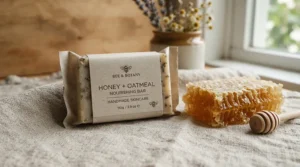
Simple enough. Yet the shelf is a jungle. Search for a manuka honey soap bar on Amazon UK and you’ll meet a parade of golden rectangles, each murmuring “active”, “medical grade” or “UMF” with the confidence of a used-car salesman. Some earn the swagger. Others contain honey in roughly the quantity a bee might leave on a windowsill.
So this guide does the unglamorous work. It’s built from ingredient lists, brand documentation, published research and the review themes visible at the time of research in 2026, not from invented bathroom heroics. Along the way you’ll learn what a UMF manuka soap bar label can and can’t promise. You’ll also see how an active manuka soap bar differs from one that merely sounds active, what to look for in a genuine New Zealand honey soap, and why “antibacterial manuka soap” deserves one raised eyebrow. Whether you’re after a budget staple or a premium manuka skincare bar, the seven picks below span the range.
For background, the manuka honey grading tables on Wikipedia show how UMF, MGO and NPA numbers line up. In the UK, MGO and NPA labelling is common. One housekeeping note: prices below are ranges only, so always check the current price on the listing.
Quick Comparison: Manuka Honey Soap Bar Picks at a Glance
Here’s the short version before we go deep. Every manuka honey soap bar in this table is a real product I could verify through Amazon listings, brand pages or retailer data.
| Product | Standout | Size | Honey signal on label | Best For |
|---|---|---|---|---|
| Dr Organic | COSMOS Organic certified | 100g | Manuka honey as “key extract” | Everyday all-body use |
| Green Pharmacy | Olive oil and kaolin at a budget price | 100g | Manuka honey extract | Budget households |
| Wild Ferns Pure and Gentle | Honey listed ahead of fragrance | 135g | Manuka honey, no grade stated | Dry-feeling skin |
| Wild Ferns Rotorua Mud | Geothermal mud | 125g | “Active” honey, no grade stated | Oily, congested skin |
| The Goat Skincare | Goat’s milk base | 100g | Manuka honey, no grade stated | Dry, itchy-feeling skin |
| Madeleine Ritchie | Fragrance-free, propolis | 125g | “Active” honey, brand-rated | Fragrance-sensitive skin |
| Origani | States UMF 10+ | 125g | UMF 10+ | Grade-conscious shoppers |
Looking at the comparison above, Dr Organic offers the most reassuring paperwork for daily use, while Green Pharmacy wins on sheer affordability. If honey content is your priority, Madeleine Ritchie and Wild Ferns Pure and Gentle list honey higher up their ingredients than most rivals, and Origani is the only bar here that states a grade outright. Notice how little of this table is measurable. That gap is the whole story of the New Zealand honey soap category, and it’s why the claims deserve a closer read.
💬 Just one click — help others make better buying decisions too!😊
Top 7 Manuka Honey Soap Bar Picks: Expert Analysis
Reviews below are aggregated themes rather than quotes, and where I couldn’t verify buyer feedback, I say so.
1. Dr Organic Manuka Honey — certified-organic all-rounder for daily use
The headline here is provenance, not honey wizardry. This 100g manuka honey soap bar carries Soil Association COSMOS Organic certification. According to the listing, that means traceable ingredients, no parabens, no microplastics and no animal testing. In a category where “natural” gets stamped on everything, a paper trail is a real advantage.
The ingredient list is short. You get an organic soap base, water, fragrance, glycerin, then manuka honey flagged as the “key extract”, followed by citric acid and limonene (a fragrance allergen). Because honey lands after the fragrance, think of it as a supporting actor. What you’re really buying is a gentle, uncomplicated wash from a brand that promises cleansing and softness and stops there. That’s refreshing if you’re weary of antibacterial manuka soap hype.
Based on the spec comparison, this suits anyone wanting a conscientious everyday bar for face-to-toe use rather than a therapeutic one. Fragrance-sensitive skin should look elsewhere.
At the time of research, Amazon’s review summary showed 15 customers commenting on scent (14 positive, one negative) and 14 on soap quality (all positive). Reviewers described a soft honey aroma, a good lather and skin that doesn’t feel stripped.
Pros:
- ✅ Soil Association COSMOS Organic certification
- ✅ Free from parabens and SLS
- ✅ Recyclable, plastic-free packaging
Cons:
- ❌ Honey sits low on the ingredient list
- ❌ Contains fragrance and limonene
Price range: under £10 at the time of research. Value verdict: excellent for the certification you get.
2. Green Pharmacy Manuka Honey & Olive Oil — best budget bar for the whole household
Sometimes the smartest buy is the humble one. This 100g bar pairs olive oil with manuka honey extract in a squared-off block that’s easy to grip with soapy hands. It’s a small design win you’ll appreciate more than you’d expect.
The published ingredient list shows a soap base, glycerin, kaolin clay, olive oil, vitamin E acetate and manuka honey extract, plus fragrance. Kaolin gives the wash a soft, matte, slightly creamy feel, and olive oil adds conditioning against the soap base’s cleansing punch. The honey is an “extract” sitting well down the list, so treat it as flavour and folklore rather than payload.
Here’s the honest reading. This is a household workhorse for showers, the kitchen sink and the guest bathroom, not a manuka skincare bar in the treatment sense. One thing the spec sheet won’t shout about is that a retailer’s ingredient list shows a tallow-based alternative to the palm soap base, even though another retailer labels the bar vegan. Versions may differ, so check the wrapper if that matters to you.
Reviews I could see on retailer pages praised the scent, lather and affordability. One critic said the fragrance fades to ordinary soap and disliked the square shape. I could only view a truncated Amazon UK snippet, so treat the review picture as limited.
Pros:
- ✅ Very affordable for a honey-branded bar
- ✅ Olive oil and kaolin for a creamy wash
- ✅ Easy-to-hold square shape
Cons:
- ❌ Honey is a low-ranking extract
- ❌ Scent fades to plain soap, some say
Price range: under £5 at the time of research. Value verdict: hard to beat for daily hand and body washing.
3. Wild Ferns Manuka Honey Pure and Gentle — honey listed ahead of the fragrance
Most bars bury the honey. This one lets it stand near the front of the queue. The 135g bar, made in New Zealand by Parrs Products according to the listing, lists soap base, water, glycerin and sorbitol before manuka honey, with perfume arriving afterwards. Sorbitol is a humectant, meaning it draws moisture towards skin, which helps explain the soft afterfeel reviewers describe.
Cosmetic ingredient lists run in descending order only for ingredients above 1%. Even so, honey’s early position hints at a more meaningful dose than in most bars here, though it isn’t proof. As New Zealand honey soap goes, it ticks the provenance box. The “99% natural” claim on the listing I found is marketing shorthand, not a certification. Fragrance allergens and colourants also appear on that list, so sensitive users should patch-test.
This is the bar I’d point to for dry-feeling skin that still wants a proper lather. It also suits anyone comparing an active manuka soap bar against a plain honey-scented one.
Reviewers on Amazon UK describe a creamy, gentle wash that suits dry, sensitive skin, with several anecdotal mentions of eczema comfort. The recurring gripe is that it’s soft, turns slimy if left sitting wet and wears down faster than buyers expect for the money.
Pros:
- ✅ Honey listed ahead of the fragrance
- ✅ Creamy lather reviewers call gentle
- ✅ Generous 135g size
Cons:
- ❌ Soft bar turns slimy in wet dishes
- ❌ Contains fragrance and added colourants
Price range: around £5-£10 at the time of research. Value verdict: good, provided you own a draining soap dish.
4. Wild Ferns Rotorua Mud with Manuka Honey — geothermal mud for oily, congested skin
Here the honey shares the stage with Rotorua’s geothermal mud, and the mud is the star. The 125g bar’s ingredient list includes bentonite (labelled thermal mud powder), a clay known for soaking up surface oil. The brand also describes its honey as “active”, so this slots neatly into the active manuka soap bar conversation. No grade number appears on the pages I found.
What does that mean at the sink? Expect a firmer, more degreasing wash than the cream-and-honey bars. It’s tailor-made for shiny T-zones and back-and-shoulder breakouts, and a poor match for skin that already feels tight. The brand says it helps fight unwanted skin bacteria, which is standard antibacterial manuka soap language. I’d read that as a gentle hint, not a clinical promise. The brand itself recommends a patch test first. Good advice, and worth following.
It’s designed for face and body. If you use it on your face, start every other day rather than twice daily, and moisturise afterwards.
I couldn’t retrieve a verifiable sample of Amazon UK review text for this listing, so I won’t characterise buyer sentiment.
Pros:
- ✅ Clay helps lift excess surface oil
- ✅ Suitable for both face and body
- ✅ Made in New Zealand with manuka honey
Cons:
- ❌ Clay can feel drying on dry skin
- ❌ “Suitable for all skin conditions” claim is over-broad
Price range: around £5-£10 at the time of research. Value verdict: a niche pick, worth it for oily skin only.
5. The Goat Skincare Goat’s Milk with Manuka Honey — creamy goat’s milk base for dry skin
Goat’s milk is the co-star on this 100g bar, and it changes the personality of the wash. Expect something creamier and softer than a honey-only bar. The brand markets it for dry, itchy and sensitive skin and says it’s paraben-free with no artificial colours, which at least means fewer dyes to worry about.
A word of scepticism, though. Goat’s milk soaps are often described as “pH-friendly”, but soap made by saponification is alkaline by chemistry, whatever milk goes in. The milk fats help the texture. They don’t rewrite the pH. Treat this as a nicely textured manuka skincare bar for dry-feeling skin, not a substitute for a leave-on moisturiser.
I couldn’t retrieve this bar’s full ingredient list during research, so I can’t tell you where the honey sits. Before buying, scroll to the listing’s ingredients and check for fragrance and honey position. The bar was also listed through a third-party seller fulfilled by Amazon, so packaging and stock can vary between sellers.
With no verifiable review sample available to me, I won’t claim customer sentiment either way.
Pros:
- ✅ Creamy goat’s milk texture
- ✅ No artificial colours
- ✅ Paraben-free formula
Cons:
- ❌ Full ingredient list not verified
- ❌ Third-party listing may vary
Price range: around £3-£8 at the time of research. Value verdict: a low-risk experiment for dry skin, pending your own ingredient check.
6. Madeleine Ritchie Manuka Honey Skincare Soap — fragrance-free with honey near the top
This 125g bar from a New Zealand skincare house is the only one here that’s both fragrance-free and lists honey among the top handful of ingredients. Per a pharmacy listing, the ingredients run soap base (sodium palmate, sodium cocoate), water, then active manuka honey. That’s fourth place, the highest honey ranking of any bar I could check.
Add propolis, evening primrose oil and calendula oil, and you’ve got a formula built for skin that dislikes perfume. That’s a real advantage if your bathroom cabinet is a graveyard of fragranced products. The catch is that propolis and honey are bee products, and some people react to them, so patch-test first.
A note on labels. The brand’s “18+” designation is its own. I couldn’t confirm which grading body it maps to, so it isn’t the same as a UMF manuka soap bar claim. The brand also markets the soap for eczema and dermatitis, but a soap bar isn’t a treatment. NHS advice leans towards emollient soap substitutes for those conditions, so ask a pharmacist or GP. There’s also a Royal Jelly sibling that the brand says contains fragrance, so check you’re buying the fragrance-free version.
I couldn’t verify a meaningful sample of buyer reviews, so no sentiment claims here.
Pros:
- ✅ Fragrance-free formula
- ✅ Honey listed fourth
- ✅ Propolis and plant oils add conditioning
Cons:
- ❌ Bee-product allergy risk
- ❌ Premium price versus rivals
Price range: around £9-£15 at the time of research. Value verdict: worth it for fragrance-sensitive skin, pricey otherwise.
7. Origani Manuka Honey — clearest UMF 10+ labelling
If you’ve ever wanted a bar that puts a number on its honey, meet the outlier. This Australian-made 125g bar says it contains UMF 10+ manuka honey plus jojoba oil, and it’s the only one in this round-up that states a grade upfront. For context, UMF 10+ corresponds to roughly MGO 263 mg/kg on Wikipedia’s conversion table. That describes the honey, not the finished bar.
That distinction is everything. A grade tells you about the ingredient going in, not how much survives soap-making or lingers on your skin for the thirty seconds you’re lathering. Even so, transparent labelling beats vague adjectives. The plant-oil base with jojoba, which the brand describes as a source of vitamins A, D and E, is pleasantly uncomplicated. For anyone hunting a UMF manuka soap bar specifically, it’s the clearest option I found.
One published review praised the clear UMF labelling, described a lemony, earthy, slightly masculine scent and said the bar doesn’t leave skin tight. It reported the bar lasting two to three weeks, while calling the price a little steep. That’s one reviewer, not a consensus.
The big caveat is that I found this bar on Amazon’s US store and Origani’s own site, but couldn’t confirm a UK Amazon listing. Check UK availability, delivery and import costs before committing.
Pros:
- ✅ States UMF 10+ openly
- ✅ Jojoba oil in a plant-oil base
- ✅ Long-lasting, per one reviewer
Cons:
- ❌ UK availability unconfirmed
- ❌ Grade describes honey, not finished bar
Price range: around £6-£12 at the time of research, with import pricing likely to vary. Value verdict: worthwhile only if UK stock and shipping make sense.
Now for the side-by-side view of what actually sits on each label.
| Product | Honey position (as listed) | Fragrance | Indicative price | Review signal |
|---|---|---|---|---|
| Dr Organic | After fragrance and glycerin | Yes | Under £10 | Positive on scent and lather |
| Green Pharmacy | Low, listed as extract | Yes | Under £5 | Positive on scent; some say it fades |
| Wild Ferns Pure and Gentle | Ahead of fragrance | Yes | £5-£10 | Praised as gentle; soft bar |
| Wild Ferns Rotorua Mud | Low to mid (order varies by listing) | Yes | £5-£10 | Not verified |
| The Goat Skincare | Not verified | Not verified | £3-£8 | Not verified |
| Madeleine Ritchie | Fourth on the list | None | £9-£15 | Not verified |
| Origani | UMF 10+ honey claimed; position not verified | Scented | £6-£12 | Positive in one review |
This table shows that price and honey content don’t move in lockstep. Green Pharmacy and Dr Organic are cheap but list honey low down, while Madeleine Ritchie and Wild Ferns Pure and Gentle give honey a better slot for a bit more money. If you’re paying for honey rather than branding, ingredient order is your best free tool.
UMF Manuka Soap Bar: What the Number Really Means
The Unique Manuka Factor is a grading system built for honey. It reflects the concentration of methylglyoxal (MGO), the compound credited with much of manuka’s antibacterial punch. On the conversion table mentioned earlier, UMF 5+ sits near MGO 83, UMF 10+ near MGO 263, UMF 15+ near MGO 514 and UMF 20+ near MGO 829 (mg/kg).
Here’s where it gets interesting. Laboratory work such as this peer-reviewed study from the University of Southern California found that UMF values correlate with antibacterial activity in honey against a range of pathogens. That’s good news for jars. But a UMF manuka soap bar is a different animal. The honey is diluted in a soap base, exposed to an alkaline manufacturing process and rinsed away within a minute. Lab results on neat honey don’t transfer neatly to a lathered, rinsed bar.
So how should you use the grade? Treat it as an input-quality signal, like knowing a bakery uses free-range eggs: reassuring, not a guarantee of the cake. A stated UMF 10+ beats silence, yet the ingredient-list position still tells you more about how much honey is in the bar. Among the seven picks, Origani is the one that states its grade, while Madeleine Ritchie relies on its own “active” branding. If you see “UMF” with no number, ask the seller.
Active Manuka Soap Bar: Meaningful Label or Marketing Sparkle?
In the honey world, “active” has a real history. It points to non-peroxide activity, the antibacterial punch that comes from methylglyoxal rather than hydrogen peroxide. Wikipedia notes that NPA is scaled to sit numerically close to UMF. So an active manuka soap bar could, in theory, signal something real.
In practice, on a soap wrapper, “active” with no number is a shrug. Madeleine Ritchie describes its honey as active, and Wild Ferns Rotorua Mud does the same in the brand’s product copy. Neither published a grade figure on the pages I found. Compare that with a labelled “UMF 10+” and you see the difference between an adjective and a data point.
There’s another wrinkle. Soap is made by reacting oils with an alkali, an unforgiving environment for delicate compounds. I couldn’t find published data showing how much of manuka’s activity survives it. That doesn’t make the honey useless in a bar, since sugars and humectants still help skin feel soft. It does mean the activity claim should be held loosely.
The practical rule is that “active” plus a number equals information, while “active” alone equals mood. When shopping for an active manuka soap bar, prefer labels that give a grade and ingredient lists where honey appears early. Better still, choose a New Zealand honey soap whose maker explains where the honey comes from.
New Zealand Honey Soap: What “Made in New Zealand” Really Tells You
Manuka honey is famously a New Zealand product. The UMF association says its testing builds on the New Zealand government’s manuka identification tests, which confirm whether a honey is genuinely manuka. Handy, but that’s about the honey’s origin. A New Zealand honey soap could be made in New Zealand with local honey, or in the UK or EU with imported honey.
Sorting the seven: Wild Ferns Pure and Gentle, Wild Ferns Rotorua Mud and Madeleine Ritchie are made in New Zealand. Origani is Australian-made but cites UMF-graded honey, a scheme tied to New Zealand honey. Dr Organic is a UK brand, and Green Pharmacy is listed as made in the EU, so both rely on imported honey.
Does geography change how a bar lathers? Not really. New Zealand manufacture buys you a shorter distance to the beekeepers and honey regulated at source. It costs you freight to the UK and usually a higher shelf price.
Check the base too. Palm-derived soap bases (sodium palmate, sodium palm kernelate) appear on most of these bars, and sustainability credentials for palm vary by supplier. The words “pure” and “natural” prove nothing. Look for a claim you can verify, such as certification, a stated grade or a named origin. In other words, treat New Zealand honey soap labels like a passport: useful, but only if the stamps are legible.
Antibacterial Manuka Soap: What to Expect (and What Not To)
Let’s separate three ideas that people blur together. First, honey in a jar shows antibacterial activity in the lab. Second, soap cleans mainly through friction, surfactants and rinsing, which physically remove microbes and grime. Third, an antibacterial manuka soap combines the two, with no published proof that the bar itself beats ordinary soap for everyday skin. Brands say things like eliminating surface bacteria (Origani) or helping fight unwanted skin bacteria (Wild Ferns Rotorua Mud). Those are brand statements, not clinical results.
What can you reasonably expect? A gentle wash, a pleasant honey note and possibly a less “stripped” afterfeel thanks to glycerin and humectants. What shouldn’t you expect? Healing infected skin, treating eczema or replacing medical care. According to NHS inform, many soaps, shampoos and shower gels can dry out the skin and make conditions like eczema worse. That’s why pharmacists offer emollient soap substitutes. It’s a useful reality check for any bar, honey or not.
If a cut looks infected (hot, swollen, weeping or spreading), skip the soap aisle and speak to a pharmacist or GP. Used as a normal wash, antibacterial manuka soap is best seen as a pleasant everyday bar with a strong story. Dr Organic makes the least dramatic claims of the seven, which some readers will find more trustworthy, not less.
How to Choose a Manuka Honey Soap Bar
To choose a manuka honey soap bar, check the honey evidence, ingredient order, fragrance, skin type, bar hardness and cost per use, in that order. Here’s the reasoning behind each step:
- Hunt for a measurable honey signal. A UMF, MGO or NPA number beats the vague word “active”. A UMF manuka soap bar with a stated grade at least gives you one fact to verify.
- Read the ingredient order. Honey appears as “Mel” or Leptospermum scoparium mel. Near the top suggests more of it; after the fragrance suggests less.
- Decide on fragrance. Fragrance-free suits sensitive noses, while scented bars please everyone else. Watch for allergens such as limonene.
- Match the base to your skin. Clay suits oily skin, and goat’s milk or olive oil suits dry skin.
- Check bar size and hardness. Bigger isn’t better if it’s soft, and a draining soap dish matters.
- Watch for bee-product allergies. Honey and propolis can trigger reactions, so patch-test on your inner forearm first.
- Weigh cost per use, not the sticker price. A cheap bar that dissolves in a fortnight isn’t cheap.
Now turn that into a decision framework. If you want transparency, choose Origani, because it states a grade. If you want low fuss and certification, choose Dr Organic. If your skin hates perfume, choose Madeleine Ritchie, because it’s fragrance-free. And if shine is your enemy, choose Wild Ferns Rotorua Mud, because the clay does the heavy lifting. Whichever route you take, a good manuka skincare bar should earn its place through its ingredients, not its adjectives. Finding an authentic New Zealand honey soap simply takes a little label-reading.
✨ Don’t Miss These Carefully Selected Picks!
🔍 Take your daily wash to the next level with these seven bars. Click on any highlighted product name to check current pricing and availability on Amazon UK. Pick the one that suits your skin and enjoy a honey-scented routine you’ll actually look forward to! 🍯
Manuka Honey Soap Bar vs Regular Soap vs Soap Substitutes
Is a manuka honey soap bar really better than the bar already in your bathroom? Better, sometimes, and different, always. The honest comparison is against two alternatives: ordinary soap and the emollient soap substitutes pharmacists recommend for very dry or eczema-prone skin.
| Option | Cleansing | Gentleness | Cost | Best For |
|---|---|---|---|---|
| Manuka honey soap bar | Good, with glycerin and humectants | Moderate; depends on base and fragrance | Low to mid | Everyday washers wanting a nicer bar |
| Regular supermarket soap bar | Good | Often more drying | Lowest | Bulk use, hands |
| Emollient soap substitute | Gentle, low foam | Highest, per NHS inform | Varies | Eczema-prone or very dry skin |
The table shows why a manuka skincare bar is best viewed as an upgrade to ordinary soap rather than a replacement for a soap substitute. Glycerin and gentler bases can make a honey bar friendlier than a basic bar, which is the everyday win. For eczema-prone skin, though, a substitute still comes first, and any antibacterial manuka soap should be treated as a treat. It certainly isn’t a treatment. Price-wise, a manuka honey soap bar costs a little more than basic soap, and you’re paying for the base, the fragrance and the story as much as the honey.
Manuka Skincare Bar for Different Skin Types
Oily and Blemish-Prone Skin
A manuka skincare bar with clay, such as Wild Ferns Rotorua Mud, is the natural fit. Use it a few times a week on the face and every day on shoulders and back if you like. Follow with a light moisturiser, because over-cleansing often makes oil production worse.
Dry and Tight-Feeling Skin
Look for creamy bases and humectants. Wild Ferns Pure and Gentle (sorbitol and glycerin) and The Goat Skincare (goat’s milk) are the obvious candidates, though I’d still apply moisturiser within minutes of drying off. A manuka skincare bar helps at the washing stage, but it can’t replace leave-on hydration.
Sensitive and Fragrance-Averse Skin
Madeleine Ritchie is the standout because it’s fragrance-free. Patch-test anyway, since honey and propolis are common culprits for people with bee-product sensitivities. Among fragranced options, the shorter the ingredient list, the fewer the potential irritants.
If You’re Buying for Family
Green Pharmacy and Dr Organic are the practical, low-drama choices. They’re inexpensive enough to keep in a shared bathroom without anxiety, and a New Zealand honey soap doesn’t have to be exotic to be useful.
How to Use a Manuka Honey Soap Bar: A Practical Guide
Set-Up: Day One
Give your bar a home that drains. A slatted dish or a wall-mounted soap saver can add weeks to its life, which matters most for soft bars like Wild Ferns Pure and Gentle. Patch-test on your inner forearm and wait 24 hours before your first proper wash.
The First-Use Routine
Wet your hands, lather the bar and apply the foam to damp skin for 20-30 seconds. Rinse thoroughly with lukewarm water, pat dry and moisturise within a couple of minutes. On the face, start every other day and build up if your skin is happy.
Maintenance Schedule
- After every wash: let the bar drain and air-dry.
- Weekly: wipe the dish clean to prevent a slimy base.
- Monthly: swap to a fresh bar and keep the spare sealed to preserve scent.
Common Mistakes in the First 30 Days
- Using very hot water, which dries skin whatever the bar.
- Leaving the bar in a puddle.
- Skipping the patch test.
- Expecting an antibacterial manuka soap to behave like medicine.
If your skin is eczema-prone, the National Eczema Society’s emollient guidance explains that soap substitutes may not foam like ordinary products but still cleanse effectively. So treat any manuka skincare bar as an occasional extra, and ask a pharmacist first.
Real-World Scenarios: Which Bar Suits Which Person?
The budget-conscious student. Shared bathroom, daily showers, a budget of a few pounds. Green Pharmacy is the sensible pick, ideally kept in its own draining dish. It won’t transform anyone’s skin, but it makes showering nicer and costs little.
The parent of an oily-skinned teenager. Mid-range budget, face washing three or four times a week, bathroom humidity and all. Wild Ferns Rotorua Mud suits the shine problem. Pair it with a light moisturiser, and don’t let anyone scrub aggressively.
The fragrance-averse commuter with dry winter skin. A willing budget of up to the mid-£10s, daily use, central heating drying everything out. Madeleine Ritchie wins on formulation, provided a patch test passes. If fragrance is acceptable, Wild Ferns Pure and Gentle is a cheaper alternative.
The label-reader who wants a UMF manuka soap bar. Curious about grades, happy to import. Origani is the only option here that shows its number. Just confirm delivery costs first.
Long-Term Cost and Value: Which Bar Earns Its Place?
Value isn’t the cheapest bar; it’s the lowest cost for the wash you actually enjoy.
| Tier | Indicative range | Picks | What you’re paying for | Best For |
|---|---|---|---|---|
| Budget | Under £5-£8 | Green Pharmacy, The Goat Skincare | Simple base, basic honey content | Shared bathrooms, everyday use |
| Mid-range | £5-£10 | Dr Organic, Wild Ferns Pure and Gentle, Wild Ferns Rotorua Mud | Certification, better honey placement, clay | Most households |
| Premium | £9-£15 | Madeleine Ritchie, Origani | Fragrance-free formulation, stated grade | Sensitive or label-conscious buyers |
I couldn’t lock in a live Amazon UK price for every bar during research, so these bands are indicative. Check current price on each listing. As a purely illustrative sum, a £5 bar that lasts five weeks costs about £1 a week, while a £12 bar lasting three weeks costs about £4 a week. Longevity can outweigh sticker price. Since one reviewer reported around two to three weeks from Origani and buyers describe Wild Ferns Pure and Gentle as a soft bar that wears quickly if left wet, keeping bars dry is your cheapest upgrade. If you want an efficient everyday bar, Dr Organic and Green Pharmacy look strongest on value. If you want the closest thing to a premium manuka skincare bar with a fragrance-free formula, Madeleine Ritchie is where the extra money goes.

FAQ
❓ Which manuka honey soap bar is best for dry skin in the UK?
❓ Is a UMF manuka soap bar worth paying more for?
❓ Can I use an antibacterial manuka soap on my face every day?
❓ How long does a manuka honey soap bar last?
❓ Where can I buy genuine New Zealand honey soap in the UK?
Conclusion: Choosing Your Manuka Honey Soap Bar
So what’s the verdict? The best manuka honey soap bar is the one whose label tells the truth about what’s inside. Dr Organic is my pick for the everyday, certified all-rounder, and Green Pharmacy for anyone who simply wants a decent honey-scented bar without fuss. Wild Ferns Pure and Gentle and Madeleine Ritchie give honey the best billing on the ingredient list, while Wild Ferns Rotorua Mud earns its place on oily skin. The Goat Skincare is a low-risk experiment for dry skin, provided you check its ingredients first. Origani is the label-reader’s bar, if you can get it delivered.
The real lesson is scepticism, delivered kindly. A UMF manuka soap bar, an active manuka soap bar and an antibacterial manuka soap all sound impressive, yet each tells you more about the honey than about the bar. Read the ingredients, patch-test, keep the bar dry and treat any manuka skincare bar as a pleasant upgrade to your wash rather than medicine. Do that, and your New Zealand honey soap will earn its place on the shelf.
Recommended for You
- Honey Soap Bar: 7 Best Natural Picks for Glowing Skin (2026)
- Goat Milk Soap Gift Set: 7 Best UK Picks for 2026 (Loved!)
- Goat Milk Soap Bar For Face: 7 Best Picks for Gentle Skin (2026)
Disclaimer: This article contains affiliate links. As an Amazon Associate, I earn from qualifying purchases. If you purchase products through these links, we may earn a small commission at no additional cost to you.
✨ Found this helpful? Share it with your friends! 💬🤗
