In This Article
There’s a moment every convert to bar soap eventually has, usually while squinting at an ingredients label in the supermarket aisle, wondering whether “sodium tallowate” is really as innocent as it sounds. Spoiler: it isn’t. It’s rendered animal fat, hiding in plain sight in some of Britain’s best-loved soaps, and it’s exactly the kind of thing a genuine vegan soap bar is designed to avoid entirely.
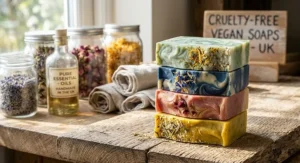
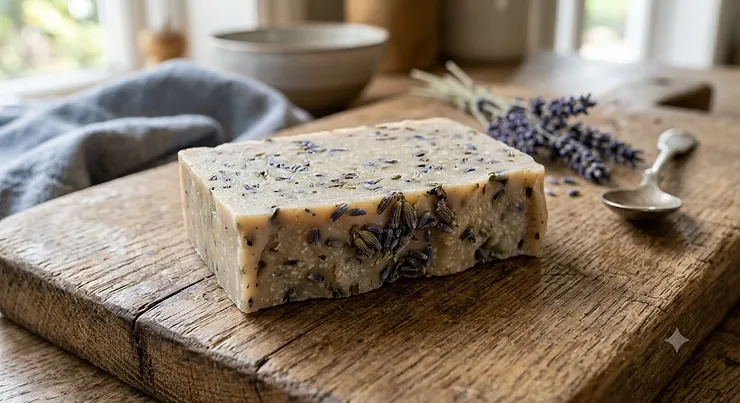
A vegan soap bar is a bar of soap made using only plant-derived oils and butters, with no animal fats, no animal-derived additives like honey or milk proteins, and no animal testing anywhere along the supply chain. That’s the whole definition, but the practice of actually finding one you’ll enjoy using every day is a much bigger puzzle, and that’s what this guide is for.
Roughly two million people in Great Britain now follow a vegan or plant-based lifestyle, and vegan beauty has stopped being a niche corner of the market; it’s mainstream enough that even shoppers who aren’t vegan themselves are actively seeking out plant based formulas for the added reassurance they bring. That shift has flooded amazon.co.uk with options, from three-ingredient artisan bars made in a Yorkshire workshop to mass-market brands that have quietly reformulated to drop palm-derived nasties. Sorting the genuinely excellent from the merely well-marketed is the tricky part, and it’s where a bit of expert digging pays off.
We’ve spent time researching real products, real specifications and real aggregated customer sentiment to bring you seven genuinely worthwhile vegan soap bar options, split across budget, mid-range and premium price points, plus the honest analysis to help you pick the right one. This article contains affiliate links, and we may earn a small commission from qualifying purchases at no extra cost to you.
Quick Comparison Table
Before the deep dive, here’s a snapshot for anyone in a hurry. Prices are approximate ranges only, since Amazon pricing fluctuates constantly; always check the current price on the product page before buying.
| Product | Type | Price Range | Best For |
|---|---|---|---|
| Faith In Nature Coconut Hand Soap Bar | Coconut, budget | under £3 | First-time switchers on a budget |
| Little Soap Company Olive Oil Soap Bar | Unperfumed, organic | £3-£4 | Sensitive skin, fragrance-averse users |
| Friendly Soap Fragrance-Free Aloe Vera Bar | Handmade, minimalist | £3-£4.50 | Eczema-prone or reactive skin |
| Dr. Bronner’s Pure-Castile Bar Soap | Castile, multi-use | £5-£7 | Multi-purpose face, body and hair use |
| Eco Warrior All Over Body Soap Bar | Shea butter, everyday | £3.50-£5 | Daily all-over body washing |
| PraNaturals Raw African Black Soap | Traditional, unrefined | £6-£9 | Oily or blemish-prone skin |
| EcoLiving Natural Vegan Soap Bar | Palm-oil-free, handmade | £3-£4.50 | Palm-oil objectors and eco purists |
Looking across the table, the pattern that jumps out is how narrow the price spread actually is. Even the priciest bar here sits under a tenner, which tells you something important: going vegan doesn’t have to mean going premium. The real differentiators are formulation philosophy (castile versus traditional saponified bars), skin type suitability, and whether a brand carries independent certification or simply self-describes as “vegan” on the label.
💬 Found a bar that suits your skin? One click on the link above helps you compare current pricing before you commit.
Top 7 Vegan Soap Bars: Expert Analysis
Coverage below spans budget essentials, mid-range all-rounders and a couple of premium or specialist picks, so there’s something here whether you’re testing the waters or replacing your entire bathroom cabinet.
1. Faith In Nature Coconut Hand Soap Bar — best budget entry point
Faith In Nature has built its reputation on refillable, no-nonsense formulas, and this coconut bar is a distillation of that philosophy into 100g of soap. The coconut oil base is doing the heavy lifting here, producing a genuinely creamy lather that punches above its price bracket. On paper, coconut-derived surfactants are prized for foaming ability without the harshness of sulphates, which explains why this bar cleanses effectively without that tight, stripped feeling some budget soaps leave behind. It’s formulated without SLS or parabens, which matters if you’re also trying to simplify your skincare routine rather than just swap one animal product for a plant one. Based on the spec sheet, this is squarely an entry-level pick: no elaborate botanicals, no essential oil blends, just a clean, hydrating base oil doing its job. Reviewers consistently note the lather quality and the pleasant, mild coconut scent, with the brand’s refill-and-reuse ethos also drawing repeat praise from environmentally conscious buyers.
Pros:
- ✅ Genuinely creamy lather from coconut oil base
- ✅ No SLS or parabens in the formula
- ✅ Very low price point for a certified vegan bar
Cons:
- ❌ Limited scent options compared to rivals
- ❌ Smaller 100g bar size than some competitors
Priced under £3 in most listings, this is about as accessible as genuine plant based soap gets, and the value proposition holds up well against supermarket own-brand alternatives that quietly still contain tallow.
2. Little Soap Company Olive Oil Soap Bar — best for sensitive, fragrance-free skin
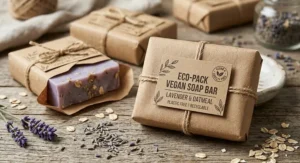
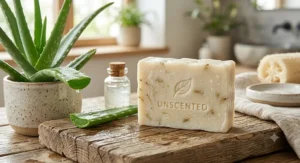
The Little Soap Company built its name on a kitchen-table start-up story that’s since scaled into a B Corp-certified, carbon-negative operation, and this Organic Range olive oil bar shows the craft hasn’t been diluted by growth. Olive oil soap, sometimes called Castile-style when unblended, is one of the gentlest saponified bases available because it’s naturally low in the harsher, more drying fatty acids found in coconut or palm oils. What that means in practice is a bar that lathers modestly rather than dramatically, but leaves skin feeling conditioned rather than squeaky-clean-and-tight. This is a soap built for people who’ve been burned by fragranced products before; it carries no added perfume, which is exactly the point for anyone managing eczema, rosacea or simple fragrance sensitivity. Reviewers consistently flag it as gentle enough for daily facial use, a claim that lines up with olive oil’s long history in traditional Mediterranean soap-making. The company’s wider sustainability credentials, including its carbon-negative status, add a layer of credibility that self-declared “natural” brands often lack.
Pros:
- ✅ Naturally gentle, low-lather olive oil formula
- ✅ Completely unperfumed for reactive skin types
- ✅ Backed by a certified B Corp, carbon-negative brand
Cons:
- ❌ Lather is modest compared to coconut-based bars
- ❌ Plain, unscented format won’t appeal to fragrance lovers
At roughly £3-£4, this sits firmly in the budget-to-mid bracket while punching well above its price in terms of formulation integrity.
3. Friendly Soap Fragrance-Free Aloe Vera Bar — best minimalist ingredients list
Friendly Soap makes every bar by hand in a Yorkshire workshop, and the ingredients list on this one reads like a masterclass in restraint: coconut oil, shea butter, olive oil, aloe vera, and water, nothing else. That short list is the whole story here. Fewer ingredients means fewer potential irritants, and the inclusion of aloe vera brings genuine soothing properties without needing a synthetic humectant to do the same job. What most buyers overlook about ultra-minimal formulas like this is that they trade a bit of shelf stability and lather volume for a much lower allergen risk, which is precisely why dermatologically cautious users gravitate toward them. Aggregated customer sentiment is a genuine mixed bag on one specific point: several buyers praise how long the bar lasts, while others in larger households report it wearing down faster than expected, a common tension with handmade bars that lack hardening additives. On the plastic-free front, Friendly Soap ships everything in recycled or recyclable card, reinforcing its position as a fully accredited operation rather than a brand simply borrowing eco language.
Pros:
- ✅ Just five ingredients, ideal for reactive skin
- ✅ Handmade in the UK with plastic-free packaging
- ✅ Soothing aloe vera without synthetic additives
Cons:
- ❌ Mixed reviews on how long the bar lasts
- ❌ Smaller 95g bar than mass-market equivalents
Expect to pay in the £3-£4.50 range, which feels entirely fair for a small-batch, handcrafted bar with this level of ingredient transparency.
4. Dr. Bronner’s Pure-Castile Bar Soap — best multi-purpose all-rounder
Dr. Bronner’s built its cult following on the liquid castile soap that famously does everything from washing dishes to hair, and the bar version distils that same philosophy into solid form. Castile soap is saponified purely from vegetable oils, in this case organic coconut, organic olive and organic hemp seed oil among others, without any synthetic detergents or foaming agents added. Here’s what the spec sheet won’t tell you outright: because there’s no added fragrance chemistry beyond essential oils, and no synthetic thickeners, the bar can genuinely double as a face wash, body bar and even an occasional shampoo bar for some hair types, which is a real point of difference from single-purpose bars. It’s independently certified under NATRUE for natural and organic cosmetics, on top of Dr. Bronner’s own USDA organic and Leaping Bunny credentials, so the ethical claims aren’t resting on marketing copy alone. Reviewers consistently rate it highly for lather quality and versatility, with the peppermint and lavender variants proving particularly popular for their sensory experience, though a handful of reviewers note the tingle from peppermint variants can be intense on freshly shaved or broken skin.
Pros:
- ✅ NATRUE-certified organic and vegan formulation
- ✅ Genuinely multi-purpose: face, body and hair
- ✅ No synthetic detergents or foaming agents
Cons:
- ❌ Peppermint variants can sting sensitive or shaved skin
- ❌ Pricier per bar than most UK-made alternatives
At around £5-£7 per bar, this is the premium pick of the group, but the versatility genuinely offsets the higher unit cost if it’s replacing multiple products in your routine.
5.Eco Warrior All Over Body Soap Bar — best everyday shea butter bar
Eco Warrior is the eco-focused sister range from the Little Soap Company, and this all-over body bar leans on shea butter as its headline ingredient rather than the plainer olive oil base used elsewhere in the brand’s range. Shea butter is rich in oleic and stearic acids, which in practice means a noticeably more moisturising bar than a standard soap, without tipping into the greasy residue that heavier balms can leave. Based on the spec comparison with the brand’s own Organic Range, this Eco Warrior bar trades some of that formula’s austerity for a slightly richer, more indulgent everyday feel, making it the pick for anyone who wants their daily wash to also function as light-touch skincare. It’s formulated free from SLS and parabens, and the brand has been vocal about its packaging choices, with cartons made from fully recyclable material rather than laminated stock. Reviewers consistently highlight the moisturising finish as the standout feature, particularly for those managing dry skin through winter months, though a few note the scent fades faster on skin than they’d like.
Pros:
- ✅ Rich, moisturising shea butter formula
- ✅ Free from SLS and parabens
- ✅ Fully recyclable, plastic-minimal packaging
Cons:
- ❌ Fragrance doesn’t linger as long as some rivals
- ❌ Less lather volume than coconut-heavy formulas
Sitting in the £3.50-£5 range, this is comfortably mid-range and arguably the most well-rounded daily driver on this list for anyone without specific skin concerns.
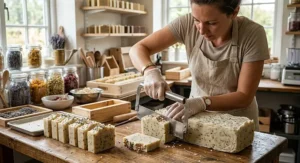
6. PraNaturals Raw African Black Soap — best for oily and blemish-prone skin
African black soap is a genuinely different animal from the Western-style bars above, and this handcrafted version made in Ghana is unrefined, meaning it retains more of the ash and plant matter that gives it its characteristic texture and dark colour. Traditionally made from plantain skins, cocoa pod ash and palm leaves, it’s naturally higher in potassium-based saponification, which tends to produce a slightly more alkaline, deeper-cleansing bar than olive or coconut-based soaps. What that means in practice for buyers is a bar genuinely suited to oily, congested or blemish-prone skin, since the deeper cleansing action helps lift excess sebum, though it can be too stripping for already-dry skin types. Because it’s unrefined and handcrafted rather than mass-produced, texture and colour can vary noticeably bar to bar, which is worth setting expectations around before you buy rather than being surprised by it on arrival. Reviewers consistently describe a genuine improvement in congestion and blackhead-prone skin within a few weeks of regular use, though several also flag that the raw, earthy scent is an acquired taste rather than a universal crowd-pleaser.
Pros:
- ✅ Deep-cleansing formula suited to oily, congested skin
- ✅ Handcrafted using traditional, ethically sourced methods
- ✅ Genuinely different from Western-style saponified bars
Cons:
- ❌ Can be too stripping for dry or sensitive skin
- ❌ Earthy scent won’t suit everyone’s preference
At around £6-£9 depending on pack size, it sits toward the premium end, reflecting its handcrafted, small-batch production rather than industrial manufacturing.
7. EcoLiving Natural Vegan Soap Bar — best for palm-oil objectors
EcoLiving occupies a specific and increasingly important niche: soap that’s not just vegan, but explicitly palm-oil-free, a distinction that matters enormously to buyers concerned about the deforestation and habitat loss linked to unsustainable palm cultivation. Handmade in the UK, the range swaps palm oil out entirely in favour of other skin-loving oils and butters, while still delivering the creamy lather that makes bar soap satisfying to use. On paper this substitution is a genuine formulation challenge, since palm oil is prized in soap-making specifically for the hardness and stable lather it lends a bar, so achieving a comparable finish without it is a real technical achievement rather than a marketing footnote. The brand’s wider positioning, including a 1% for the Planet commitment and carbon-neutral operations, gives the ethical claims more substance than a logo alone would. Reviewers consistently praise the lather and the peace of mind that comes from a fully palm-free formula, with the exfoliating oatmeal variant earning particular mentions for gently sloughing without irritating sensitive skin.
Pros:
- ✅ Genuinely palm-oil-free, not just palm-oil-reduced
- ✅ Compostable, plastic-free packaging throughout
- ✅ Handmade in the UK with skin-loving butters
Cons:
- ❌ Smaller independent brand with a narrower stockist base
- ❌ Fewer scent and variant options than bigger brands
Expect around £3-£4.50 per bar, making this a genuinely accessible way to align your bathroom cabinet with deforestation concerns without paying a premium for it.
How to Switch to Vegan Soap Bars: A Practical Setup & Care Guide
Switching from liquid pumps or animal-derived bars to a genuinely vegan soap bar is a five-minute decision but a habit change that takes a few weeks to bed in properly, and getting the basics right from day one makes a real difference. Start with drainage: a bar left sitting in a puddle of its own runoff softens, cracks and disappears far faster than one stored properly, so a ridged or draining soap dish is arguably the single most impactful accessory you can buy alongside your first bar. Second, resist the urge to leave a fresh bar wet between uses in the first week; letting it air-dry fully between washes hardens the outer layer and dramatically extends how long it lasts, sometimes by weeks.
A common first-30-days mistake is expecting an unscented, minimalist bar like an olive oil or castile soap to lather like a commercial shower gel; it won’t, and that’s not a fault, it’s simply lower surfactant volume by design. Give it two or three uses to adjust your expectations and technique, working a small amount between wet hands before applying rather than rubbing the bar directly onto skin, which tends to waste product. If you’re using a castile-style bar such as Dr. Bronner’s Pure-Castile Bar Soap on your face, patch test on your inner arm first, since the alkalinity that makes it such an effective all-rounder can be a touch much for very reactive facial skin without a short adjustment period. Finally, buy in twos: alternate two bars a few days apart so each gets a full drying cycle, which noticeably extends total lifespan compared with single-bar rotation, particularly in humid bathrooms without good ventilation.
Real-World Scenarios: Which Vegan Soap Bar Suits You?
Abstract specs only take you so far, so here’s how these bars map onto genuinely common situations. If you’re a student in shared halls with a communal bathroom, budget and durability matter more than luxury, making the Faith In Nature Coconut Hand Soap Bar or EcoLiving Natural Vegan Soap Bar the sensible picks; both are inexpensive enough that losing a bar to a flatmate’s “borrowing” habit doesn’t sting, and both hold up reasonably well in shared, high-turnover conditions.
If you’re managing eczema or reactive skin and have already been burned by fragranced products, the Little Soap Company Olive Oil Soap Bar or Friendly Soap Fragrance-Free Aloe Vera Bar deserve first consideration; both strip back the ingredient list to the essentials, minimising the surface area for a reaction while still cleansing effectively. For someone tackling oily, blemish-prone skin who’s tried countless cleansers without lasting success, PraNaturals Raw African Black Soap is worth the higher price and the adjustment period its unusual texture demands, since its deeper-cleansing chemistry addresses the root issue rather than masking it. And for the household that wants one bar to genuinely replace face wash, body wash and occasional shampoo, cutting down on both plastic bottles and bathroom clutter, Dr. Bronner’s Pure-Castile Bar Soap earns its premium price tag through sheer versatility, particularly for frequent travellers who’d rather pack one solid bar than three liquid bottles fighting airline restrictions.
What Is a Vegan Soap Bar?
A vegan soap bar is a bar of soap formulated entirely without animal-derived ingredients or by-products, and manufactured without animal testing at any stage. That means no tallow (rendered animal fat), no honey, no milk derivatives, no lanolin, no carmine, and crucially, no reliance on a fixed cut-off date to justify past animal testing. In the UK, the clearest way to verify this claim independently, rather than taking a brand’s word for it, is to look for third-party certification such as the Vegan Trademark.
How to Choose a Vegan Soap Bar
Picking the right bar comes down to weighing a handful of factors against your own skin and priorities, roughly in this order of importance:
- Check for genuine certification, not just the word “vegan” on the packaging. A sunflower Vegan Trademark logo or a Leaping Bunny mark means an independent body has actually verified the ingredient list and testing history, rather than the brand simply self-declaring.
- Match the base oil to your skin type. Coconut-heavy bars foam generously but can be drying for some; olive and shea-based bars are gentler but lather less; castile bars sit somewhere in between.
- Read the full ingredients list for hidden irritants. Even vegan bars can contain synthetic fragrance, essential oils that trigger sensitivities, or added colourants worth avoiding if your skin reacts easily.
- Consider packaging and palm oil sourcing. Plastic-free packaging and explicitly palm-oil-free or RSPO-certified formulations matter if environmental impact is part of your reasoning for switching.
- Weigh bar size against price per gram, not just the headline price. A £6 bar that lasts eight weeks can be cheaper per wash than a £2.50 bar gone in ten days.
- Factor in where it’s made. UK-handmade bars typically have a smaller carbon footprint for delivery, though imported castile soaps can offset that with genuine multi-purpose versatility.
- Check aggregated review sentiment for longevity and lather complaints, since these are the two issues that come up most consistently across real customer feedback for handmade, lower-additive bars.
Certified Vegan Soap: What “Vegan Society Approved” Actually Means
Here’s something that catches a lot of first-time buyers off guard: the word “vegan” printed on a soap wrapper carries no legal definition in the UK, and any brand can use it regardless of whether an independent body has actually checked their supply chain. That’s precisely the gap that certified vegan soap schemes exist to close. The most recognised of these in Britain is the Vegan Trademark, the sunflower logo managed by The Vegan Society, the same charity that coined the word “vegan” back in 1944. Products carrying it have had every ingredient and its source individually verified, are confirmed free from animal testing at any stage of development, and aren’t sold into markets where post-market animal testing is a legal requirement.
What most buyers overlook about vegan society approved soap specifically is how granular the checking process is; certification isn’t a company-wide badge but a per-product registration, meaning a brand can have some lines certified and others not, so it’s worth checking the individual bar rather than assuming a “mostly vegan” brand covers everything it sells. Independent surveys commissioned by the charity found that a majority of UK shoppers, vegan or not, actively prefer to see vegan certification clearly displayed on the front of packaging rather than buried in small print, which tells you the assurance genuinely changes buying behaviour rather than being a niche concern. Dr. Bronner’s Pure-Castile Bar Soap carries its own suite of third-party marks including NATRUE and Leaping Bunny, which functions similarly, giving buyers a verification trail rather than a marketing claim to take on faith.
Tallow-Free Soap and Animal-Free Ingredients Explained
If there’s one ingredient responsible for more accidental non-vegan purchases than any other, it’s tallow, technically labelled sodium tallowate on an ingredients panel, and it remains disturbingly common in mainstream, budget soap bars precisely because rendered animal fat is a cheap, plentiful by-product of the meat industry. A genuinely tallow-free soap bar swaps this out entirely for saponified vegetable oils, most commonly coconut, palm, olive, shea or hemp seed, which produce comparably firm, long-lasting bars without the animal-derived source material.
Animal-free soap ingredients extend well beyond tallow, though. Honey and beeswax appear in “natural” soap ranges surprisingly often, milk proteins and goat’s milk turn up in moisturising formulas, and even glycerin, a byproduct of saponification, can occasionally be sourced from animal fat rather than vegetable oil unless a brand specifies otherwise. This is where palm oil sourcing becomes a genuinely separate ethical question from veganism itself: palm oil is technically plant-derived and therefore vegan, but unsustainably farmed palm oil carries its own well-documented environmental cost tied to tropical deforestation and habitat loss for species including orangutans. Research into the environmental footprint of palm oil makes clear that certification, not blanket avoidance, is generally considered the more effective route to sourcing it responsibly, which is why brands like EcoLiving Natural Vegan Soap Bar that go palm-oil-free entirely, and others that insist on RSPO-certified sourcing, are both taking legitimate but different approaches to the same underlying concern.
Vegan Bar Soap vs Traditional Soap: A Detailed Comparison
| Factor | Vegan Bar Soap | Traditional Bar Soap |
|---|---|---|
| Core ingredients | Coconut, olive, shea, palm oils | Often includes tallow (animal fat) |
| Animal testing | Independently verified none, if certified | Not guaranteed, varies by brand |
| Skin compatibility | Often gentler, fewer harsh additives | Can vary widely, some very drying |
| Environmental packaging | Frequently plastic-free, recyclable card | Mixed, often plastic-wrapped |
| Price range | £2.50-£9 typically | £1-£5 typically |
| Best For | Ethically-driven buyers, sensitive skin | Budget-first buyers, no ethical priority |
The headline takeaway from this comparison is that traditional soap’s slight price advantage often shrinks or disappears once you account for how much longer a well-formulated vegan bar tends to last per gram. Traditional soap also carries a hidden information gap: without an ingredients check, you genuinely can’t tell whether tallow is present, whereas certified vegan bars remove that uncertainty entirely. Where traditional soap can still win out is raw hardness and lather volume in some tallow-based formulas, since animal fat produces a notably long-lasting bar, though the ethical trade-off for most vegan buyers isn’t a close call.
✨ Don’t Miss These Exclusive Deals! 🌱
Ready to make the switch? Click on any of the bars above to check current pricing and availability on Amazon UK. These plant based picks will help you build a genuinely cruelty-free bathroom routine your whole household can feel good about!
Common Mistakes When Buying Vegan Soap Bars
The single most common error is trusting the word “vegan” on a front label without checking either the small-print ingredients or an independent certification mark, since UK labelling law doesn’t police the term, leaving room for accidental or even deliberate misuse. A close second is assuming “natural” or “plant-based” is automatically synonymous with vegan; The Vegan Society has specifically flagged plant-based labelling being used as a deliberate sidestep by brands whose products haven’t actually met full vegan certification standards. Buyers also frequently overlook essential oil sensitivities, assuming that because a soap is plant based it must be universally gentle, when concentrated essential oils in fragranced bars can trigger reactions just as readily as synthetic fragrance does.
Another frequent misstep is judging a bar purely on upfront price without considering size or expected lifespan, leading to a false sense of savings on a small, fast-dissolving bar that needs replacing twice as often as a larger, better-formulated one. Finally, plenty of first-time switchers give up on a bar within the first week because the lather feels underwhelming compared to a sulphate-heavy commercial soap, without realising that’s often simply how a genuinely additive-light formula behaves, not a sign the product is faulty.
Plant Based Soap Bar for Different Skin Types and Audiences
Not every plant based soap bar suits every skin type, and treating “vegan” as a single homogenous category is where a lot of buyers go wrong. For dry or mature skin, richer bars built on shea butter or olive oil, such as the Eco Warrior All Over Body Soap Bar or Little Soap Company Olive Oil Soap Bar, tend to perform noticeably better than high-foam coconut formulas, which can strip natural oils faster than drier skin can replenish them. Oily or acne-prone skin generally responds better to deeper-cleansing, slightly more alkaline bars like PraNaturals Raw African Black Soap, though it’s worth easing in gradually rather than switching cold turkey, since over-stripping can trigger a rebound in oil production.
For families with young children, milder, fragrance-free formulations minimise the risk of reaction on more delicate skin, making unscented options like the olive oil bar a sensible shared-bathroom default. Frequent travellers and minimalists tend to gravitate toward multi-purpose castile-style bars precisely because one product replacing three liquid bottles is both a genuine convenience and a meaningful reduction in luggage weight and plastic waste. And for anyone specifically motivated by environmental concerns over animal ethics alone, palm-oil-free options deserve particular attention, since they address a separate but related sustainability question that certification alone doesn’t fully resolve.
Buying a Vegan Bar Soap on Amazon UK: A Shopping Guide
Searching for a vegan bar soap on amazon.co.uk throws up an overwhelming number of results, so a few filtering habits make the process considerably faster. Use Amazon’s built-in “Material Features” filter and select “Vegan” specifically, rather than relying on keyword search alone, since this narrows results to products the seller has explicitly flagged, though it’s worth cross-checking the product description for a genuine certification mark rather than trusting the filter blindly. Pay close attention to the seller field on each listing; products “sold by Amazon” or dispatched directly from a known UK brand’s own storefront tend to have more reliable stock consistency and genuine formulations than unfamiliar third-party resellers, particularly for smaller artisan brands.
Read the full product title and bullet points rather than just the headline image, since pack size varies enormously between otherwise identical-looking listings, and a “twin pack” versus “single bar” mix-up is a genuinely common ordering mistake. Customer review sections are worth scanning specifically for repeated mentions of scent longevity, bar hardness and packaging condition on arrival, since these three issues come up most consistently in aggregated feedback for handmade or lower-additive soap bars shipped by post. Finally, remember that Amazon pricing shifts regularly, so always verify the current price on the product page rather than relying on any figure quoted here, and consider Subscribe & Save options if you’ve settled on a favourite bar for genuinely regular reordering.
Long-Term Cost & Value: Is Vegan Soap Bar Worth the Switch?
| Consideration | Vegan Soap Bar | Liquid or Traditional Soap |
|---|---|---|
| Average lifespan | 4-8 weeks per bar (well-stored) | Bottle typically lasts 2-4 weeks |
| Packaging waste | Minimal card, often recyclable | Plastic bottle and pump |
| Cost per wash | Generally lower over time | Generally higher over time |
| Best For | Long-term, low-waste value | Short-term convenience buyers |
Run the numbers over a year rather than a single purchase, and the value case for vegan bar soap becomes considerably clearer. A well-stored bar in the £3-£5 range, used by one or two people, can realistically stretch to six or eight weeks, which works out cheaper per wash than most liquid soap bottles once you account for how quickly pump dispensers empty in daily household use. The environmental total cost of ownership tells a similar story: bar soap in cardboard packaging generates a fraction of the plastic waste of an equivalent volume of bottled liquid soap over a year, a genuinely meaningful reduction if you’re washing hands and bodies multiple times daily across a household of several people. Premium picks like Dr. Bronner’s Pure-Castile Bar Soap justify their higher unit price specifically through this multi-purpose value, effectively replacing three separate products rather than competing purely on soap-to-soap cost.
FAQ
❓ Is all bar soap automatically vegan?
❓ What does the Vegan Society sunflower logo actually mean?
❓ Is palm oil in vegan soap a problem?
❓ Why does my vegan soap bar not lather as much as my old soap?
❓ How do I make a vegan soap bar last longer?
Conclusion
Switching to a genuinely vegan soap bar turns out to be one of those small bathroom-cabinet decisions that quietly ripples outward, cutting plastic waste, sidestepping animal-derived ingredients you’d probably rather not think too hard about, and in several of the picks above, actually delivering a gentler wash than the mainstream alternative you’re replacing. There’s no single “best” bar in this list, deliberately so, because the right choice depends entirely on your skin, your budget and what you’re actually trying to solve, whether that’s sensitivity, sustainability, value or sheer convenience.
If you’re taking your first step away from tallow-based soap, start with something forgiving and inexpensive like the Faith In Nature Coconut Hand Soap Bar, and don’t be discouraged if the lather feels different for the first few washes; that’s simply a lower-additive formula doing its job rather than a sign you’ve bought the wrong thing. For anyone further along and looking to consolidate their routine, Dr. Bronner’s Pure-Castile Bar Soap remains the standout multi-purpose choice, while eco purists specifically concerned about palm oil sourcing will find EcoLiving Natural Vegan Soap Bar hard to beat on principle alone. Whichever you land on, the broader shift toward transparent, independently verified sustainable sourcing across the beauty industry means the genuinely good options are only getting easier to find.
Recommended for You
- Organic Soap Bar Gift Set: 7 Best Picks for 2026 UK Gifting
- Organic Soap Bar for Babies: 7 Gentle Picks Tested 2026
- 7 Best Organic Soap Bar for Face Picks UK Buyers Trust (2026)
Disclaimer: This article contains affiliate links. As an Amazon Associate, I earn from qualifying purchases. If you purchase products through these links, we may earn a small commission at no additional cost to you.
✨ Found this helpful? Share it with your friends! 💬🤗
