In This Article
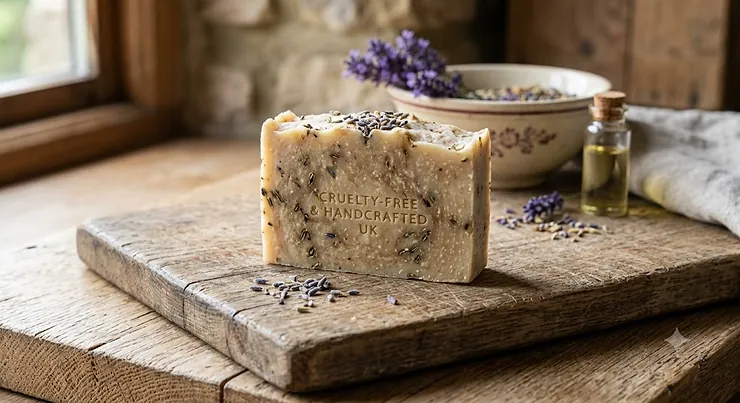
Somewhere between the third “vegan-friendly” sticker and the fifth soap that smells suspiciously like a candle shop, most shoppers give up trying to work out what a genuine cruelty free soap bar actually is. Fair enough — the labelling on bathroom shelves has become its own small dialect, half marketing, half science. A cruelty free soap bar is, at its simplest, one where neither the finished product nor its individual ingredients have been tested on animals at any stage of development, ideally backed by an independent certification rather than a brand’s own say-so. That distinction between “we promise” and “we were audited” turns out to matter enormously, and it’s the thread running through everything below.
Here’s the thing nobody tells you when you start shopping ethically: the UK actually banned cosmetic animal testing back in 1998, a full fifteen years before the EU followed suit, so on paper every bar soap sold legally in Britain should already qualify. In practice, supply chains are messier than legislation, and that’s precisely why independent marks carry weight. We dug into seven real, currently available bars — spanning budget bulk-buys to small-batch B Corps — and pulled apart their certifications, their ingredient sourcing, and what actual reviewers say about how they perform in a British bathroom (hard water, damp towel rails, and all). No invented five-star quotes here, just honest analysis of what’s verifiable.
What follows isn’t a rewritten product listing. It’s commentary on why these specific bars earn their ethical claims, a proper comparison of where they diverge on price and formulation, and practical guidance — from spotting a fake cruelty free soap claim to working out which certification actually protects you. Whether you’re switching your whole bathroom over or just replacing one bar at a time, you’ll leave with a shortlist that’s been through more than a quick glance at the packaging.
Quick Comparison Table
Before the deep dive, here’s the shape of the market at a glance. This isn’t the full breakdown — that’s coming — but it’ll orient you if you’re short on time and just want a starting point.
| Product | Certification | Best For | Price Range |
|---|---|---|---|
| Dr Bronner’s Pure-Castile Bar Soap | Leaping Bunny, Fair Trade | Multi-purpose, sensitive skin | £4-£6 per bar |
| Faith in Nature Fragrance Free Bar (18-pack) | Vegan Society | Bulk buyers, zero-waste households | £25-£35 for 18 |
| Friendly Soap Bars | Vegan Society, cruelty free | Plastic-free UK-made basics | £3-£5 per bar |
| The Little Soap Company | Vegan, B Corp certified | Gift-worthy, carbon-conscious buyers | £2-£4 per bar |
| Soap & Glory (Boots) | Leaping Bunny | High-street convenience, fragrance lovers | £4-£7 per bar |
| Urtekram Organic Soap Bars | EU Organic, vegan | Certified-organic seekers | £3-£5 per bar |
| Suma Soap Bars | Vegan Society, cruelty free | Co-op ethics, wholefood shoppers | £2-£4 per bar |
Looking across the table, the split isn’t really budget versus premium — most of these sit within a few pounds of each other, which is refreshing for anyone who assumed “ethical” automatically means “expensive”. The real differentiator is certification depth: Dr Bronner’s, Friendly Soap, and Soap & Glory carry independently audited marks, while a couple of the smaller brands rely more on Vegan Society trademarking, which verifies vegan formulation but isn’t identical to a full cruelty-free supply-chain audit. If bulk value is your priority, Faith in Nature‘s box set wins on cost-per-bar; if you want the shortest ingredients list on the shelf, Dr Bronner’s is hard to beat.
🔍 Ready to find your match? Scroll down to see the full breakdown of all seven bars, including honest pros, cons, and who each one actually suits.
Top 7 Cruelty Free Soap Bars: Expert Analysis
Below is the full rundown — budget, mid-range, and premium options, plus a couple of lesser-known picks that deserve more attention than they get. Every product name is in bold so you can scan quickly.
1. Dr Bronner’s Pure-Castile Bar Soap — shortest ingredients list in the category
The standout here is simplicity: this is a genuine castile soap, meaning it’s saponified purely from plant oils with nothing synthetic bulking out the formula.
Made from organic coconut, palm, and olive oils with retained glycerin, the 140g bar is unscented or lightly scented depending on variant (rose and lavender are the UK bestsellers), and it’s Fair Trade certified on its key oils. In practice, that ingredient simplicity means fewer opportunities for the skin reactions that synthetic-detergent bars can trigger — no parabens, no synthetic foaming agents, nothing you can’t pronounce. Based on the spec comparison with other bars on this list, Dr Bronner’s is the one most likely to double as a shampoo bar or shaving soap, which genuinely extends its value beyond a single use case.
This is the pick for anyone who wants one product doing several jobs — campers, minimalist bathroom cabinets, or people trying to cut down on the sheer number of bottles crowding the shower shelf. Reviewers consistently report that the lather is thinner than a commercial bar but rinses cleanly without residue, and a recurring theme in aggregated feedback is that the scent fades faster than fragranced competitors, which some buyers count as a pro for sensitive skin and others miss.
Pros:
- ✅ Genuinely minimal, recognisable ingredients list
- ✅ Multi-purpose — body, face, hair, even light laundry use
- ✅ Fair Trade sourced key oils with retained glycerin
Cons:
- ❌ Thinner lather than detergent-based bars
- ❌ Scent doesn’t last as long as fragranced alternatives
At around £4-£6 per bar depending on pack size, it sits mid-pack on price but earns that back in versatility — you’re not buying a separate shampoo bar and body wash.

2. Faith in Nature Fragrance Free Hand Soap Bar (18-Pack) — best bulk value for zero-waste households
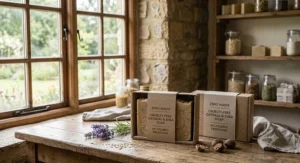
The immediate hook is the box set format: eighteen 100g bars, Vegan Society approved, designed explicitly to strip out single-use plastic from a household’s soap routine.
Formulated around wild-harvested seaweed extract, prized for antioxidant content, the bars skip parabens and SLS entirely, landing at 99% natural-origin ingredients. What most buyers overlook about bulk fragrance-free formulas like this is that they’re often gentler specifically because there’s nothing added to mask a scent — the formula has to work on its own merits. That makes it a sensible default for households with mixed skin sensitivities, where one bar needs to suit everyone from a toddler to someone managing eczema.
Packaging is fully recycled and recyclable cardboard, with zero plastic anywhere in the box, which matters if reducing bathroom waste is as much a priority as the cruelty-free claim itself. Aggregated review sentiment consistently flags the unscented formula as a genuine win for sensitive-skin households, though a recurring complaint is that anyone expecting a spa-like fragrance experience will find it underwhelming — this is a practical bar, not an indulgent one.
Pros:
- ✅ Eighteen bars per box — strong cost-per-use value
- ✅ Fully plastic-free, recycled cardboard packaging
- ✅ Vegan Society approved and genuinely fragrance-free
Cons:
- ❌ No scent variety — one formula only
- ❌ Bulk box requires storage space most bathrooms lack
Expect the full set to sit in the £25-£35 range, which works out to roughly £1.50-£2 per bar — among the cheapest genuinely certified options here.
3. Friendly Soap Bars — UK-made and completely plastic-free by design
What stands out immediately is the provenance: these are handmade in the UK, a detail that matters if traceable, shorter supply chains are part of your ethical criteria.
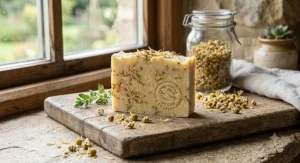
Built around coconut oil, shea butter, and essential oils rather than synthetic fragrance, the range spans lavender, tea tree, and peppermint variants, each formulated without SLS or parabens. Here’s what the spec sheet won’t tell you outright: because these are cold-processed in small UK batches rather than mass-manufactured, batch consistency can vary slightly bar to bar — a trade-off for the more artisanal production method. For anyone specifically hunting an ethical soap bar with a shorter, more transparent supply chain, that’s arguably a feature rather than a flaw.
The brand markets itself explicitly around never testing on animals and using no animal-derived ingredients, which places it firmly in the not tested on animals soap category rather than merely “vegan-labelled”. Reviewers report the shea butter content leaves a noticeably less stripped feeling than glycerin-heavy commercial bars, particularly for dry or combination skin.
Pros:
- ✅ Handmade in the UK with short, traceable supply chain
- ✅ Zero SLS or parabens, shea butter for dry-skin comfort
- ✅ Genuinely plastic-free wrapping, not just plastic-reduced
Cons:
- ❌ Slight batch-to-batch variation given small-scale production
- ❌ Smaller fragrance range than mass-market brands
Individual bars typically fall in the £3-£5 range, positioning Friendly Soap as one of the more affordable genuinely UK-made options on this list.
4. The Little Soap Company — carbon-negative and B Corp certified
The standout claim here isn’t just cruelty-free — it’s carbon negative, verified through B Corp certification, which is a considerably higher bar than most bathroom brands bother clearing.
Ingredients lean on rose geranium essential oil among others, chosen specifically because it helps balance sebum production, making the range workable for both dry and oily skin types rather than forcing a choice between the two. On paper this means one bar can realistically serve an entire household with mixed skin types, which is a genuine practical advantage over more targeted formulas. Founded from a kitchen-table operation into a business selling a bar every 23 seconds, the brand has scaled without dropping its 100% vegan, cruelty-free commitment — a detail worth noting given how often ethical brands quietly dilute standards as they grow.
Aggregated customer sentiment across retail reviews consistently describes the lather as notably creamy for a natural bar, a quality often lost when brands strip out synthetic thickening agents. The B Corp and carbon-negative claims are independently verified, not self-reported, which strengthens the credibility of the wider ethical positioning.
Pros:
- ✅ B Corp certified and independently verified carbon negative
- ✅ Rose geranium formula suits both dry and oily skin
- ✅ Creamy lather despite fully natural ingredient base
Cons:
- ❌ Smaller bar sizes than some competitors for the price
- ❌ Limited unscented options for fragrance-sensitive users
At roughly £2-£4 per bar, this is genuinely competitive with supermarket own-brand soap, which undercuts the assumption that verified ethical credentials always cost a premium.
5. Soap & Glory (Boots) — widest high-street availability with audited certification
The advantage that sets this apart from smaller ethical brands is sheer accessibility: it’s a Leaping Bunny approved range stocked in essentially every Boots on the British high street.
As part of Boots’ own portfolio, Soap & Glory sits alongside other Leaping Bunny approved lines including Botanics and Liz Earle, meaning the certification covers not just the finished product but the supplier network behind it — a meaningfully stronger claim than a brand simply printing “cruelty-free” on the box. Based on the spec comparison with the smaller artisanal brands on this list, Soap & Glory trades some of that handmade character for consistency and, crucially, for the ability to buy it on a Tuesday lunchtime without waiting for a delivery. For anyone newly building an ethical soap bar routine who wants proof without hunting through niche retailers, that convenience is a real factor.
The fragrance profiles (Original Pink, Clean on Me among them) lean recognisably “beauty counter” rather than minimalist, which suits buyers who associate ethical products with a compromise on sensory experience and want to prove that assumption wrong. Reviewers frequently cite the scent longevity as a standout compared with unscented natural bars, though a recurring critique is that stronger fragrance formulas aren’t always ideal for reactive or eczema-prone skin.
Pros:
- ✅ Leaping Bunny certified with full supplier-chain audit
- ✅ Available in almost every Boots store nationwide
- ✅ Long-lasting, distinctive fragrance profiles
Cons:
- ❌ Stronger fragrance may not suit sensitive or reactive skin
- ❌ Less minimal ingredients list than castile-style bars
Typically priced in the £4-£7 range, it sits toward the upper-mid end of this list, justified largely by brand recognition and guaranteed shelf availability.

6. Urtekram Organic Soap Bars — certified organic with Nordic sourcing standards
What immediately distinguishes this pick is the organic certification stacked on top of the cruelty-free claim, rather than either one standing alone.
Formulated under EU Organic standards with a strong plant-oil base, the range draws on Scandinavian production standards that tend to run stricter than baseline EU requirements on sourcing transparency. Here’s what most spec sheets skip: an organic certification and a cruelty-free certification test entirely different things — one covers farming and ingredient sourcing, the other covers whether animals were used in testing — so a bar carrying both marks has cleared two separate, independently audited hurdles rather than one. That combination is genuinely rarer than the marketing language around “natural” soap would suggest.
Buyers drawn to certified organic body soap because of chemical sensitivity or a preference for traceable agricultural sourcing tend to be the core audience here, more than buyers purely chasing the cruelty-free angle in isolation. Aggregated feedback from UK stockists points to a firmer bar texture that lasts longer per gram than softer glycerin soaps, though availability through UK retailers is patchier than the more mainstream names on this list.
Pros:
- ✅ Dual certification — EU Organic and cruelty-free verified
- ✅ Firm bar texture with strong per-gram longevity
- ✅ Nordic sourcing standards exceed baseline EU rules
Cons:
- ❌ Less widely stocked in UK shops than rivals here
- ❌ Fewer scent and variant options than domestic brands
Prices generally land between £3 and £5 per bar, competitive given the additional organic certification layered on top of standard cruelty-free assurances.
7. Suma Soap Bars — co-operative ethics with an extensive range
The standout feature is structural, not just formulaic: Suma operates as a workers’ co-operative, which extends the “ethical” framing beyond animal welfare into labour practices too.
The range covers a genuinely wide spread of skin types and formulations, sourced through Suma’s wholefood supply network rather than a conventional cosmetics manufacturer — a detail that tends to appeal to shoppers already buying ethically in other categories, like bulk pantry staples or fair-trade goods. What most reviews of “ethical” brands miss is that a co-operative ownership structure changes incentives around supply-chain transparency, since decisions aren’t driven purely by shareholder margin targets. That’s a genuinely different kind of ethical claim from a certification logo, even if it’s harder to quantify on a comparison table.
For buyers whose ethical shopping habits already run through co-operative or wholefood channels, Suma soap slots naturally into an existing basket rather than requiring a separate specialist retailer. Feedback from co-op shoppers frequently highlights the practical, no-frills formulation over indulgent extras, which tracks with the brand’s broader positioning around function over marketing gloss.
Pros:
- ✅ Workers’ co-operative structure, not just an animal-welfare claim
- ✅ Extensive range covering multiple skin types
- ✅ Fits naturally alongside other ethical wholefood shopping
Cons:
- ❌ Less mainstream retail presence outside co-op networks
- ❌ Marketing and branding less polished than commercial rivals
Bars typically sit in the £2-£4 range, making Suma one of the more affordable entries once you factor in the added dimension of co-operative ethics.
Practical Usage Guide: Getting the Most From an Ethical Soap Bar
Switching from bottled body wash to a bar sounds trivial until the bar turns to mush on a wet shelf within a week — a genuinely common first-30-days mistake. The fix is almost embarrassingly simple: a draining soap dish, ideally one with ridges or slats, extends bar life dramatically by letting water run off between uses rather than pooling underneath.
For castile-style bars like Dr Bronner’s, cutting a full bar into two or three smaller pieces and storing the unused portions somewhere dry actually improves longevity, since a smaller surface area dissolving at any one time slows overall wear. With fragrance-free bulk bars such as Faith in Nature, storing the unopened stock away from steam and humidity — a linen cupboard rather than the bathroom itself — preserves the bar’s texture until it’s actually in rotation. A soap bag or pouch, meanwhile, works well for handmade bars like Friendly Soap, letting you use up the last sliver rather than binning it, which matters both for value and for genuinely reducing waste.
One optimisation trick that rarely makes it onto packaging: letting a new bar “cure” for a week or two in open air before first use firms up the surface and slows the initial wear rate, particularly with softer, glycerin-rich formulas. It’s a small habit, but across a year of regular use it can meaningfully stretch how far each bar goes.
Real-World Scenarios: Who Suits Which Bar
Picture three fairly typical UK households, each with different priorities, and the shortlist above starts to sort itself out almost automatically.
A university student sharing a flat with three others, working with a tight budget and minimal storage, is best served by something like Faith in Nature‘s bulk box or Suma‘s range — low cost-per-bar, no fuss, and formulations gentle enough to suit multiple skin types without needing separate products for each flatmate. A parent managing a household with a child who has reactive or eczema-prone skin will likely find more value in Friendly Soap or The Little Soap Company, both formulated without SLS and with ingredient lists short enough to rule out likely irritants quickly if a reaction does occur. Someone commuting into a city centre, wanting the reassurance of an audited certification without hunting through specialist shops, is the exact customer Soap & Glory through Boots is built for — walk in, buy it, know it’s Leaping Bunny approved, walk out.
None of these profiles is prescriptive — skin type and personal priorities will always shift the calculation — but they illustrate a genuinely useful principle: the “best” cruelty free soap bar isn’t a single answer, it’s whichever bar’s certification, formulation, and price point line up with your actual daily life.
How to Choose a Cruelty Free Soap Bar
Working through this systematically saves a lot of label-squinting in the supermarket aisle:
- Check for an independent certification, not just brand claims. A Leaping Bunny or PETA logo means external audit; “cruelty-free” printed alone with no mark means self-declaration only.
- Read the ingredients for animal-derived items. Tallow, lanolin, and certain glycerins can be animal-sourced even in soaps that avoid direct animal testing — vegan and cruelty-free aren’t automatically the same claim.
- Match the formulation to your skin type. Fragrance-free suits reactive skin; shea- or oil-rich bars suit dry skin; firmer castile-style bars often suit oily or combination skin best.
- Weigh cost-per-use, not just sticker price. A bulk box at a higher upfront cost can undercut a single premium bar significantly over a year.
- Consider packaging alongside the cruelty-free claim. Plastic-free wrapping compounds the ethical value if reducing waste matters to you as much as animal welfare.
- Look at where it’s actually sold. Wide availability (like Boots stocking Soap & Glory) matters if you don’t want to rely on online reordering every time you run out.
- Check whether the brand supports its claim publicly. Reputable companies publish an animal-testing policy statement, not just a logo — that transparency itself is a useful trust signal.
Cruelty Free Bar Soap vs Regular Supermarket Soap
The comparison isn’t really about performance — plenty of regular supermarket soap cleans perfectly well — it’s about what sits behind the label. Regular mass-market bars from brands without a published cruelty-free policy may still rely on suppliers or parent companies that test ingredients in markets where it’s legally required, even if the finished UK product itself wasn’t tested here. That’s the loophole a genuine cruelty free soap bar, backed by Leaping Bunny or PETA certification, is specifically designed to close, since certified brands pledge no animal testing anywhere in their supply chain, not just in the country of sale.
There’s also a formulation difference worth flagging: many cruelty-free brands lean toward plant-oil bases and away from synthetic detergents partly because that ingredient philosophy tends to align with the same audience, not because one automatically implies the other. Urtekram‘s organic certification is a good example — it’s a separate claim from cruelty-free, but the two often travel together in this category. The honest takeaway is that a regular supermarket bar isn’t necessarily unethical, but it’s rarely verifiable, and that gap between “probably fine” and “independently confirmed” is exactly what the extra pound or two on a certified bar is buying.
Common Mistakes When Buying an Ethical Soap Bar
The single biggest mistake is trusting a rabbit graphic on packaging without checking whether it’s an actual registered Leaping Bunny or PETA logo — plenty of own-brand illustrations use bunny imagery loosely, with no certifying body behind it at all. A close second is assuming “vegan” and “cruelty-free” are interchangeable; a soap can be entirely free of animal-derived ingredients while the parent company still permits animal testing elsewhere in its wider portfolio, or vice versa.
Shoppers also frequently overpay by buying single bars repeatedly rather than checking whether a brand offers a bulk box — Faith in Nature‘s 18-pack, for instance, works out considerably cheaper per bar than buying singles month to month. Another recurring pitfall: choosing a heavily fragranced bar for sensitive skin purely because it’s certified cruelty-free, forgetting that certification says nothing about how gentle a formulation actually is. And finally, some buyers assume certification is permanent — it isn’t. Leaping Bunny requires annual recommitment, so a brand certified two years ago isn’t guaranteed to still hold that status today; a quick check on the certifying body’s current list takes thirty seconds and avoids relying on outdated packaging claims.
Certified Cruelty Free Body Soap: What Leaping Bunny and PETA Actually Verify
This is where the label language gets genuinely confusing, so it’s worth being precise. A Leaping Bunny approved product has cleared an independent audit run by Cruelty Free International, covering not just the finished soap but every supplier and ingredient manufacturer in the chain, with a fixed cut-off date after which no animal testing may have occurred anywhere in that supply network. That’s meaningfully stricter than a company simply stating it doesn’t test on animals, because it closes the loophole of an untested finished product built from ingredients that were tested elsewhere.
PETA’s “Beauty Without Bunnies” programme works on a related but distinct basis — companies self-certify by signing a statement of assurance rather than undergoing the same third-party supply-chain audit, and PETA offers two tiers: one for cruelty-free only, and a stricter “cruelty-free and vegan” tier. Neither approach is fake, but they’re not identical in rigour, and a genuinely diligent shopper checking a certified cruelty free body soap claim should know which programme backs a given logo before assuming equivalent scrutiny. Among the seven bars above, Dr Bronner’s and Soap & Glory are the clearest examples of brands operating within audited Leaping Bunny frameworks, giving buyers the strongest available assurance short of visiting the factory floor themselves.
Not Tested on Animals Soap: What the Label Actually Means
“Not tested on animals” printed on packaging, without an accompanying third-party logo, is legally almost meaningless in the UK — there’s no regulatory requirement to prove it before printing it, since cosmetic animal testing has been illegal here since 1998 regardless. That’s part of why the phrase can appear on nearly any soap sold legally in Britain; it’s often simply restating existing law rather than making a distinctive ethical claim about the wider supply chain.
The more useful question isn’t whether a UK-sold bar was tested on animals domestically — it almost certainly wasn’t, by law — but whether the brand or its ingredient suppliers test products intended for sale in markets that still legally require it, most notably mainland China’s historical requirements for imported cosmetics (though these have loosened significantly for many product categories in recent years). Brands like Friendly Soap and The Little Soap Company address this directly by publishing explicit policies against selling into markets requiring animal testing, which is a stronger and more verifiable claim than the bare phrase “not tested on animals” alone. If a not tested on animals soap claim isn’t backed by a stated policy on international sales and supplier auditing, treat it as a baseline legal statement rather than a differentiator.
Ethical Soap Bar Shopping on Amazon UK
Searching for cruelty free bar soap on amazon uk throws up a genuinely mixed bag — certified brands sitting alongside own-label listings that use “cruelty-free” loosely in bullet points without any backing logo. Amazon’s own filtering does help here: the platform lets shoppers narrow results by “Cruelty Free” as a material feature alongside filters like vegan, hypoallergenic, and fragrance-free, which is a faster starting point than scrolling product descriptions individually.
That said, the filter itself relies on seller-submitted attributes rather than independent verification, so it’s worth treating it as a first pass rather than a guarantee. A practical approach: use the Amazon filter to shortlist, then cross-check any unfamiliar brand name against the Leaping Bunny compassionate shopping guide or PETA’s own database before adding to basket. Established names like Dr Bronner’s and Faith in Nature are consistently available through Amazon UK listings and carry verifiable certification, making them a reliable starting point if you’d rather not do the cross-referencing yourself every time.
Long-Term Cost & Value Analysis
Bar soap’s real financial advantage over bottled body wash rarely shows up in the initial price comparison — it shows up over months of use. A typical 100-140g bar, used once or twice daily by one person, tends to last three to five weeks depending on storage and formulation, putting most of the bars above somewhere between 10p and 20p per use once the maths is done properly.
Bulk options change that equation further: Faith in Nature‘s 18-bar box, at roughly £25-£35 total, works out to under £2 per bar and comfortably under 10p per use across a household sharing the box. Compare that with an equivalent volume of bottled cruelty-free body wash, which typically runs noticeably higher per millilitre once you factor in the plastic bottle itself as an ongoing recurring cost rather than a one-off. The other cost that’s easy to overlook is packaging waste disposal — not a cash cost, but a genuine one if your council charges for non-recyclable waste collection, since plastic-free bars like Friendly Soap and Suma sidestep that entirely.

Frequently Asked Questions
❓ Is Dove soap cruelty-free in the UK?
❓ What's the difference between vegan and cruelty-free soap?
❓ Are Leaping Bunny and PETA certifications equally trustworthy?
❓ Can I buy genuinely cruelty-free soap on Amazon UK?
❓ Does cruelty-free soap cost more than regular soap?
Conclusion
Picking a genuine cruelty free soap bar really comes down to two questions worth asking every single time: is the claim backed by an independent audit, and does the formulation actually suit your skin? Everything else — fragrance, packaging, brand story — is preference layered on top of those fundamentals. Among the seven bars covered here, Dr Bronner’s and Soap & Glory offer the strongest audited assurance through Leaping Bunny certification, Faith in Nature wins decisively on bulk value, and The Little Soap Company brings a verified environmental claim that goes meaningfully further than cruelty-free alone.
None of these are the “wrong” choice — they’re simply built for slightly different bathrooms and slightly different priorities. What matters most is moving past packaging that merely gestures at ethics and toward brands that can actually show their working, whether that’s a Leaping Bunny audit trail, a B Corp certification, or a co-operative ownership model that changes the incentives from the ground up. Once you know what to look for, spotting the genuine article gets considerably easier — and considerably quicker — the next time you’re standing in front of a shelf full of near-identical claims.
✨ Ready to make the switch? Pick the bar from this list that matches your skin and your priorities, and check current pricing before it’s back in stock! 🐰
Recommended for You
- Best Vegan Soap Bar Gift Set 2026: 7 Cruelty-Free Picks Reviewed
- Vegan Soap Bar for Men: 7 Best Plant-Based Picks for 2026
- Vegan Soap Bar For Dry Skin: 7 Genuinely Nourishing Picks (2026)
Disclaimer: This article contains affiliate links. As an Amazon Associate, I earn from qualifying purchases. If you purchase products through these links, we may earn a small commission at no additional cost to you.
✨ Found this helpful? Share it with your friends! 💬🤗
