In This Article
Somewhere between the ninth plastic shower gel bottle you’ve binned this year and the headline about another “greenwashed” beauty brand, you start asking a fairly reasonable question: does an honestly ethical soap bar even exist, or is it just clever packaging with a guilty conscience printed on the front? The good news is that it does exist, and there are more genuinely good options on the market right now than at any point in the last decade.
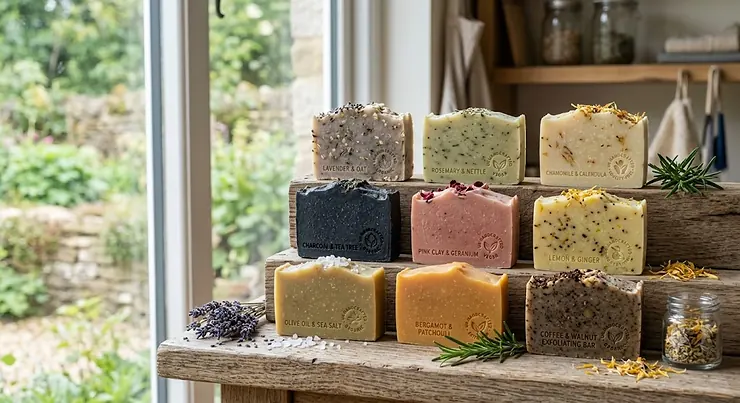
Best ethical soap bars, in the simplest terms, are soap bars produced without animal testing, with transparent sourcing, and typically without palm oil, plastic packaging or synthetic fillers — while holding up independent scrutiny from bodies like B Corp, Fair for Life or the Soil Association rather than just claiming it on the wrapper. That definition matters because “ethical” gets thrown around so loosely in cosmetics aisles that it’s practically wallpaper.
This guide cuts through that noise. We’ve dug into real specifications, aggregated genuine reviewer sentiment, and cross-checked certifications for seven soap bars actually available to UK shoppers, from budget Yorkshire-made bars to B Corp-certified heavyweights. According to Ethical Consumer’s shopping guide, the UK is one of only 45 countries worldwide where animal testing for cosmetics is prohibited, which sets a decent baseline — but as you’ll see below, the genuinely good brands go a long way further than the legal minimum. Whether you’re switching your bathroom shelf for good, hunting for an ethical soap bar gift set, or just tired of soap that claims “natural” while quietly containing a chemistry set, you’ll find a straight answer here.
Quick Comparison Table
| Soap Bar | Certification Highlight | Price Range | Best For |
|---|---|---|---|
| Dr. Bronner’s Pure-Castile Bar Soap | B Corp, Fair for Life | £4-£7 per bar | All-round ethical staple |
| Friendly Soap Palm Oil Free Bar | Palm-oil-free, plastic-free | £3-£5 per bar | Budget-conscious buyers |
| Faith in Nature Soap Gift Set | Vegan, cruelty-free | £8-£12 per set | Best cruelty-free soap gift |
| Wild Natural Soap Bar | B Corp, carbon-negative | £4-£6 per bar | Eco-conscious minimalists |
| Neal’s Yard Remedies Geranium & Orange Soap | Fair for Life, organic | £6-£9 per bar | Fragrance-led luxury routine |
| Weleda Calendula Soap | Biodynamic, Soil Association-adjacent | £5-£8 per bar | Sensitive and dry skin |
| Alter/Native by Suma Soap Bar | Fair trade cooperative-made | £3-£5 per bar | Ethical beauty on a budget |
Looking at the spread above, there’s a genuinely useful pattern: the certification badges roughly track with price, but not always in the direction you’d expect. Alter/Native by Suma Soap Bar proves that fair trade credentials don’t have to carry a premium tag, while Neal’s Yard Remedies Geranium & Orange Soap shows where that extra spend actually goes — essential oil concentration and Fair for Life-audited sourcing rather than fancier packaging. If you only remember one thing from this table, let it be that a higher price doesn’t automatically mean a more ethical bar.
💬 Just one click — help others make better buying decisions too!😊
Top 7 Best Ethical Soap Bars: Expert Analysis
Picking seven bars out of a genuinely crowded market meant weighing real specifications against real reviewer sentiment rather than marketing copy — because, as any regular soap-aisle browser knows, the word “natural” on a wrapper is doing an enormous amount of unpaid overtime these days.
1. Dr. Bronner’s Pure-Castile Bar Soap — B Corp and Fair for Life certified all-rounder
Dr. Bronner’s Pure-Castile Bar Soap has quietly become the benchmark other ethical soaps get measured against, and there’s a reason for that beyond the famously wordy label. The bar is made from saponified organic oils — coconut, olive, hemp and jojoba — with no synthetic detergents, thickeners or foaming agents added, and every wrapper is made from post-consumer recycled paper rather than plastic film.
Sold in 140g bars across scents like Peppermint, Lavender and Citrus, the formula works as a face, body or even hair bar, which matters more than it sounds: fewer bottles in your bathroom means less packaging waste overall, not just soap-specific savings. On paper this means one purchase does the job of three separate products for anyone happy to experiment slightly with their routine.
Based on the certification comparison, this is where Dr. Bronner’s genuinely pulls ahead of most competitors on this list — it carries both B Corp status and Fair for Life certification, the latter independently verifying fair wages and transparent supply-chain practices rather than relying on self-reported claims. Reviewers consistently report that the lather is thinner than a typical commercial bar, which some find takes adjustment, but almost universally praise how little residue it leaves and how far a single bar stretches.
Pros:
- ✅ B Corp and Fair for Life dual certification
- ✅ Works as face, body and hair soap
- ✅ Fully recyclable, plastic-free wrapper
Cons:
- ❌ Thinner lather takes some getting used to
- ❌ Strong essential oil scents aren’t for everyone
Priced around £4-£7 per bar depending on scent and pack size, it sits firmly in mid-range territory — but given the multi-use versatility, the value verdict is strongly in its favour.
2. Friendly Soap Palm Oil Free Bar — Yorkshire-handmade, zero-plastic budget favourite
Friendly Soap Palm Oil Free Bar is handcrafted in Yorkshire using a cold-process method that, according to the brand, creates each bar without generating any by-products, and is fully biodegradable. That production detail matters more than it might seem: cold-process soap-making avoids the energy-intensive heating stages that many mass-market bars rely on.
Available in scents including Tea Tree & Turmeric and Lavender, each bar is wrapped in recyclable paper rather than plastic, and — crucially for anyone avoiding the most contentious ingredient in the ethical beauty world — the formula skips palm oil entirely rather than relying on RSPO-certified sourcing as a workaround. What most buyers overlook about this brand is that “UK-handmade” isn’t just a nice-to-have; it typically means a shorter, more traceable supply chain than internationally produced alternatives.
Aggregated customer sentiment consistently flags the bars as long-lasting for their size, and reviewers with sensitive or reactive skin frequently mention the Tea Tree & Turmeric variant specifically for calming irritation. The trade-off, honestly, is scent longevity — because there’s no synthetic fragrance holding the aroma in place, it fades faster on the skin than perfumed commercial soaps.
Pros:
- ✅ Genuinely palm-oil-free, not just RSPO-offset
- ✅ Cold-process handmade in the UK
- ✅ Fully plastic-free, recyclable packaging
Cons:
- ❌ Scent fades faster than synthetic-fragrance bars
- ❌ Smaller bar size than some rivals
At around £3-£5 per bar, this is one of the most accessible genuinely ethical options on UK shelves, making it an easy first swap for anyone testing the waters.
3. Faith in Nature Natural Handmade Soap Gift Set — budget-friendly trio built for gifting
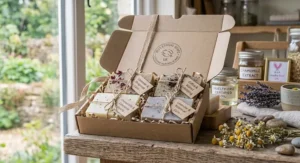
If you’re specifically after the best cruelty-free soap gift or an affordable ethical soap bar gift set, Faith in Nature Natural Handmade Soap Gift Set is worth starting your search here. The set bundles three 100g bars — typically Orange, Lavender and Aloe Vera — and every bar is 100% natural with zero plastic packaging, presented in a way that reads as a genuine gift rather than a repurposed everyday product.
Each bar uses certified sustainable palm-derived ingredients (marked clearly on the ingredient list) alongside plant-derived glycerin and essential oils, so buyers who are palm-oil-averse should check the label before purchase — this is sustainably sourced rather than palm-free, which is a meaningfully different claim. Here’s what to weigh: for gifting purposes, the trio format means the recipient gets to sample three distinct scents rather than committing to one, which reviewers consistently cite as the set’s strongest selling point.
Reviewers frequently note the soaps as a pleasant surprise for people who assume “natural soap” means compromising on scent — the Lavender bar in particular gets repeated praise for smelling genuinely relaxing rather than medicinal. Some reviewers do mention the bars are on the smaller side for a gift set, which is a fair criticism if you’re comparing against premium boxed alternatives.
Pros:
- ✅ Three-scent trio, ideal for gifting
- ✅ 100% plastic-free packaging throughout
- ✅ Vegan and cruelty-free across the range
Cons:
- ❌ Uses sustainable palm oil, not palm-free
- ❌ Individual bars smaller than standalone options
At roughly £8-£12 for the full set, it undercuts most boxed ethical gift sets while still feeling considered rather than thrown together.
4. Wild Natural Soap Bar — carbon-negative B Corp with 94% natural ingredients
Wild Natural Soap Bar comes from the UK deodorant brand that built its entire reputation on refillable, plastic-free personal care — and the soap range carries the same DNA. The bars are made from 94% natural ingredients and enriched with olive oil for hydration, and the brand holds full B Corp certification alongside a verified carbon-negative operating status.
Scents run from Rhubarb & Raspberry to Amber & Oud, with an exfoliating range that uses genuine texture agents like apricot kernel and dried lavender rather than plastic microbeads — a detail worth flagging given how recently microbead-laden “exfoliating” products were still common on UK shelves. What most buyers overlook here is that Wild’s B Corp score of over 110 points (against an 80-point pass threshold) puts it meaningfully above the certification bar rather than just scraping through, which is a genuinely useful signal when comparing brands making similar claims. The Vegan Society and B Lab both maintain public standards for exactly this reason — so a shopper can verify rather than just trust.
Reviewer sentiment leans strongly positive on scent longevity and lather quality, with several buyers specifically noting they switched from liquid body wash and didn’t miss it. The main recurring critique is that the exfoliating variants can feel slightly drying for those with already-dry skin, so the standard bars are the safer starting point.
Pros:
- ✅ Full B Corp certification, carbon-negative brand
- ✅ 94% natural ingredient formulation
- ✅ Genuine texture agents, no plastic microbeads
Cons:
- ❌ Exfoliating variants can feel drying
- ❌ Premium pricing versus own-brand bars
Expect to pay in the £4-£6 range per bar, which is competitive given the certification depth behind it.
5. Neal’s Yard Remedies Geranium & Orange Soap — Fair for Life organic luxury bar
Neal’s Yard Remedies Geranium & Orange Soap sits at the premium end of this list, and the specification explains why. The bar is built on an organic coconut oil base enriched with shea butter, geranium and orange essential oils, and the brand’s Fair Trade range is independently Fair for Life certified — meaning wages and sourcing practices across the supply chain are audited by a third party, not simply self-declared.
Presented in a cardboard box rather than shrink-wrap, it reads as gift-appropriate straight out of the packaging, and the essential oil concentration is noticeably higher than budget alternatives — reviewers repeatedly mention the scent projecting through the box before it’s even opened. Based on the spec comparison with the rest of this list, this is the bar to reach for if fragrance experience is your priority over pure minimalism.
Aggregated reviews are largely enthusiastic about the lather and moisturising finish, though a recurring honest theme in customer feedback is that the fragrance, while pleasant on the bar and in the bathroom, doesn’t linger strongly on skin after rinsing — a common characteristic of essential-oil-scented (rather than synthetically fixed) soap.
Pros:
- ✅ Fair for Life audited supply chain
- ✅ High essential oil concentration
- ✅ Gift-ready presentation out of the box
Cons:
- ❌ Premium price point versus rivals
- ❌ Scent doesn’t linger long on skin
At around £6-£9 per 100g bar, it’s the most expensive option here, but the audited fair trade credentials and presentation genuinely justify the gap for gifting or treat-yourself purchases.
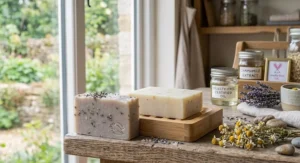
6. Weleda Calendula Soap — biodynamic organic bar for sensitive skin
Weleda Calendula Soap draws on the brand’s decades-long focus on biodynamic farming, using organic plant oils and the company’s own biodynamically grown calendula as the hero ingredient. According to reviewer roundups, the bar is made from 100% organic plant oils and packaged in FSC-certified, recycled, plastic-free packaging.
Calendula has a long-standing reputation in skincare specifically for calming irritated or reactive skin, and the spec sheet won’t tell you this, but user reports suggest the soap performs particularly well post-shave or on skin prone to redness — which lines up with calendula’s traditional use in soothing balms. Coverage note: the bar does contain palm oil, though Weleda sources it through certified sustainable channels, so palm-oil-averse buyers should weigh that against the brand’s otherwise strong organic credentials.
Reviewers consistently describe the lather as gentle rather than luxurious, which tracks with a formula designed around sensitivity rather than indulgence. A recurring, honest critique in aggregated feedback is that the bar can dissolve faster than firmer cold-process alternatives if left sitting in water, so a proper soap dish genuinely earns its keep here.
Pros:
- ✅ Biodynamic, organic calendula formulation
- ✅ FSC-certified, fully plastic-free packaging
- ✅ Well-suited to sensitive or reactive skin
Cons:
- ❌ Contains certified sustainable palm oil
- ❌ Dissolves faster without a soap dish
Priced around £5-£8 per bar, it’s a solid mid-range pick specifically for anyone whose skin reacts badly to stronger, more heavily scented soaps.
7. Alter/Native by Suma Soap Bar — cooperative-made, fair trade ethos, palm-oil-free
Alter/Native by Suma Soap Bar comes from Suma, the UK’s largest independent wholefood cooperative, which means the ethics here run through the entire business structure rather than sitting in a single product line. The soap range is palm-oil-free with unique scents, cruelty-free, vegan, and made in the UK.
As a worker cooperative, Suma’s decision-making and pay structures are inherently more equitable than a standard shareholder-driven company — every worker-owner earns the same rate regardless of role, which is a genuinely unusual level of transparency for a personal care brand to be built on. Here’s what to weigh: buyers specifically hunting for fair trade soap bar options with a UK-based, cooperative supply chain (rather than imported fair trade certification) will find this the most direct match on the list.
Reviewers consistently highlight value for money and note the bars last well compared to their price point, though the scent range is smaller than dedicated soap-only brands, which makes sense given Suma’s primary identity as a wholefood distributor rather than a beauty specialist.
Pros:
- ✅ Genuinely palm-oil-free formulation
- ✅ Worker-cooperative ownership structure
- ✅ UK-made with transparent sourcing
Cons:
- ❌ Smaller scent range than rivals
- ❌ Less widely stocked than bigger brands
At roughly £3-£5 per bar, it’s one of the best-value picks here for anyone who wants their money to reinforce fair pay structures directly rather than through a third-party audit.
Full Comparison at a Glance
| Soap Bar | Key Ingredient Focus | Palm Oil Status | Price Range | Best For |
|---|---|---|---|---|
| Dr. Bronner’s Pure-Castile Bar Soap | Coconut, olive, hemp, jojoba oils | Sustainable, certified | £4-£7 | Multi-use ethical staple |
| Friendly Soap Palm Oil Free Bar | Plant oils, essential oils | Palm-oil-free | £3-£5 | First-time ethical switchers |
| Faith in Nature Soap Gift Set | Orange, lavender, aloe vera | Sustainable, certified | £8-£12 | Gifting and sampling scents |
| Wild Natural Soap Bar | Olive oil, natural exfoliants | Minimal, sourced responsibly | £4-£6 | Eco-minimalist bathrooms |
| Neal’s Yard Remedies Geranium & Orange Soap | Coconut oil, shea butter | Sustainable, certified | £6-£9 | Fragrance-focused luxury |
| Weleda Calendula Soap | Biodynamic calendula | Sustainable, certified | £5-£8 | Sensitive and reactive skin |
| Alter/Native by Suma Soap Bar | Plant oils, cooperative-sourced | Palm-oil-free | £3-£5 | Fair trade on a budget |
This table makes one pattern obvious once you line the bars up side by side: palm-oil-free doesn’t necessarily mean cheaper, and premium pricing doesn’t necessarily buy you a palm-free formula either. If avoiding palm oil entirely is non-negotiable for you, Friendly Soap Palm Oil Free Bar and Alter/Native by Suma Soap Bar are your two most reliable picks on this list, both incidentally sitting at the budget end.
Practical Usage Guide: Getting the Most from Your Ethical Soap Bar
Switching from bottled body wash to a bar sounds simple, and mostly it is — but the first 30 days trip a lot of people up in entirely avoidable ways. The single biggest mistake is leaving the bar sitting in a puddle of water between uses; without proper drainage, even a firm cold-process bar like Dr. Bronner’s Pure-Castile Bar Soap will turn mushy within a fortnight, effectively halving its lifespan.
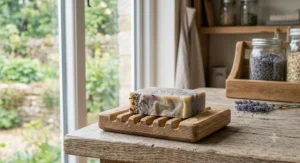
A ridged soap dish or draining tray solves most of this, letting the bar dry fully between washes rather than sitting in standing water. For travel, a vented soap tin (rather than a sealed plastic pouch) keeps a bar like Friendly Soap Palm Oil Free Bar from sweating and softening in a wash bag. If you’re switching a whole household over, buy two bars at once and rotate them — giving each bar 48 hours to fully dry roughly doubles its usable life compared with daily single-bar rotation.
One optimisation trick that rarely makes it onto packaging: cutting a full-size bar like Weleda Calendula Soap in half when you first open it means one half stays sealed and fresh in storage while the other is in daily use, which noticeably slows scent fade on essential-oil-based formulas. And don’t skip the ingredient label just because a bar is marketed as natural — “natural fragrance” can still trigger sensitive skin, so patch-test any new bar, including premium options like Neal’s Yard Remedies Geranium & Orange Soap, on your inner wrist before a full face or body wash.
Real-World Scenarios: Which Ethical Soap Bar Suits You?
The student on a tight budget, sharing a bathroom. If you’re commuting to lectures daily and splitting a bathroom cabinet three ways, cost-per-wash and durability matter more than fragrance complexity. Alter/Native by Suma Soap Bar or Friendly Soap Palm Oil Free Bar both make sense here — low price point, decent lather life, and no risk of an expensive bar disappearing into someone else’s routine.
The new parent building a low-irritant household. Newborn skin and postpartum sensitivity both call for gentleness over fragrance intensity. Weleda Calendula Soap is purpose-built for exactly this, given calendula’s traditional calming use, though it’s worth patch-testing before full family adoption — and pairing it with Friendly Soap Palm Oil Free Bar‘s milder scent range for the rest of the household keeps things consistent.
The gift-giver who wants to impress without overspending. If you’re stuck between a candle and a bath set for a birthday, an ethical soap bar gift set solves the “thoughtful but not overthought” problem neatly. Faith in Nature Natural Handmade Soap Gift Set offers variety at a low price point, while Neal’s Yard Remedies Geranium & Orange Soap works better solo for someone whose taste runs more luxury than budget-conscious.
Problem → Solution: Common Ethical Soap Bar Frustrations Solved
Problem: the bar disappears too fast. This is almost always a storage issue rather than a formula issue — a bar sitting in standing water dissolves two to three times faster than one properly drained. Solution: invest in a ridged dish and, per the usage guide above, keep a spare bar sealed rather than opening two at once.
Problem: scent fades within a day. Essential-oil-scented bars like Neal’s Yard Remedies Geranium & Orange Soap rely on natural aromatics rather than synthetic fixatives, so the scent genuinely won’t cling to skin the way commercial soap does. Solution: layer with a matching unscented lotion, or simply reset expectations — the trade-off for skipping synthetic fixatives is a lighter, shorter-lived fragrance.
Problem: skin feels tight or dry after washing. This is frequently a water hardness issue rather than a soap fault — hard water reacts with true soap (as opposed to synthetic detergent bars) to leave a slight residue. Solution: a quick rinse with slightly cooler water, or switching to Wild Natural Soap Bar‘s standard (non-exfoliating) formula, which reviewers note as noticeably less stripping.
Problem: uncertainty about whether a “vegan” claim is genuine. Vegan and cruelty-free aren’t automatically the same thing, and self-declared claims vary in reliability. Solution: look for third-party certification rather than taking wrapper text at face value — B Corp, Fair for Life, and Soil Association Organic all involve independent audits rather than self-reporting.
Problem: gift sets feel wasteful once opened. A common complaint about boxed sets is leftover cardboard or plastic inserts. Solution: Faith in Nature Natural Handmade Soap Gift Set uses fully plastic-free packaging throughout, so the whole gift — box included — is genuinely recyclable rather than just the bars themselves.
How to Choose the Best Ethical Soap Bars
- Check for third-party certification, not just wrapper claims. A logo from B Corp, Fair for Life, or the Soil Association means an outside body has actually verified the claim, rather than the brand simply stating it.
- Decide how you feel about palm oil. Sustainably sourced isn’t the same as palm-free — both are legitimate positions, but they’re different claims, so check the ingredient list rather than the marketing headline.
- Match the formula to your skin type. Sensitive or reactive skin generally does better with fragrance-light, calendula- or oat-based bars; oilier skin can typically handle stronger essential oil concentrations without irritation.
- Weigh packaging against price. Fully plastic-free packaging, like Friendly Soap Palm Oil Free Bar and Dr. Bronner’s Pure-Castile Bar Soap both use, tends to sit at a slightly lower price point than boxed luxury presentations — decide which matters more for your specific use case.
- Consider cost-per-wash, not just shelf price. A firmer cold-process bar that lasts six weeks can work out cheaper per wash than a softer bar at a lower upfront price that dissolves in three.
- Think about who else uses your bathroom. Shared households benefit from milder, lower-fragrance formulas that won’t clash with other products or irritate more sensitive skin types in the mix.
- If gifting, prioritise presentation and variety. A gift set with multiple scents, like Faith in Nature Natural Handmade Soap Gift Set, tends to land better than a single full-size bar for anyone whose preferences you’re not certain about.
B Corp Certified Soap: What the Badge Actually Means
The B Corp label gets used almost as a shorthand for “ethical” across the beauty aisle now, but it’s worth understanding what it actually verifies before treating it as a blanket guarantee. To achieve and maintain certification, companies complete the B Impact Assessment and must reach a verified total score of 80 or more points, alongside amending their Articles of Association to formally embed stakeholder consideration into company governance. You can look up any brand’s certification and score directly through B Lab UK’s official certification pages.
What most buyers overlook about B Corp certified soap specifically is that the assessment covers the whole company, not just one product line — so a brand can be B Corp certified even if a specific bar’s formula isn’t the most eco-optimised item in its range. On this list, both Dr. Bronner’s Pure-Castile Bar Soap and Wild Natural Soap Bar carry the certification, and Wild’s reported score of over 110 points against the 80-point threshold is a genuinely useful data point when comparing brands making similar claims — a higher score signals a more thorough, higher-scrutiny business rather than one that scraped a pass.
The trade-off worth knowing: certification isn’t free or quick, which is part of why smaller independent soap makers — including some excellent handmade UK brands — may never pursue it despite arguably matching or exceeding the ethics of certified competitors. Absence of the badge isn’t automatically a red flag; it’s simply a reason to check other signals like ingredient sourcing and packaging claims instead.
Fair Trade Soap Bars: Why Sourcing Matters
Fair trade certification in soap-making mostly concerns raw ingredients further up the supply chain — palm oil, shea butter, cocoa butter and essential oils are all commodities where labour practices vary hugely by region and grower. Fair for Life, the certification carried by both Dr. Bronner’s Pure-Castile Bar Soap and Neal’s Yard Remedies Geranium & Orange Soap on this list, audits transparent economic, social and environmental practices across a supply chain, verifying that workers receive fair wages and decent conditions at every stage of production rather than just at the final manufacturing step.
Here’s what to weigh: a fair trade soap bar doesn’t automatically cost more, but the audited version usually does, because independent verification carries a real cost that gets passed through the supply chain. Alter/Native by Suma Soap Bar takes a slightly different route to the same underlying goal — rather than relying on third-party fair trade certification of overseas ingredients, it’s built on Suma’s own worker-cooperative structure, where UK-based pay equity is baked directly into the business model.
Reviewers and ethical shopping guides consistently note that fair trade claims are one of the areas most prone to vague marketing language, so if sourcing transparency genuinely matters to your buying decision, look specifically for named certification bodies (Fair for Life, Fairtrade International) rather than generic phrases like “ethically sourced,” which carry no independent verification requirement whatsoever.
What Makes Sustainable Soap Brands Different
Sustainable soap brands tend to differ from conventional ones across three separate dimensions that are worth pulling apart rather than treating as one blurry concept: ingredient sourcing, packaging, and production process. The ethics of soap companies vary enormously — from big high-street brands to smaller eco brands — and packaging is a major differentiator, since soap doesn’t need to come as a liquid in a plastic bottle the way body wash typically does.
On production specifically, cold-process soap-making — used by Friendly Soap Palm Oil Free Bar and several other brands on this list — is genuinely less energy-intensive than the hot-process methods common in mass manufacturing, because the saponification reaction generates its own heat rather than requiring continuous external heating. That’s a real, measurable sustainability difference rather than a marketing distinction.
On packaging, the honest picture is mixed across the industry: some sustainable soap brands go fully plastic-free with paper wrapping, while others use recycled or FSC-certified cardboard for boxed sets like Faith in Nature Natural Handmade Soap Gift Set. Both are legitimate approaches, but paper-only wrapping generally has a smaller environmental footprint than any cardboard-and-insert combination, even when the cardboard itself is recycled.
Long-term cost and maintenance also separates genuinely sustainable brands from those merely styled to look that way: a bar that lasts appropriately long for its size, ships without excess packaging, and doesn’t require replacement bottles every few weeks is doing more real-world environmental work than a beautifully branded bar that dissolves in a fortnight.
Ethical Soap Gift Sets: Best Cruelty-Free Gifts for 2026
Buying an ethical soap bar gift set well means balancing three things: presentation, scent variety, and genuine ethical credentials rather than just eco-styled packaging over a standard formula. Of everything on this list, Faith in Nature Natural Handmade Soap Gift Set is the clearest best cruelty-free soap gift pick for most people — three distinct scents at a genuinely accessible price, in packaging that’s fully plastic-free rather than just partially.
For a more premium gift, particularly for someone who already has strong opinions about skincare, a single boxed bar of Neal’s Yard Remedies Geranium & Orange Soap reads as more considered than a multi-bar set, precisely because the higher essential oil concentration and Fair for Life certification give it a genuine story to tell alongside the gift itself.
✨ Don’t Miss These Exclusive Deals!
🔍 Take your bathroom routine to the next level with these carefully selected ethical soap bars. Click on any highlighted item to check current pricing and availability. These picks will help you create an authentic, cruelty-free gifting routine your friends and family will genuinely appreciate!
A middle-ground option worth considering: bundling two individual bars from different brands on this list — say, Wild Natural Soap Bar for the eco-minimalist and Weleda Calendula Soap for sensitive skin — in your own gift wrapping. It costs roughly the same as a pre-made set but lets you tailor scent and formula specifically to the recipient rather than relying on whatever a brand happened to bundle together.
Common Mistakes When Buying Ethical Soap
The most frequent mistake is trusting front-of-pack claims without checking the ingredient list — “natural” and “eco-friendly” are entirely unregulated terms in UK cosmetics labelling, meaning any brand can use them regardless of actual formulation. Look for named certifications instead, the way you would with Dr. Bronner’s Pure-Castile Bar Soap‘s B Corp and Fair for Life badges.
A second common error is assuming vegan automatically means cruelty-free, or vice versa. As one detailed vegan soap guide points out, a soap can be cruelty-free but not vegan — honey-based bars being a common example — or vegan but not cruelty-free, if the manufacturer still permits animal testing in certain markets it sells into. Checking both claims separately, rather than assuming one implies the other, avoids an easy and common mix-up.
A third mistake is over-buying scent variety before establishing whether a fragrance-forward bar actually suits your skin. Essential-oil-heavy bars like Neal’s Yard Remedies Geranium & Orange Soap are wonderful for many people but can irritate genuinely reactive skin — buying a full gift set of unfamiliar scents before patch-testing a single bar is a common, avoidable regret.
Finally, buyers frequently overlook storage entirely, which — as covered in the usage guide above — has a bigger impact on a bar’s real-world lifespan and cost-per-wash than almost any formulation difference between brands.
Long-Term Cost & Maintenance: Are Ethical Soap Bars Worth It?
| Factor | Bar Soap (average) | Bottled Body Wash (average) |
|---|---|---|
| Packaging waste per year | Near zero (paper only) | 8-12 plastic bottles |
| Typical cost per wash | £0.08-£0.15 | £0.10-£0.20 |
| Shelf life once opened | 4-8 weeks per bar (properly stored) | 4-6 weeks per bottle |
| Best For | Households prioritising waste reduction | Households prioritising convenience |
The numbers above tell a fairly clear story once you look past the sticker price: cost-per-wash for a well-stored ethical soap bar is usually comparable to, or slightly cheaper than, bottled body wash, while the packaging waste difference is dramatic. Over a year, a household of two switching entirely to bars like Alter/Native by Suma Soap Bar or Friendly Soap Palm Oil Free Bar could reasonably avoid somewhere between eight and twelve plastic bottles that would otherwise need recycling or, more likely, landfill.
The maintenance side of the equation matters too: a soap dish is a one-off purchase of a few pounds that meaningfully extends every bar’s lifespan going forward, which is a far better return on investment than most “eco upgrade” purchases in a typical bathroom. Total cost of ownership, in other words, favours the humble bar — provided you store it properly.
Safety, Regulations & Compliance: UK Cosmetic Rules Explained
UK cosmetic safety regulation sits on a genuinely strong foundation when it comes to animal testing specifically. A ban on animal-tested cosmetic products was first implemented in the UK in 1998, covering finished cosmetic products and ingredients intended primarily for “vanity” products, making Britain one of the earliest countries in the world to introduce such a policy. That baseline has continued to develop: the government has been actively working on reducing reliance on animal testing more broadly across UK science, with funding committed toward non-animal testing methods that will eventually benefit cosmetics ingredient safety assessment too.
Beyond animal testing specifically, UK-sold soap must comply with the Cosmetic Products Enforcement Regulations, which require accurate ingredient labelling (INCI names), safety assessment documentation held by the manufacturer, and clear allergen disclosure for common irritants like limonene and linalool — both of which appear on several bars covered in this guide, including Neal’s Yard Remedies Geranium & Orange Soap. If you have known fragrance sensitivities, checking the ingredient panel for these specific compounds before buying is genuinely more useful than trusting a “gentle” or “sensitive skin” label alone.
Look-alike certification logos are a real, if less common, safety-adjacent issue in the wider cosmetics market — brands occasionally use vague leaf icons or self-designed “cruelty-free” badges that carry no independent verification. The genuine third-party marks to look for are the Leaping Bunny, PETA’s cruelty-free logo, B Corp, Fair for Life, and Soil Association Organic — all of which involve an actual external audit process rather than a brand simply printing whatever it likes on its own packaging.
Features That Actually Matter (And Those That Don’t)
Genuinely useful: independently verified certification logos, a clear palm oil position (free versus sustainably sourced, clearly stated either way), plastic-free packaging, and transparent ingredient lists using recognisable INCI names rather than vague umbrella terms.
Largely marketing noise: “eco-friendly” and “natural” used without any certification backing them up, elaborate boxed presentation that adds cost without adding ethical substance, and exotic single ingredients (charcoal, gold flake, and similar novelties) that photograph well but rarely change how a bar actually performs on skin. A soap like Wild Natural Soap Bar earns its premium through a verified B Corp score and carbon-negative operations — substance a shopper can check — rather than through novelty ingredients that simply sound impressive on a product page.
FAQ
❓ What makes a soap bar genuinely ethical rather than just marketed that way?
❓ Are all vegan soap bars automatically cruelty-free?
❓ Do ethical soap bars actually last as long as regular soap?
❓ Is B Corp certified soap always more expensive?
❓ What's the best ethical soap bar gift set for someone new to natural skincare?
Conclusion
There’s no single “best” ethical soap bar for everyone, and honestly, anyone claiming otherwise probably hasn’t looked closely enough at the differences between certifications, formulas, and price points covered here. What’s clear from lining up all seven side by side is that genuine ethics and genuine value aren’t opposites — Alter/Native by Suma Soap Bar and Friendly Soap Palm Oil Free Bar prove that fair, transparent production doesn’t require a premium price tag, while Dr. Bronner’s Pure-Castile Bar Soap and Wild Natural Soap Bar show what a well-earned B Corp badge actually backs up.
If you’re prioritising sensitive skin, start with Weleda Calendula Soap. If you’re buying for someone else, Faith in Nature Natural Handmade Soap Gift Set or a single premium bar of Neal’s Yard Remedies Geranium & Orange Soap both make thoughtful, genuinely defensible gifts. And if you’re simply making your first switch away from bottled body wash, any bar on this list will get you there without the greenwashing regret that sends so many people back to their old routine within a month.
Recommended for You
- Cruelty Free Soap for Sensitive Skin: 7 Best UK Picks 2026
- Cruelty Free Vegan Soap Bar: 7 Genuinely Ethical Picks for 2026
- Cruelty Free Soap Bar: 7 Ethical Picks for UK Skin (2026)
Disclaimer: This article contains affiliate links. As an Amazon Associate, I earn from qualifying purchases. If you purchase products through these links, we may earn a small commission at no additional cost to you.
✨ Found this helpful? Share it with your friends! 💬🤗
