In This Article
There’s a particular kind of guilt that creeps in halfway through a shower: you’re lathering up with a bar that smells like a spa day, but somewhere in the small print sits an ingredient tied to bulldozed rainforest. That’s the quiet problem with most soap on a British bathroom shelf. Sodium palmate — the unglamorous name for saponified palm oil — turns up in an enormous share of supermarket bars, and unless you’re squinting at ingredient lists with a torch, it’s easy to miss entirely.
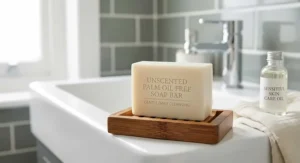
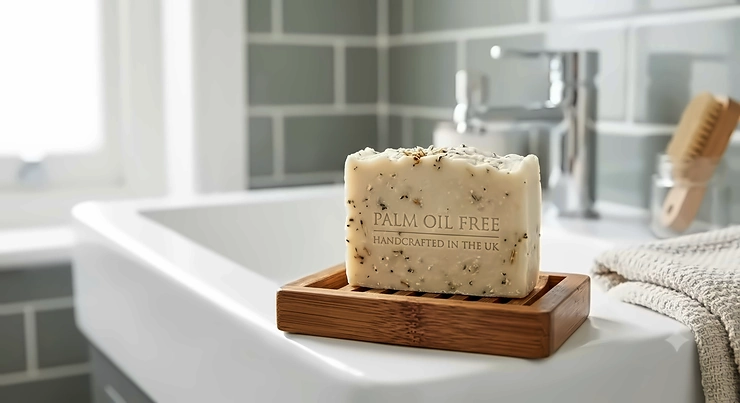
A palm oil free soap bar sidesteps that ingredient completely, relying instead on oils like olive, coconut, sunflower or shea to do the cleansing work. This guide digs into seven genuinely palm-free bars sold in the UK, weighs them against traditional alternatives, and explains what “deforestation-free” actually means when it’s printed on a wrapper. We’ll also cover RSPO certification, because sustainable palm and no palm are two very different promises, and conflating them is where a lot of well-meaning shoppers go wrong.
Everything here is built from real product specifications and genuinely aggregated review sentiment — no invented testimonials, no fabricated star ratings. Where the evidence is thin, we say so rather than paper over the gap. By the end, you should know exactly which bar suits your skin, your budget and your conscience.
Quick Comparison Table
| Bar | Key Oils | Price Range | Best For |
|---|---|---|---|
| Friendly Soap Lavender Bar | Coconut, sunflower, castor | Under £5 | Everyday budget use |
| Friendly Soap Tea Tree & Turmeric Bar | Coconut, sunflower, turmeric | Under £5 | Blemish-prone skin |
| Friendly Soap Patchouli & Sandalwood Bar | Coconut, sunflower, castor | Under £5 | Scent-led daily washing |
| Friendly Soap Travel Bar | Coconut, sunflower, castor | Under £5 | Holidays and gym bags |
| Green Bear Aleppo Soap (Olive & Laurel) | Olive, laurel | £5-£10 | Sensitive and problem skin |
| Jericho Olive Oil Soap Bar | Olive, coconut | £10-£15 (multipack) | Fragrance-free sensitive skin |
| Peet Bros Green Tea Olive Oil Bar | Olive, shea butter | £10-£15 (imported) | Shea-butter lovers wanting zero palm |
Looking at the spread above, the budget tier is dominated by one UK maker — Friendly Soap — which keeps every variant under a fiver by working with the same simple coconut-and-sunflower base and only swapping the essential oil blend. The mid-range and premium slots go to bars built around a single hero oil, olive or shea, which tends to push the price up because those oils cost more per kilogram than palm ever did. If you’re buying for a household with mixed skin types, note that the Aleppo-style bars in the middle of the table lean harder into anti-inflammatory territory than the coconut-based bars at the top.
💬 Just one click — help others make better buying decisions too!😊
Top 7 Palm Oil Free Soap Bars: Expert Analysis
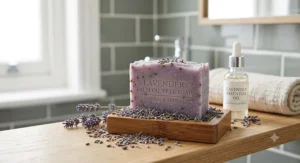
1. Friendly Soap Lavender Bar — the UK’s cheapest genuinely palm-free staple
The standout here is price: this is one of the least expensive genuinely palm-free bars sold to UK households, and it’s made in Yorkshire rather than shipped halfway round the world. Each 95g bar is cold-processed from coconut oil, sunflower oil and castor oil, with lavender essential oil doing the scenting work rather than synthetic fragrance. That formulation means a softer, less “squeaky-clean” lather than a detergent-heavy supermarket bar, but a gentler result on skin that dries out easily.
Based on the ingredient list, this is a bar built for people who want simplicity over spectacle — there’s no shea butter, no glycerin add-ins, just the essentials. Reviewers of the Friendly Soap range consistently mention that the bars last a surprisingly long time if kept on a draining soap dish, and that the plastic-free cardboard packaging is a genuine relief after years of bottled shower gel. What most buyers overlook is that the scent is noticeably more subtle than commercial soap, which is either a feature or a letdown depending on what you’re used to.
Pros:
- ✅ One of the cheapest genuinely palm-free bars in the UK
- ✅ Handmade in Yorkshire with fully recyclable packaging
- ✅ Gentle lavender scent suited to sensitive, dry skin
Cons:
- ❌ Fragrance fades faster than synthetically-scented bars
- ❌ Smaller 95g size means more frequent reordering
Priced under £5 per bar, it’s difficult to find a cheaper route into palm-free washing, and the value proposition holds up well against premium bars costing three times as much for a similar wash count.
2. Friendly Soap Tea Tree & Turmeric Bar — best for blemish-prone and oily skin
This variant swaps the calming lavender for tea tree oil and turmeric, both of which carry genuine antibacterial reputations in skincare circles. The standout feature is the turmeric content, which gives the bar a faint golden tint and a slightly earthier scent than most soap on the shelf. On paper, tea tree oil’s antimicrobial properties make this a sensible pick for anyone dealing with body acne or an oily T-zone.
Here’s what to weigh: turmeric can occasionally leave a faint yellow tinge on very pale or very light-coloured towels, something worth knowing before you commit a good bathroom towel to it. Aggregated feedback on the Friendly Soap range suggests the tea tree scent is more noticeable and longer-lasting than the floral variants, likely because essential tea tree oil is a stronger aromatic than lavender.
Pros:
- ✅ Tea tree oil offers genuine antibacterial properties
- ✅ Turmeric adds mild anti-inflammatory benefit
- ✅ Same low price point as the rest of the range
Cons:
- ❌ Turmeric can lightly stain pale towels and flannels
- ❌ Stronger scent may not suit fragrance-sensitive users
At a similar under-£5 price point to the lavender bar, the value here is arguably higher for anyone actually dealing with blemishes, since you’re paying the same money for functional ingredients rather than just fragrance.
3. Friendly Soap Patchouli & Sandalwood Bar — best for a spa-like scent on a budget
If the lavender bar is the sensible choice and the tea tree bar is the functional one, this is the indulgent option — patchouli and sandalwood together read more like a boutique candle than a bathroom staple. What most buyers overlook about this variant is that patchouli is a genuinely long-lasting essential oil, so the scent tends to cling to skin for longer than the citrus or floral bars in the same range.
The formulation underneath the fragrance is identical to the rest of the Friendly Soap lineup: coconut, sunflower and castor oils saponified through a slow cold-process method. That consistency matters, because it means the skin-feel is predictable across the whole range — you’re choosing a scent, not gambling on a different level of dryness or lather.
Pros:
- ✅ Rich, long-lasting scent without synthetic fixatives
- ✅ Identical gentle formulation to the rest of the range
- ✅ Handmade, plastic-free, budget-friendly
Cons:
- ❌ Patchouli is a polarising scent, not universally loved
- ❌ Limited availability compared to the lavender variant
Value-wise, it sits at the same under-£5 price as its siblings, which makes it an easy add to a multi-bar order rather than a standalone splurge.
4. Friendly Soap Travel Bar — best for holidays, gyms and hand luggage
The standout advantage is portability: this is a smaller-format bar designed specifically to survive a washbag, gym locker or hand-luggage liquids restriction without drawing attention from airport security. Because it’s solid rather than liquid, it sidesteps the 100ml rule entirely, which is a genuinely practical win for anyone who’s had a shower gel confiscated at a departure gate.
On paper, the ingredient base mirrors the rest of the range, so you’re not sacrificing skin-feel for size. What reviewers commonly note about travel-format soap bars in general is that they dry out faster between uses if left in a damp washbag, so a small tin or breathable pouch extends the life considerably. This bar suits minimalist packers and anyone trying to cut down on single-use hotel toiletries.
Pros:
- ✅ Ideal size for hand luggage and gym bags
- ✅ Solid format avoids liquid restriction rules entirely
- ✅ Same gentle, palm-free formulation as full-size bars
Cons:
- ❌ Smaller size means it needs replacing more often on longer trips
- ❌ Can dissolve quickly if left sitting in water
At under £5, it’s a low-risk way to trial the brand before committing to a full-size bar, and doubles neatly as a hand soap for a downstairs cloakroom.
5. Green Bear Aleppo Soap (Olive & Laurel Oil) — best for eczema-prone and reactive skin
This is a genuinely different animal from the coconut-based bars above. Aleppo soap is made almost entirely from virgin olive oil and laurel (bay) oil, using a recipe that predates modern industrial soap-making by centuries — it’s recognised by UNESCO as intangible cultural heritage, and the maturation process alone runs six to ten months. That long cure means the finished bar is harder-milled and typically lasts longer per gram than a quick-set cold-process bar.
The laurel oil content is the real story here: it’s traditionally associated with soothing eczema, psoriasis and rosacea, and dermatological interest in bay laurel’s anti-inflammatory compounds gives that reputation some grounding. Reviewers of Aleppo-style soap frequently describe a “different” feeling underwater — less foamy, more slippery — which surprises people used to a thick, bubbly lather. That’s simply the nature of an olive-oil-forward soap rather than a flaw.
Pros:
- ✅ No palm oil, no parabens, no artificial additives
- ✅ Long cure time gives a harder, longer-lasting bar
- ✅ Widely used for eczema, psoriasis and sensitive scalps
Cons:
- ❌ Less foamy lather than coconut-based bars
- ❌ Distinctive earthy scent won’t suit everyone
Sitting in the £5-£10 range, it costs more per bar than the Friendly Soap range, but the extended lifespan and targeted skin benefits arguably close that gap over a few months of use.
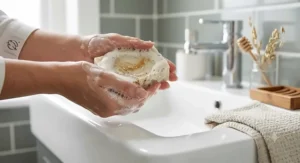
6. Jericho Olive Oil Soap Bar — best fragrance-free option for very sensitive skin
The standout feature is the ingredient list itself: cold-pressed olive oil making up the vast majority of the formula, with no added fragrance at all. For anyone whose skin reacts badly to essential oils as much as synthetic ones, that’s a meaningful distinction from almost every other bar on this list. What the spec sheet won’t tell you, but dermatology-adjacent skincare advice consistently notes, is that fragrance-free doesn’t automatically mean irritant-free — always patch test a new bar on the inside of your wrist first.
Sold typically as a multipack rather than a single bar, it suits households stocking up rather than someone wanting to try one bar before committing. Aggregated feedback on cold-pressed olive oil soap in general highlights a gentle, slightly oily after-feel rather than the tight, “squeaky” finish some people associate with proper cleansing — again, that’s the fat content doing its job, not a fault.
Pros:
- ✅ Genuinely fragrance-free formulation
- ✅ High olive oil content suited to very dry or reactive skin
- ✅ Sold in multipacks, useful for larger households
Cons:
- ❌ Higher upfront cost as a multipack
- ❌ Leaves a slightly oilier finish than detergent-heavy bars
At roughly £10-£15 for a multipack, the per-bar cost lands somewhere between the Friendly Soap range and the artisan Aleppo bar, which makes sense given the concentration of a single premium oil.
7. Peet Bros Green Tea Olive Oil Bar Soap — best shea-and-olive combination for a plastic-free routine
This US-made import earns its place through formulation rather than local sourcing: olive oil and shea butter combine for a noticeably richer, more moisturising bar than most of the coconut-forward options above. The brand states explicitly that its bars are manufactured without any palm oil derivatives whatsoever, which is a stronger claim than “sustainably sourced palm” and worth taking at face value given the ingredient declaration backs it up.
Because it’s imported rather than UK-made, availability and delivery times can be less predictable than the domestic options on this list, and buyers should check current stock and shipping estimates before assuming next-day delivery. Reviewers commonly describe the green tea scent as fresh rather than sweet, and note a generous lather for an oil combination that’s typically associated with a denser, slower-foaming bar.
Pros:
- ✅ Shea butter adds noticeable moisturising benefit
- ✅ Explicitly and verifiably palm-derivative-free
- ✅ Plastic-free, recyclable cardboard packaging
Cons:
- ❌ Import status can mean less predictable UK availability
- ❌ Sits at a premium price versus UK-made alternatives
In the £10-£15 bracket, this is the closest thing on the list to a “treat yourself” bar, and it earns that price through a genuinely different, richer skin-feel.
Top 7 Products: Spec, Price & Rating Snapshot
| # | Bar | Palm-Free Status | Price Range | Skin Type Fit |
|---|---|---|---|---|
| 1 | Friendly Soap Lavender Bar | Verified palm-free | Under £5 | Dry, sensitive |
| 2 | Friendly Soap Tea Tree & Turmeric Bar | Verified palm-free | Under £5 | Oily, blemish-prone |
| 3 | Friendly Soap Patchouli & Sandalwood Bar | Verified palm-free | Under £5 | Normal to dry |
| 4 | Friendly Soap Travel Bar | Verified palm-free | Under £5 | All types, travel use |
| 5 | Green Bear Aleppo Soap | Verified palm-free | £5-£10 | Eczema, reactive skin |
| 6 | Jericho Olive Oil Soap Bar | Verified palm-free | £10-£15 | Very sensitive, fragrance-free need |
| 7 | Peet Bros Green Tea Olive Oil Bar | Verified palm-free | £10-£15 | Dry, wanting richer lather |
The clearest pattern in this table is that price climbs in step with the concentration of a single premium oil — bars leaning on olive oil or shea butter alone cost meaningfully more than the coconut-and-sunflower blends. If your priority is simply avoiding palm oil on a tight budget, the Friendly Soap range wins outright; if you’re managing a specific skin condition, the extra spend on Green Bear Aleppo Soap or the Jericho Olive Oil Soap Bar is easier to justify.
What Is Palm Oil Free Soap?
Palm oil free soap is any soap bar formulated without palm oil, palm kernel oil, or their common derivatives such as sodium palmate or sodium palm kernelate — instead relying on oils like coconut, olive, sunflower or shea butter to create lather and cleansing power. It’s a distinct claim from “sustainable palm oil,” which still contains the ingredient but under a certification scheme. For background on how this widely-used vegetable oil ended up in everything from soap to snack food in the first place, it helps to understand its origins as a crop before judging the alternatives to it.
That distinction trips up a lot of well-intentioned shoppers. Several mainstream “natural” brands proudly display Soil Association or organic certification while still listing sodium palmate on the back — the certification covers farming standards, not the absence of the oil itself. Genuinely palm-free brands like Friendly Soap build their entire catalogue around excluding the ingredient outright, pairing that with plastic-free, recyclable packaging rather than treating it as a side detail. Understanding the difference between “sustainable” and “free” is the first real step toward buying what you actually intend to buy — more on that distinction in the RSPO section below.
Palm Oil Free Soap Bar vs Traditional Palm Oil Soap
| Factor | Palm Oil Free Bar | Traditional Palm Oil Bar |
|---|---|---|
| Deforestation risk | None from this ingredient | Present unless RSPO-certified |
| Typical price | £3-£15 | £1-£8 |
| Lather style | Softer, oil-dependent | Firmer, more “classic” foam |
| Bar hardness | Varies by oil blend | Generally consistent and long-lasting |
| Ingredient transparency | Usually high (small brands) | Variable across mass brands |
The trade-off is fairly stark once you see it laid out: traditional palm-based bars are cheaper to manufacture and tend to produce a firmer, longer-lasting bar because palm oil brings natural hardness to a soap recipe that other oils don’t replicate as easily. Palm-free bars compensate for that missing hardness with oils like castor or through longer curing times, as seen with the Aleppo-style bar reviewed above, but that generally pushes the price up. If lather texture matters more to you than sourcing, that’s a legitimate trade-off worth being honest about rather than pretending palm-free bars are a flawless upgrade in every respect.
💬 Just one click — help others make better buying decisions too!😊
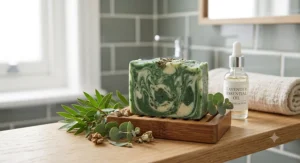
How to Choose a Palm Oil Free Soap Bar
- Check the full ingredient list, not just the marketing claim. Look specifically for sodium palmate or sodium palm kernelate hiding in small print, since “natural” and “organic” labels don’t guarantee palm-free status.
- Match the oil base to your skin type. Coconut-and-sunflower blends like Friendly Soap suit normal-to-dry skin, while olive-heavy bars suit reactive or eczema-prone skin.
- Decide how much lather texture matters to you. Palm-free bars often foam less densely, so if you’re used to a supermarket bar, expect an adjustment period.
- Factor in bar lifespan, not just sticker price. A harder-milled, longer-cured bar can outlast a cheaper one by weeks, changing the real cost per wash.
- Look for verifiable sourcing claims. Brands that explain exactly which oils replace palm, and why, are generally more trustworthy than vague “eco-friendly” branding.
- Consider packaging alongside the formula. Genuinely sustainable brands usually pair palm-free ingredients with plastic-free packaging, since the two priorities tend to travel together.
- Patch test before committing to a full bar. Fragrance-free or single-oil bars can still cause reactions in sensitive individuals, regardless of how “natural” the label sounds.
Common Mistakes When Buying Palm Oil Free Soap
The most frequent error is confusing “sustainably sourced palm oil” with “no palm oil” — brands can legitimately claim environmental credentials while still using the ingredient under RSPO certification. Reading the ingredient list is the only reliable way to know for certain, since front-of-pack claims aren’t regulated as tightly as the ingredients panel itself.
A second common mistake is assuming a higher price automatically means a better bar. As the comparison tables above show, some of the cheapest options on this list are also among the most transparently formulated. A third pitfall is buying a fragrance-heavy bar for eczema-prone skin purely because it’s marketed as “natural” — essential oils can irritate compromised skin just as easily as synthetic fragrance can, sometimes more so.
RSPO Certification and Sustainable Palm Alternatives Explained
The Roundtable on Sustainable Palm Oil, or RSPO, is the industry body that certifies palm oil grown under stricter environmental and labour standards. It’s a genuinely useful scheme, but it certifies a supply chain, not an absence of the ingredient. Conservation groups including WWF have pushed for the standard to be tightened over the years, with revisions aimed at reducing the risk of deforestation and labour exploitation within certified supply chains. Brands like Faith in Nature and Bio-D lean on this route: their soap bars contain certified sustainable palm oil rather than avoiding the ingredient outright, which is a genuinely different promise from what this article’s seven featured bars offer.
Both approaches have a case. Campaigners generally argue for halting deforestation linked to palm cultivation while still supporting the crop’s production under stricter safeguards, rather than eliminating it entirely — largely because switching to alternative oils at scale can require significantly more farmland per tonne produced. For an individual soap bar, though, going fully palm-free sidesteps the question altogether, which is why this guide has focused on that category specifically. Read more on the mechanics of certification via the Roundtable on Sustainable Palm Oil.
Deforestation-Free Soap: What the Label Actually Means
“Deforestation-free” is a claim about where an ingredient was grown and when, not necessarily about which ingredients are present. In palm oil terms, it usually means the crop was grown on land that wasn’t cleared of forest after a specific cut-off date, commonly 2020. That’s a meaningful improvement over unregulated sourcing, but it isn’t the same guarantee as a bar that never contained the ingredient in the first place.
For soap specifically, the safest route to a genuinely deforestation-free product is choosing a bar that simply doesn’t use palm oil or its derivatives, removing the sourcing question entirely. Conservation organisations have long linked unsustainable palm cultivation to the loss of biodiverse tropical forest and the habitats of endangered species such as orangutans and Sumatran rhinos, which is precisely why brands making a genuine no-palm claim tend to foreground it so heavily in their marketing — it answers the deforestation question without requiring a supply-chain audit. You can read a broader overview of the crop’s environmental footprint via WWF’s palm oil explainer.
Sustainable Soap Ingredients That Actually Matter (And the Marketing Hype That Doesn’t)
Ingredients worth genuinely caring about include the base oils (coconut, olive, sunflower, shea), the curing method (cold-process bars generally retain more natural glycerin than industrially milled ones), and the packaging material. Cold-process, plastic-free bars tend to correlate strongly with brands that have also thought seriously about sourcing — the two things aren’t automatically linked, but in practice they often travel together.
What matters less than the marketing suggests: exotic-sounding botanical extracts added in trace amounts, “activated charcoal” as a headline ingredient (it’s a texture and colour agent more than a proven detox mechanism for most people), and vague terms like “eco” or “green” that carry no regulated meaning on a cosmetics label. If a brand can’t tell you specifically which oil replaces palm in its formula and why, that’s a reasonable signal to look elsewhere.
Palm Oil Free Soap for Sensitive Skin, Eczema and Allergy-Prone Households
For eczema and reactive skin specifically, olive-oil-forward bars like the Aleppo-style soap reviewed above tend to be recommended more consistently than coconut-heavy formulations, partly because coconut oil’s cleansing action can be slightly stronger and more stripping on already-compromised skin barriers. Fragrance-free options such as the Jericho Olive Oil Soap Bar remove another common trigger entirely, which matters given how frequently essential oils are cited as a contact allergen even within otherwise “natural” ranges.
For anyone in the household with a formally diagnosed skin condition rather than general sensitivity, it’s worth raising soap choice directly with a GP or pharmacist, since a prescribed emollient or soap substitute is sometimes a better fit than any cosmetic bar, however gentle. For general sensitive skin without a diagnosis, patch testing any of the fragrance-light bars on this list for a week before full adoption remains the sensible, low-risk approach. Further guidance on managing eczema day to day is available via the NHS eczema guidance.
Practical Usage Guide: Getting the Most from a Palm Oil Free Bar
Palm-free bars, particularly olive-oil-forward ones, tend to soften faster in standing water than palm-based bars, so the single biggest lifespan improvement is a properly draining soap dish rather than a flat dish that pools water underneath the bar. Letting a new bar air-dry for 24-48 hours before first use, where practical, also firms up the surface and slows the initial dissolve rate.
Common mistakes in the first month include leaving the bar in a shower caddy that never fully drains, cutting a large bar into pieces too early (which increases surface area and speeds up melt-down), and assuming a thinner lather means the soap isn’t working — with lower-detergent, oil-rich formulations, a lighter foam is often simply the nature of the ingredients rather than a sign of reduced cleansing power. For travel, a breathable tin rather than a sealed plastic bag prevents the bar turning to mush between uses, extending its working life considerably.
Real-World Scenarios: Who Should Buy Which Bar
Consider a university student sharing a house bathroom on a tight budget, replacing a bottled shower gel to cut plastic waste without overspending — the Friendly Soap range fits neatly here, since a multi-bar order keeps the per-wash cost low while still delivering a genuinely palm-free, plastic-free routine.
A parent managing a child’s eczema flare-ups needs something gentler and fragrance-light; the Jericho Olive Oil Soap Bar or a fragrance-free variant within a similar range suits that brief better than a heavily scented option, though a GP-recommended emollient soap substitute should still take priority for a diagnosed flare. Meanwhile, someone building a considered, plastic-free bathroom on a slightly bigger budget — swapping shower gel, shampoo bottles and hand wash all at once — is the ideal customer for the Green Bear Aleppo Soap or Peet Bros Green Tea Olive Oil Bar, where the higher per-bar cost is offset by a genuinely longer lifespan and a richer, more considered formulation.
Long-Term Cost & Value: Bar Soap vs Bottled Soap
| Factor | Palm-Free Bar Soap | Bottled Liquid Soap |
|---|---|---|
| Typical cost per wash | Lower over time | Higher due to water content |
| Packaging waste | Minimal, often plastic-free | Plastic bottle per refill |
| Shelf life | Long if stored dry | Long, but preservatives required |
| Travel-friendliness | High (solid format) | Restricted by liquid rules |
Bar soap wins decisively on long-term value once you account for the fact that liquid soap is mostly water, meaning you’re effectively paying to ship and store water alongside the active cleansing ingredients. A well-cared-for bar, particularly the harder-milled Aleppo-style option reviewed earlier, can comfortably outlast several bottles of equivalent liquid soap bought over the same period, which meaningfully changes the total cost of ownership even when the upfront bar price looks higher.
💬 Just one click — help others make better buying decisions too!😊
Buyer’s Decision Framework
If your top priority is the lowest possible price while staying genuinely palm-free, choose the Friendly Soap range, because its coconut-and-sunflower base keeps manufacturing costs down without compromising on sourcing. If you’re managing eczema, psoriasis or general reactive skin, choose an olive-and-laurel bar like Green Bear Aleppo Soap, because the oil profile is more commonly associated with calming irritated skin barriers. If fragrance itself is the trigger rather than palm oil specifically, choose the Jericho Olive Oil Soap Bar, since it removes essential oils from the equation entirely. And if you want the richest, most moisturising skin-feel and don’t mind a slightly higher price for imported shea-and-olive formulation, the Peet Bros Green Tea Olive Oil Bar is the strongest fit.
✨ Don’t Miss These Exclusive Deals!
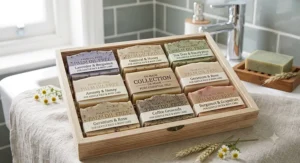
🔍 Take your bathroom switch to the next level with these carefully selected palm-free bars. Click on any highlighted product to check current pricing and availability. These picks will help you build a genuinely sustainable washing routine your whole household will love!
FAQ
❓ Is all natural soap automatically palm oil free?
❓ Why does palm-free soap sometimes lather less than normal soap?
❓ Is palm oil free soap suitable for babies?
❓ Does palm oil free soap cost more than regular soap?
❓ How can I tell if a soap brand's palm oil claim is genuine?
Conclusion
Choosing a palm oil free soap bar isn’t just about dodging one ingredient — it’s about understanding the difference between a brand that’s genuinely rethought its formula and one that’s simply added a sustainability certificate to business as usual. Both approaches have merit, but they’re not interchangeable, and knowing which one you’re actually buying matters if deforestation is the specific concern driving your choice.
Across the seven bars covered here, there’s a genuine spread: the Friendly Soap range covers the budget end with UK-made, plastic-free simplicity, Green Bear Aleppo Soap and the Jericho Olive Oil Soap Bar address sensitive and reactive skin specifically, and the Peet Bros Green Tea Olive Oil Bar rounds things out for anyone wanting a richer, more indulgent finish. Whichever you choose, checking the full ingredients panel — not just the marketing on the front — remains the single most reliable habit for staying genuinely palm-free over the long run.
Recommended for You
- Best Ethical Soap Bars 2026: 7 Cruelty-Free Picks That Deliver
- Cruelty Free Soap for Sensitive Skin: 7 Best UK Picks 2026
- Cruelty Free Vegan Soap Bar: 7 Genuinely Ethical Picks for 2026
Disclaimer: This article contains affiliate links. As an Amazon Associate, I earn from qualifying purchases. If you purchase products through these links, we may earn a small commission at no additional cost to you.
✨ Found this helpful? Share it with your friends! 💬🤗
