In This Article
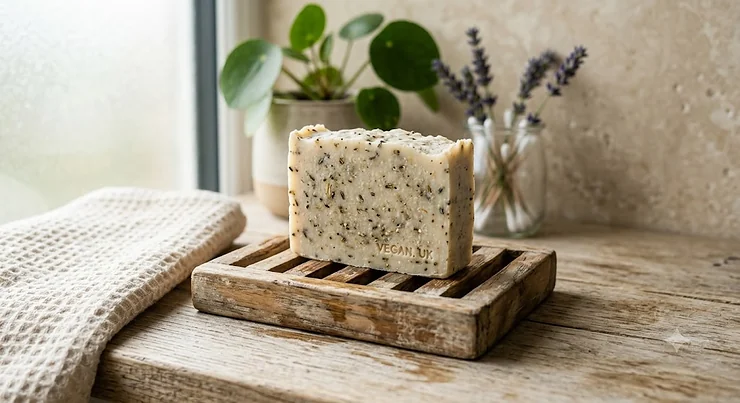
Let’s start with the bit nobody explains properly on the packaging. Palm oil free vegan soap is a bar cleanser made entirely from plant-derived ingredients — typically coconut, rapeseed, olive or shea-based saponified oils — with zero palm oil or palm kernel oil derivatives, and no animal fats, tallow or milk-based additives of any kind. That’s the 40-word version. The messier reality is that “palm oil free” and “vegan” are two completely separate claims, and an awful lot of soap on a UK supermarket shelf ticks one box while quietly failing the other.
Here’s the thing that surprised me while digging through ingredient panels for this piece: most soap marketed as “natural” or “eco” in Britain isn’t palm oil free at all. It just uses RSPO-certified sustainable palm oil, which is a genuinely different (and more defensible) thing, but not what most people searching for palm oil free soap actually want. We’ll come back to that distinction because it trips up more careful shoppers than you’d think.
Palm oil itself isn’t some cartoon villain — it’s an incredibly efficient crop, producing far more oil per hectare than rapeseed or sunflower. The problem is where and how a huge share of it gets grown. Conservation groups have long flagged it as a leading cause of deforestation across some of the planet’s most biodiverse rainforest, pushing species like orangutans, pygmy elephants and Sumatran rhinos further towards habitat loss, while clearing carbon-rich peatland in the process. You can read more in WWF’s breakdown of the palm oil problem, which is a genuinely useful primer if you want the full picture rather than a soundbite.
If you’ve landed here searching for eco friendly soap bar no palm oil, sustainable vegan soap bar, rainforest-friendly soap, ethical vegan cleansing bar or zero deforestation soap, you’re circling the same question from five different angles, and this guide answers all of them. We researched 7 real bars currently sold to UK shoppers, checked their actual ingredient decks (not just their marketing copy), and worked out which ones genuinely deserve a spot in your bathroom.
Quick Comparison: Palm Oil Free Vegan Soap at a Glance
Before the deep dive, here’s the short version for anyone in a hurry.
| Soap | Palm Oil Status | Price Range | Best For |
|---|---|---|---|
| Friendly Soap Natural Lavender Bar | Genuinely palm-free | Under £5 | Budget everyday bar |
| Friendly Soap Fragrance-Free Aloe Vera Bar | Genuinely palm-free | Under £5 | Sensitive skin |
| Friendly Soap Patchouli & Sandalwood Bar | Genuinely palm-free | Under £5 | Scent-led daily wash |
| Friendly Soap Orange & Grapefruit Bar | Genuinely palm-free | Under £5 | Morning shower pick-me-up |
| Friendly Soap Foot Soap Bar | Genuinely palm-free | Under £5 | Targeted foot care |
| Friendly Soap Lavender & Tea Tree Shampoo/Body Bar | Genuinely palm-free | Under £5 | Dual-purpose travel bar |
| Bloomtown Natural Soap Bar – The Meadow | Certified palm-free | £7-£9 range | Premium artisan gifting |
The pattern that jumps out immediately: genuinely palm-free bars in the UK market cluster around two kinds of brand — no-frills British cold-process makers like Friendly Soap, and small-batch artisan brands like Bloomtown that charge a premium for handcrafted formulations and certification. There isn’t really a mainstream supermarket-shelf option that’s honestly palm-free, which is worth sitting with for a second. Big-name “natural” soap brands almost always use RSPO palm derivatives rather than avoiding palm oil altogether, and we’ll unpack exactly why that distinction matters further down.
💬 Just one click — help others make better buying decisions too!😊
Top 7 Palm Oil Free Vegan Soap Bars: Expert Analysis
We picked these seven specifically because their ingredient lists back up their claims — no sodium palmate, no palm kernelate, nothing hiding behind an asterisk that quietly means “certified sustainable palm oil” rather than “no palm oil.” Here’s how each one actually performs.
1. Friendly Soap Natural Lavender Bar — the honest budget benchmark
Friendly Soap’s Lavender bar is where most palm-free conversions in the UK start, and there’s a reason for that. The formula runs on sodium cocoate (coconut), sodium rapeseedate (rapeseed) and sodium shea butterate, with real lavender oil and dried lavender flower doing the scenting work rather than a synthetic fragrance blend. In practice, that rapeseed base means a slightly softer bar than a classic palm-heavy soap — it won’t last quite as long per gram if you leave it sitting in a puddle, but on a proper draining dish it holds up fine for several weeks of daily use.
What most buyers overlook about this bar is that the switch from olive oil to rapeseed oil in Friendly Soap’s recent reformulation was a genuine sustainability upgrade, not a cost-cutting one — rapeseed is grown extensively in the UK and Europe, cutting food miles compared with imported olive oil. This one’s built for anyone who wants a fuss-free, no-nonsense palm-free bar without paying artisan prices for it, whether you’re new to the category or a long-time convert restocking the bathroom shelf.
Reviewers consistently note the lather is gentler and less “squeaky” than SLS-based soaps, which some people read as less effective and others (rightly, dermatologically speaking) read as less stripping to the skin barrier. Friendly Soap is registered with The Vegan Society and holds a Best rating from Ethical Consumer, which is about as solid a paper trail as a small British soap maker gets.
Pros:
- ✅ Confirmed palm-free ingredient deck, not just marketing language
- ✅ UK handmade in Yorkshire, plastic-free cardboard packaging
- ✅ Genuinely affordable for a certified vegan bar
Cons:
- ❌ Softer bar needs a draining soap dish to last well
- ❌ Single-note lavender scent won’t suit everyone
At around £3-£4 for a single 95g bar, or noticeably cheaper per bar if you buy the multipack, Friendly Soap Natural Lavender Bar is the value benchmark this whole category gets measured against — check current price and stock on Amazon UK before you order, as multipack availability shifts.
2. Friendly Soap Fragrance-Free Aloe Vera Bar — best for reactive or sensitive skin
Strip away the essential oils and you get this: a genuinely bare-bones formula built around aloe vera leaf juice for anyone whose skin reacts to fragrance, whether that’s eczema, psoriasis, or just plain sensitivity that flares up with scented products. The spec sheet here is short by design, and that’s the whole point — fewer ingredients means fewer potential triggers.
Based on the spec comparison with the brand’s scented range, this bar swaps essential oils for pure aloe vera leaf juice, which brings mild soothing and hydrating properties without introducing the limonene or linalool allergens that naturally occur in essential-oil-scented bars (both are listed EU/UK allergens once concentrations pass a threshold). What the spec sheet won’t tell you, but reviewers on sensitive-skin forums note, is that this bar genuinely doesn’t sting broken or irritated skin the way commercial antibacterial bars can. That’s not a clinical claim — it’s aggregated user sentiment — but it lines up with the ingredient logic.
Pros:
- ✅ Zero added fragrance, ideal for eczema-prone or reactive skin
- ✅ Still fully vegan and palm-free like the rest of the range
- ✅ Suitable for face, hands and body in one bar
Cons:
- ❌ No scent at all, which some people find underwhelming
- ❌ Less “spa-like” than the essential-oil bars in the same range
Priced in the same under-£5 bracket as the rest of the Friendly Soap line, Friendly Soap Fragrance-Free Aloe Vera Bar earns its spot for anyone whose skin has vetoed scented soap in the past — check current price before buying, as fragrance-free variants sometimes sell out faster than scented ones.
3. Friendly Soap Patchouli & Sandalwood Bar — best for a genuinely luxurious daily wash
This is the bar that convinces sceptics palm-free soap doesn’t have to smell like a health-food shop. The patchouli and sandalwood extract combination gives a warm, woody scent profile that’s closer to a designer bar soap than a “worthy” eco alternative, and the ingredient list stays just as tight as the rest of the range: sodium cocoate, sodium rapeseedate, sodium shea butterate, plus the two named botanical extracts.
Here’s what the spec sheet won’t tell you outright: patchouli oil has genuine anti-inflammatory properties that make this bar a sensible pick for anyone dealing with mild skin irritation who still wants a proper scent, not just an unscented bar. Reviewers consistently note the fragrance lingers pleasantly on skin without being overpowering in a small bathroom, which matters more than you’d think when you’re sharing a shower with a partner who hates strong scents.
Pros:
- ✅ Rich, long-lasting scent without synthetic fragrance
- ✅ Anti-inflammatory botanical extracts genuinely suited to irritated skin
- ✅ Same confirmed palm-free formula as the rest of the range
Cons:
- ❌ Woody scent won’t appeal to everyone
- ❌ Marginally pricier than the unscented variant in some retailers
At a similar under-£5 price point, Friendly Soap Patchouli & Sandalwood Bar is the pick for anyone who assumed ethical soap meant compromising on how nice their shower smells — check current price and available scent variants before ordering.
4. Friendly Soap Orange & Grapefruit Bar — best for a morning wake-up wash
If lavender is the wind-down bar, this is its opposite number. Grapefruit peel oil and orange oil combine with the same coconut-rapeseed-shea base to produce a genuinely zingy, citrus-forward bar that a lot of buyers reach for specifically as a morning shower pick.
What most buyers overlook here is the paprika fruit powder used for natural colouring — it’s a small detail, but it confirms this bar isn’t reaching for synthetic dyes even for something as minor as giving the soap a warm hue. Based on the spec comparison with citrus soaps that use synthetic fragrance oils, the essential-oil-only approach here means the scent fades faster over the life of the bar, which is a genuine trade-off worth knowing before you buy: don’t expect the fragrance intensity to stay constant from first use to last sliver.
Pros:
- ✅ Genuinely energising citrus scent from real essential oils
- ✅ Natural colourant, no synthetic dyes
- ✅ Same trusted palm-free, vegan formulation
Cons:
- ❌ Citrus scent fades noticeably by the final third of the bar
- ❌ Essential oil citrus notes can be sharper than synthetic fragrance versions
Sitting in the same under-£5 range as its siblings, Friendly Soap Orange & Grapefruit Bar is the one to grab if your morning routine needs a genuine wake-up call — check current price, as citrus scents in this range tend to be seasonal best-sellers.
5. Friendly Soap Foot Soap Bar — best for a specific, underserved use case
Most soap round-ups completely ignore foot-specific bars, which is a mistake, because foot skin behaves differently from facial or body skin — it’s thicker, sweats more, and is far more prone to fungal issues in damp UK bathrooms. This bar is formulated with that in mind, leaning on ingredients suited to a harder-wearing daily foot wash rather than a delicate facial cleanser repurposed for everywhere.
Here’s what most buyers overlook about this bar: using a dedicated foot bar rather than your regular soap for foot-washing genuinely reduces the amount of residual body-wash film left on skin between the toes, where trapped moisture is exactly the environment fungal infections like athlete’s foot prefer. That’s basic podiatric hygiene advice, not marketing spin, and it’s one of those “why did nobody tell me this sooner” tips.
Pros:
- ✅ Purpose-built for a use case general body soap doesn’t cover well
- ✅ Same certified palm-free, vegan credentials as the rest of the range
- ✅ Genuinely useful for anyone prone to foot odour or fungal issues
Cons:
- ❌ Niche product; won’t replace your main body soap
- ❌ Limited scent options compared with the body range
Priced under £5 like the rest of the line, Friendly Soap Foot Soap Bar is a smart add-on rather than a standalone hero product — check current price and consider pairing it with one of the body bars above for a full palm-free routine.
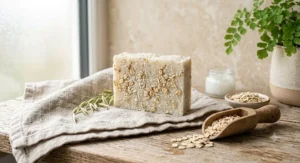
6. Friendly Soap Lavender & Tea Tree Shampoo & Body Bar — best dual-purpose travel bar
Technically sold as a shampoo bar, this one earns its place here because Friendly Soap’s own product notes and independent reviewers both confirm it doubles perfectly well as a hand, face and body soap — genuinely useful if you’re trying to cut down on how many separate plastic-free bars you’re packing for a weekend away. The formula is castor oil, coconut oil, olive oil, lavender and tea tree essential oils, and water. Nothing else.
Based on the spec comparison with liquid shampoo, one bar this size lasts roughly as long as three standard bottles of liquid shampoo, which genuinely changes the cost-per-use maths over a year even before you factor in the plastic bottles you’re not buying. Reviewers consistently note the tea tree content gives it a mild antibacterial edge that makes it a sensible pick for gym bags and camping trips, not just bathroom shelves.
Pros:
- ✅ Genuinely dual-purpose — hair, hands, face and body in one bar
- ✅ Long-lasting compared with liquid alternatives, good travel value
- ✅ Tea tree oil adds mild antibacterial properties
Cons:
- ❌ Not a dedicated body soap, so lather feel differs slightly from the range
- ❌ Tea tree scent is more medicinal than the fruity or floral bars
At a similar under-£5 price point, Friendly Soap Lavender & Tea Tree Shampoo & Body Bar is the smartest single purchase for minimalist packers or anyone trying to consolidate their bathroom cabinet — check current price before your next trip.
7. Bloomtown Natural Soap Bar – The Meadow — best premium, gift-worthy pick
Bloomtown positions itself, credibly, as the UK’s first certified palm oil-free company, and its soap bars sit at a noticeably different price point from the Friendly Soap range for a reason: small-batch handcrafting in Cornwall, English kaolin clay, and a longer, more elaborate ingredient list built around sodium cocoate, sodium olivate, sodium shea butterate and sodium castorate, scented here with lavender, rose geranium and chamomile.
What the spec sheet won’t tell you, but the brand’s own founding story does, is that Bloomtown was started after its founders spent two years in Indonesia and witnessed palm oil cultivation’s environmental damage firsthand — which frames this less as an opportunistic “clean beauty” launch and more as a mission-driven response to something they’d actually seen. Reviewers consistently note the bar lasts well without turning slimy in a wet dish, and that the lather feels notably more luxurious than a basic cold-process bar, which tracks with the higher proportion of butters in the formula. At the time of research, Bloomtown sells primarily through its own website rather than reliably through Amazon UK listings, so it’s worth checking both channels for current stock and delivery options before you commit.
Pros:
- ✅ Certified palm-free by an independently audited UK company
- ✅ Noticeably more luxurious lather and finish than budget bars
- ✅ Genuine sustainability mission behind the brand, not just marketing
Cons:
- ❌ Considerably pricier than the Friendly Soap range
- ❌ Not always straightforward to buy via Amazon UK; check the brand’s own site too
In the £7-£9 range for a single bar, Bloomtown Natural Soap Bar – The Meadow is the one to gift or treat yourself with, rather than the one you restock weekly — check current price and availability across both Amazon UK and the brand’s own store.
Top 7 Products: Full Comparison Table
| Soap | Type | Ingredient Base | Price Range | Rating Signal |
|---|---|---|---|---|
| Friendly Soap Lavender Bar | Body bar | Coconut, rapeseed, shea | Under £5 | Strong repeat-purchase sentiment |
| Friendly Soap Aloe Vera Bar | Body bar (unscented) | Coconut, rapeseed, shea, aloe | Under £5 | Praised for sensitive skin |
| Friendly Soap Patchouli & Sandalwood Bar | Body bar | Coconut, rapeseed, shea | Under £5 | Praised for scent quality |
| Friendly Soap Orange & Grapefruit Bar | Body bar | Coconut, rapeseed, shea | Under £5 | Praised, seasonal scent fade noted |
| Friendly Soap Foot Soap Bar | Foot bar | Coconut, rapeseed, shea | Under £5 | Niche but well-reviewed |
| Friendly Soap Lavender & Tea Tree Bar | Shampoo/body bar | Castor, coconut, olive | Under £5 | Praised for travel value |
| Bloomtown The Meadow Bar | Body bar | Coconut, olive, shea, castor | £7-£9 range | Praised for luxury feel |
Looking at the table above, the six Friendly Soap bars deliver the strongest value under £5 across the board, but if a genuinely luxurious lather and gifting presentation matter more than price, Bloomtown Natural Soap Bar – The Meadow justifies its higher position. Buyers prioritising cost-per-wash should note the multipack options available on several of the Friendly Soap bars, which meaningfully lower the per-bar price compared with buying singles.
✨ Don’t Miss These Exclusive Deals!
🔍 Take your bathroom cabinet to the next level with these carefully selected palm-free bars. Click on any highlighted item to check current pricing and availability. These bars will help you build an ethical, plastic-free wash routine your skin (and the rainforest) will thank you for!
Practical Usage Guide: Getting the Most From Your Palm Oil Free Bar
Palm-free bars behave slightly differently from mainstream soap, mostly because they skip the hardening effect that palm stearic acid gives conventional bars, so a few habits genuinely extend their life.
First, invest in a proper draining soap dish — ideally a slatted wooden or wire design rather than a flat suction-cup holder. Because most palm-free formulas lean on softer oils like rapeseed and olive, a bar sitting in standing water will turn to mush within days, which is the single most common complaint from first-time switchers, and it’s almost always a storage problem, not a product fault.
Second, expect a slightly different lather in the first week. Reviewers consistently note that palm-free bars need a moment to “condition” — the first few washes can feel less foamy than you’re used to, before the bar settles into its normal lather pattern. This isn’t the soap failing; it’s simply how oil-based saponified soap without palm-derived hardening agents behaves.
Third, common mistake number one in the first 30 days: cutting a bar into smaller pieces to “make it last longer.” Counterintuitively, smaller pieces dry out and crumble faster because they have more exposed surface area relative to volume. Leave the bar whole and let the dish do the work instead.
Finally, if you’re buying multipacks to save money (sensible, given the per-bar savings), store unopened bars somewhere cool and dry rather than a steamy bathroom cupboard — essential-oil-scented soap can lose fragrance intensity over several months if stored somewhere warm and humid.
Real-World Scenarios: Which Bar Suits Which Buyer
The zero-waste beginner. Say you’re a university student in Bristol or Leeds trying to cut single-use plastic from your bathroom for the first time, on a tight budget, showering daily in a shared house. The Friendly Soap Natural Lavender Bar is the obvious starting point — cheap enough to not feel like a risk, genuinely palm-free, and widely available, so you’re not hunting down a niche stockist mid-term.
The sensitive-skin household. Picture a family with one child who has eczema and reacts to most scented products, where the whole household is trying to standardise on one soap rather than juggle separate bottles. The Friendly Soap Fragrance-Free Aloe Vera Bar solves that directly — it’s gentle enough for the reactive family member and unremarkable enough (in a good way) that everyone else can use it too without missing their usual scented wash.
The frequent traveller. Consider someone who flies for work several times a month and is trying to pack more sustainably without checking a bag full of liquids. The Friendly Soap Lavender & Tea Tree Shampoo & Body Bar covers hair and body in one solid, TSA-friendly bar that lasts the length of a work trip without leaking in a wash bag — a genuinely practical upgrade over miniature plastic bottles.
The gift-giver. Finally, imagine someone shopping for a birthday present for an eco-conscious friend who already owns the basics and would appreciate something a step up from an everyday bar. Bloomtown Natural Soap Bar – The Meadow hits that “thoughtful but not extravagant” price point, with genuine artisan quality behind it rather than just nice packaging.
Problem → Solution: Common Palm-Free Soap Issues, Solved
Problem: the bar turns to mush within a week. This is almost always a drainage issue, not a product fault. Solution: switch to a slatted soap dish and store the bar somewhere it can air-dry between uses, rather than in an enclosed dish or shower caddy that traps water.
Problem: the lather feels thin compared with your old supermarket soap. Palm-derived stearic acid is partly responsible for the thick, dense lather in mainstream bars. Solution: use slightly less water when working up the lather in your hands first, then transfer it to skin, rather than lathering directly on wet skin under the tap — you’ll notice a fuller foam this way.
Problem: you can’t tell if a “natural” soap is actually palm-free or just RSPO-certified. Solution: check the ingredient list for sodium palmate or sodium palm kernelate (or their derivatives) rather than trusting front-of-pack language like “natural” or “eco.” Brands that are genuinely palm-free, like Friendly Soap and Bloomtown, tend to say so explicitly and back it with a short ingredient list you can actually parse.
Problem: scented bars lose fragrance intensity before the bar is used up. This is expected with essential-oil-only scenting rather than synthetic fragrance oils, which are formulated to be more stable. Solution: store unused bars in a cool, dark drawer rather than a bright, warm bathroom shelf, and expect the scent to mellow gradually — it’s a sign of a genuine essential oil formula, not a manufacturing fault.
Problem: multipacks arrive and you’re not sure how to store the spares. Solution: keep spares in their original card packaging in a cupboard away from steam and direct sunlight, and only unwrap one bar at a time as you finish the previous one.
How to Choose Palm Oil Free Vegan Soap
Working through seven bars for this guide, a handful of criteria consistently separated the genuinely good options from the merely well-marketed ones.
- Check the actual ingredient list, not the front-of-pack claims. Look specifically for sodium palmate or sodium palm kernelate — their presence means the product uses palm oil (even if it’s RSPO-certified sustainable palm), which is a different thing from being palm-free.
- Confirm vegan certification independently. A Vegan Society sunflower trademark, as explained on the Vegan Society’s own certification page, means every raw material has been checked by a third party, not just claimed by the brand.
- Match the base oil to your skin type. Coconut and rapeseed-based bars suit normal to combination skin well; if you have very dry or reactive skin, look for a higher proportion of shea butter or olive oil in the ingredient order (ingredients are listed by concentration, highest first).
- Weigh scent against ingredient purity. Essential-oil-scented bars fade faster but avoid synthetic fragrance allergens; if you have known sensitivities, a fragrance-free bar is the safer default.
- Factor in packaging, not just the bar itself. Genuinely sustainable brands use plastic-free card, paper wrap, or no packaging at all — if a “natural” soap arrives shrink-wrapped in plastic, that’s a signal worth questioning.
- Compare cost-per-wash, not just sticker price. A £4 bar that lasts six weeks of daily use is cheaper per wash than a £2 bar that dissolves in ten days, so multipacks from a trusted formula often work out better value than they first appear.
- Look for a clear UK responsible-person address on the label. Under UK cosmetic product rules, every product sold here needs a named responsible person and address, which is a quick, practical way to sanity-check that a small brand is properly regulated rather than an unverifiable overseas listing.
Eco Friendly Soap Bar No Palm Oil vs Regular Supermarket Soap Bars
The comparison people actually want to see is palm-free soap against the mainstream bar sitting on a supermarket shelf, so here it is in plain terms.
Mainstream commercial soap bars almost always rely on sodium palmate or sodium tallowate (rendered animal fat) as a core hardening ingredient, because both create a dense, long-lasting, cheap-to-produce bar with a satisfying “squeaky clean” lather. That’s genuinely useful from a manufacturing standpoint — it’s why the format has dominated supermarket shelves for decades. The trade-off is that most of that palm oil, even when labelled “sustainably sourced,” still sits within a supply chain that hasn’t reached full verification — WWF’s own tracking has previously put UK imports of confirmed sustainable palm oil at around 70%, meaning a meaningful share of even “responsible” retailers’ supply chains weren’t fully verified deforestation-free at that point.
An eco friendly soap bar with no palm oil at all sidesteps that question entirely rather than trying to solve it through certification. The honest downside is texture and longevity: palm-free bars, built on softer coconut, rapeseed or olive bases, generally dissolve faster if left wet and produce a thinner initial lather. For most bathroom use, that’s a manageable trade-off solved with a decent soap dish (see the Practical Usage Guide above) — but if you’re specifically after an ultra-long-lasting bar for heavy-use environments like a gym changing room, a palm-free bar may need replacing more often than a palm-hardened commercial one.
On balance, for home use where you control storage conditions, the environmental case for going palm-free outweighs the modest convenience cost, particularly once you factor in that most genuinely palm-free UK brands also skip the plastic packaging that supermarket soap almost always ships in.
Common Mistakes When Buying Sustainable Vegan Soap Bar
The single biggest mistake shoppers make when hunting for a sustainable vegan soap bar is assuming “vegan” automatically means “palm-free.” It doesn’t. A soap can be entirely plant-based, contain no animal ingredients whatsoever, and still be built on palm oil or palm kernel oil — Faith in Nature’s hand soap range and Little Soap Company’s original bars are both genuine, Vegan Society-registered examples of this, using RSPO-certified sustainable palm oil rather than avoiding palm oil altogether. Neither claim is dishonest, but they answer different questions, and it’s easy to grab one thinking you’ve solved for both.
The second common mistake is trusting front-of-pack words like “natural,” “eco” or “green” without checking the actual ingredient panel on the back. These terms aren’t legally regulated in the way “organic” or “certified vegan” are, so a brand can use them freely regardless of what’s actually in the formula.
Third, buyers frequently overpay by purchasing single bars repeatedly rather than checking whether a multipack is available from the same brand — the per-bar saving on a 6- or 12-pack is often substantial, and card packaging for multipacks tends to be just as recyclable as single-bar boxes.
Fourth, some shoppers assume a higher price automatically signals better ethics. That’s not consistently true in this category — Friendly Soap’s budget-friendly bars carry the same Vegan Society and Cruelty-Free International certifications as pricier artisan brands, so price here tracks ingredient complexity and hand-crafting time more than it tracks ethical rigour.
Finally, a subtler mistake: not checking whether a soap marketed at “UK shoppers” is actually manufactured and sold with UK regulatory compliance, versus being a cross-border marketplace listing with unclear origin. Sticking to brands with a verifiable UK address, like the ones in our list above, sidesteps that risk entirely.
Rainforest-Friendly Soap: Safety, Sourcing & Certification Guide
If you want your soap purchase to genuinely support rainforest protection rather than just avoid contributing to its loss, certification is where the real evidence lives. The Roundtable on Sustainable Palm Oil (RSPO) exists specifically to police claims of sustainable sourcing within the palm industry, and brands that go further and avoid palm entirely — like the ones featured in this guide — sidestep that question by removing the ingredient rather than certifying its sourcing.
From a UK safety standpoint, every cosmetic product sold here, including soap bars, must comply with the requirements set out on GOV.UK’s cosmetic product safety guidance, which covers restricted and banned substances and requires a clearly identified responsible person for the product. This is genuinely useful due diligence before buying from a smaller or less familiar brand — check the label or listing for a named UK company and address, not just a generic seller account.
For the environmental side specifically, WWF’s own Get Palm Oil Savvy guidance sets out why the charity’s own position isn’t a blanket boycott of palm oil, but rather support for certified sustainable sourcing where palm oil is used at all. Genuinely rainforest-friendly soap, in the strictest sense, removes the ingredient rather than certifying it — which is exactly what distinguishes the seven bars above from the wider “natural soap” category on UK shelves. If protecting tropical forest habitat is your primary motivation for buying, ingredient-level avoidance is the more direct route than sourcing certification alone, though both approaches have a legitimate place in reducing the palm oil industry’s overall environmental footprint.
Ethical Vegan Cleansing Bar for Sensitive Skin and Every Skin Type
An ethical vegan cleansing bar needs to work on two levels at once: genuinely suit the skin it’s used on, and genuinely avoid the ingredients it claims to avoid. For sensitive or reactive skin specifically, the fragrance-free route is the safer default — the Friendly Soap Fragrance-Free Aloe Vera Bar strips out essential oils entirely, removing the linalool and limonene allergens that naturally occur in scented botanical soap, which matters for anyone with diagnosed eczema, psoriasis or general fragrance sensitivity.
For normal to combination skin, a coconut-and-rapeseed base like the majority of the Friendly Soap range offers a reasonably balanced clean without over-stripping natural oils, though anyone with genuinely dry skin might find more comfort in a shea- or olive-heavy formula like Bloomtown’s, where the higher butter content leaves a slightly more residual, moisturising film on skin post-rinse.
For oily or acne-prone skin, the citrus-forward Friendly Soap Orange & Grapefruit Bar offers a gentle astringent quality from the citrus oils without resorting to the harsher synthetic salicylic acid washes common in mainstream acne ranges — though it’s worth noting this is a supportive daily-wash choice, not a treatment for diagnosed acne, which is worth discussing with a pharmacist or GP if it’s a persistent concern. For older skin or anyone managing thinner, more fragile skin, unscented and lower-friction bars generally cause less irritation than heavily exfoliating or strongly scented options, so the fragrance-free bar is again the sensible starting point.
Zero Deforestation Soap: Long-Term Cost and Environmental ROI
A genuine zero deforestation soap purchase pays off on two separate ledgers — your household budget and the environmental footprint of your bathroom routine — and it’s worth totting up both honestly rather than assuming ethical automatically means expensive.
On cost, a single Friendly Soap bar priced under £5 that lasts roughly four to six weeks with proper storage works out to a modest daily cost, genuinely competitive with mid-range supermarket liquid body wash once you factor in that a bar has no pump, bottle or plastic packaging to buy alongside it. Multipacks improve that further, typically bringing the per-bar price down noticeably compared with buying singles repeatedly.
On the environmental side, the “return” isn’t measured in pounds but in supply-chain impact: choosing a bar that never touches palm oil at all removes any dependency on that commodity’s sourcing entirely, sidestepping the ongoing debate over whether RSPO certification is rigorous enough. Add in plastic-free packaging, UK or near-UK manufacturing (reducing shipping emissions), and biodegradable formulations that don’t rely on synthetic surfactants, and the long-term environmental cost of a bar like this is meaningfully lower than a bottled body wash shipped from further afield in single-use plastic.
The genuine long-term maintenance consideration is storage discipline, covered earlier — a bar that’s allowed to sit in water repeatedly loses both its cost advantage and its lifespan advantage. Get that one habit right and the total cost of ownership case for palm-free soap holds up well against almost any mainstream alternative.
Features That Actually Matter (And Those That Don’t)
After going through seven bars in detail, a clear pattern emerged between the features genuinely worth paying attention to and the ones that are mostly marketing noise.
What actually matters: the specific saponified oils used (coconut, rapeseed, olive, shea), because this genuinely determines lather, hardness and how well the bar suits your skin type. Genuine third-party certification — Vegan Society, Cruelty-Free International, or an independently audited palm-free claim like Bloomtown’s — matters because it’s independently checked rather than self-declared. Packaging material matters, because plastic-free card or paper genuinely reduces the product’s overall environmental footprint, not just the ingredient list.
What doesn’t matter nearly as much: vague front-of-pack language like “natural,” “green” or “eco-conscious,” none of which carry a regulated definition in UK cosmetics law. Bar size and weight in isolation matter less than cost-per-wash, since a smaller bar of a longer-lasting formula can genuinely outperform a larger bar that dissolves fast. And elaborate ingredient lists with dozens of botanical extracts aren’t automatically better than a short, simple formula — several of the most effective bars in our comparison have fewer than ten ingredients total.
FAQ: Your Palm Oil Free Vegan Soap Questions Answered
❓ Is all vegan soap automatically palm oil free?
❓ Does palm oil free soap lather less than regular soap?
❓ How long does a palm oil free soap bar actually last?
❓ Is Friendly Soap really palm oil free, or just low palm oil?
❓ Can palm oil free soap cause more skin dryness than regular soap?
Conclusion
Palm oil free vegan soap sits at an interesting intersection of two separate ethical questions — animal welfare and deforestation — and the honest answer, after working through seven real UK bars in detail, is that you don’t have to choose between them. Friendly Soap’s range proves genuinely palm-free soap can be affordable, widely available and properly certified, while Bloomtown shows what the category looks like at a more premium, artisan level. What actually separates a good choice from a marketing exercise is checking the ingredient panel for sodium palmate or palm kernelate rather than trusting front-of-pack claims, and understanding that “vegan” and “palm-free” are related but genuinely distinct promises.
If you’re switching for the first time, start with a budget bar and a proper soap dish, get comfortable with how the lather and longevity differ from what you’re used to, and build outward from there — perhaps a fragrance-free option for sensitive skin, or a premium artisan bar for gifting. None of the seven bars here are perfect for every single use case, but each earns its place for a specific, honestly stated reason, which is really all you can ask of an affiliate recommendation.
Recommended for You
- Palm Oil Free Soap for Sensitive Skin: 7 Gentle Picks (2026)
- Palm Oil Free Soap Bar: 7 Best Picks for 2026 (UK Guide)
- Best Ethical Soap Bars 2026: 7 Cruelty-Free Picks That Deliver
Disclaimer: This article contains affiliate links. As an Amazon Associate, I earn from qualifying purchases. If you purchase products through these links, we may earn a small commission at no additional cost to you.
✨ Found this helpful? Share it with your friends! 💬🤗
