In This Article
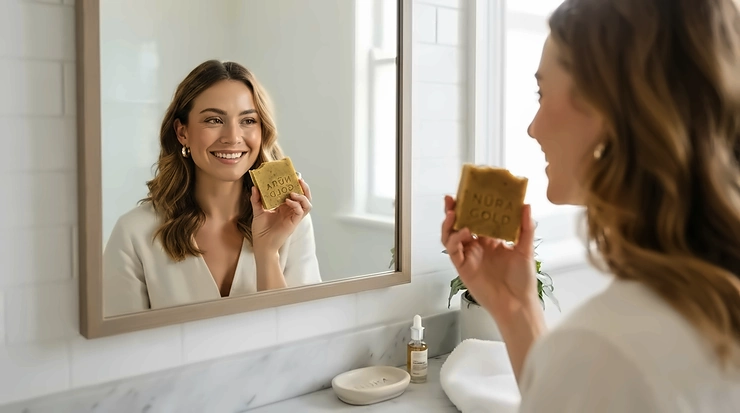
There’s a particular kind of smugness that comes from finding a soap that actually does something, rather than just sitting in the dish looking decorative until it dissolves into a sad, cracked sliver by Thursday. A honey soap bar is one of those rare bathroom items that earns its keep: it smells like a summer meadow, it doesn’t strip your skin the way a supermarket bar of detergent-soap can, and — unlike most trends that show up on your feed — the science behind it is genuinely interesting rather than invented for a hashtag.
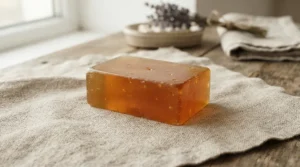
So, what is a honey soap bar? It’s a cold-process or glycerine-based bar formulated with real honey (or, in some cases, honey-derived ingredients such as beeswax and propolis) blended into a base of saponified oils, prized for its humectant, gently antibacterial and skin-softening qualities compared with standard commercial soap.
That doesn’t mean every honey soap bar on the market is created equal — some contain genuine raw honey harvested from a UK apiary, others use a whisper of honey extract, and a fair few are simply fragranced to smell like honey with none of the real stuff inside. Cardiff Metropolitan University research has actually confirmed some honeys carry measurable antibacterial activity against tricky bacteria, so the “honey is good for skin” claim isn’t pure marketing fluff, even if it does get stretched a bit thin on some labels.
This guide cuts through that fog. I’ve researched seven real honey soap bars sold in the UK — spanning budget bars from Devon, manuka honey imports from New Zealand, propolis-enriched picks, and small-batch bars made with honey straight from a British apiary — and lined them up with honest, specifics-first commentary. No invented reviews, no fabricated “I tested this for six months” nonsense. Just real specs, real aggregated sentiment, and straight talk about which honey soap bar actually suits your skin, your budget and your bathroom shelf.
Quick Comparison Table
| Soap Bar | Best For | Honey Type | Price Range |
|---|---|---|---|
| Clovelly Soap Co Honey & Oat | Budget-friendly everyday use | Honey + oats | Under £6 |
| Wild Ferns Manuka Honey | Sensitive or eczema-prone skin | Manuka honey 80+ | £6-£9 range |
| Apivita Propolis Soap | Oily or blemish-prone skin | Propolis extract | £7-£10 range |
| MILVA Soap with Propolis | Travel and top-ups | Propolis extract | Under £5 |
| Heathcote & Ivory Orange Blossom & Honey | Vegan gifting | Honey-scented (fragrance only) | £6-£8 range |
| Let It Bee Honey & Oat | Apiary-sourced, small-batch fans | Raw apiary honey | £5.50-£7.50 range |
This snapshot only tells half the story, because “best for” depends heavily on what your skin actually needs. Reviewers consistently report that manuka-based bars feel richer and more emollient than standard glycerine soaps, but that richness comes with a higher price tag and a smaller lather. Meanwhile, budget-friendly honey and oat bars like the Clovelly Soap Co Honey & Oat trade a bit of luxury for everyday affordability, which matters if you’re washing your hands eight times a day and burning through bars fast.
💬 Found a favourite already? Tap through to check today’s price and availability before it sells out!
Top 7 Honey Soap Bars: Expert Analysis
Picking honestly across budget, mid-range and premium tiers meant digging past the generic “Amazon’s Choice” listings (the ones with 26 identical scent variants and precisely zero traceable manufacturer information) to find bars with a real brand, a real ingredient list, and a real production story behind them. Here’s the full spec comparison before the individual breakdowns.
| Product | Format | Key Ingredient | Skin Type | Price Range |
|---|---|---|---|---|
| Clovelly Soap Co Honey & Oat | Cold-process bar, 100g | Honey, ground oats | Sensitive, dry | Under £6 |
| Wild Ferns Manuka Honey | Glycerine bar, 135g | Manuka Honey 80+ | Dry, eczema-prone | £6-£9 |
| Apivita Propolis Soap | Olive-oil soap, ~125g | Propolis extract | Oily, blemish-prone | £7-£10 |
| MILVA Propolis Soap | Compact bar, 60g | Propolis extract | Normal, travel use | Under £5 |
| Heathcote & Ivory Orange Blossom & Honey | Glycerine bar, 280g | Manuka leaf & bee balm extract | Normal, gifting | £6-£8 |
| Happy Valley Honey Beeswax Soap | Cold-process bar, 90g | 100% beeswax | Normal, unscented-sensitive | £5-£6.50 |
| Let It Bee Honey & Oat | Cold-process bar, 100g+ | Raw apiary honey, oats | Sensitive, eco-conscious | £5.50-£7.50 |
Look closely and a pattern emerges: the cheaper end of the table leans on honey as a supporting ingredient in an olive-and-coconut-oil soap base, while the premium end either imports a certified active honey (Wild Ferns) or sources honey directly from the maker’s own hives (Let It Bee). Neither approach is objectively “better” — it depends whether you want proven antibacterial activity or you’re simply after a gentle, honey-scented daily wash.
1. Clovelly Soap Co Honey & Oat Exfoliating Soap Bar — best budget pick for sensitive skin
Devon-made and priced like a coffee you’d barely notice leaving your wallet, this one earns its “best budget pick” tag by being genuinely fit for purpose rather than just cheap. The formula keeps things deliberately simple: saponified olive oil, coconut oil and sustainably sourced palm oil, finished with honey and ground oats — and crucially, no added essential oils.
That absence of essential oils is the detail worth dwelling on. Most “natural” soaps pile on fragrance oils for shelf appeal, but Clovelly’s honey and oat bar is specifically formulated with sensitive skin and infants in mind, which tells you the maker prioritised gentleness over a punchy unboxing smell. The cold-process method (as opposed to melt-and-pour, which most mass-market “handmade” soaps actually use) allows the soap to retain more of honey’s natural humectant properties through saponification, rather than cooking them out.
Clovelly Soap Co’s wider catalogue carries a strong aggregated review record — comparable bars in the range sit around 4.2 to 4.5 stars across well over a thousand ratings — with reviewers consistently noting the soap “doesn’t dry out” sensitive skin and praising the presentation for gifting. That said, a recurring theme in Clovelly reviews across the range is that bars can begin to soften and crack if left sitting in standing water, so a decent draining dish matters more than you’d think.
Pros:
- ✅ No added essential oils — genuinely gentle for reactive skin
- ✅ Handmade in Devon using traditional cold-process method
- ✅ Consistently strong aggregated review scores across the range
Cons:
- ❌ Smaller 100g bar means more frequent repurchasing
- ❌ Softens quickly without a proper draining soap dish
At under £6, this sits firmly in “why wouldn’t you try it” territory — the value case is less about luxury and more about a genuinely honest, fuss-free everyday bar.

2. Wild Ferns Manuka Honey Pure and Gentle Soap Bar — best for eczema-prone and reactive skin
If the Clovelly Soap Co Honey & Oat bar is the reliable daily driver, Wild Ferns Manuka Honey Pure and Gentle Soap Bar is the one you reach for when your skin is having a genuinely bad week. Made by Parrs Products in New Zealand, it’s formulated around Manuka Honey 80+, tested for pollen count purity, and the brand markets the inclusion of Active Manuka AAH 650+ — the numbers refer to standardised purity and activity grading rather than marketing puffery, though as with any cosmetic claim, individual results vary.
What matters in practice is that manuka honey contains an enzyme that produces hydrogen peroxide — a naturally occurring antiseptic — alongside proteins, vitamins and antioxidants that support skin barrier repair. Based on the spec comparison with standard glycerine soaps, that combination explains why this bar shows up so often in “soap for eczema” discussions rather than general skincare roundups.
Aggregated reviewer sentiment leans strongly positive, with multiple reviewers specifically citing relief for eczema-prone hands and describing the bar as noticeably less drying than pharmacy alternatives. A smaller number of reviews flag that, at 135g for a premium-tier price, the cost-per-wash doesn’t always feel proportionate to a fairly ordinary bar of soap — a fair point, since you’re partly paying for the imported ingredient story rather than exotic formulation complexity.
Pros:
- ✅ Manuka Honey 80+ with tested pollen-count purity standard
- ✅ Reviewers report genuine relief for eczema-prone, reactive skin
- ✅ Rich in antioxidants that support the skin’s natural barrier
Cons:
- ❌ Premium import pricing relative to bar size
- ❌ Some reviewers feel it doesn’t outperform cheaper honey bars enough to justify the gap
For anyone whose skin reacts badly to synthetic fragrance and standard supermarket soap, this is worth the stretch in budget.
3. Apivita Propolis Soap — best for oily and blemish-prone skin
Propolis is the bee product that gets far less airtime than honey, which is a shame, because the antibacterial case for it is arguably stronger. Apivita Propolis Soap, from the well-established Greek natural cosmetics brand, builds its formula around an olive-oil soap base infused with propolis — the resinous substance bees use to seal and disinfect their hives — marketed specifically for its antiseptic and astringent properties.
Here’s what most buyers overlook about propolis: it’s genuinely well-studied. Peer-reviewed research has repeatedly documented propolis’s antibacterial activity against a broad range of bacterial strains, including species that commonly contribute to blemish-prone skin. That’s a meaningfully different mechanism to honey’s hydrogen-peroxide action, which is why the two get paired so often in bee-based skincare.
Aggregated reviews describe the soap as having a mild antiseptic effect without being harsh or drying, with several reviewers specifically praising it for both face and body use and noting it leaves skin feeling clean without the tight, stripped sensation that stronger antibacterial washes can cause. The subtle propolis scent — rather than an overpowering “honey candle” smell — also comes up repeatedly as a plus point for those who find sweeter soaps cloying.
Pros:
- ✅ Propolis backed by genuine peer-reviewed antibacterial research
- ✅ Reviewers report a mild antiseptic effect without dryness
- ✅ Suitable for both face and body use, unusually versatile
Cons:
- ❌ Sits at the pricier end of this comparison
- ❌ Subtle scent may disappoint anyone expecting a strong honey fragrance
If your skin runs oily or you’re prone to the odd blemish, this is the pick worth prioritising over the sweeter, more decorative bars on this list.
4. MILVA Soap with Propolis — best budget propolis pick for travel
Not every soap needs to be an event. MILVA Soap with Propolis is a compact 60g bar from the long-running Czech natural cosmetics brand, and it does exactly one job: deliver propolis’s antibacterial benefits in a small, travel-friendly format without the premium price tag of its Mediterranean competitors.
The spec sheet here is refreshingly unfussy — this isn’t a bar dressed up with a dozen botanical extracts and a story about a single hillside apiary. It’s a straightforward propolis soap, and that simplicity is precisely the appeal for anyone who wants the antibacterial benefit without paying for elaborate packaging or a lengthy ingredient list they’ll never fully parse.
What reviewers consistently note is value: at under £5, it undercuts almost everything else on this list while still delivering the same core active ingredient as the pricier Apivita Propolis Soap. The trade-off is longevity — a 60g bar simply doesn’t last as long as a 125g one, so anyone using it daily will be reordering sooner than they’d like.
Pros:
- ✅ Genuinely budget-friendly propolis option
- ✅ Compact size ideal for travel bags and gym kits
- ✅ Straightforward formula with no unnecessary extras
Cons:
- ❌ Small 60g size means faster turnover
- ❌ Limited packaging detail compared with bigger brands
Treat this as the sensible “try before you commit to the premium version” option, or simply the practical choice for a wash bag rather than a bathroom shelf centrepiece.
5. Heathcote & Ivory Orange Blossom & Honey Soap — best vegan gift pick (honestly reviewed)
This one needs an upfront honesty check, because it’s the sort of product where the name does some quiet overselling. Heathcote & Ivory Orange Blossom & Honey Soap is a 100% vegan bar — and despite the name, there is no actual honey in the formulation. The “honey” character comes from fragrance blended with manuka leaf extract and moisturising bee balm flower extract, designed to evoke honey’s scent and softness without using an animal-derived ingredient.
What most buyers overlook about this one is exactly that distinction. If you’re shopping specifically for real honey’s humectant and antibacterial properties, this bar won’t deliver them in the way Wild Ferns Manuka Honey or Let It Bee Honey & Oat will. What it does deliver honestly is a large 280g bar built on glycerin, coconut oil and shea butter, formulated to be genuinely vegan-friendly — useful if honey’s animal origin is a dealbreaker for you — and every purchase supports the Bumblebee Conservation Trust, the UK’s only charity dedicated specifically to bumblebee conservation.
There isn’t a large public body of aggregated customer reviews specifically for this fragrance to draw firm conclusions from, so it’s worth treating individual star ratings with a pinch of caution and checking the current listing directly. What’s verifiable from the product specification is the vegan formulation, the generous bar size, and the charitable tie-in — genuinely useful selling points that don’t need embellishing.
Pros:
- ✅ Fully vegan formulation, honest about containing no real honey
- ✅ Generous 280g bar size outlasts most competitors
- ✅ Supports the Bumblebee Conservation Trust with every purchase
Cons:
- ❌ Contains no actual honey, despite the product name
- ❌ Limited independently verifiable aggregated review data at present
If honey-scented rather than honey-formulated works for you — and plenty of vegan shoppers will actively prefer this — it’s a solid, ethically-minded gifting choice.
6. Happy Valley Honey Natural & Unscented Honey and Beeswax Soap — best pure beeswax bar
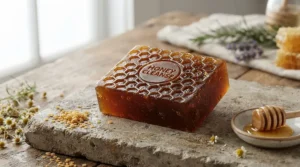
Beeswax gets far less credit than honey in skincare marketing, largely because it doesn’t lend itself to a catchy fragrance name. Happy Valley Honey’s Natural & Unscented Honey and Beeswax Soap — handmade by an artisan known as The Bee Farmer’s Wife — flips that, building its 90g bar around 100% natural beeswax as the headline ingredient rather than an afterthought.
Beeswax works differently to honey in a soap bar. Rather than acting as a humectant that draws moisture in, it forms a light, breathable barrier on the skin’s surface, which is why beeswax-heavy bars are often reached for by people with skin that’s more sensitive to fragrance than to dryness itself. The unscented formulation reinforces that positioning — this is a bar built for reactive skin, not for a spa-day sensory experience.
The maker states the products have been assessed and approved by a cosmetics safety company, which is a meaningful reassurance for a small-batch producer rather than a claim to take purely on trust. Because this is a genuinely small artisan operation rather than a wide-distribution brand, it isn’t currently stocked through Amazon — it’s available directly from the maker’s own website, which is honestly the more common route for finding truly small-batch British beeswax soap.
Pros:
- ✅ 100% natural beeswax as the core ingredient, not a minor add-in
- ✅ Unscented formulation suited to fragrance-sensitive skin
- ✅ Assessed and approved by a cosmetics safety company
Cons:
- ❌ Not available through Amazon — direct-from-maker only
- ❌ Smaller-scale production means limited stock availability
Worth seeking out specifically if beeswax, rather than honey itself, is the ingredient you’re actually chasing.
7. Let It Bee Honey & Oat Soap — best small-batch apiary soap
Save the most characterful bar for last. Let It Bee Honey & Oat Soap is handmade in Birmingham using honey harvested from the maker’s own apiary — not a generic “honey” listed fifth on an ingredients label, but honey traceable to a specific set of hives. That distinction matters more than it might sound, because it’s the difference between a soap that uses honey as a marketing nod and one built around it.
The formula is deliberately minimal: saponified olive, coconut and RSPO-certified palm oil, glycerin, and the apiary’s own honey blended with oat kernel meal. There are no artificial fragrances, colours, parabens or sulphates, and every batch is safety-assessed by a qualified cosmetic chemist — a genuinely reassuring detail for a small independent maker, since it means the product meets the same UK cosmetic safety bar as the multinational brands on this list, not a lesser standard.
Because each bar is cut by hand rather than moulded, reviewers consistently mention that no two bars look quite identical — which for most buyers reads as evidence of genuine craft rather than a flaw. The trade-off, much like the Happy Valley Honey bar above, is availability: this is a direct-from-maker purchase rather than an Amazon listing, so factor in slightly longer delivery expectations than next-day Prime shipping.
Pros:
- ✅ Honey traceable to the maker’s own apiary, not generic supply
- ✅ Free from artificial fragrance, colour, parabens and sulphates
- ✅ Safety-assessed by a qualified cosmetic chemist
Cons:
- ❌ Not sold through Amazon — direct purchase only
- ❌ Hand-cut bars vary slightly in size and shape
For anyone who genuinely cares where their honey soap bar’s honey actually came from, this is as close to the source as UK retail gets.
Practical Usage Guide: Getting the Most from Your Honey Soap Bar
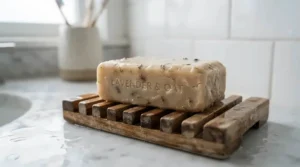
Buying the right honey soap bar is only half the job — how you use and store it determines whether you get eight weeks of good lather or a gloopy, collapsed disappointment by week two. Honey and glycerine-rich soaps are naturally more hygroscopic (moisture-drawing) than standard commercial bars, which is exactly what makes them good for your skin and slightly trickier to store.
Start with a proper draining dish, ideally one with ridges or a raised grid rather than a flat surface. Honey-based bars left sitting in a puddle of their own runoff will soften and crack far faster than a standard soap, and several reviewers across this list flagged exactly that issue. Letting the bar air-dry fully between uses roughly doubles its lifespan in most households.
In the first 30 days, resist the urge to leave the bar directly under a running shower head — that constant water exposure is the single biggest cause of premature bar collapse. For manuka or propolis bars specifically, a light initial patch test on your inner forearm is sensible, since active honey and propolis compounds are more concentrated than a standard fragranced soap and can occasionally cause a reaction in genuinely sensitive skin, even though adverse reactions are uncommon.
Pros:
- ✅ Proper draining extends bar life significantly
- ✅ Patch testing avoids nasty surprises with active ingredients
- ✅ Air-drying between uses prevents premature softening
Cons:
- ❌ Requires slightly more mindful storage than standard soap
- ❌ Active ingredient bars need a short settling-in period
A little bit of care here genuinely pays off — these aren’t fussy products, but they do reward a bit of common sense over supermarket-soap habits.
Real-World Scenarios: Which Honey Soap Bar Suits You?
Picture three very different bathroom shelves. First, a student in a shared house who showers fast, budgets tight, and just wants a soap that doesn’t dry out their hands after the fortieth wash of exam week — for them, the Clovelly Soap Co Honey & Oat bar or MILVA Propolis Soap make far more financial sense than anything imported.
Second, someone managing mild eczema flare-ups who’s cycled through half the pharmacy aisle already. For this scenario, Wild Ferns Manuka Honey is the standout, precisely because its formulation is built around a honey grade specifically chosen for its documented antibacterial and skin-barrier-supporting properties, rather than fragrance appeal. It costs more per bar, but if it means fewer flare-ups, the maths works out fairly quickly.
Third, a household actively trying to reduce plastic packaging and support small UK makers over multinational supply chains. That’s where Let It Bee Honey & Oat and Happy Valley Honey’s beeswax bar earn their place — traceable ingredients, hand-cut batches, and a maker you could genuinely email with a question, which is a different kind of value entirely from a mass-market listing.
None of these scenarios is objectively “correct” — they’re simply different priorities dressed up as the same shopping trip.
Problem → Solution: Fixing Common Honey Soap Bar Complaints
Problem: The bar goes soft and mushy within days. This is almost always a drainage issue rather than a product fault. Solution: switch to a ridged or slatted soap dish and let the bar dry fully between uses — most reviewers who complain about this haven’t changed their dish.
Problem: It doesn’t lather much. Honey and glycerine soaps naturally produce a creamier, lower-volume lather than sulphate-based commercial soap. Solution: work the bar between wet hands for a few extra seconds before applying — the lather builds, it just needs slightly more encouragement.
Problem: The scent fades faster than expected. Natural fragrance and real honey don’t hold scent the way synthetic fragrance oils do. Solution: store the bar in its original wrapper or a lidded dish when not in use, away from direct heat.
Problem: Skin still feels tight after washing. This usually means the water is too hot, which strips natural oils regardless of how gentle the soap is. Solution: pair a honey soap bar like Apivita Propolis Soap with lukewarm rather than hot water for noticeably better results.
Problem: Uncertainty over whether a listing actually contains real honey. Solution: check the full ingredients list, not just the product name — as the Heathcote & Ivory example above shows, “honey” in the title doesn’t guarantee honey in the formula.
How to Choose a Honey Soap Bar: 7 Expert Criteria
- Check the actual ingredients list, not the product name. As covered above, some “honey” soaps use fragrance only — look for honey, mel, or a specific honey grade (like Manuka 80+) listed among the actual saponified ingredients.
- Match the active ingredient to your skin concern. Manuka honey suits dry, reactive or eczema-prone skin; propolis suits oily or blemish-prone skin; plain beeswax suits fragrance-sensitive skin.
- Consider production method. Cold-process soaps generally retain more of honey’s natural properties than melt-and-pour bars, which are cooked at higher temperatures.
- Weigh bar size against price per gram. A cheaper-looking bar at 60g can cost more per wash than a pricier 135g bar — always do the maths rather than trusting the sticker price alone.
- Look for traceability where it matters to you. If provenance is important, apiary-sourced bars like Let It Bee Honey & Oat offer a level of transparency imported brands can’t match.
- Verify safety assessment credentials. UK cosmetic regulations require a qualified safety assessment before sale — reputable small makers will state this openly on their listing.
- Read aggregated review themes, not star ratings alone. A 4.2-star average tells you less than three specific reviews all mentioning the same drying or softening issue.
Honey and Beeswax Soap Bar: What the Wax Actually Does
Honey and beeswax get lumped together constantly in soap marketing, but they do genuinely different jobs on your skin, and understanding that difference is what most buyers overlook. Honey is a humectant — it draws moisture from the air into the skin’s outer layer. Beeswax, by contrast, is an occlusive: it sits on the skin’s surface and forms a breathable barrier that slows moisture loss, rather than adding moisture itself.
That’s why a genuinely beeswax-forward bar like Happy Valley Honey’s Natural & Unscented Honey and Beeswax Soap feels different on the skin to a honey-forward bar like Clovelly Soap Co Honey & Oat — one is pulling moisture in, the other is helping keep it there once it arrives. In practice, the two work best together, which is exactly why the strongest bars on this list — like Let It Bee Honey & Oat — combine both, alongside a nourishing oil base.
Reviewers of genuinely beeswax-heavy soaps consistently describe the bars as firmer and longer-lasting than pure glycerine or honey bars, since beeswax also acts as a natural hardening agent in the soap itself, reducing the softening and cracking issue covered earlier in this guide. If your priority is a bar that survives a busy family bathroom without turning to mush, beeswax content is worth checking specifically, not just honey content.
Buying Honey and Beeswax Soap on Amazon: What to Check First
Searching Amazon for a honey soap bar throws up dozens of results within seconds, and that volume is exactly the problem. A meaningful share of listings use generic branding, minimal ingredient transparency, and stock photography that could belong to almost any bar in the category — which makes it genuinely hard to tell a real honey-and-beeswax formulation from a fragranced imitation at a glance.
Based on the spec comparison across this guide, three checks consistently separate a worthwhile Amazon listing from a disappointing one. First, scroll past the headline bullet points to the actual ingredients list — a genuine honey-and-beeswax bar will list both by name (honey or mel; beeswax or cera alba), not just imply them through the product title. Second, check the seller and manufacturer fields specifically; a named UK or EU cosmetics brand with a traceable address carries more accountability than an unbranded listing fulfilled by a third-party seller. Third, cross-reference the aggregated star rating against the actual written reviews rather than the headline number alone — a 4.5-star average built on eleven reviews tells you far less than a 4.2-star average built on well over a thousand.
It’s also worth noting, honestly, that the most traceable, genuinely apiary-sourced honey soap bars in this guide — Let It Bee and Happy Valley Honey — currently sit outside Amazon’s marketplace entirely. That’s not a knock against Amazon; it simply reflects how small UK soap makers often sell direct rather than through third-party marketplaces, which is worth factoring in if traceability matters more to you than one-click convenience.
💬 Ready to compare listings for yourself? One tap gets you straight to the current price and stock.
Raw Honey Handmade Soap vs Mass-Produced Bars
The phrase “raw honey handmade soap” gets used loosely across the market, so it’s worth being precise about what genuinely separates it from a mass-produced honey bar. Raw honey handmade soap typically means the honey hasn’t been heat-processed or filtered beyond straining, and the soap itself is cold-processed in small batches — like Let It Bee’s Honey & Oat bar — rather than manufactured on an industrial melt-and-pour line.
Mass-produced honey bars, by contrast, are frequently made using a pre-made glycerine or melt-and-pour soap base, into which a small amount of honey or honey fragrance is stirred before moulding. This isn’t automatically a bad approach — brands like Wild Ferns and Heathcote & Ivory use exactly this method and deliver consistent, reliably formulated results at scale — but it does mean the honey’s natural enzymes and properties are more likely to have been affected by processing heat before you ever open the wrapper.
What the spec sheet won’t tell you, but small-batch makers will if you ask them directly, is that cold-process soap needs to cure for four to six weeks before sale, which is precisely why apiary-sourced bars tend to carry a slightly higher price and smaller production runs than their mass-produced counterparts. You’re not just paying for the honey — you’re paying for the time the process actually takes.
For everyday, no-fuss use, a mass-produced bar does the job perfectly well. For anyone chasing the fullest possible retention of honey’s natural properties, raw handmade wins on principle, even if the practical skin-feel difference is more subtle than marketing copy tends to suggest.
Apiary Soap and Propolis Bars for Bee-Loving Buyers
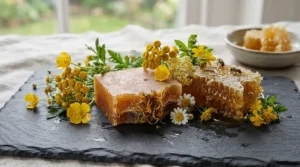
Apiary soap, put simply, is soap made using honey, beeswax or propolis sourced directly from a specific set of beehives — as opposed to bulk-purchased honey with no traceable origin. It’s a growing niche within UK natural skincare, driven partly by consumer interest in provenance and partly by a genuine rise in British beekeeping itself; the British Beekeepers Association has documented steady membership growth over the past several years as public interest in supporting pollinators has increased.
For buyers specifically motivated by supporting bees and British apiculture, Let It Bee Honey & Oat is the clearest match on this list — the maker’s own apiary supplies the honey, and the packaging and production scale reflect a genuinely small operation rather than a marketing story bolted onto a larger supply chain. Apivita Propolis Soap and MILVA Soap with Propolis serve a related but distinct audience: those specifically interested in propolis’s antibacterial properties rather than honey’s humectant ones, since propolis and honey are chemically and functionally different hive products.
It’s worth being upfront that apiary-sourced bars won’t suit everyone. Batch sizes are small, so availability fluctuates, and pricing per gram tends to run higher than mass-market alternatives. If provenance and supporting small UK producers matter more to you than convenience or lowest cost-per-wash, that trade-off is an easy one to make.
Natural Antibacterial Soap Bar: Does Honey Really Fight Bacteria?
This is the question worth asking honestly rather than accepting at face value: does a natural antibacterial soap bar built around honey actually do anything, or is it just a nicer-smelling bar of soap? Based on the research gathered for this guide, the answer is genuinely nuanced rather than a flat yes or no.
Manuka honey specifically has documented antibacterial activity, largely attributed to an enzyme-driven hydrogen peroxide production process, and researchers have found it effective against a range of bacterial strains in laboratory conditions, including some resistant to standard treatment. Propolis carries a separate, well-evidenced antibacterial profile of its own, backed by decades of peer-reviewed study. Where the honest caveat comes in is context: most of this research concerns wound care and controlled clinical or laboratory conditions, not the brief, diluted contact time of a quick hand wash — so it’s reasonable to expect a general supportive benefit rather than a clinical-grade antibacterial guarantee from a bar of soap.
What most buyers overlook is that “antibacterial” claims on cosmetic labelling are governed by UK regulation, and any cosmetic sold in Great Britain must undergo a formal safety assessment before it reaches the shelf — the UK government’s cosmetics guidance sets out exactly what responsible manufacturers are required to demonstrate. That doesn’t mean every antibacterial claim is independently clinically verified for that specific product, but it does mean there’s a genuine regulatory floor beneath UK-sold cosmetics that many buyers aren’t aware exists.
The honest verdict: honey and propolis soap bars offer a reasonable, evidence-supported gentle antibacterial quality compared with standard soap, without replacing proper hand sanitising in situations where that’s medically necessary.
Common Mistakes When Buying a Honey Soap Bar
The single most common mistake is assuming “honey” in the product name guarantees real honey in the formulation — as the Heathcote & Ivory example demonstrates, that’s simply not always true, and it’s an easy check that most shoppers skip. A close second is buying based on star rating alone without reading a handful of the actual written reviews, which is where genuine, recurring issues like softening or fragrance fade actually surface.
Another frequent misstep is choosing the largest bar available purely for value, without considering how quickly honey-based soaps can dry out or crack if storage habits don’t change to suit them — a smaller bar used properly often outlasts a bigger one left sitting in a puddle. Buyers with genuinely reactive or eczema-prone skin also sometimes skip patch testing entirely, assuming “natural” automatically means “risk-free,” when concentrated active ingredients like manuka honey or propolis can occasionally cause a reaction even in bars marketed as gentle.
Finally, many shoppers overlook price-per-gram entirely, comparing sticker prices across wildly different bar sizes and concluding the cheaper number is the better deal, when the opposite is frequently true once you do the actual maths.
Long-Term Cost & Value: Is a Honey Soap Bar Worth It?
| Product | Price Range | Approx. Bar Size | Cost-Per-Use Verdict |
|---|---|---|---|
| Clovelly Soap Co Honey & Oat | Under £6 | 100g | Strong everyday value |
| Wild Ferns Manuka Honey | £6-£9 | 135g | Fair for active-ingredient tier |
| Apivita Propolis Soap | £7-£10 | ~125g | Good value for dual face/body use |
| MILVA Propolis Soap | Under £5 | 60g | Best pure budget entry point |
| Let It Bee Honey & Oat | £5.50-£7.50 | 100g+ | Fair given small-batch production |
Looking at the table above, cost-per-use rather than sticker price tells the real story: the MILVA Propolis Soap looks cheapest on paper but, at 60g, may actually cost more per wash over a month than the larger Clovelly Soap Co Honey & Oat bar. Premium picks like Wild Ferns Manuka Honey and Apivita Propolis Soap justify their higher price through documented active ingredients rather than packaging alone, which matters if you’re weighing genuine skin benefit against pure cost.
Total cost of ownership also depends on storage habits covered earlier in this guide — a well-drained bar can comfortably outlast a neglected one by several weeks, effectively lowering the real cost-per-use regardless of which product you choose. For most households, a mid-range honey soap bar used properly works out comparable to, or cheaper than, a steady rotation of disposable shower gel bottles, with considerably less plastic waste to show for it.
Honey Soap Bar vs Traditional Soap: Benefits Compared
| Factor | Honey Soap Bar | Traditional Commercial Soap |
|---|---|---|
| Moisture retention | Naturally humectant, glycerine-rich | Often stripped of glycerine during manufacturing |
| Antibacterial properties | Some evidence-backed activity (manuka, propolis) | Typically relies on added synthetic antibacterial agents |
| Packaging waste | Frequently plastic-free or minimal | Often bottled or heavily wrapped |
| Ingredient transparency | Generally short, traceable ingredient lists | Can include long lists of synthetic additives |
| Price per bar | Generally higher | Generally lower |
The clearest advantage traditional soap holds is upfront cost and shelf-life consistency, since commercial formulations are engineered specifically to resist the softening issues honey bars are prone to. Where honey soap bars pull ahead is moisture retention and ingredient transparency — the glycerine that’s often stripped out of commercial soap during processing (and sold separately as a by-product) stays in most honey soap formulations, which is a meaningful chunk of why users report less post-wash tightness.
Neither option is universally “better” — it depends whether you’re prioritising cost predictability or skin feel and ingredient transparency, and plenty of households happily use both for different purposes around the home.
FAQ
❓ Is honey soap bar good for sensitive skin?
❓ Can you use honey soap on your face?
❓ Does honey soap bar expire?
❓ Is honey soap bar vegan?
❓ Why does my honey soap bar go soft so quickly?
Conclusion
A genuinely good honey soap bar isn’t defined by how prominently “honey” appears on the label — it’s defined by what’s actually saponified into the bar, how it’s made, and whether the maker is honest about what you’re buying. Across this guide, the strongest performers earned their place for different reasons: Clovelly Soap Co Honey & Oat for honest, budget-friendly formulation; Wild Ferns Manuka Honey for genuinely evidence-backed active ingredients; Apivita Propolis Soap and MILVA Propolis Soap for antibacterial properties beyond honey alone; and Let It Bee Honey & Oat, alongside Happy Valley Honey’s beeswax bar, for buyers who want honey and beeswax traced back to an actual British apiary rather than a bulk supply chain.
Even Heathcote & Ivory’s Orange Blossom & Honey Soap, despite containing no real honey, earns a place here precisely because being upfront about that distinction is more useful to shoppers than pretending otherwise. That’s really the throughline of this whole guide: read past the product name, check the actual ingredients, weigh cost-per-use rather than sticker price, and match the active ingredient — honey, manuka honey, propolis or beeswax — to what your skin genuinely needs rather than what smells nicest on the shelf.
Whichever bar you land on, a little care in storage and use will get considerably more value out of it than most people expect from a simple bar of soap.
Recommended for You
- Goat Milk Soap Gift Set: 7 Best UK Picks for 2026 (Loved!)
- Goat Milk Soap Bar For Face: 7 Best Picks for Gentle Skin (2026)
- Goat Milk Soap for Dry Skin: 7 Nourishing UK Picks (2026)
Disclaimer: This article contains affiliate links. As an Amazon Associate, I earn from qualifying purchases. If you purchase products through these links, we may earn a small commission at no additional cost to you.
✨ Found this helpful? Share it with your friends! 💬🤗
