In This Article
Moisturising bar soap for dry skin is a solid cleanser that washes away dirt and oil without stripping the skin’s natural lipids, thanks to mild cleansing bases plus added emollients, humectants or surplus oils. The best moisturising bar soap for dry skin leaves you comfortable, not tight, after rinsing.
You know the feeling. Ten minutes after a hot shower your shins have gone chalky, your forearms itch, and the bar on the dish, the one that smelled so lovely in the shop, is suspect number one. Often it’s guilty. Traditional soap cleans brilliantly, and that’s the problem: it takes your skin’s own oils along for the ride.
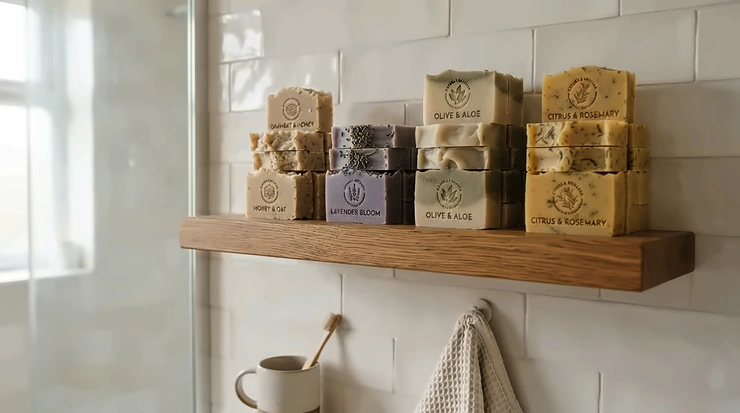
The fix isn’t always to abandon bars, though. Most body-washing bars are already “refatted”, which chemists call superfatting. A little extra oil is left unreacted, and the glycerol that remains acts as a moisturiser, as this overview of soap chemistry explains. Superfatted soap is kinder than a bar with no cushion, although it can feel slightly greasy. Other bars skip soap altogether and use gentler synthetic cleansers (syndets). A few blend both.
Below are seven real bars, from supermarket staples to pharmacy-shelf specialists, covering budget, mid-range and premium. I haven’t tested them myself. What I’ve done is compare ingredient lists, retailer specifications and published review patterns, then translate them into plain English. Along the way we’ll cover skin barrier basics, humectants and emollients, what makes a hydrating soap bar for dry skin different from an ordinary one, and what to look for in a creamy soap bar for dry hands. Prices are ranges, checked in October 2026.
Moisturising Bar Soap for Dry Skin: Quick Comparison Table
Short on time? This table sorts all seven bars by cleansing base and ideal user. Detailed analysis follows in the next section.
| Product | Base type | Standout | Best For |
|---|---|---|---|
| Dove Original Beauty Cream Bar | Hybrid cream bar | Cheap and everywhere | Mild, seasonal dryness on a budget |
| Sebamed Cleansing Bar | Syndet, pH 5.5 | Skin-matched pH | Sensitive or normal-to-dry skin, face and body |
| Cetaphil Gentle Cleansing Bar | Syndet | Minimalist formula | Reactive, irritation-prone dryness |
| CeraVe Hydrating Cleanser Bar | Syndet with ceramides | Ceramides, hyaluronic acid, 5% cream | Dry, eczema-prone skin needing barrier support |
| Oilatum Soap Bar | Soap base with liquid paraffin | Pharmacy emollient bar | Dry skin that still wants a proper lather |
| Dr Bronner’s Baby Unscented Pure-Castile Bar Soap | Superfatted-style soap | Extra olive oil, no fragrance | Short-ingredient-list fans |
| The English Soap Company Dry Skin Soap Bar | Soap with shea and apricot kernel oil | British-made, fragrance-free | Handwashing and everyday body use |
Looking at the table above, Dove Original Beauty Cream Bar wins on sheer affordability, while CeraVe Hydrating Cleanser Bar and Cetaphil Gentle Cleansing Bar make more sense if your skin reacts easily. The two true-soap options, Dr Bronner’s Baby Unscented Pure-Castile Bar Soap and The English Soap Company Dry Skin Soap Bar, suit people who prefer short, recognisable ingredient lists and don’t find soap too tightening. If you’re unsure which camp you’re in, start with a syndet and see how your skin feels after a week.
💬 Just one click — help others make better buying decisions too!😊
Top 7 Moisturising Bar Soap for Dry Skin: Expert Analysis
Each bar below is judged on what its formula means in practice, who it suits, and what reviewers consistently say. This second table pulls the key facts together.
| Product | Key moisturising ingredients | Price range | Review pattern | Best For |
|---|---|---|---|---|
| Dove Original Beauty Cream Bar | ¼ moisturising cream, glycerin | Under £3 per bar | Softer skin; mild scent | Budget households |
| Sebamed Cleansing Bar | Panthenol, vitamin E | £4–£5 | Gentle but modest lather | Sensitive skin |
| Cetaphil Gentle Cleansing Bar | Glycerin (regional listings) | £5–£8 | Mostly positive; pricey | Reactive skin |
| CeraVe Hydrating Cleanser Bar | Ceramides, hyaluronic acid, petrolatum | £5–£8 | Positive for dry, itchy skin | Eczema-prone dryness |
| Oilatum Soap Bar | Liquid paraffin | £6–£7 | Likeable lather; costly | Pharmacy-style routine |
| Dr Bronner’s Baby Unscented Pure-Castile Bar Soap | Olive, hemp, jojoba oils | £5–£9 | Middling rating | Plant-based households |
| The English Soap Company Dry Skin Soap Bar | Shea butter, apricot kernel oil | £4–£7 | No verified reviews found | Handwashing |
The pattern is clear: syndets (Sebamed Cleansing Bar, Cetaphil Gentle Cleansing Bar, CeraVe Hydrating Cleanser Bar) cost more per gram but give the most predictable comfort for sensitive skin. True soaps (Dr Bronner’s Baby Unscented Pure-Castile Bar Soap, The English Soap Company Dry Skin Soap Bar) reward people whose skin tolerates them. Dove Original Beauty Cream Bar sits in the sensible middle at the lowest cost.
1. Dove Original Beauty Cream Bar — everyday cream bar at supermarket prices
The standout here is accessibility. Dove Original Beauty Cream Bar, usually sold as 90g bars and often in twin packs, turns a creamy soap bar for dry hands into something you can grab at almost any UK shop.
The headline spec is “¼ moisturising cream”, but the UK ingredient list tells the real story. Sodium lauroyl isethionate, a mild synthetic cleanser, leads the list, followed by stearic acid. A smaller share of conventional soap salts (sodium palmate, sodium stearate) and glycerin sit further down. In plain English, it’s a hybrid: gentler than classic soap, with more lather than a pure syndet. Glycerin is a humectant, but in a rinse-off bar it only has seconds to work.
Based on the spec comparison, this suits mild or seasonal dryness. It’s less convincing for eczema-prone skin, because the label carries fragrance allergens such as limonene and linalool. Formulations also differ by market, and some packs list animal-derived sodium tallowate, so vegans should read the carton.
In a March 2026 UK round-up by Testix, which analysed over 1,900 retailer reviews across ten soaps, it took the top spot. The recurring praise is skin that feels softer even in cold weather. The recurring gripes are a scent some find too mild and the fact it isn’t antibacterial.
Pros:
- ✅ Mild isethionate base, not just traditional soap
- ✅ Widely stocked and easy to repurchase
- ✅ Dermatologically tested for face, body and hands
Cons:
- ❌ Perfumed, with fragrance allergens listed
- ❌ Some packs contain animal-derived tallowate
Price range: well under £3 per bar on multipacks at the time of research, so check current price. Verdict: unbeatable cost per wash for mild dryness.

2. Sebamed Cleansing Bar — pH 5.5 syndet that respects your skin barrier
The standout is the pH. Sebamed Cleansing Bar is formulated at 5.5 to match healthy skin, and it’s both soap-free and alkali-free.
The 150g bar is enriched with panthenol and vitamin E, and brand material also mentions lecithin and amino acids. A skin-matched pH matters because the skin’s slightly acidic surface helps the skin barrier do its job. Syndet bars like this are built to cleanse without the alkaline swing of true soap. Panthenol is a humectant-type ingredient that adds comfort, but like everything in a rinse-off product, it’s a small top-up rather than a treatment.
Where does it fit? UK retailers position it for sensitive and problem skin more than for very dry skin, and that’s fair. This is a gentle cleanser that avoids damage, not a rich cream bar. If your dryness is severe, pair it with a leave-on moisturiser. An olive-oil variant is sold in some markets, so check what’s available to you.
Reviews are mixed in an informative way. Forum reviewers say it cleans without drying, but also that the lather is modest, and a few with very dry skin report extra tightness. One UK retailer shows only three reviews, too thin a sample to rely on.
Pros:
- ✅ Soap-free, alkali-free pH 5.5 formula
- ✅ Panthenol and vitamin E on the label
- ✅ Generous 150g size lasts well
Cons:
- ❌ Modest lather feels unlike traditional soap
- ❌ Too light alone for very dry skin
Price range: roughly £4–£5 per 150g bar at the time of research. Verdict: strong value for sensitive, normal-to-dry skin.
3. Cetaphil Gentle Cleansing Bar — minimalist syndet for reactive, dry skin
The standout is restraint. Cetaphil Gentle Cleansing Bar does one job, cleansing without fuss, and leaves the drama out.
The 127g bar is a non-soap formula that UK listings market for dry and sensitive skin. Regional listings cite glycerin as the headline humectant, and some packs quote a pH of around 5.5–5.6. Recipes vary by market, though, so check the UK carton. Cetaphil’s own instructions say to keep the bar dry before and after use, which matters because syndet bars soften quickly in a puddle.
This suits the person who wants fewer variables: face and body, low scent, low irritation risk. The trade-offs are price per gram and a deliberately plain sensory experience. If you love a bubble bath moment, look elsewhere.
Aggregated sentiment skews positive. Life Pharmacy shows 4.7 out of 5 from 106 reviews, and reviewers repeatedly mention gentleness and minimal scent. The critical end, such as a US skincare forum score of 3.9 from 65 reviews, includes people with severely dry skin who still felt tight afterwards. Cost versus ordinary soap is the most common complaint.
Pros:
- ✅ Soap-free base that cleanses gently
- ✅ Suitable for face and body
- ✅ Low-scent profile reduces irritation risk
Cons:
- ❌ Costs more per gram than supermarket bars
- ❌ Can still feel drying on severe dryness
Price range: around £5–£8 per bar at the time of research. Verdict: worth it if irritation, not budget, is your main worry.
4. CeraVe Hydrating Cleanser Bar — ceramides and hyaluronic acid in a rinse-off bar
The standout is the barrier-repair ingredient list. CeraVe Hydrating Cleanser Bar packs three ceramides, hyaluronic acid and 5% CeraVe Moisturising Cream into 128g.
Think of the label as a mini moisturiser. Glycerin and hyaluronic acid are humectants. Petrolatum and dimethicone are occlusives that leave a light film. Ceramides, cholesterol and phytosphingosine mimic the lipids in your skin barrier. The caveat is contact time: humectants are not easily retained by wash-off products, so the real win is a cleanser that doesn’t undo your moisturiser.
It’s the logical pick for dry, itchy or eczema-prone skin. Boots lists it as suitable for sensitive and eczema-prone skin, and UK retailer pages describe it as fragrance-free. One shopper elsewhere still complained of an off smell, so scent-sensitive buyers should check the label.
NBC Select’s 2026 bar-soap round-up named it best for dry skin, and shopper reviews from people with dry, itchy or eczema-prone skin often describe less tightness after showering. A minority object to the smell.
Pros:
- ✅ Ceramides, glycerin and hyaluronic acid listed
- ✅ Petrolatum and dimethicone add a light film
- ✅ Billed as suitable for eczema-prone skin
Cons:
- ❌ Costs more than hybrid cream bars
- ❌ Humectants get limited contact time in a rinse
Price range: roughly £5–£8 at the time of research. Verdict: the best-justified premium for a hydrating soap bar for dry skin.
5. Oilatum Soap Bar — pharmacy emollient bar for tight, dry skin
The standout is its pharmacy pedigree. Oilatum Soap Bar is sold as an emollient cleanser for dry and sensitive skin, suitable for daily use by adults and children.
The 100g bar is soap-based but refatted with liquid paraffin (7.5% on one UK listing). Liquid paraffin leaves a thin oily film, so some moisture stays behind after rinsing. One pharmacy listing also shows colourants (E110, E122) and fragrance, so read the carton if you avoid those.
This is the lathery option for people who like a proper wash, with some of the oil cushioning of superfatted soap. One caution: NHS advice for diagnosed dry skin conditions is to avoid soap and use emollient soap substitutes instead. If you have eczema, ask a pharmacist before relying on any soap bar, this one included.
Reviewers on one marketplace praise the lather, creamy feel and scent. Cost is the main complaint: one called it poor value at almost £4 a bar, and pharmacy prices today are higher.
Pros:
- ✅ Paraffin refatting leaves skin feeling softer
- ✅ Rich, creamy lather
- ✅ Marketed for adults and children
Cons:
- ❌ Expensive per 100g
- ❌ Colourants and fragrance on some listings
Price range: around £6–£7 per bar at the time of research. Verdict: only worth it if you like pharmacy-style products and a rich lather.
6. Dr Bronner’s Baby Unscented Pure-Castile Bar Soap — double olive oil, plant-based, fragrance-free
The standout is the doubled olive oil. Dr Bronner’s Baby Unscented Pure-Castile Bar Soap has twice the olive oil of the brand’s standard bars.
The 140g bar combines saponified coconut, palm and olive oils with hemp and jojoba oils, plus glycerin, sea salt, citric acid and tocopherol. That’s classic superfatted soap logic: extra oil beyond what the lye consumes leaves emollient behind, and the glycerin stays in the bar. I haven’t seen a stated superfat percentage, so treat that as a description, not a measurement.
It’s the “real soap” choice for people who want short, plant-based labels and one bar for body, face and hair. It’s not tear-free, and it’s still a true soap, so very dry or reactive skin may tighten regardless of the oils. Dry it on a draining dish.
The Ocado shopper rating is a middling 3.6 out of 5 from 14 reviews. That fits what you’d expect from true soap, which suits some dry skins and not others, though that’s my inference rather than a stated review theme.
Pros:
- ✅ Extra olive oil plus hemp and jojoba oils
- ✅ Fragrance-free with a short plant-based label
- ✅ Vegan and versatile for body, face and hair
Cons:
- ❌ True soap can still tighten very dry skin
- ❌ Priced above supermarket bars
Price range: roughly £5–£9 depending on seller at the time of research. Verdict: a good fit for ingredient minimalists, not a first choice for reactive skin.
7. The English Soap Company Dry Skin Soap Bar — British-made shea and apricot kernel oil
The standout is the British craftsmanship. The English Soap Company Dry Skin Soap Bar pairs shea butter and apricot kernel oil with vegetable glycerine in a fragrance-free, vegan 190g bar.
The label shows a true soap base (sodium palmate, sodium palm kernelate) followed by glycerin, apricot kernel oil and shea butter. Apricot kernel oil is rich in oleic and linoleic fatty acids, according to the brand, which is why it’s pitched at dry skin. Shea butter is a classic emollient. Because the oils sit below glycerin on the list, expect a comfort upgrade over plain soap rather than a clinical-strength moisturiser.
It’s an appealing soap bar with added moisturisers for everyday handwashing and body use, especially if you dislike perfume. The 190g size also makes it strong value per 100g.
I couldn’t verify independent customer reviews for this specific bar at the time of research. Retailer ratings I found related to the brand’s fragranced Heritage soaps, so this judgement rests on label and spec alone. Availability on amazon.co.uk varies by seller, so check.
Pros:
- ✅ Fragrance-free and vegan-friendly
- ✅ Shea butter and apricot kernel oil listed
- ✅ Generous 190g size
Cons:
- ❌ No verified independent reviews found
- ❌ True soap base may tighten very dry skin
Price range: roughly £4–£7 at the time of research. Verdict: good value for hand-washing households that want a gentle, perfume-free bar.
Practical Usage Guide: How to Use Bar Soap Without Drying Out Your Skin
Even the best formula can be undone by bad habits. This 30-day routine is designed for any bar above.
- Week 1: Fix the basics. Use lukewarm water, not scalding. Build lather between your hands and apply that, rather than scrubbing the bar across skin. Rinse thoroughly, then pat dry, don’t rub, as NHS guidance on emollients advises. Moisturise within a few minutes while skin is still slightly damp.
- Week 2: Protect the bar. Both Cetaphil Gentle Cleansing Bar and Sebamed Cleansing Bar soften quickly if left wet. Use a draining dish, and let the bar dry fully between uses. This also stretches value.
- Week 3: Edit your routine. Cut shower time, and wash areas that need it (underarms, feet, groin) rather than every inch daily. Dry arms and legs often need only a rinse.
- Week 4: Review. Is your skin less tight after five minutes? Is itching easing? If not, switch base type, for example from a true soap to a syndet, rather than hopping between random brands.
Common first-month mistakes include changing bars every week (you never learn what works), skipping moisturiser because “the bar is moisturising”, and over-exfoliating. A rinse-off bar’s job is to avoid damaging your skin barrier first and add comfort second.

Real-World Scenarios: Matching the Right Bar to Your Life
Specs are abstract. Here are three typical profiles, matched with reasoning.
The student on a tight budget. Picture a student in a shared flat, showering daily, with perhaps £3 a month to spend on soap. Dry patches appear every winter, but nothing is severe. Dove Original Beauty Cream Bar is the sensible match: low cost, easy to repurchase, and gentle enough for mild seasonal dryness. A cheap leave-on moisturiser does the rest.
The office worker with itchy forearms. Imagine someone with eczema-prone patches, a preference for low scent, and a willingness to spend £5–£8 on a bar that lasts a few weeks. CeraVe Hydrating Cleanser Bar or Cetaphil Gentle Cleansing Bar fit best, ideally with a quick pharmacist chat. Patch test on a small area first.
The family wanting short ingredient lists. Think of a household of four with a mid-range budget and a preference for plant-based labels. Dr Bronner’s Baby Unscented Pure-Castile Bar Soap and The English Soap Company Dry Skin Soap Bar suit this profile, particularly for hand-washing at the kitchen sink. If anyone’s skin tightens, switch that person to a syndet.
Skin Barrier, Humectants and Emollients: What Dry Skin Actually Needs
Your skin barrier is the outermost layer of skin, a tightly packed arrangement of cells held together by fats. When those fats are stripped by harsh cleansing, water escapes faster and the surface turns rough, tight and itchy.
Moisturising ingredients fall into three groups. Humectants (glycerin, hyaluronic acid, panthenol) attract water. Emollients (shea butter, apricot kernel oil, ceramides) soften and fill gaps between cells. Occlusives (petrolatum, paraffin, dimethicone) seal the surface. Understanding humectants and emollients matters because they work best together. A review in the Indian Journal of Dermatology notes that humectants can increase water loss if used alone, which is why they’re usually paired with occlusives, and that occlusives work best on slightly damp skin.
For a rinse-off bar, this has a practical consequence. Contact time is short, so don’t expect hyaluronic acid to behave as it would in a leave-on cream. The bar’s first job is not to damage your skin barrier. Its second is to leave a thin film of emollient or occlusive behind. That’s why CeraVe Hydrating Cleanser Bar (petrolatum, dimethicone, ceramides) and Oilatum Soap Bar (liquid paraffin) approach the problem differently from Sebamed Cleansing Bar, which relies on a skin-matched pH.
Superfatted Soap vs Syndet Bars vs Cream Bars
Not all bars are built the same, and the base determines how your skin feels afterwards.
| Option | How it cleans | Typical feel on dry skin | Best For |
|---|---|---|---|
| Traditional soap | Soap salts, generally alkaline | Often tight and squeaky | Hardy skin, occasional use |
| Superfatted soap | Soap plus leftover oil and glycerin | Softer, sometimes slightly greasy | Dr Bronner’s Baby Unscented Pure-Castile Bar Soap, The English Soap Company Dry Skin Soap Bar, Oilatum Soap Bar |
| Hybrid cream bar | Isethionate plus some soap | Comfortable for mild dryness | Dove Original Beauty Cream Bar |
| Syndet bar | Synthetic surfactants, skin-like pH | Gentlest of the bars | Sebamed Cleansing Bar, Cetaphil Gentle Cleansing Bar, CeraVe Hydrating Cleanser Bar |
| Emollient soap substitute | Emollient mixed with water | Gentlest overall, no foam | Diagnosed dry skin conditions (ask a pharmacist) |
Superfatted soap is the most misunderstood. Makers typically leave around 5% unreacted oil, and some high-coconut recipes use more. Too much surplus oil can turn rancid, so the sweet spot is modest. A superfatted bar is genuinely kinder than plain soap, but it’s still soap. Syndets avoid the alkaline swing, and hybrids split the difference. If you tolerate soap, a superfatted bar is lovely. If you don’t, a syndet is the safer route.
How to Choose Moisturising Bar Soap for Dry Skin
Choosing the right bar is easier with a checklist. Work through these steps in order.
- Identify the base. Syndet, hybrid or true soap? Syndets suit reactive skin, hybrids suit mild dryness, and superfatted soap suits people who tolerate soap.
- Check for pH or “soap-free” claims. A pH near 5.5 matches healthy skin, but treat marketing claims as a starting point and read the label.
- Scan for humectants and emollients. Glycerin, shea butter, ceramides and plant oils are good signs. Their position on the list hints at quantity.
- Audit fragrance and colourants. Limonene, linalool and similar allergens appear on ingredient lists. Fragrance-free options reduce risk.
- Compare cost per 100g. A £5 bar at 190g beats a £4 bar at 90g.
- Patch test. Try a new bar on one forearm for three days before committing.
- Plan your moisturiser. No bar replaces leave-on moisture after washing.
Common Mistakes When Buying Moisturising Bar Soap for Dry Skin
The biggest mistake is trusting the front of the pack. “Moisturising” is a marketing word, not a standard. A bar can say it and still contain a strongly alkaline soap base.
The second is ignoring fragrance. A lovely scent is a common reason dry skin flares, so if your skin reacts easily, choose an unscented bar like Dr Bronner’s Baby Unscented Pure-Castile Bar Soap, The English Soap Company Dry Skin Soap Bar or Cetaphil Gentle Cleansing Bar.
Third, buying a giant multipack before trialling. Skin reacts differently to different bases, and a six-pack of the wrong bar is a false economy.
Fourth, confusing “natural” with gentle. Plant oils can be lovely, but plant-based true soap is still soap.
Fifth, expecting a bar to replace moisturiser. The wash is a thirty-second event. The leave-on cream is what protects your skin for the next eight hours.
Last, leaving the bar in a pool of water. Syndet bars especially turn to mush, which shortens their life and increases cost per wash.
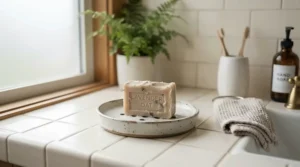
What to Expect: Real-World Performance of a Soap Bar With Added Moisturisers
Switching to a soap bar with added moisturisers changes how washing feels, and not always in the way you expect.
First, lather. Syndets like Sebamed Cleansing Bar produce a modest, creamy foam, while true soaps like Oilatum Soap Bar foam more generously. Less foam doesn’t mean less clean. It just means different surfactants. If you miss the bubbles, a hybrid like Dove Original Beauty Cream Bar is the compromise.
Second, the “squeaky clean” sensation disappears. That squeak is often the feeling of stripped skin, so a good bar should leave your skin slightly soft, not tight. A useful test: five minutes after drying, does your skin feel comfortable or pulled?
Third, results take time. A fortnight is a fair trial. Seasonal effects also matter, and winter heating can undo the best bar’s work.
Finally, set realistic goals. A rinse-off bar can avoid making dryness worse and may add a little comfort, but it won’t treat dry skin on its own. Pair it with a moisturiser.
Creamy Soap Bar for Dry Hands: Handwashing Without the Cracks
Hands are the toughest test. You wash them more than any other body part, they’re exposed to cold air, and cracks can appear quickly. A creamy soap bar for dry hands has to balance hygiene with kindness.
The NHS notes that everyday soaps usually dry out skin, and that moisturiser is best applied after washing hands, once they’re patted dry. It also stresses regular emollient use on hands and face, which are exposed to the elements more than the rest of your body. Don’t skip washing, though. Choose a gentler bar, keep water lukewarm, rinse thoroughly and blot dry.
For the sink, Dove Original Beauty Cream Bar is labelled for daily use on face, body and hands, and The English Soap Company Dry Skin Soap Bar is a pleasant fragrance-free option. Oilatum Soap Bar suits people who like pharmacy-style products. Keep a small tube of hand cream beside the bar.
If skin is cracked, bleeding or looks infected, speak to a pharmacist or GP. A bar is a sensible everyday choice, not a treatment for dermatitis.
Hydrating Soap Bar for Dry Skin: Price Range and Value Analysis
Price per bar is misleading. Size, lifespan and your skin’s response all matter, so this table compares indicative cost per 100g.
| Product | Size | Price range | Indicative cost per 100g | Value verdict |
|---|---|---|---|---|
| Dove Original Beauty Cream Bar | 90g | Under £3 | £1–£2.50 | Best budget option |
| Sebamed Cleansing Bar | 150g | £4–£5 | £2.50–£3.50 | Strong value for sensitive skin |
| Cetaphil Gentle Cleansing Bar | 127g | £5–£8 | £4–£6 | Premium for irritation-prone skin |
| CeraVe Hydrating Cleanser Bar | 128g | £5–£8 | £4–£6 | Fair for barrier support |
| Oilatum Soap Bar | 100g | £6–£7 | £6–£7 | Most expensive per gram |
| Dr Bronner’s Baby Unscented Pure-Castile Bar Soap | 140g | £5–£9 | £3.50–£6.50 | Varies by seller |
| The English Soap Company Dry Skin Soap Bar | 190g | £4–£7 | £2–£4 | Good value per gram |
Figures are indicative, based on prices seen at the time of research, and may vary. Dove Original Beauty Cream Bar and The English Soap Company Dry Skin Soap Bar deliver the lowest cost per wash, while Oilatum Soap Bar is the priciest by weight. For total cost of ownership, remember that a retailer FAQ suggests a 90g Dove bar can last several weeks with daily use. Keeping any bar dry extends that further, so a £1 draining dish can save more than switching brands.
✨ Ready to Give Your Dry Skin a Break?
🔍 Take your washing routine to the next level with these carefully selected bars. Click on any highlighted item to check current pricing and availability. These bars will help you create a calmer, more comfortable shower routine you’ll actually look forward to!
Labelling, Safety and UK Rules for Moisturising Soap Bars
In the UK, bar soaps sold as cosmetics fall under the UK Cosmetics Regulation, which is why you’ll see a UK address on most packs. It requires a safety assessment, but it doesn’t guarantee a bar suits your skin.
Read labels for three things. First, fragrance allergens: limonene and linalool, listed on Dove Original Beauty Cream Bar, are common triggers. Second, colourants: one pharmacy listing for Oilatum Soap Bar shows E110 and E122. Third, animal-derived ingredients: sodium tallowate appears on some Dove packs.
Slipping is a real shower hazard, and NHS guidance specifically warns about slipping when using emollients in the bath or shower. Use a non-slip mat, and wash any greasy residue from the tub afterwards.
If you follow a bar with a leave-on emollient, note the MHRA’s safety guidance on emollient creams. Dried-on creams make fabrics more flammable, so avoid naked flames and wash clothing and bedding regularly. A rinse-off bar carries far less risk, but the moisturiser you layer afterwards deserves the same care.
For babies, note that Dr Bronner’s Baby Unscented Pure-Castile Bar Soap is not tear-free, while Oilatum Soap Bar is marketed for adults and children. If in doubt, ask a pharmacist.
Frequently Asked Questions
❓ Is a hydrating soap bar for dry skin better than body wash?
❓ Can I use a soap bar with added moisturisers on my face?
❓ How long does a moisturising soap bar usually last?
❓ Is superfatted soap suitable for eczema-prone skin?
❓ What is the best creamy soap bar for dry hands on a budget?
Conclusion
Dry skin doesn’t mean giving up bars, but it does mean reading beyond the word “moisturising”. The base matters most: syndets are gentlest, hybrids are the sensible middle ground, and superfatted soap suits people who tolerate soap.
For most households, Dove Original Beauty Cream Bar is the practical starting point, thanks to its mild base and tiny cost. If your skin reacts easily, Sebamed Cleansing Bar and Cetaphil Gentle Cleansing Bar offer gentler, soap-free alternatives, and CeraVe Hydrating Cleanser Bar adds ceramides and hyaluronic acid for extra barrier support. If you like a rich lather, Oilatum Soap Bar brings a pharmacy-style feel. And if short, plant-based labels matter, Dr Bronner’s Baby Unscented Pure-Castile Bar Soap and The English Soap Company Dry Skin Soap Bar are worth a look.
Whichever you choose, give it two weeks, keep it dry, moisturise afterwards and treat persistent dryness with a pharmacist’s help rather than another new bar.
Recommended for You
- Moisturising Bar Soap: 7 Best Budget Buys For Dry Skin (2026)
- Syndet Bar Vs Traditional Soap For Rosacea: 7 Best Picks (2026)
- Soap For Rosacea: 7 Best Gentle Picks For UK Skin (2026)
Disclaimer: This article contains affiliate links. As an Amazon Associate, I earn from qualifying purchases. If you purchase products through these links, we may earn a small commission at no additional cost to you.
✨ Found this helpful? Share it with your friends! 💬🤗
