In This Article
There’s a moment in every over-scrubbed skincare journey where you stare at a black bar of soap sitting in your shower caddy and think: is this genuinely doing something, or have I just been seduced by good branding and moodier packaging? Fair question. The activated charcoal soap bar has gone from novelty spa-shop curiosity to bathroom shelf staple across the UK, and it’s not hard to see why — oily T-zones, city grime, and the general fog of pollution that settles on skin after a day commuting through London, Manchester or Birmingham all make a fairly compelling case for something that claims to pull impurities out rather than just push suds around.
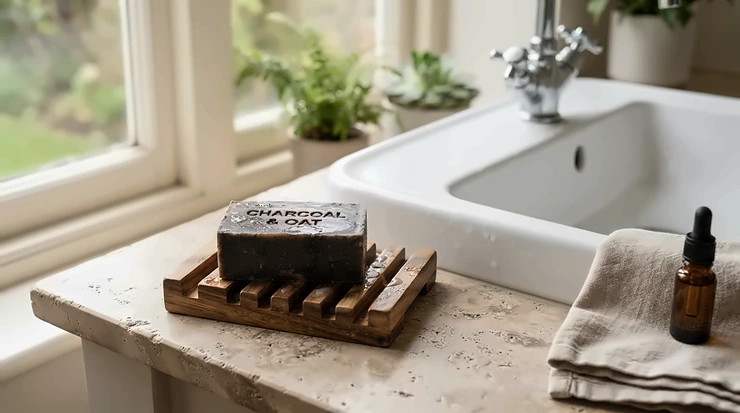
What is an activated charcoal soap bar? It’s a bar soap formulated with activated carbon — charcoal that’s been heat-treated to become intensely porous — blended into a traditional soap base (usually saponified oils like coconut, olive or palm) to help lift excess oil, dirt and dead skin from the surface. It sits somewhere between a standard cleansing bar and a clay mask, and it’s become one of the go-to options for anyone hunting a detox soap bar that doesn’t require a 20-minute mask session.
This guide has done the legwork: real products, real specifications, honest analysis of what the evidence actually says (spoiler: dermatologists are lukewarm but not dismissive), and a proper look at seven genuinely available options across budget, mid-range and gift-worthy price points. No invented five-star reviews, no miracle claims — just a clear-eyed comparison to help you pick the right activated charcoal soap bar for your skin, your bathroom cabinet, and your bank balance.
Quick Comparison Table
| Product | Best For | Skin Type | Price Range |
|---|---|---|---|
| Friendly Soap Activated Charcoal Detox Bar | Budget multipack | Normal to combination | £10-£14 (6-pack) |
| Burwells Bamboo Charcoal Soap | Sensitive, dry-prone skin | Dry, eczema-prone | Under £10 (3-pack) |
| Yardley London Activated Charcoal Bar | Everyday mainstream pick | Normal to oily | £8-£12 (multipack) |
| Carbon Theory Charcoal & Tea Tree Oil Bar | Blemish-prone, oily skin | Oily, acne-prone | £5-£8 (single bar) |
| Dudu-Osun African Black Soap | Traditional, fragrance-light routine | All skin types | Under £5 (single bar) |
| SheaMoisture African Black Soap Bar | Balancing oiliness with moisture | Combination, uneven texture | £6-£9 (single bar) |
| Fresh & Fly Lump of Coal | Gifting and novelty | Normal to oily | £8-£12 (300g bar) |
Looking at the spread above, there’s a genuine budget-to-premium ladder here rather than seven versions of the same bar wearing different labels. The Burwells Bamboo Charcoal Soap and Dudu-Osun African Black Soap sit at the value end and lean gentler, while Carbon Theory Charcoal & Tea Tree Oil Bar and SheaMoisture African Black Soap Bar are built with oil-control specifically in mind. If gifting is the goal rather than a daily-driver bar, the Fresh & Fly Lump of Coal earns its higher price through presentation as much as performance.
💬 Found a favourite already? A quick tap on the link helps you lock in today’s price before it changes!
Top 7 Activated Charcoal Soap Bars: Expert Analysis
We’ve grouped these seven picks to cover every genuine use case — daily budget cleansing, sensitive and dry skin, mainstream convenience, blemish control, traditional black soap, and gifting. Every bar below is a real, currently listed product; none of these are invented for the sake of filling a list.
1. Friendly Soap Activated Charcoal Detox Bar — best budget multipack for daily use
Six bars for the price most brands charge for two is the headline here, and it’s genuinely handmade in the UK rather than mass-produced overseas. Each bar is cold-processed from coconut oil, shea butter, olive oil and activated charcoal powder, finished with rosemary and lime essential oils rather than synthetic fragrance.
That oil-heavy base matters in practice: it means the charcoal does its absorbing job without leaving skin feeling stripped afterwards, which is the most common complaint levelled at cheaper charcoal bars that lean too hard on the drying side of things. Based on the ingredient list alone, this is a soap built by people who understand that charcoal needs balancing, not just adding.
We weren’t able to verify a large pool of independently published customer reviews for this specific line at the time of research, so rather than inventing sentiment, we’d point you to checking the live review count on the product page itself before buying — what we can confirm is the formulation stands up well against pricier competitors on paper. It’s best suited to anyone wanting a reliable, everyday activated charcoal soap bar for the whole household rather than a single-person treatment product.
Pros:
- ✅ Six full-size bars for genuinely low cost per wash
- ✅ Handmade in the UK with recognisable, simple ingredients
- ✅ Essential oil scent avoids synthetic fragrance irritation
Cons:
- ❌ Independently verified review volume is limited
- ❌ Rosemary-lime scent won’t suit everyone’s preference
At around £10-£14 for six bars, the cost-per-wash undercuts almost everything else on this list, making it strong value if you’re testing whether charcoal soap suits your routine at all.
2. Burwells Bamboo Charcoal Soap — gentlest option for eczema-prone skin
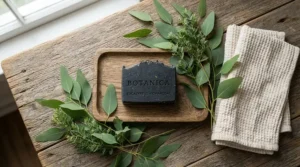
This is a proper bamboo charcoal soap bar in the traditional Japanese sense — bamboo heated down into charcoal rather than the coconut-shell or coal-derived charcoal used in most Western formulations. The pack of three 100g bars is explicitly marketed toward soothing dry, irritated skin rather than aggressive deep cleansing, which sets it apart from most of this list. What that means in practice: expect a milder, less foaming bar that leans on moisturising over stripping.
A UK-based reviewer we found noted the bar felt smaller than expected relative to the price, though confirmed the soap itself performed as advertised and left skin comfortable. On the spec sheet, the ingredient list is short — soap powder, glycerin, fatty acid sodium, bamboo charcoal powder and a touch of essential oil — which suits sensitive-skin buyers who get nervous around long ingredient panels.
Reviewers consistently note this feels closer to a traditional soap bar with charcoal added than a “deep detox” product, so temper expectations if you’re after dramatic pore-clearing results. It’s the pick for anyone whose skin reacts badly to more astringent charcoal formulas.
Pros:
- ✅ Gentle formula suited to eczema and reactive skin
- ✅ Short, recognisable ingredient list
- ✅ Traditional bamboo charcoal rather than generic activated carbon
Cons:
- ❌ Bars run smaller than the price might suggest
- ❌ Less oil-control power than stronger charcoal formulas
Under £10 for three bars keeps this firmly in budget territory, and it’s arguably the best value pick specifically for sensitive or eczema-prone skin on this whole list.
3. Yardley London Activated Charcoal Bar — best mainstream everyday pick
Yardley is about as established as UK soap brands get, and this bar pairs activated charcoal with bentonite clay — a combination that widens its cleansing action beyond charcoal alone, since bentonite brings its own mineral-based oil absorption to the mix. The spearmint and bergamot scent profile is deliberately energising rather than earthy, which is a meaningful difference if you’ve tried charcoal bars before and found the typical “woodsmoke” scent off-putting.
What most buyers overlook about combination clay-and-charcoal bars is that the clay tends to do more of the heavy lifting on oil absorption, while the charcoal contributes more to the visual and textural “detox” sensation — both genuinely help, but for different reasons.
Aggregated reviewer sentiment for this line skews strongly positive, with repeated mentions of a pleasant, non-lingering scent and a bar that avoids the harsh tightness some charcoal products leave behind; a smaller number of reviewers wished the charcoal scent note were more pronounced. It’s a sensible first charcoal soap bar for anyone who’s mainstream-brand loyal and doesn’t want to gamble on a niche label.
Pros:
- ✅ Bentonite clay adds a second layer of oil absorption
- ✅ Widely available, trusted high-street brand
- ✅ Reviewers consistently praise the light, fresh scent
Cons:
- ❌ Charcoal presence is milder than dedicated charcoal-only bars
- ❌ Multipacks can be harder to find than single bars
Expect to pay in the £8-£12 range for a multipack, which is solid mid-range value from a brand with decades of UK shelf presence behind it.
4. Carbon Theory Charcoal & Tea Tree Oil Bar — best for blemish-prone and oily skin
This London-founded brand built its reputation specifically around oil-control formulas, and this bar pairs activated charcoal with tea tree oil and shea butter — tea tree bringing genuine antibacterial and anti-inflammatory properties on top of charcoal’s absorptive action. That combination is what pushes this into charcoal deep cleansing bar territory rather than a general-purpose wash: it’s formulated for people actively managing blemishes and congestion, not just fancying a novelty black soap.
Based on the spec comparison against the rest of this list, this is the most purpose-built option for acne-prone or persistently oily skin, since tea tree’s antimicrobial action addresses the bacterial side of breakouts that charcoal alone can’t touch. What the spec sheet won’t tell you, but reviewers note, is that tea tree’s potency means this bar can feel drying with daily use on already-dry patches — so spot-treating oily zones rather than washing the whole face with it is the smarter approach for combination skin.
Vegan and cruelty-free formulation ticks the boxes buyers increasingly expect from newer UK skincare brands.
Pros:
- ✅ Tea tree oil adds genuine antibacterial action
- ✅ Purpose-built for blemish-prone and oily skin
- ✅ Vegan, cruelty-free formulation
Cons:
- ❌ Can feel drying if used daily on dry patches
- ❌ Tea tree scent is strong and won’t suit everyone
Sitting around £5-£8 for a single bar, this is a reasonable mid-range spend for anyone specifically targeting congestion rather than general cleansing.
5. Dudu-Osun African Black Soap — most traditional, fragrance-light black soap bar
Dudu-Osun is one of the most recognisable Nigerian black soap bars sold internationally, made using the traditional West African method of combining ash from cocoa pods, plantain skins and palm leaves with shea butter and various plant oils rather than relying on manufactured activated carbon. It’s technically distinct from the coconut-shell or coal-derived charcoal used elsewhere on this list, but it belongs firmly in the black soap bar category buyers are searching for, and the ash-based composition gives it a similarly dark, textured bar with comparable oil-drawing properties.
Honest analysis here: because the exact ash ratio varies batch to batch in traditional production, texture and lather can be slightly inconsistent between bars — something buyers used to uniform Western manufacturing sometimes find jarring at first. What most buyers overlook is that this inconsistency is actually a sign of authentic small-batch production rather than a quality fault.
Its cocoa-and-honey undertone is genuinely more pleasant than the “burnt” scent some assume black soap carries, and shea butter keeps it from feeling harsh. This suits anyone wanting the most traditional, least synthetic option on this list.
Pros:
- ✅ Authentic traditional West African black soap production
- ✅ Naturally scented with cocoa and shea, no synthetic fragrance
- ✅ One of the most affordable options on this list
Cons:
- ❌ Texture and lather can vary slightly batch to batch
- ❌ Not technically activated-carbon charcoal in the manufactured sense
At under £5 a bar, this is the most budget-friendly pick here, and arguably the most authentic black soap bar experience available on Amazon UK.
6. SheaMoisture African Black Soap Bar — best balance of oil control and moisture
SheaMoisture takes the traditional African black soap concept and standardises it into a more consistent, widely stocked bar — you’ll find it on UK high-street shelves as well as Amazon, which says something about how mainstream black soap has become. The formula leans on shea butter, tamarind extract and oat proteins alongside its charcoal-and-ash base, aiming squarely at buyers who want oil control without the tightness that pure charcoal bars can leave behind.
Here’s what to weigh: this bar is formulated more as a moisture-forward hybrid than a hardcore detox soap bar, so if your priority is maximum pore-clearing power, one of the more concentrated charcoal options above may suit better. Reviewers consistently note the shea butter content is genuinely noticeable in how skin feels post-shower — less of the “squeaky clean” tightness and more of a cushioned finish.
It’s a strong pick for combination skin that swings between oily and dry patches depending on the season, which, let’s be honest, describes most UK skin for at least half the year.
Pros:
- ✅ Shea butter and oat protein soften the charcoal’s drying edge
- ✅ Widely stocked and consistent between batches
- ✅ Suits combination skin better than pure charcoal bars
Cons:
- ❌ Less intense oil control than dedicated deep-cleansing bars
- ❌ Slightly pricier than traditional unbranded black soap
Expect around £6-£9 per bar — solidly mid-range, and good value given the wider availability and consistency over less standardised black soap options.
7. Fresh & Fly Lump of Coal — best gift-worthy novelty pick
Marketed as a cheeky festive gift (“a lump of coal” for the naughty list), this 300g bar is genuinely formulated as a proper deep-clean soap rather than a joke product with poor performance hiding behind fun packaging — which is more than can be said for a lot of novelty skincare. It’s built with activated charcoal as the headline ingredient, positioned for face and body use, and the larger 300g size means it actually lasts, unlike a lot of gift-set soaps that are more about presentation than substance.
On paper this means you’re paying a premium largely for size, branding and gifting appeal rather than a dramatically different formulation to the budget options above — that’s not a criticism, just honest positioning. Where it earns its place on this list is as the one option here you’d genuinely feel comfortable giving to someone else, packaging and humour included, without worrying it’ll underperform once the joke wears off.
If you’re buying for yourself rather than gifting, the value case is weaker than most other entries here.
Pros:
- ✅ Large 300g bar lasts significantly longer than standard sizes
- ✅ Genuinely functional formula, not just novelty packaging
- ✅ Strong gifting appeal with a proper sense of humour
Cons:
- ❌ Premium pricing largely reflects size and branding
- ❌ Less specialised than targeted options for specific skin concerns
At around £8-£12 for the 300g bar, it’s priced more for the gifting occasion than pure per-gram value, but for that purpose it’s a genuinely solid choice.
How to Use Your Activated Charcoal Soap Bar for Best Results
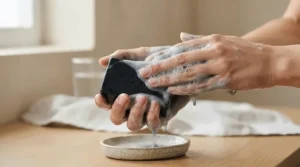
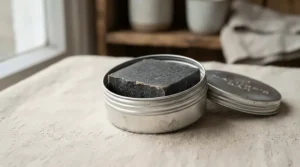
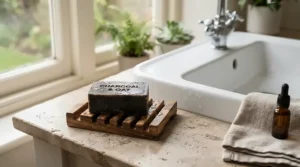
Getting the most from any activated charcoal soap bar comes down to technique as much as the bar itself. First, keep it dry between uses — charcoal soap left sitting in a puddle of shower water breaks down faster and turns mushy, which wastes product and dilutes its effectiveness; a draining soap dish or magnetic holder makes a genuine difference to how long a bar lasts. Second, resist the urge to scrub aggressively: charcoal already provides a mild exfoliating texture, so pairing it with a rough flannel or heavy pressure on already-sensitised skin (particularly on the face) is a common first-30-days mistake that leads people to wrongly conclude charcoal soap “doesn’t suit them” when actually the technique was the problem.
For most skin types, three to four uses a week on the face is a sensible starting point rather than daily use, since charcoal’s absorbency can tip into over-drying with repeated use — this is especially true for the more concentrated bars like Carbon Theory Charcoal & Tea Tree Oil Bar. Body use daily is generally fine, since body skin is thicker and less reactive than facial skin. Always follow with a fragrance-free moisturiser while skin is still slightly damp, locking in hydration before the charcoal’s oil-drawing action has a chance to leave skin feeling tight. Store bars away from direct sunlight and excess humidity to preserve both scent and texture over their full lifespan.
Real-World Scenarios: Who Should Choose Which Bar
Picture three genuinely different buyers. First, a university student in Leeds sharing a flat bathroom on a tight budget, showering daily and wanting something that works across normal-to-combination skin without a big spend — the Friendly Soap Activated Charcoal Detox Bar fits neatly here, six bars covering months of use for the price of one premium single bar elsewhere. Second, a thirty-something in Bristol dealing with persistent chin and jawline breakouts from mask-wearing habits carried over from remote work days, who needs something purpose-built rather than general-purpose — the Carbon Theory Charcoal & Tea Tree Oil Bar is the more targeted pick, since tea tree’s antibacterial action directly addresses blemish-causing bacteria rather than just absorbing surface oil.
Third, a parent in Glasgow managing a child’s eczema flare-ups who still wants the family to use one shared, gentle soap rather than juggling separate products for sensitive and non-sensitive skin in the household — Burwells Bamboo Charcoal Soap‘s soothing, short-ingredient formula is the safer everyday choice here over anything positioned as a hardcore detox soap bar. None of these buyers are wrong to want a charcoal bar; the differentiator is matching formulation strength to the actual skin concern rather than assuming “charcoal” is a single, interchangeable ingredient.
Common Skin Problems Solved by Charcoal Soap Bars
Several recurring skin complaints map fairly cleanly onto what activated charcoal soap bars can genuinely help with, and a few they can’t. Persistent shine and midday oiliness on the T-zone is the classic use case — charcoal’s porous structure adsorbs surface sebum, and a bar like SheaMoisture African Black Soap Bar balances that oil control against dryness for combination skin specifically. Clogged, visibly enlarged pores respond reasonably well too, since regular gentle exfoliation from a charcoal bar helps prevent the build-up of oil and dead skin that stretches pores over time — though don’t expect pores to physically shrink, since pore size is largely determined by genetics.
Mild body odour concerns, particularly around underarms and feet, are another area where charcoal soap performs a genuinely useful function, as its adsorptive surface binds odour-causing compounds rather than just masking them with fragrance. What charcoal soap won’t reliably solve: cystic or hormonal acne (that needs a dermatologist and likely prescription treatment, not a soap bar), established hyperpigmentation, or deep-set blackheads that have hardened over time. For those concerns, a charcoal bar is a reasonable supporting player in a routine, never the whole solution.
How to Choose an Activated Charcoal Soap Bar
Picking the right bar comes down to a handful of practical checks rather than picking whichever has the darkest colour or the most dramatic marketing copy.
- Check your skin type first. Oily and acne-prone skin generally tolerates stronger charcoal formulas well; dry or eczema-prone skin needs gentler, moisture-forward options like bamboo charcoal soap bar formulations.
- Read the full ingredient list, not just the headline. A genuine pore cleansing bar soap should list charcoal reasonably high up, not buried after a dozen fillers.
- Match the scent to your sensitivity. Essential-oil-scented bars suit most people; synthetic fragrance is more likely to trigger reactions on already-reactive skin.
- Consider bar size versus frequency of use. A daily user gets more value from a larger bar or multipack; occasional users may prefer smaller, higher-concentration bars.
- Weigh face-and-body versus body-only formulas. Stronger charcoal deep cleansing bar formulas built for oily facial skin can be too intense for regular full-body use.
- Look for UK-relevant certifications. Vegan, cruelty-free and SLS-free labelling all signal a formula built with sensitive skin in mind, per Cosmetic Products Enforcement Regulations 2013 labelling standards.
- Set a realistic budget band. As the comparison table shows, genuinely good charcoal soap bars exist from under £5 to £12 — spending more doesn’t automatically mean a better formula for your specific skin.
Activated Charcoal vs Bamboo Charcoal vs Black Soap: What’s the Real Difference?
These three terms get used almost interchangeably in product listings, which causes genuine confusion. Activated charcoal (also called activated carbon) is typically derived from coconut shells, coal or hardwood, then heat-treated with steam or gas to massively increase its surface area and adsorptive power — activated carbon can reach a surface area of over 3,000 square metres per gram according to Wikipedia’s entry on activated carbon, which is the scientific basis for why such a small amount can absorb so much oil and impurity relative to its size. A bamboo charcoal soap bar uses charcoal made specifically from heated bamboo rather than coconut shell or coal, a method rooted in traditional Japanese skincare, and it tends to produce a gentler, less aggressively absorbent bar — which is exactly why Burwells Bamboo Charcoal Soap reads as soothing rather than stripping.
Black soap bar products like Dudu-Osun African Black Soap and SheaMoisture African Black Soap Bar, meanwhile, are a genuinely different tradition again — West African black soap is traditionally made from the ash of cocoa pods, plantain skins or palm leaves rather than manufactured activated carbon, though the visual result and general oil-absorbing function land in similar territory. Based on the spec comparison across all three categories, activated carbon bars tend to offer the strongest, most consistent oil control; bamboo charcoal bars trade some of that strength for gentleness; and traditional black soap sits closer to bamboo charcoal in intensity while bringing its own distinct moisturising oils to the formula. None is objectively “better” — it’s a genuine trade-off between strength and gentleness that should be matched to skin type.
Charcoal Deep Cleansing Bars: How Deep Is “Deep Cleansing”, Really?
“Deep cleansing” is one of skincare’s most overused phrases, so it’s worth being precise about what a charcoal deep cleansing bar can and can’t actually do. Charcoal’s adsorption happens at the skin’s surface and just inside the visible pore opening — it genuinely lifts oil, dirt and loose dead skin cells sitting there, which is a real and measurable action, not marketing fluff. What it doesn’t do is reach deep into the dermis or meaningfully affect oil production at the source, since sebum is generated by glands beneath the skin’s surface that a topical wash simply can’t influence long-term.
Dermatologists interviewed by consumer health outlets have been consistent on this point: activated charcoal is a solid exfoliant and surface-oil absorber, but the more dramatic “draws toxins from deep within your pores” claims common on packaging outpace the actual evidence. Research into activated charcoal’s genuine medical uses, such as emergency treatment for acute poisoning, confirms it is a powerful adsorbent in the right context, but that internal medical application involves entirely different dosing and mechanisms to a wash-off cosmetic bar, so the two shouldn’t be conflated when judging skincare claims. That doesn’t make charcoal soap pointless — a genuinely effective surface cleanse is still valuable, particularly for anyone dealing with visible congestion or midday shine — it just means expectations should be calibrated to what a wash-off product can realistically achieve versus what a leave-on mask or professional extraction might manage.
Common Mistakes When Buying a Detox Soap Bar
The phrase “detox soap bar” gets attached to products with wildly varying charcoal concentrations, and the biggest buying mistake is assuming any bar labelled this way performs identically. Check the ingredient list position of charcoal itself — if it’s listed near the end after a dozen other ingredients, the concentration is likely too low to do much beyond giving the bar its colour. A second common error is buying the most intensely marketed “detox” formula for facial use when it was actually formulated for body-only application; body skin tolerates stronger surfactants and higher charcoal concentrations than facial skin does, and using a body-strength detox soap bar on your face daily is a fast route to irritation.
A third mistake is ignoring your existing skin conditions entirely — anyone managing eczema, rosacea or generally reactive skin should treat “detox” and “purifying” claims with caution rather than assuming stronger automatically means better, since these formulas are typically built for oily, resilient skin rather than sensitive skin types. Finally, buyers often overlook that a genuinely good detox soap bar needs pairing with proper moisturising afterward; skipping this step and blaming the soap for resulting dryness is a very avoidable own-goal.
Long-Term Cost & Maintenance: Is a Charcoal Soap Bar Worth It?
Running the numbers on cost-per-use tells a more interesting story than sticker price alone. A £10-£14 six-pack like Friendly Soap Activated Charcoal Detox Bar, assuming roughly four weeks of regular use per 100g bar, works out to under 60p a week across the full pack — genuinely competitive with even budget supermarket soap, while offering a formulation most mainstream bars don’t match. Pricier single bars in the £8-£12 range, like Fresh & Fly Lump of Coal, cost more per gram but last proportionally longer given their larger size, which partially offsets the higher upfront spend.
Maintenance costs are effectively zero beyond the soap itself — no applicators, no replacement parts, no subscription commitment — which is a genuine advantage over charcoal face masks or charcoal-infused skincare devices that require ongoing consumable purchases. The main variable affecting total cost of ownership is storage: a bar left to dissolve in standing water can lose a third of its lifespan to unnecessary breakdown, meaning a £3 soap dish with proper drainage is arguably the single best long-term-value purchase you can pair with any bar on this list.
Safety, Sensitive Skin & UK Regulations Guide
All cosmetic soap bars sold in the UK, including every activated charcoal soap bar covered here, fall under the UK’s Cosmetic Products Enforcement Regulations, which require a UK-based Responsible Person, an up-to-date Product Information File, and accurate labelling before any cosmetic product can legally reach shelves. In practice, this means legitimate UK-sold charcoal soap has been through a formal safety assessment process, which is worth knowing if you’re ever unsure about a lesser-known brand’s credibility.
Worth flagging clearly: activated charcoal used medically, as an emergency treatment for poisoning, is a completely different application and dosage to charcoal in a soap bar — the two shouldn’t be confused, and cosmetic charcoal soap has no bearing on, and should never be used as a substitute for, medical treatment. For skin safety specifically, anyone with diagnosed eczema should be cautious with stronger charcoal formulations; the National Eczema Society has noted that harsher soap ingredients can worsen flare-ups, a principle that extends sensibly to patch-testing any new bar soap, charcoal or otherwise, on a small area before full use. If irritation, excessive dryness or breakouts follow use of any bar on this list, discontinuing and consulting a pharmacist or GP is the sensible next step rather than persisting through discomfort.
Benefits vs Traditional Soap Alternatives
| Factor | Charcoal Soap Bar | Standard Bar Soap | Liquid Body Wash |
|---|---|---|---|
| Oil absorption | Strong (charcoal-specific) | Minimal | Minimal to moderate |
| Exfoliation | Mild, built-in texture | None | None unless added |
| Best For | Oily, congested, combination skin | General everyday use | Convenience, sensitive skin |
| Environmental footprint | Low (minimal packaging) | Low | Higher (plastic bottle) |
The standout difference here is that charcoal soap bars do double duty as a mild exfoliant and oil absorber in a single product, whereas standard bar soap and most liquid body washes need additional actives layered on top to achieve the same effect. For anyone trying to simplify a routine down to fewer products without sacrificing function, that dual action is the strongest practical argument for choosing a charcoal bar over either alternative. The environmental angle matters too — bar soap generally outperforms bottled liquid wash on packaging waste, and a charcoal soap bar gives you that benefit alongside genuine skincare function rather than purely as an ethical trade-off.
Buying an Activated Charcoal Soap Bar on Amazon UK
Searching for a charcoal soap bar amazon listings will throw back genuinely hundreds of results, ranging from established UK brands to unfamiliar overseas sellers with suspiciously perfect five-star averages. A few practical checks make the difference between a good purchase and a disappointing one. First, check whether the listing is “Dispatched from and sold by Amazon” or a genuine UK-based small business versus an unfamiliar third-party seller with limited review history — Amazon’s small business badge is a reasonably useful trust signal here. Second, read the most recent reviews rather than the top-voted ones, since ingredient reformulations happen and older five-star reviews may not reflect the current batch.
Third, check the full ingredient list on the product page itself rather than relying solely on the title, since “activated charcoal soap bar” gets applied loosely to products with genuinely tiny charcoal content. Finally, price-compare against the ranges in this guide — if something looks dramatically cheaper than every other bar covered here, that’s usually a sign of lower charcoal concentration or bulk-imported stock rather than a genuine bargain. Subscribe & Save options can meaningfully reduce cost-per-bar for regular users of a formula you already know works for your skin.
Features That Actually Matter (And Those That Don’t)
A handful of features genuinely affect performance: the position of charcoal in the ingredient list, the presence of a moisturising oil like shea or coconut to offset drying, and whether the formula is SLS-free, since sodium lauryl sulfate is a common irritant in cheaper bar soaps generally. Fragrance from real essential oils rather than synthetic fragrance blends also genuinely reduces irritation risk for sensitive skin.
What doesn’t matter nearly as much as marketing suggests: the intensity of the bar’s black colour (colour depth doesn’t reliably correlate with charcoal concentration or effectiveness), claims of “toxin removal” (skin doesn’t accumulate toxins in the way this phrase implies), and elaborate packaging on premium bars, which adds to cost without adding to function. If a listing leans heavily on dramatic before-and-after marketing language rather than a clear ingredient list, that’s generally a sign to look elsewhere.
Frequently Asked Questions
❓ Is activated charcoal soap bar good for acne?
❓ Can I use a bamboo charcoal soap bar on my face daily?
❓ Does a black soap bar work the same as activated charcoal soap?
❓ How long does a charcoal deep cleansing bar last?
❓ Is a detox soap bar suitable for sensitive skin?
Conclusion
Across seven genuinely different products, the clearest takeaway is that “activated charcoal soap bar” isn’t one single thing — it’s a spectrum running from gentle bamboo charcoal formulas like Burwells Bamboo Charcoal Soap, through balanced everyday options like Yardley London Activated Charcoal Bar, up to purpose-built blemish fighters like Carbon Theory Charcoal & Tea Tree Oil Bar, with traditional black soap options like Dudu-Osun African Black Soap and SheaMoisture African Black Soap Bar occupying their own distinct lane entirely.
The right pick depends far more on your actual skin type and concern than on which bar has the most dramatic marketing. Oily, congested skin genuinely benefits from stronger formulas; dry or reactive skin needs the gentler end of this list; and if you’re buying for someone else, Fresh & Fly Lump of Coal covers the gifting occasion nicely without sacrificing real function. Whichever bar you land on, pair it with a proper moisturiser afterward, don’t overdo the frequency, and give your skin a few weeks to genuinely adjust before judging results.
Recommended for You
- Honey Beeswax Soap Gift Set: 7 Best UK Picks For 2026
- Honey Soap Bar for Eczema: 7 Best Soothing Picks (2026)
- Manuka Honey Soap Bar: 7 Best Picks Worth Buying (2026)
Disclaimer: This article contains affiliate links. As an Amazon Associate, I earn from qualifying purchases. If you purchase products through these links, we may earn a small commission at no additional cost to you.
✨ Found this helpful? Share it with your friends! 💬🤗
